What Is an Apex Predator?
Apex predators sit at the top of local food webs with no regular natural predators as adults. Examples, mesopredators, and why top carnivores shape ecosystems.
Global Animal Guide · July 16, 2026
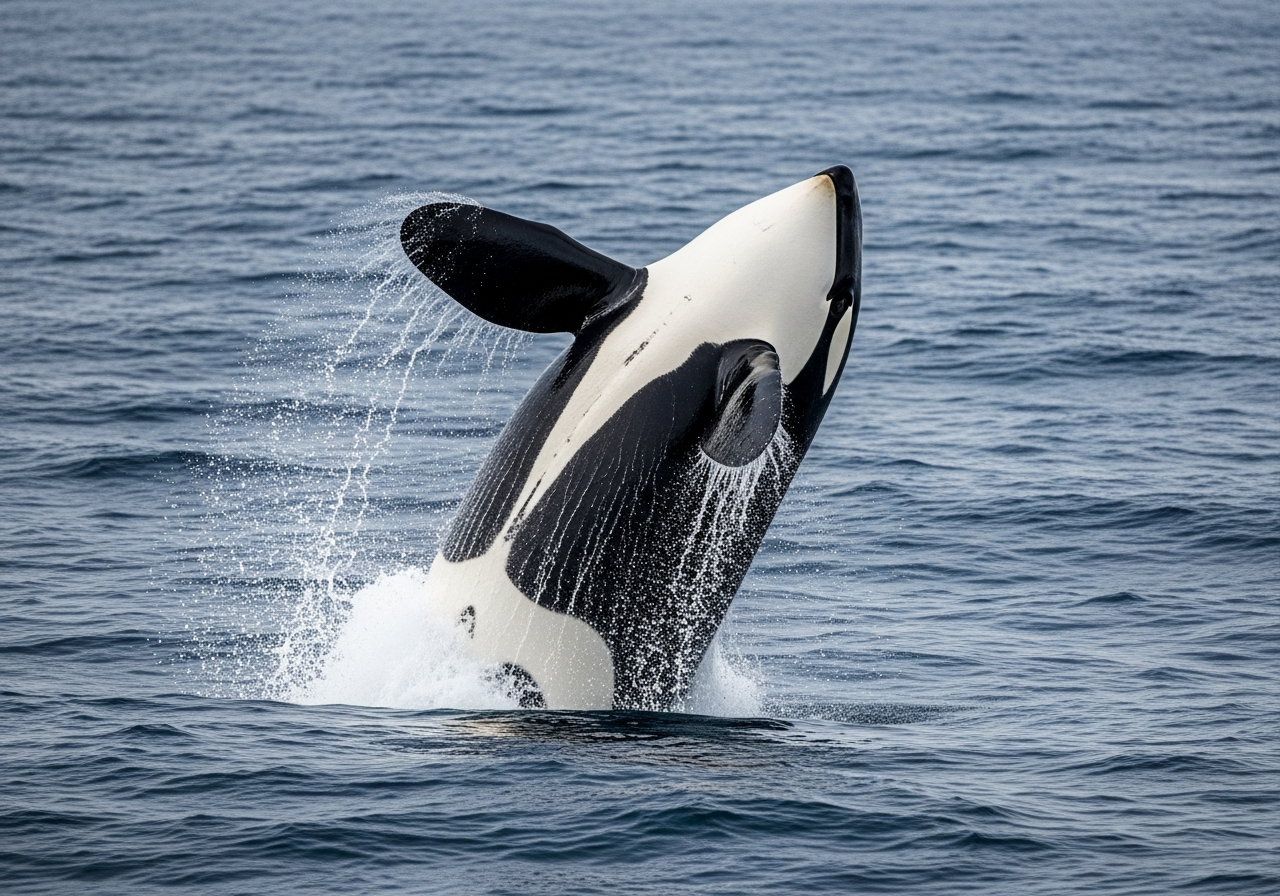
Image sourcing: see credits & licences
Quick answer
An apex predator is an animal that, as a healthy adult, sits at the top of its food web and is not regularly preyed on by other species. Lions, orcas, saltwater crocodiles, and great white sharks are classic examples — though humans now overshadow almost every wild food web.
Last updated: July 2026.
What “apex” actually means
An apex predator is defined by its position in a food web, not by its size, its ferocity, or how frightening it looks. The test is simple: when a healthy adult of the species dies, is it usually because something ate it? For an apex predator, the answer is no. It dies of age, injury, starvation, disease, or human causes — but not routinely from predation.
That definition carries two important qualifiers. The first is healthy adult. Almost every top carnivore is vulnerable when young: lion cubs are killed by hyena clans and by rival males, and juvenile crocodiles are eaten by herons, fish, and larger crocodiles. Apex status is something an animal grows into.
The second qualifier is in its ecosystem. Apex is a local job title, not a global rank. A red fox is a mid-ranking predator in a landscape that still holds wolves and lynx, but in Britain, where large carnivores were exterminated centuries ago, the fox is effectively the top terrestrial predator. Same animal, different food web, different rank.
Famous apex predators
- Land: lion, tiger, gray wolf, polar bear
- Water: orca, saltwater crocodile, large sharks
- Air / mixed: large eagles can be apex in local bird communities
Others earn the label in more specialised settings. The komodo dragon tops the food web on a handful of Indonesian islands with no big cats or canids. The snow leopard is unchallenged across high Central Asian ranges where few other large carnivores can cope with the altitude. The jaguar sits above every other Neotropical predator including caimans, which it hunts. And the golden eagle is apex within its aerial community, taking prey up to the size of young deer while nothing regularly hunts it back.
Trophic levels: how ecologists rank predators
Food webs are described in trophic levels. Level one is plants and algae capturing sunlight; level two is the herbivores that eat them; level three is the predators that eat herbivores; and level four and above are predators that eat other predators. Apex predators occupy the top occupied level, wherever that happens to be.
Real webs are messier than that ladder suggests, because most predators feed at several levels at once. An orca pod may eat herring one week and hunt harbor seal the next — prey drawn from two different levels. Ecologists therefore assign fractional trophic levels based on average diet, which is why an orca scores higher than a lion: seals are themselves predators, so eating them stacks another level onto the total.
That stacking matters beyond bookkeeping. Fat-soluble pollutants such as mercury concentrate at each step up the chain, so apex predators carry the heaviest contaminant burdens in their system — one reason top marine predators serve as sentinels of ocean health.
Apex ≠ invincible
Cubs, injured adults, and rare predator–predator fights still happen. Orcas may kill great whites; wolves may kill coyotes. “Apex” means usual top position for healthy adults in that place and time.
The exceptions are instructive. A great white shark is a textbook apex predator, yet orcas in some regions kill them for their lipid-rich livers, and the survivors abandon the area for months. That does not demote the great white — an occasional specialised attack is not regular predation — but it shows that the top of a food web is a statistical description rather than a guarantee. Scavengers muddy the picture too: a vulture consumes apex predators routinely, but eating the dead is not predation.
Mesopredator release
Remove the animal at the top and the effects run downward in ways that are rarely intuitive. The clearest is mesopredator release. Mid-ranked predators — foxes, raccoon, coyote, many snakes — are normally suppressed by larger carnivores that kill them, outcompete them, or simply make them cautious. Take the suppressor away and mesopredators become more numerous and bolder.
That matters because mesopredators are often harder on small prey than the apex predator was. Across much of North America, the decline of wolves and cougars was followed by a coyote expansion into habitats they had never occupied, with knock-on pressure on ground-nesting birds and small mammals. The paradox is real: fewer big predators can mean more predation overall.
Trophic cascades
The other downward effect is the trophic cascade, where a change at the top ripples through two or more levels to reshape the vegetation itself. The best-documented marine case involves the sea otter. Otters eat sea urchin; urchins graze kelp. Where otters were hunted out, urchin numbers exploded and stripped kelp forests down to bare rock — “urchin barrens” that support a fraction of the former community. Where otters returned, kelp returned with them.
Cascades are not universal, and honest ecology admits that. They show up most strongly in systems with few species and simple chains — islands, kelp forests, small lakes. In species-rich systems, several predators overlap and can substitute for one another, buffering the loss of any one of them. The Yellowstone wolf story is genuinely instructive but also genuinely contested; researchers still debate how much of the vegetation change is down to wolves rather than to climate, grizzly bear predation on elk calves, drought, or hunting by people.
Why the top of a food web is the fragile end
Apex predators share a demographic profile that makes them the first casualties of almost any disturbance. They are large, so they need extensive territories. They are rare, because energy losses at every trophic step mean a landscape supports only a fraction as many predators as prey. They mature slowly and raise few offspring. And they conflict with people over livestock, game, and space.
Combine those traits and you get species that can absorb very little additional mortality before declining — which is also why they recover slowly even when protection works, and why their absence is the most persistent signature of human impact on a landscape.
Humans as the ecological super-predator
Ecologically, humans sit above nearly every wild food web — but not in the way other apex predators do. Wild predators overwhelmingly kill the young, the old, and the weak, because those are the animals they can catch. People, using technology, preferentially take large adults in their reproductive prime: the biggest bluefin tuna, the largest-antlered deer, the mature breeding elephant.
That inversion is why human predation reshapes populations far faster than natural predation does. Removing prime breeders strips out exactly the individuals a population depends on to replace itself. It is also why “humans are apex predators” understates the case. We are the only predator that routinely hunts other apex predators, and the only one whose presence determines whether a wolf, a tiger, or a shark still occupies the top of its food web at all.
Related reading
- Food chains and food webs explained
- Keystone species explained
- Most dangerous animal
- Carnivore vs herbivore vs omnivore
Sources
Frequently asked questions
Is a shark always an apex predator?
Large species such as great whites often are; smaller sharks are mid-level predators eaten by bigger sharks, orcas, and others.
What's a mesopredator?
A mid-ranked predator (foxes, raccoons, many snakes). When apex predators decline, mesopredators can boom — the “mesopredator release” effect.
Are humans apex predators?
Ecologically yes in most systems — hunting technology puts people above nearly all wild animals.
Do apex predators help ecosystems?
Often yes — by limiting herbivores or mesopredators they can protect vegetation and biodiversity (trophic cascades).