Image sourcing: see credits & licences
Quick answer
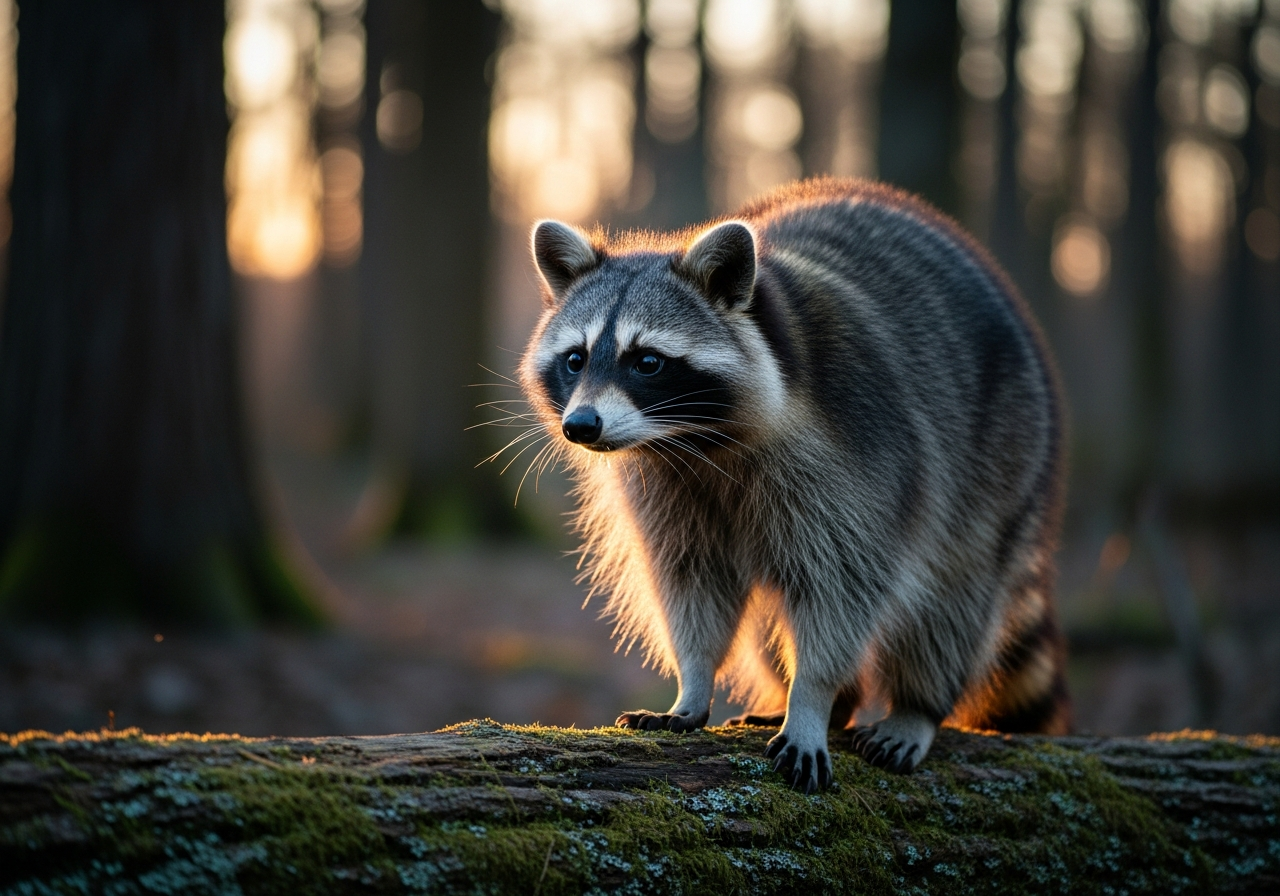
The raccoon is a clever, adaptable mammal native to North America, easily recognized by its black 'bandit' mask and ringed tail. Famous for nimble, sensitive front paws and a habit of 'washing' food, raccoons thrive in forests, wetlands, and cities alike. They are highly intelligent omnivores that typically live 2 to 3 years in the wild, though much longer in captivity.
Top questions about the Raccoon
Raccoon facts at a glance
- Weight 8 kg
- Length 80 cm
- Top speed 24 km/h
- Lifespan 3 years
| Scientific name | Procyon lotor |
|---|---|
| Diet | Omnivore |
| Habitat | Forest, wetland, and urban areas |
| Lifespan | 2–3 years in the wild |
| Weight | 5–12 kg (11–26 lb) |
| Top speed | Up to 24 km/h (15 mph) |
| Conservation status | Least Concern (IUCN) |
| Kingdom | Animalia |
|---|---|
| Phylum | Chordata |
| Class | Mammalia |
| Order | Carnivora |
| Family | Procyonidae |
| Genus | Procyon |
Where it lives
The raccoon (Procyon lotor) is native to Forests, wetlands, and cities across North America, introduced to parts of Europe and Asia. — recorded across North America in this guide’s range summary.
For occurrence records, see GBIF species search and sources below.
How big is a raccoon?
An adult raccoon measures 80 cm long — about 46% of the height of an average adult person (1.73 m) — and weighs around 8.0 kg, about 11% of an average adult’s body weight (70 kg).
Length vs an average adult’s height (to scale)
What is a group of raccoons called?
Group name (collective noun)
A group of Raccoons is called a gaze. It is also known as a nursery.
Baby name
A baby Raccoon is called a kit. It may also be called a cub.
Explore more animal collective nouns and baby animal names .
Clever and dexterous
Raccoons are remarkably intelligent and have extraordinarily sensitive, nimble front paws with which they can open latches, jars, and bins. In studies they solve puzzles and remember solutions for years, and their problem-solving skills are a big reason they flourish alongside people.
Why they 'wash' food
Raccoons often dunk and rub their food in water, which looks like washing. They are not cleaning it; wetting their paws dramatically heightens their sense of touch, letting them feel and identify what they are handling. Their Latin name, lotor, even means 'washer'.
Adaptable omnivores
Raccoons eat almost anything, from fruit, nuts, and insects to eggs, frogs, and human leftovers. This flexible diet, along with their intelligence and dexterity, lets them thrive in habitats from wild forests and marshes to busy city neighborhoods, where they raid gardens and trash cans at night.
Behavior and range
Mostly nocturnal, raccoons den in tree hollows, burrows, and attics. Native to North America, they have also been introduced to parts of Europe and Asia, where they can become an invasive nuisance. They can carry diseases such as rabies, so wildlife experts advise against handling them.
Dig deeper into the Raccoon
- How Long Do Raccoons Live?
Raccoon lifespan is typically 2–3 years in the wild. What shortens or extends life, life stages, and status (Least Concern).
- Raccoon: Key Facts
The raccoon is a clever, adaptable mammal native to North America, easily recognized by its black 'bandit' mask and ringed tail.
- What Do Raccoons Eat?
What raccoons eat: Omnivore, foraging style, and seasonal shifts in Forest, wetland, and urban areas.
- Where Do Raccoons Live?
Where raccoons live: Forest, wetland, and urban areas, native range cues, and human overlap. Status Least Concern.
Explore the Raccoon
Range & geography
Did you know? Raccoon facts
- The raccoon is a clever, adaptable mammal native to North America, easily recognized by its black 'bandit' mask and ringed tail.
- Raccoons do not really wash their food. Wetting their highly sensitive front paws sharpens their sense of touch, helping them feel and identify what they are about to eat.
- Yes, very. Raccoons can open complex latches, solve puzzles, and remember the solutions for years, which helps them thrive in cities as well as in the wild.
- Raccoons are omnivores that eat fruit, nuts, insects, eggs, frogs, small animals, and human food scraps, adapting their diet to whatever is available.
- In the wild, raccoons usually live only 2 to 3 years due to predators, traffic, and disease, but in captivity they can live up to 20 years.
- Conservation: Least Concern (IUCN).
Diet & feeding
Raccoon feeds primarily as a omnivore. Raccoons eat almost anything, from fruit, nuts, and insects to eggs, frogs, and human leftovers. This flexible diet, along with their intelligence and dexterity, lets them thrive in habitats from wild forests and marshes to busy city neighborhoods, where they raid gardens and tras
Adaptations
- Raccoons are remarkably intelligent and have extraordinarily sensitive, nimble front paws with which they can open latches, jars, and bins. In studies they solve puzzles and remember solutions for years, and their problem-solving skills are a big reason they flourish alongside people.
- Raccoons often dunk and rub their food in water, which looks like washing. They are not cleaning it; wetting their paws dramatically heightens their sense of touch, letting them feel and identify what they are handling. Their Latin name, lotor, even means 'washer'.
Behaviour & ecology
- Raccoons are remarkably intelligent and have extraordinarily sensitive, nimble front paws with which they can open latches, jars, and bins. In studies they solve puzzles and remember solutions for years, and their problem-solving skills are a big reason they flourish alongside people.
- Raccoons often dunk and rub their food in water, which looks like washing. They are not cleaning it; wetting their paws dramatically heightens their sense of touch, letting them feel and identify what they are handling. Their Latin name, lotor, even means 'washer'.
- Raccoons eat almost anything, from fruit, nuts, and insects to eggs, frogs, and human leftovers. This flexible diet, along with their intelligence and dexterity, lets them thrive in habitats from wild forests and marshes to busy city neighborhoods, where they raid gardens and trash cans at night.
Communication
- Raccoon uses scent, posture, and vocal signals to mark territory and coordinate social behaviour.
- Communication intensity often peaks during breeding seasons and territorial disputes.
Habitat & range
Forest, wetland, and urban areas
Ecological role
Raccoon plays a recognised ecological role in forest, wetland, and urban areas.
Conservation status of the Raccoon
The raccoon (Procyon lotor) is listed as Least Concern on the IUCN Red List. Least Concern (LC) is the IUCN's lowest-risk category, assigned to widespread, abundant species that have been evaluated and found not to be threatened. It does not mean a species faces no pressures — only that it is not currently at risk of extinction.
The raccoon (Procyon lotor) is assessed on the IUCN Red List. Look up on the IUCN Red List .
Frequently asked questions about the Raccoon
Why do raccoons wash their food?
Raccoons do not really wash their food. Wetting their highly sensitive front paws sharpens their sense of touch, helping them feel and identify what they are about to eat.
Are raccoons intelligent?
Yes, very. Raccoons can open complex latches, solve puzzles, and remember the solutions for years, which helps them thrive in cities as well as in the wild.
What do raccoons eat?
Raccoons are omnivores that eat fruit, nuts, insects, eggs, frogs, small animals, and human food scraps, adapting their diet to whatever is available.
How long do raccoons live?
In the wild, raccoons usually live only 2 to 3 years due to predators, traffic, and disease, but in captivity they can live up to 20 years.
Are raccoons dangerous?
Raccoons usually avoid people, but they can bite or scratch if cornered and may carry diseases such as rabies and roundworm, so it is best not to feed or handle them.
What is a group of raccoons called?
A group of Raccoons is called a gaze. It is also known as a nursery.
What is a baby raccoon called?
A baby Raccoon is called a kit. It may also be called a cub.
Sources & references
This guide is compiled and reviewed against established zoological and conservation references. Key sources for the Raccoon:
-
IUCN Red List of Threatened Species
Conservation status (Least Concern) reflects the IUCN Red List category for Procyon lotor.
-
iNaturalist — observations & photos
Search citizen-science observations and community IDs for Procyon lotor. Useful for range checks and recent sightings — not a substitute for formal Red List status.
-
GBIF — occurrence data
Global Biodiversity Information Facility species search for Procyon lotor. Explore published occurrence records used in range research.
- IUCN Red List — Procyon lotor.
Conservation status (Least Concern) and population trends.
- Animal Diversity Web — Procyon lotor. University of Michigan Museum of Zoology.
Life history, morphology, and range.
- Wikipedia — Raccoon.
General taxonomy and overview (cross-check primary sources).
-
Global Animal Guide editorial standards
How we research, source, review, and update every guide for accuracy.