Coyote
Canis latrans
Quick answer
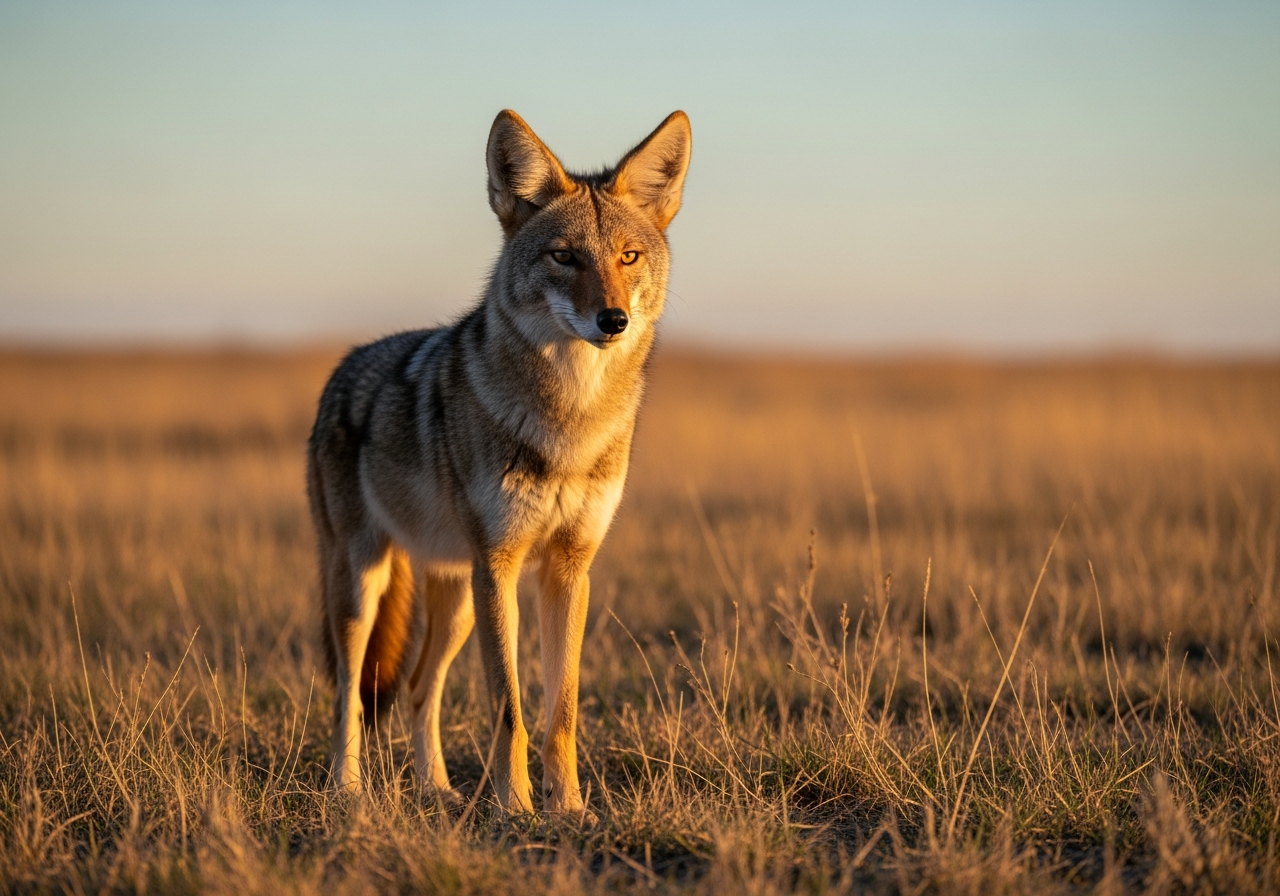
The coyote is a highly adaptable wild dog native to North America, smaller and slimmer than a wolf, with tawny-grey fur, pointed ears, and a bushy tail. Famous for its yipping, howling chorus, it thrives everywhere from deserts and prairies to the middle of large cities. Coyotes are omnivores, can run up to about 64 km/h (40 mph), and typically live around 10 years in the wild.
Coyote facts at a glance
| Scientific name | Canis latrans |
|---|---|
| Diet | Omnivore (rodents, rabbits, deer, fruit) |
| Habitat | Prairie, desert, forest, mountains, cities |
| Lifespan | Around 10 years wild (up to 14) |
| Weight | 7–20 kg (15–44 lb) |
| Top speed | 64 km/h (40 mph) |
| Conservation status | Least Concern (IUCN) |
| Kingdom | Animalia |
|---|---|
| Phylum | Chordata |
| Class | Mammalia |
| Order | Carnivora |
| Family | Canidae |
| Genus | Canis |
Where it lives
Throughout North America from Alaska and Canada across the United States and Mexico into Central America, including many cities.
What is a group of coyotes called?
Group name (collective noun)
A group of Coyotes is called a pack. It is also known as a band or a rout.
Baby name
A baby Coyote is called a pup.
Explore more animal collective nouns and baby animal names .
Adaptability and intelligence
Few large predators have adapted to human change as well as the coyote. As wolves were removed from much of North America, coyotes expanded their range across the entire continent, including into major cities such as Chicago and Los Angeles. They are intelligent and flexible, adjusting their diet, activity times, and social behaviour to local conditions — becoming more nocturnal and secretive where people are common.
Diet and hunting
Coyotes are omnivores that hunt small mammals such as mice, voles, and rabbits, but they will also take birds, reptiles, insects, carrion, and fruit, and occasionally cooperate to bring down larger prey like deer. This broad diet lets them survive almost anywhere. In urban areas they also scavenge food waste, which can draw them closer to people.
The coyote chorus
The coyote's scientific name, Canis latrans, means 'barking dog', and its vocal range is remarkable. Group yip-howls — a chorus of yips, barks, and howls — help packs and family groups stay in contact and advertise territory. The sound can make two or three coyotes seem like many more, which is why their calls are such a familiar feature of the American night.
Range and relationships
Coyotes live in family groups based around a breeding pair, defending a territory and raising pups in a den. In the east, some coyotes carry wolf and dog ancestry and are larger than their western counterparts, sometimes nicknamed 'coywolves'. Listed as Least Concern, the coyote is one of the few wild predators whose numbers and range have grown despite heavy persecution.
Frequently asked questions about the Coyote
What is a group of coyotes called?
A group of coyotes is called a pack or a band. Coyotes usually live in family groups centred on a breeding pair, and a baby coyote is called a pup.
Are coyotes dangerous to humans?
Attacks on people are very rare, as coyotes are naturally wary. The risk rises where coyotes are fed or become used to people, so they should never be approached or fed, and small pets should be supervised.
What is the difference between a coyote and a wolf?
Coyotes are smaller and slimmer than wolves, with narrower snouts and larger ears relative to the head. Wolves are much heavier, hunt larger prey in bigger packs, and have a deeper howl.
What do coyotes eat?
Coyotes are omnivores that mainly eat small mammals such as mice, voles, and rabbits, plus birds, reptiles, insects, fruit, and carrion. In cities they also scavenge food waste and occasionally take unattended pets.
Why do coyotes howl?
Coyotes howl and yip to communicate with their family group, locate one another, and advertise their territory to rival coyotes. A group chorus can make a few animals sound like many.
What is a baby coyote called?
A baby Coyote is called a pup.
Sources & references
This guide is compiled and reviewed against established zoological and conservation references. Key sources for the Coyote:
-
IUCN Red List of Threatened Species
Conservation status (Least Concern) reflects the IUCN Red List category for Canis latrans.
-
Global Animal Guide editorial standards
How we research, source, review, and update every guide for accuracy.