Image sourcing: see credits & licences
Quick answer
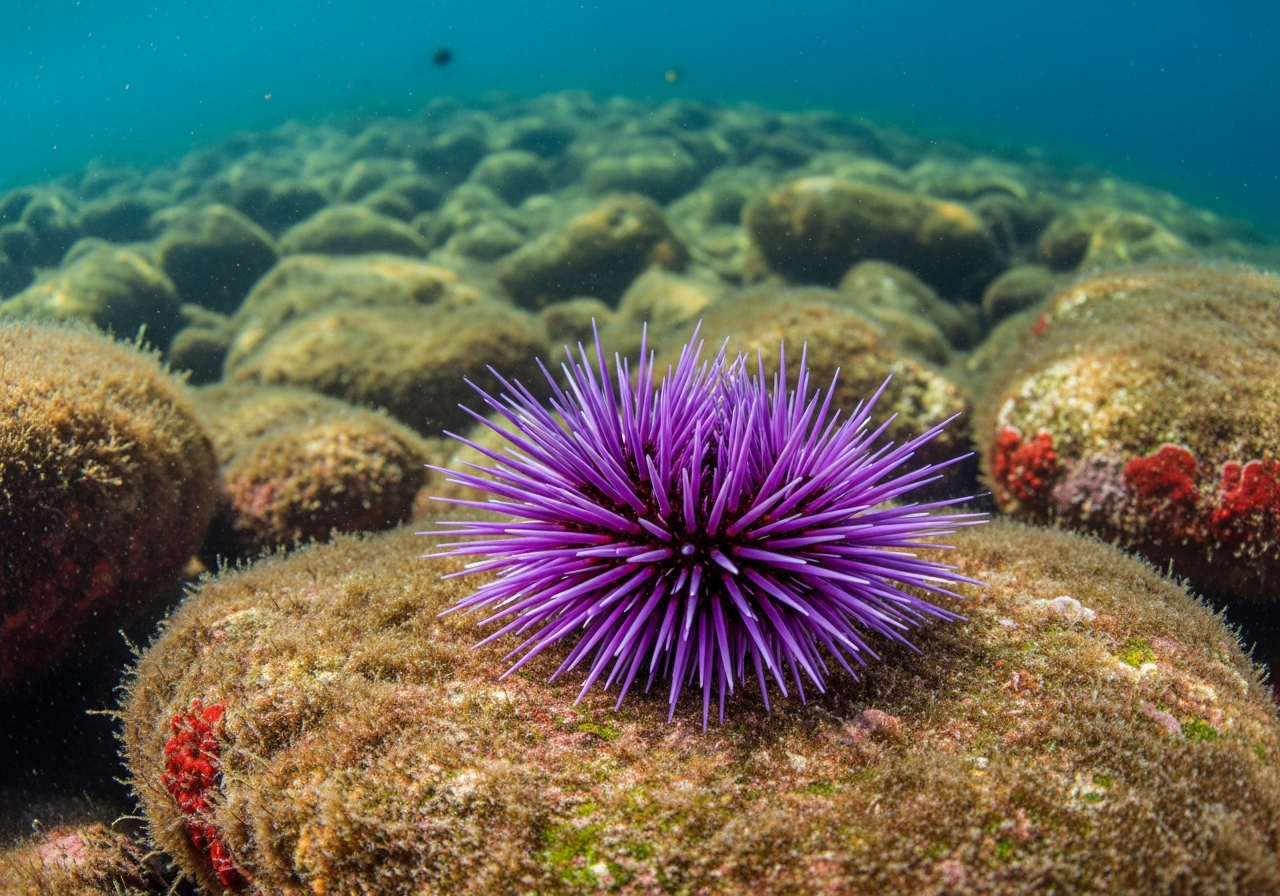
Sea urchins are round, spiny marine invertebrates related to starfish, with a hard shell called a test covered in movable spines. They graze on algae across reefs and rocky seabeds worldwide, using a five-toothed mouth on their underside known as Aristotle's lantern. Most live around 10 to 30 years, and some species are very long-lived.
Top questions about the Sea Urchin
Sea Urchin facts at a glance
- Weight 100 g
- Length 8 cm
- Top speed 0 km/h
- Lifespan 30 years
| Scientific name | Echinoidea (class) |
|---|---|
| Diet | Mostly herbivore (algae and kelp) |
| Habitat | Reefs, rocky seabeds, and kelp forests worldwide |
| Lifespan | 10–30 years (some far longer) |
| Size | Shell usually 3–10 cm (1–4 in) across |
| Top speed | Very slow; creeps on tube feet and spines |
| Conservation status | Least Concern (IUCN, most species) |
| Kingdom | Animalia |
|---|---|
| Phylum | Echinodermata |
| Class | Echinoidea |
Where it lives
The sea urchin (Echinoidea) is native to Reefs, rocky seabeds, and kelp forests of oceans worldwide, from shallows to the deep sea. — recorded across Oceans in this guide’s range summary.
For occurrence records, see GBIF species search and sources below.
How big is a sea urchin?
An adult sea urchin measures 8 cm long — about 5% of the height of an average adult person (1.73 m) — and weighs around 100 g, a small fraction of an average adult’s body weight (70 kg).
Length vs an average adult’s height (to scale)
What is a baby sea urchin called?
Baby name
A baby Sea Urchin is called a larva.
Explore more animal collective nouns and baby animal names .
Spines and shell
A sea urchin's body is a rounded shell called a test, built from fused plates and covered in movable spines. The spines provide defense against predators, help with movement, and in some species carry mild venom. Between the spines, tiny tube feet extend to grip surfaces and gather food.
Aristotle's lantern
On its underside, a sea urchin has a complex five-toothed mouth structure called Aristotle's lantern. It uses this to scrape algae and kelp from rocks and to chew tough plant material. The self-sharpening teeth can even slowly grind into rock to carve out a sheltering hollow.
Diet and ecology
Most sea urchins graze on algae and kelp, and in balanced ecosystems they help control plant growth. When their natural predators, such as sea otters, decline, urchin numbers can explode and strip kelp forests into bare 'urchin barrens.' This makes them an important species for the health of coastal habitats.
Slow life and long age
Sea urchins move slowly using tube feet and their spines, creeping across the seabed in search of food. Many live for decades, and the red sea urchin is among the longest-lived animals, with some individuals estimated to be over 100 years old. They reproduce by releasing eggs and sperm into the water.
Dig deeper into the Sea Urchin
- How Long Do Sea Urchins Live?
Sea Urchin lifespan is typically 10–30 years (some far longer). What shortens or extends life, life stages, and status (Least Concern).
- What Do Sea Urchins Eat?
What sea urchins eat: Mostly herbivore (algae and kelp), foraging style, and seasonal shifts in Reefs, rocky seabeds, and kelp forests worldwide.
- Where Do Sea Urchins Live?
Where sea urchins live: Reefs, rocky seabeds, and kelp forests worldwide, native range cues, and human overlap. Status Least Concern.
Explore the Sea Urchin
Related Invertebrates
Range & geography
Did you know? Sea Urchin facts
- Sea urchins are round, spiny marine invertebrates related to starfish, with a hard shell called a test covered in movable spines.
- Sea urchin spines can puncture skin and break off, causing pain and possible infection, and some species have mild venom. They are not aggressive, but stepping on one is a common painful injury for swimmers.
- Most sea urchins are grazers that eat algae and kelp, scraping it from rocks with a five-toothed mouth called Aristotle's lantern. Some also eat small bits of animal matter.
- Many sea urchins live 10 to 30 years, but some are far older. The red sea urchin is among the longest-lived animals, with some individuals estimated at over 100 years.
- Yes. Sea urchins and starfish are both echinoderms, a group of spiny-skinned marine invertebrates that also includes sand dollars and sea cucumbers.
- Conservation: Least Concern (IUCN, most species).
Diet & feeding
Sea Urchin feeds primarily as a mostly herbivore (algae and kelp). Most sea urchins graze on algae and kelp, and in balanced ecosystems they help control plant growth. When their natural predators, such as sea otters, decline, urchin numbers can explode and strip kelp forests into bare 'urchin barrens.' This makes them
Adaptations
- A sea urchin's body is a rounded shell called a test, built from fused plates and covered in movable spines. The spines provide defense against predators, help with movement, and in some species carry mild venom. Between the spines, tiny tube feet extend to grip surfaces and gather food.
- On its underside, a sea urchin has a complex five-toothed mouth structure called Aristotle's lantern. It uses this to scrape algae and kelp from rocks and to chew tough plant material. The self-sharpening teeth can even slowly grind into rock to carve out a sheltering hollow.
Behaviour & ecology
- A sea urchin's body is a rounded shell called a test, built from fused plates and covered in movable spines. The spines provide defense against predators, help with movement, and in some species carry mild venom. Between the spines, tiny tube feet extend to grip surfaces and gather food.
- On its underside, a sea urchin has a complex five-toothed mouth structure called Aristotle's lantern. It uses this to scrape algae and kelp from rocks and to chew tough plant material. The self-sharpening teeth can even slowly grind into rock to carve out a sheltering hollow.
- Most sea urchins graze on algae and kelp, and in balanced ecosystems they help control plant growth. When their natural predators, such as sea otters, decline, urchin numbers can explode and strip kelp forests into bare 'urchin barrens.' This makes them an important species for the health of coastal habitats.
Communication
- Sea Urchin uses scent, posture, and vocal signals to mark territory and coordinate social behaviour.
- Communication intensity often peaks during breeding seasons and territorial disputes.
Habitat & range
Reefs, rocky seabeds, and kelp forests worldwide
Ecological role
Sea Urchin shapes vegetation through grazing or browsing and serves as prey for larger predators where ranges overlap.
Conservation status of the Sea Urchin
The sea urchin (Echinoidea) is listed as Least Concern on the IUCN Red List. Least Concern (LC) is the IUCN's lowest-risk category, assigned to widespread, abundant species that have been evaluated and found not to be threatened. It does not mean a species faces no pressures — only that it is not currently at risk of extinction.
The sea urchin (Echinoidea) is assessed on the IUCN Red List. Look up on the IUCN Red List .
Frequently asked questions about the Sea Urchin
Are sea urchins dangerous?
Sea urchin spines can puncture skin and break off, causing pain and possible infection, and some species have mild venom. They are not aggressive, but stepping on one is a common painful injury for swimmers.
What do sea urchins eat?
Most sea urchins are grazers that eat algae and kelp, scraping it from rocks with a five-toothed mouth called Aristotle's lantern. Some also eat small bits of animal matter.
How long do sea urchins live?
Many sea urchins live 10 to 30 years, but some are far older. The red sea urchin is among the longest-lived animals, with some individuals estimated at over 100 years.
Are sea urchins related to starfish?
Yes. Sea urchins and starfish are both echinoderms, a group of spiny-skinned marine invertebrates that also includes sand dollars and sea cucumbers.
Why are urchin barrens a problem?
When predators like sea otters decline, sea urchin numbers can surge and overgraze kelp, turning lush kelp forests into bare 'urchin barrens.' This damages habitat for many other marine species.
What is a baby sea urchin called?
A baby Sea Urchin is called a larva.
Sources & references
This guide is compiled and reviewed against established zoological and conservation references. Key sources for the Sea Urchin:
-
IUCN Red List of Threatened Species
Conservation status (Least Concern) reflects the IUCN Red List category for Echinoidea.
-
iNaturalist — observations & photos
Search citizen-science observations and community IDs for Echinoidea. Useful for range checks and recent sightings — not a substitute for formal Red List status.
-
GBIF — occurrence data
Global Biodiversity Information Facility species search for Echinoidea. Explore published occurrence records used in range research.
- IUCN Red List — Echinoidea.
Conservation status (Least Concern) and population trends.
- Wikipedia — Sea Urchin.
General taxonomy and overview (cross-check primary sources).
-
Global Animal Guide editorial standards
How we research, source, review, and update every guide for accuracy.