Lion
Panthera leo
Quick answer
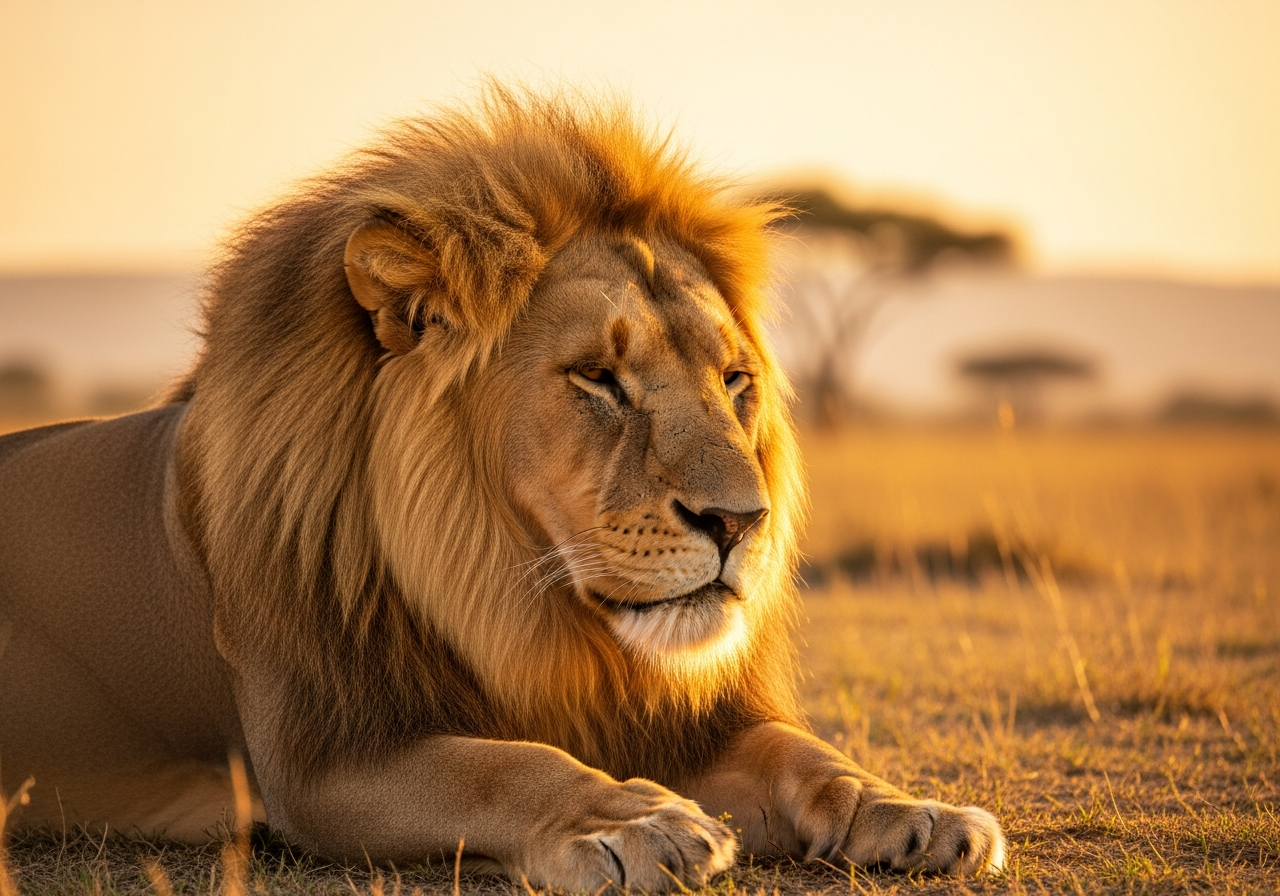
Lions are large social cats native to sub-Saharan Africa, with a small population in India's Gir Forest. They live in groups called prides, can weigh up to 250 kg (550 lb), and are the only cats that hunt cooperatively. Wild lions typically live 10 to 14 years.
Lion facts at a glance
| Scientific name | Panthera leo |
|---|---|
| Diet | Carnivore |
| Habitat | Savanna, grassland, open woodland |
| Lifespan | 10–14 years in the wild |
| Weight | 120–250 kg (260–550 lb) |
| Top speed | 80 km/h (50 mph) in short bursts |
| Conservation status | Vulnerable (IUCN) |
| Kingdom | Animalia |
|---|---|
| Phylum | Chordata |
| Class | Mammalia |
| Order | Carnivora |
| Family | Felidae |
| Genus | Panthera |
Diet and hunting
As apex predators, lions hunt large herbivores such as zebra, wildebeest, buffalo, and antelope. They are the only cats that hunt as a coordinated team, using teamwork to surround and ambush prey. A single lion can eat up to 40 kg (88 lb) of meat in one sitting.
Habitat and range
Most wild lions live in sub-Saharan Africa across savannas, grasslands, and open woodlands. A separate, critically small population of Asiatic lions survives only in India's Gir Forest National Park. Lions avoid dense rainforest and true desert.
Conservation
Lion numbers have fallen by roughly half over the past 25 years, driven by habitat loss, conflict with livestock farmers, and declining prey. They are listed as Vulnerable by the IUCN, and the Asiatic subspecies is Endangered. Protected reserves and community conservation programs are central to their survival.
Frequently asked questions about the Lion
How long do lions live?
Wild lions live about 10 to 14 years. Females tend to live longer than males, who often die earlier due to injuries from territorial fights. In captivity, lions can reach 20 years or more.
What do lions eat?
Lions are carnivores that eat large hoofed mammals such as zebra, wildebeest, antelope, and buffalo. They hunt cooperatively in prides and can consume up to 40 kg of meat in a single meal.
How fast can a lion run?
A lion can sprint up to 80 km/h (50 mph), but only over short distances. They rely on stealth and ambush rather than sustained chases because they tire quickly.
Are lions endangered?
Lions are classified as Vulnerable by the IUCN, meaning they face a high risk of extinction in the wild. The Asiatic lion population in India is Endangered, with only a few hundred individuals remaining.
Why do male lions have manes?
A male lion's mane signals age, health, and dominance to rivals and potential mates. Darker, fuller manes are linked to higher testosterone and tend to attract more females and intimidate competing males.
Do lions live in groups?
Yes. Lions are the only big cats that live in social groups called prides, which typically include several related females, their cubs, and a coalition of one to four adult males.