Image sourcing: see credits & licences
Quick answer
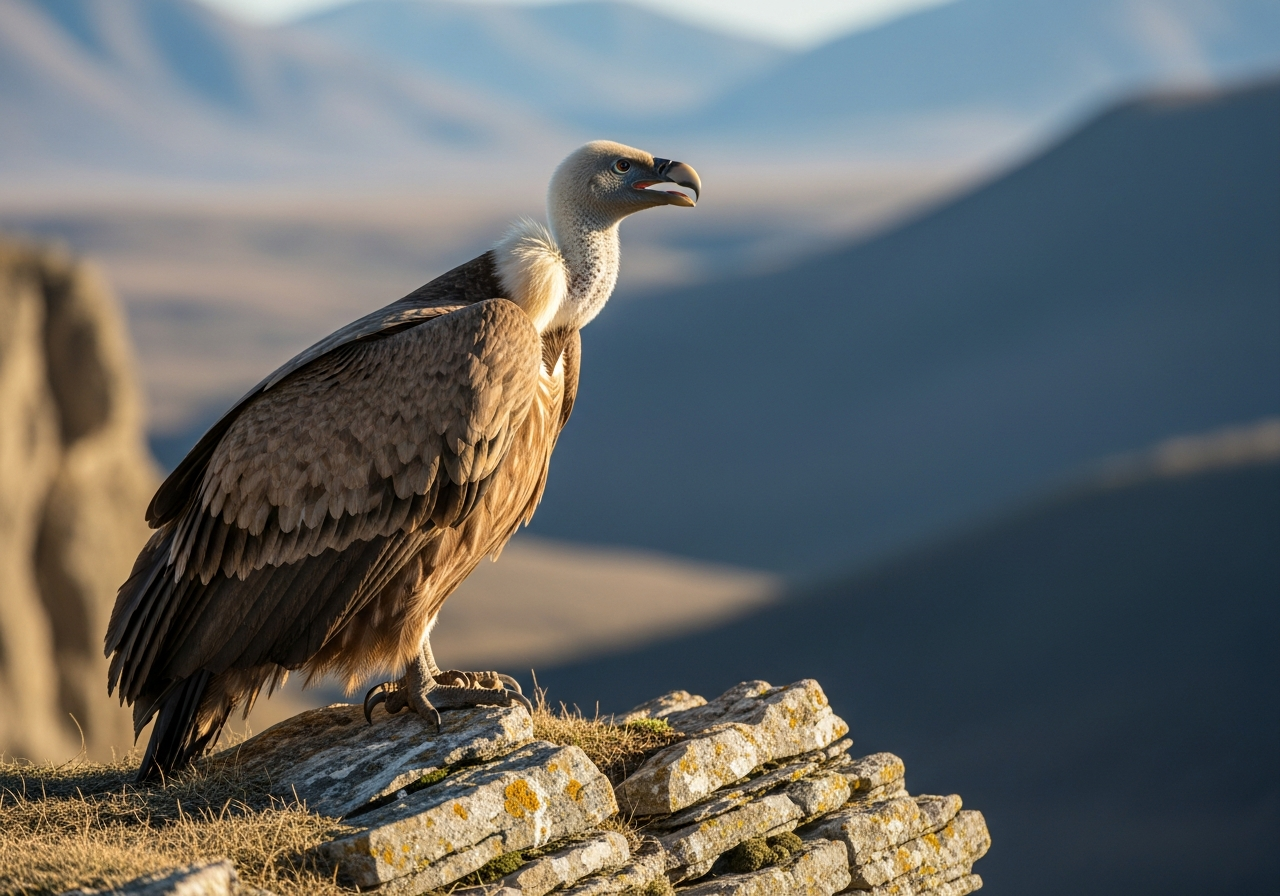
A vulture is a large bird of prey that feeds mainly on carrion, soaring for hours on broad wings to find carcasses. Its often bald head stays cleaner while feeding. Vultures provide a vital sanitation service, can live 20 to 30 years, and several species are now Critically Endangered.
Top questions about the Vulture
Vulture facts at a glance
- Weight 8 kg
- Length 1 m
- Top speed 55 km/h
- Lifespan 25 years
| Scientific name | Gyps fulvus (griffon vulture) |
|---|---|
| Diet | Scavenger (carrion) |
| Habitat | Mountains, plains, and open country |
| Lifespan | 20–30 years |
| Weight | 2–11 kg (4.4–24 lb), varies by species |
| Top speed | Soars for hours; can dive faster |
| Conservation status | Varies by species; several Critically Endangered |
| Kingdom | Animalia |
|---|---|
| Phylum | Chordata |
| Class | Aves |
| Order | Accipitriformes |
| Family | Accipitridae |
Where it lives
The vulture (Gyps fulvus) is native to Mountains, plains, and open country across Africa, southern Europe, and Asia (Old World vultures). — recorded across Africa, Asia, Europe in this guide’s range summary.
For occurrence records, see GBIF species search and sources below.
How big is a vulture?
An adult vulture measures 1 m long — about 58% of the height of an average adult person (1.73 m) — and weighs around 8.0 kg, about 11% of an average adult’s body weight (70 kg).
Length vs an average adult’s height (to scale)
What is a group of vultures called?
Group name (collective noun)
A group of Vultures is called a committee. It is also known as a kettle or a wake.
Baby name
A baby Vulture is called a chick.
Explore more animal collective nouns and baby animal names .
Masters of soaring
Vultures are built to cover huge distances with almost no effort, riding rising columns of warm air called thermals on long, broad wings. From great height they scan the ground, and Old World vultures rely mainly on sharp eyesight to spot carcasses or the activity of other scavengers.
Why the bald head
Many vultures have bare heads and necks. Feeding inside a carcass is messy, and bare skin is easier to keep clean and free of bacteria, while also helping the bird control its temperature. Powerful stomach acid lets vultures safely digest meat that would sicken other animals.
Nature's sanitation service
By quickly consuming dead animals, vultures stop the spread of diseases such as rabies and anthrax and recycle nutrients back into the ecosystem. Where vultures have vanished, rotting carcasses and booming populations of feral dogs and rats have followed, harming public health.
A conservation crisis
Several vulture species have suffered some of the steepest declines of any birds. In South Asia, the veterinary drug diclofenac in livestock carcasses poisoned vultures and crashed their numbers, and poisoning remains a major threat in Africa. Many species are now Endangered or Critically Endangered.
Dig deeper into the Vulture
- Are Vulture Endangered
Dig deeper into vulture — are vulture endangered.
- How Long do Vulture Live?
Dig deeper into vulture — how long do vulture live.
- What do Vulture Eat
Dig deeper into vulture — what do vulture eat.
- Where do Vulture Live?
Dig deeper into vulture — where do vulture live.
Explore the Vulture
Related Birds
Collections
Range & geography
Did you know? Vulture facts
- A vulture is a large bird of prey that feeds mainly on carrion, soaring for hours on broad wings to find carcasses.
- Vultures are scavengers that feed mainly on carrion, the bodies of dead animals. Their strong stomach acid lets them safely digest meat full of bacteria.
- A bald head and neck stay cleaner when a vulture feeds inside a carcass and help the bird regulate its body temperature.
- It varies by species. Several, especially in South Asia and Africa, are Critically Endangered after poisoning and the veterinary drug diclofenac caused massive declines.
- Vultures clean up dead animals quickly, which limits the spread of diseases like rabies and anthrax and recycles nutrients in the environment.
- Conservation: Varies by species; several Critically Endangered.
Diet & feeding
Vulture feeds primarily as a scavenger (carrion). Vultures are built to cover huge distances with almost no effort, riding rising columns of warm air called thermals on long, broad wings. From great height they scan the ground, and Old World vultures rely mainly on sharp eyesight to spot carcasses or the activity of ot
Adaptations
- Vultures are built to cover huge distances with almost no effort, riding rising columns of warm air called thermals on long, broad wings. From great height they scan the ground, and Old World vultures rely mainly on sharp eyesight to spot carcasses or the activity of other scavengers.
- Many vultures have bare heads and necks. Feeding inside a carcass is messy, and bare skin is easier to keep clean and free of bacteria, while also helping the bird control its temperature. Powerful stomach acid lets vultures safely digest meat that would sicken other animals.
Behaviour & ecology
- Vultures are built to cover huge distances with almost no effort, riding rising columns of warm air called thermals on long, broad wings. From great height they scan the ground, and Old World vultures rely mainly on sharp eyesight to spot carcasses or the activity of other scavengers.
- Many vultures have bare heads and necks. Feeding inside a carcass is messy, and bare skin is easier to keep clean and free of bacteria, while also helping the bird control its temperature. Powerful stomach acid lets vultures safely digest meat that would sicken other animals.
- By quickly consuming dead animals, vultures stop the spread of diseases such as rabies and anthrax and recycle nutrients back into the ecosystem. Where vultures have vanished, rotting carcasses and booming populations of feral dogs and rats have followed, harming public health.
Communication
- Vulture uses calls and visual displays to communicate territory, alarm, and breeding status.
- Vocal repertoires vary by species and are often learned or refined during development.
Habitat & range
Mountains, plains, and open country
Ecological role
Vulture contributes to seed dispersal, insect control, or nutrient cycling depending on diet and foraging habits.
Conservation status of the Vulture
The vulture (Gyps fulvus) is listed as Endangered on the IUCN Red List. Endangered (EN) means a species faces a very high risk of extinction in the wild. Populations are usually declining sharply due to habitat loss, hunting, disease, or climate pressure. It sits one level below Critically Endangered on the IUCN Red List.
The vulture (Gyps fulvus) is assessed on the IUCN Red List. Look up on the IUCN Red List .
Frequently asked questions about the Vulture
What do vultures eat?
Vultures are scavengers that feed mainly on carrion, the bodies of dead animals. Their strong stomach acid lets them safely digest meat full of bacteria.
Why do vultures have bald heads?
A bald head and neck stay cleaner when a vulture feeds inside a carcass and help the bird regulate its body temperature.
Are vultures endangered?
It varies by species. Several, especially in South Asia and Africa, are Critically Endangered after poisoning and the veterinary drug diclofenac caused massive declines.
Why are vultures important?
Vultures clean up dead animals quickly, which limits the spread of diseases like rabies and anthrax and recycles nutrients in the environment.
How do vultures find food?
Old World vultures soar to great heights and use keen eyesight to spot carcasses and the movements of other scavengers below.
What is a group of vultures called?
A group of Vultures is called a committee. It is also known as a kettle or a wake.
What is a baby vulture called?
A baby Vulture is called a chick.
Sources & references
This guide is compiled and reviewed against established zoological and conservation references. Key sources for the Vulture:
-
IUCN Red List of Threatened Species
Conservation status (Endangered) reflects the IUCN Red List category for Gyps fulvus.
-
iNaturalist — observations & photos
Search citizen-science observations and community IDs for Gyps fulvus. Useful for range checks and recent sightings — not a substitute for formal Red List status.
-
GBIF — occurrence data
Global Biodiversity Information Facility species search for Gyps fulvus. Explore published occurrence records used in range research.
-
eBird — bird observations
Cornell Lab eBird target search for Vulture. Check recent checklists and seasonal abundance where birders report this species.
- IUCN Red List — Gyps fulvus.
Conservation status (Endangered) and population trends.
- Animal Diversity Web — Gyps fulvus. University of Michigan Museum of Zoology.
Life history, morphology, and range.
- Wikipedia — Vulture.
General taxonomy and overview (cross-check primary sources).
-
Global Animal Guide editorial standards
How we research, source, review, and update every guide for accuracy.