Carnivore vs Herbivore vs Omnivore Explained
Carnivores eat mostly animals, herbivores mostly plants, omnivores both. Teeth, guts, and examples from lions to elephants to bears — plus messy real-world exceptions.
Global Animal Guide · July 16, 2026
Quick answer
A carnivore’s diet is mostly other animals, a herbivore’s mostly plants, and an omnivore’s a mix of both. Teeth, jaw muscles, and gut length often match the diet — but many “carnivores” nibble plants and many herbivores eat the occasional insect or bone.
Last updated: July 2026.
The three labels describe what an animal usually eats: carnivores live mostly on other animals, herbivores mostly on plants, omnivores on a working mixture of both. The categories are genuinely useful, because diet leaves fingerprints on teeth, jaws, guts, and behaviour that you can read off an animal without ever watching it feed. They are also leakier than school biology suggests — and the leaks are where the interesting biology lives.
Quick comparison
| Diet type | Usual food | Body clues | Examples |
|---|---|---|---|
| Carnivore | Animals | Sharp canines, shorter gut | Lion, saltwater crocodile |
| Herbivore | Plants | Flat molars, long gut | Elephant, giant panda |
| Omnivore | Mix | Mixed teeth | Grizzly bear, red fox, pigs |
Why meat is easy and plants are hard
The whole subject turns on one asymmetry: animal tissue is chemically similar to the body eating it, and plant tissue is not. Muscle is protein and fat, already close to what a predator needs, and it digests quickly with ordinary enzymes. A lion can convert a meal into usable energy within hours and be done.
Plants defend themselves instead. Their cells are walled in cellulose, and no vertebrate makes an enzyme that breaks cellulose down. Leaves are also laced with tannins, alkaloids, silica, and latex — deterrents that a herbivore must either detoxify or tolerate. And the energy return per mouthful is poor. Grass is a low-grade fuel wrapped in armour.
This single fact drives almost everything downstream. A predator’s problem is catching the meal; a plant-eater’s problem is processing it. Their bodies solve different problems, and the solutions look nothing alike.
Reading the teeth and the jaw
Carnivores keep long canines for gripping and killing, and behind them the carnassials — a paired blade in the upper and lower jaw that scissors past itself like shears, slicing meat rather than grinding it. The jaw joint is a simple hinge that moves up and down only, which is exactly what you want for a powerful bite and exactly wrong for chewing. The jaw muscles sit forward for force. Watch a saltwater crocodile or a gray wolf feed and you will see swallowing, not mastication.
Herbivores went the other way. Their molars are broad, ridged grinding plates, and their jaw joints allow sideways and fore-aft movement so the surfaces can mill against each other. Grazers face a further problem: grass carries abrasive silica that wears teeth down, so many have evolved high-crowned teeth that keep erupting through life, or in rodents teeth that grow continuously. Front teeth become clippers — a zebra crops with incisors, a giraffe strips leaves with tongue and lips.
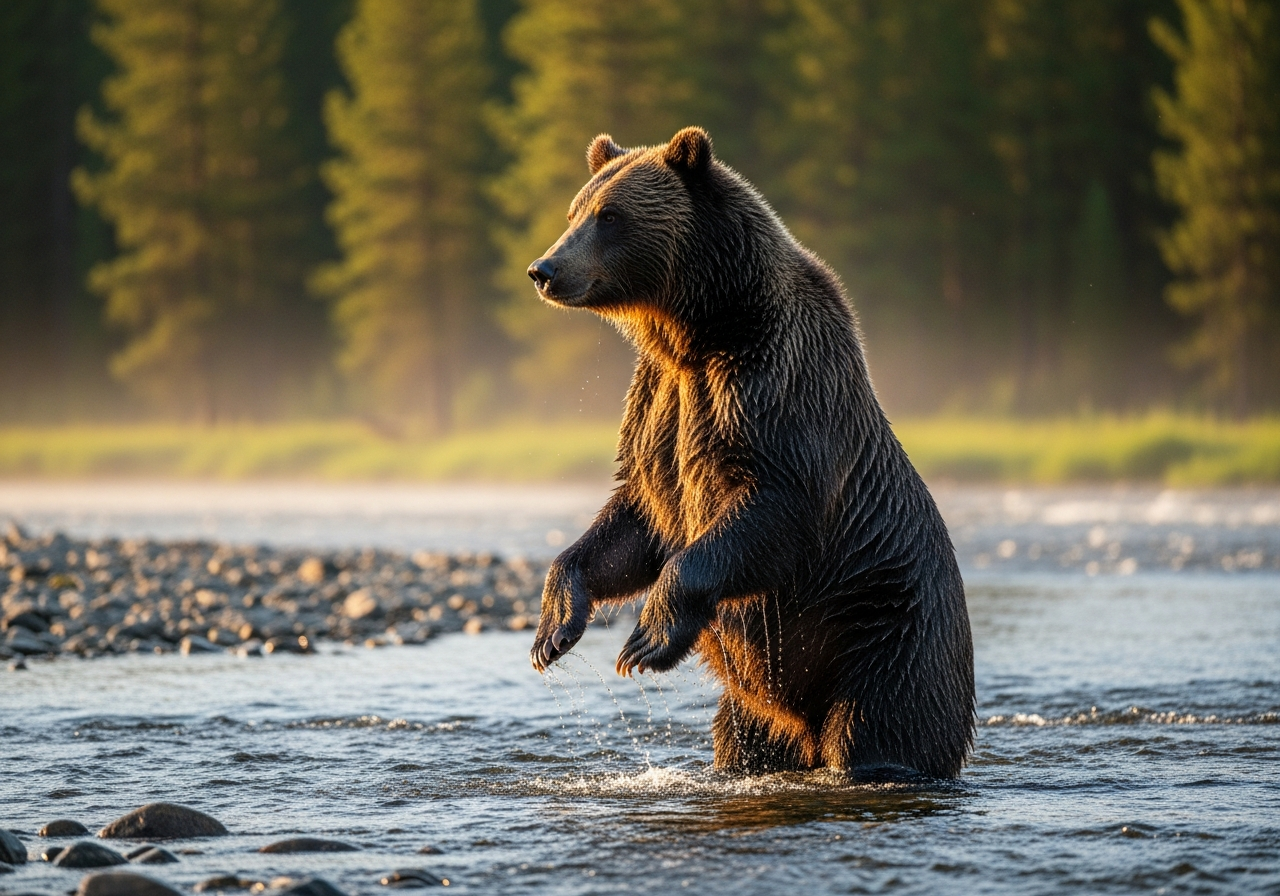
Omnivores keep the whole toolkit and specialise in none of it. A grizzly bear has a carnivore’s canines and flattened, bumpy molars for crushing berries and roots. Human teeth follow the same compromise, which is why the fossil dentition of our ancestors is legible as an omnivore’s.
The gut is where the real work happens
Gut length tracks diet more reliably than teeth do. Carnivores run short, simple digestive tracts — high-quality food does not need a long residence time. Herbivores run long, capacious, chambered ones, because they are not really digesting plants themselves at all. They are farming microbes that do it for them.
Two designs dominate. Foregut fermenters — cattle, deer, and other ruminants — hold food in a fermentation vat before the true stomach, then regurgitate and re-chew the cud. Microbes break cellulose into fatty acids the animal absorbs, and the animal later digests the microbes themselves for protein. It is slow and thorough, and it lets a cow extract nutrition from material that would pass straight through a dog.
Hindgut fermenters — the horse, the elephant, the rabbit — ferment after the small intestine, in an enlarged caecum and colon. Extraction is less complete, but throughput is faster, so a horse compensates by simply eating more, for more hours. Rabbits patch the shortfall by producing soft caecal pellets and eating them, running the food through twice.
The exceptions that break the labels
Obligate carnivores. The cat is not merely a carnivore by preference; it has lost the biochemistry to be anything else. Cats cannot synthesise enough taurine or make vitamin A from plant carotene, so a genuinely meat-free cat goes blind and develops heart failure. Contrast the dog, which sits in the same order but carries extra copies of the gene for starch digestion — a legacy of living alongside farmers — and is functionally an omnivore.
Carnivores that eat plants. The order Carnivora is a family tree, not a diet. The giant panda belongs to it, retains a carnivore’s short, simple gut, and eats bamboo almost exclusively — which it manages only by eating for most of the day and digesting a modest fraction of it. The red panda does much the same independently. The red fox takes fruit in season without apology.
Herbivores that eat animals. Deer chew shed antlers and bones for phosphorus and calcium. Red deer and sheep on mineral-poor islands have been recorded taking seabird chicks. Hippopotamuses, fiercely committed grazers, have been documented scavenging carrion. Cattle swallow insects in fodder constantly and nobody counts it.
Specialists within specialists. An insectivore such as the aardvark or most bats is technically a carnivore, but the label is nearly useless — the toolkit for eating termites shares almost nothing with the toolkit for killing antelope. Nectar feeders, blood feeders like the vampire bat, and detritivores all sit awkwardly in a three-box scheme.
So how do we know what an animal really eats?
Watching is the obvious method and the least reliable, because it catches only what happens in front of you. Modern diet studies lean on stomach and scat contents, stable isotope ratios in hair and bone that record months of feeding, DNA metabarcoding of faeces, and microscopic wear patterns on tooth enamel that reveal whether an animal was browsing soft leaves or grazing gritty grass.
What these methods keep showing is flexibility. Diets shift with season, age, region, and what the neighbours are eating. The three categories are best treated as descriptions of a typical diet and the body built to handle it — not as a rule the animal is obliged to obey.
Browse by diet
Related reading
Sources
Frequently asked questions
Is a bear a carnivore?
Most bears are omnivores. Polar bears eat mostly meat; others eat large amounts of plants, insects, and fish depending on season.
Are humans omnivores?
Yes — human teeth and digestive systems handle both plant and animal foods.
What's an insectivore?
An animal specialised on insects and other invertebrates — a type of carnivore (or faunivore) such as aardvarks and many bats.
Do herbivores ever eat meat?
Occasionally — deer may chew bones for minerals; some “herbivores” eat nestling birds. Labels describe the usual diet.