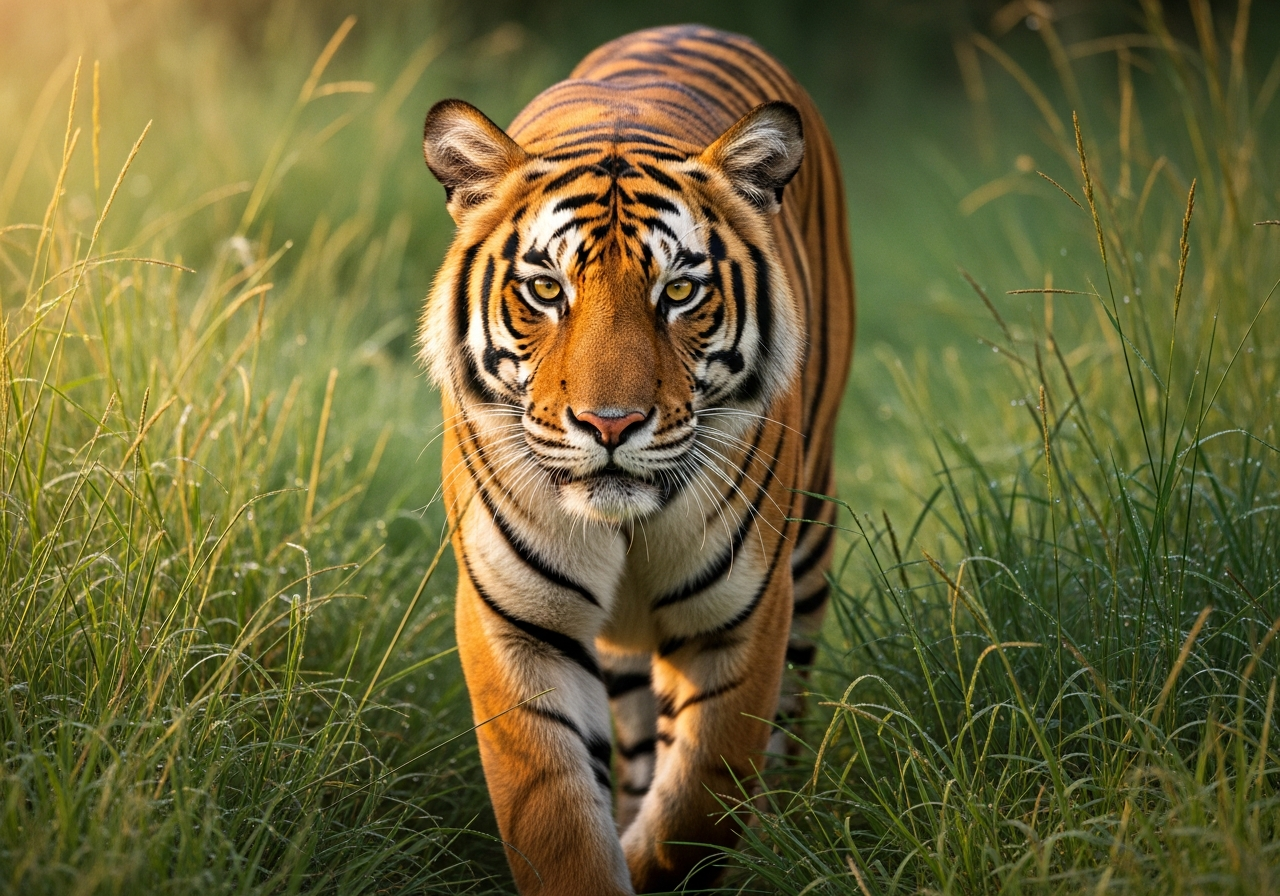
Tiger
Panthera tigris
Quick answer
Tigers are the largest living cat species, reaching up to 300 kg (660 lb). They are solitary, primarily nocturnal hunters native to Asia, from Siberian forests to tropical mangroves. Every tiger's stripe pattern is unique, like a human fingerprint. Wild tigers live around 10 to 15 years.
Also available in Español (Tigre)
Tiger facts at a glance
| Scientific name | Panthera tigris |
|---|---|
| Diet | Carnivore |
| Habitat | Forest, grassland, mangrove swamp |
| Lifespan | 10–15 years in the wild |
| Weight | 90–300 kg (200–660 lb) |
| Top speed | 65 km/h (40 mph) |
| Conservation status | Endangered (IUCN) |
| Kingdom | Animalia |
|---|---|
| Phylum | Chordata |
| Class | Mammalia |
| Order | Carnivora |
| Family | Felidae |
| Genus | Panthera |
Where it lives
Forests, grasslands, and mangroves across Asia, from the Russian Far East to Sumatra.
What is a group of tigers called?
Group name (collective noun)
A group of Tigers is called a streak. It is also known as an ambush.
Baby name
A baby Tiger is called a cub.
Explore more animal collective nouns and baby animal names .
Behavior
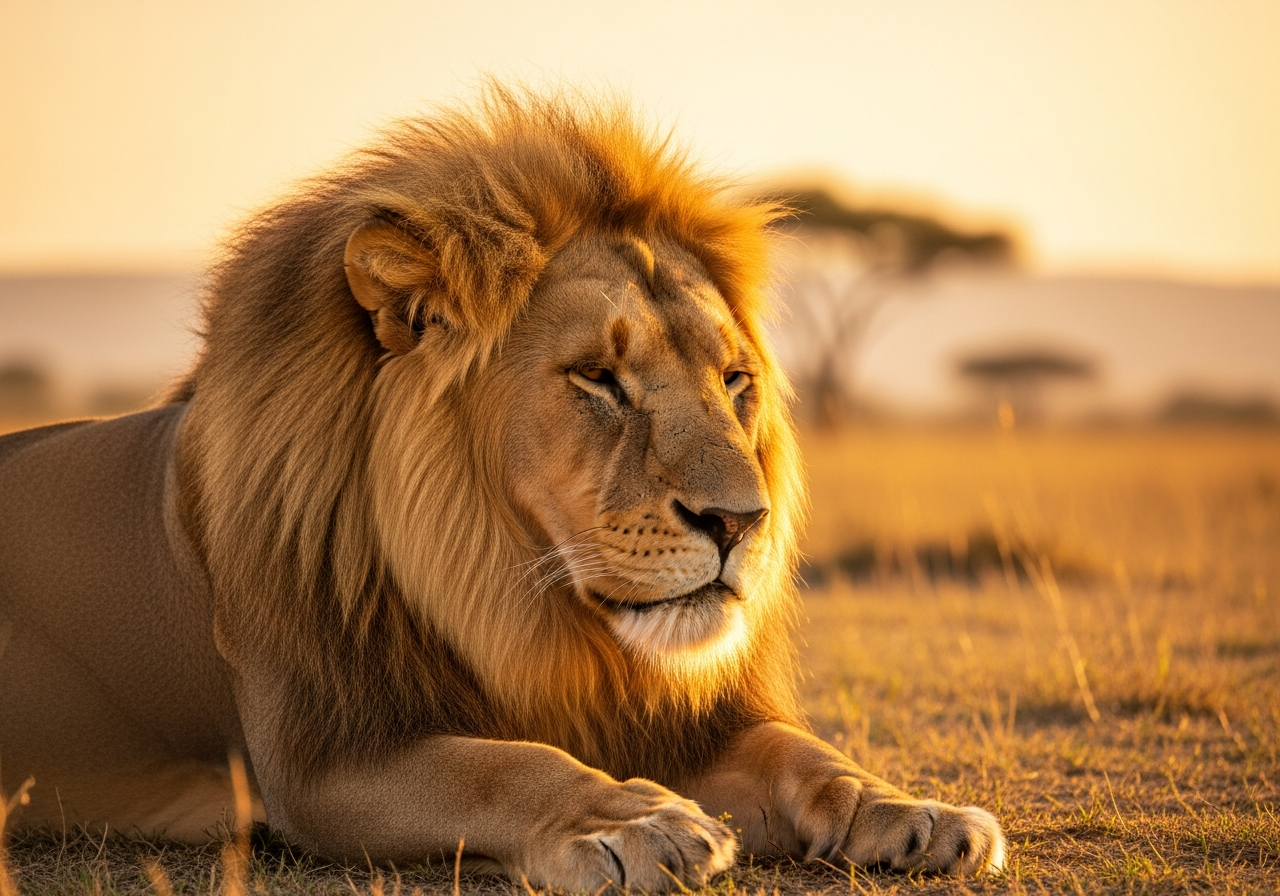
Unlike lions, tigers are solitary and territorial, coming together only to mate. They are powerful swimmers and, unusually for cats, enjoy water, often cooling off in rivers and lakes. Tigers communicate through scent marks, scratch marks, and vocalizations that can carry for kilometers.
Diet and hunting
Tigers are ambush predators that hunt deer, wild boar, and other large mammals. They stalk silently and use their immense strength to overpower prey, often dragging carcasses far heavier than themselves to cover. A tiger may eat up to 35 kg (77 lb) of meat in one night.
Habitat and range
Tigers once roamed across much of Asia. Today they survive in scattered populations from the snowy forests of the Russian Far East to the mangroves of the Sundarbans and the tropical forests of India and Southeast Asia.
Conservation
Wild tiger numbers crashed in the 20th century due to poaching and habitat loss, with as few as 3,200 remaining around 2010. Intensive conservation has since helped numbers begin to recover in some countries, but tigers remain Endangered.
Subspecies and size
The tiger is the largest living cat. Surviving subspecies include the Bengal, Siberian (Amur), Sumatran, Indochinese, Malayan, and South China tiger. The Siberian tiger is the biggest, with large males exceeding 300 kg (660 lb), while island-dwelling Sumatran tigers are the smallest.
Hunting and territory
Unlike lions, tigers are solitary and ambush prey alone, relying on their stripes for camouflage in tall grass and forest. Each tiger defends a large territory marked with scent and scratch marks, and a single adult may range over dozens of square kilometers in search of deer, wild boar, and other large prey.
Dig deeper into the Tiger
- Are Tigers Endangered?
IUCN Endangered status, threats, and recovery bright spots.
- Are Tigers Endangered
Alternate URL — same Endangered status explained.
- Bengal Tiger Facts
India’s most numerous subspecies overview.
- How Fast Is a Tiger?
Ambush bursts about 49–65 km/h — not cheetah speed.
- How Long Do Tigers Live?
Wild vs captive lifespan and mortality factors.
- How Many Tigers Are Left?
Global wild estimates and why counts vary.
- Siberian Tiger
Amur tiger ecology in the Russian Far East.
- Tiger Cubs Life
Cub development and survival challenges.
- Tiger Hunting Strategy
Solitary stalk, rush, and killing bite.
- What Do Tigers Eat?
Deer, wild boar, and regional prey lists.
- Where Do Tigers Live?
Asian range countries and habitat types.
- Where do Tigers Live?
Alternate URL — remaining wild range map.
- White Tiger Myths
Colour morph myths vs wild conservation.
- Why Do Tigers Have Stripes?
Disruptive camouflage and unique patterns.
Explore the Tiger
Related Mammals
Collections
Range & geography
Did you know? Tiger facts
- The tiger is the largest living cat, with big Siberian males exceeding 300 kg.
- No two tigers share the same stripe pattern — it is as individual as a fingerprint.
- A tiger's roar can carry up to 3 km and is used to advertise territory.
- Tigers are strong swimmers and often cool off in water, unlike most cats.
- Wild tiger numbers fell to around 3,200 by 2010 before recovering in some countries.
- Tigers hunt mostly by ambush, killing with a bite to the throat or nape.
Diet & feeding
Tigers prey chiefly on large ungulates such as deer (sambar, chital) and wild boar, occasionally taking larger prey like gaur; an adult can eat tens of kilograms in a sitting and may kill once a week.
Adaptations
- Striped camouflage breaks up the body outline in tall grass and dappled forest light. (Nowak 1999)
- Powerful forelimbs and retractable claws pull down prey far larger than the tiger itself.
- Padded paws and flexible spine allow a near-silent stalk before an explosive charge.
- Night vision roughly six times better than a human's supports nocturnal hunting.
Behaviour & ecology
- Tigers are solitary and territorial, with males holding ranges that overlap several females.
- They scent-mark and scrape boundaries to space themselves out and avoid conflict.
- Cubs stay with their mother for about two years, learning to hunt before dispersing.
- A tiger may drag a large kill to cover and return to feed over several days.
Communication
- Roars and moans advertise presence and reproductive state over long distances.
- Scent-marking with sprayed urine and scrapes signals territory ownership.
- Facial expressions and the 'prusten' chuff are used in close, friendly contact.
Habitat & range
Tigers occupy a range of habitats from Siberian boreal forest to tropical mangrove and rainforest across Asia, needing dense cover, water, and abundant large prey; their range is now fragmented into a fraction of its historical extent.
Ecological role
As the apex predator across Asian forests, the tiger regulates populations of deer and wild pigs and serves as an umbrella species whose protection conserves entire ecosystems.
Conservation status of the Tiger
Endangered (EN) means a species faces a very high risk of extinction in the wild. Populations are usually declining sharply due to habitat loss, hunting, disease, or climate pressure. It sits one level below Critically Endangered on the IUCN Red List.
Main threats to the tiger
- Poaching for the illegal wildlife trade
- Habitat loss and fragmentation
- Prey depletion
- Human–wildlife conflict
Tiger (Panthera tigris) was most recently assessed for the IUCN Red List in 2022. View the full IUCN assessment .
Frequently asked questions about the Tiger
Are tigers endangered?
Yes. Tigers are listed as Endangered by the IUCN, with only a few thousand left in the wild, and the South China tiger may already be extinct in the wild.
Can tigers swim?
Yes. Unlike most cats, tigers are strong swimmers that readily enter water to cool off or cross rivers, and they will even pursue prey into the water.
Are tigers the biggest cats in the world?
Yes. Tigers are the largest of all living cat species. The Siberian (Amur) tiger is the biggest subspecies, with males weighing up to about 300 kg (660 lb).
What do tigers eat?
Tigers are carnivores that mainly hunt large prey such as deer and wild boar. They are ambush hunters and can eat up to 35 kg of meat in a single feeding.
Why do tigers have stripes?
A tiger's stripes provide camouflage in tall grass and dappled forest light, helping it stalk prey unseen. Each tiger's stripe pattern is unique, and the markings are also present on its skin.
How many tigers are left in the wild?
Recent estimates put the wild tiger population at roughly 4,500 individuals. Numbers have begun to recover in some countries thanks to anti-poaching efforts and habitat protection, but tigers remain Endangered.
How long do tigers live?
Wild tigers typically live 10 to 15 years, while tigers in captivity can live up to 20 to 25 years with veterinary care and a steady food supply.
What is a group of tigers called?
A group of Tigers is called a streak. It is also known as an ambush.
What is a baby tiger called?
A baby Tiger is called a cub.
Sources & references
This guide is compiled and reviewed against established zoological and conservation references. Key sources for the Tiger:
-
IUCN Red List of Threatened Species
Conservation status (Endangered) reflects the IUCN Red List category for Panthera tigris, most recently assessed in 2022.
- Goodrich, J. et al. (2022). Panthera tigris. IUCN Red List of Threatened Species.
Conservation status (Endangered) and population trend.
- Mazák, V. (1981). Panthera tigris. Mammalian Species, American Society of Mammalogists.
Morphology and subspecies.
- Nowak, R. M. (1999). Walker's Mammals of the World (6th ed.). Johns Hopkins University Press.
Measurements and biology.
-
Global Animal Guide editorial standards
How we research, source, review, and update every guide for accuracy.
Want to help directly? Learn how to symbolically adopt a tiger and support its conservation.