Aardvark
Orycteropus afer
Quick answer
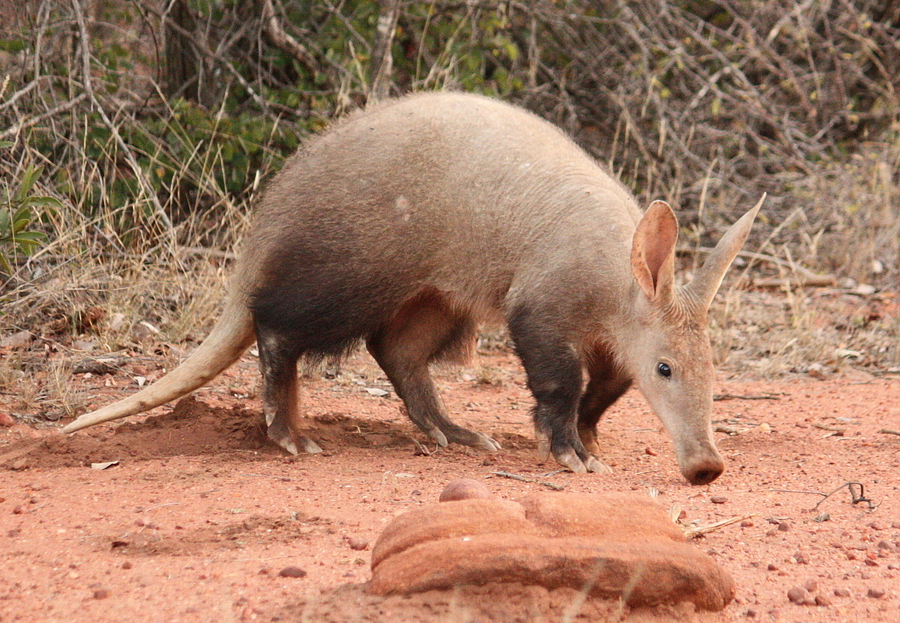
Aardvarks are nocturnal African mammals with pig-like snouts, rabbit-like ears, and powerful claws for tearing open termite mounds. They are the only living member of the order Tubulidentata and weigh 40–65 kg (88–143 lb). Listed Least Concern but locally threatened by bushmeat hunting.
Aardvark facts at a glance
| Scientific name | Orycteropus afer |
|---|---|
| Diet | Ants and termites |
| Habitat | Savannas, grasslands, and woodland across sub-Saharan Africa |
| Lifespan | Up to 23 years in the wild |
| Weight | 40–65 kg (88–143 lb) |
| Top speed | Up to 40 km/h (25 mph) when fleeing predators |
| Conservation status | Least Concern (IUCN) |
| Kingdom | Animalia |
|---|---|
| Phylum | Chordata |
| Class | Mammalia |
| Order | Tubulidentata |
| Family | Orycteropodidae |
| Genus | Orycteropus |
Where it lives
Savannas, grasslands, and woodland across sub-Saharan Africa wherever ants and termites are abundant.
What is a group of aardvarks called?
Group name (collective noun)
A group of Aardvarks is called a group.
Baby name
A baby Aardvark is called a cub.
Explore more animal collective nouns and baby animal names .
Night digger
An aardvark can consume tens of thousands of insects in one night using a 30 cm tongue. Long ears detect insect activity; claws excavate hardened termite mounds in minutes.
Burrow architects
Abandoned aardvark burrows shelter warthogs, hyenas, wild dogs, and pythons — making them keystone ecosystem engineers across African savannas.
Solitary and secretive
Aardvarks leave their burrows after dark, foraging alone across home ranges marked with scent. They swim well and can seal nostrils while digging.
Threats and status
Listed Least Concern globally but hunted for bushmeat in parts of Africa. Habitat conversion to agriculture reduces termite mound density in some regions.
Explore the Aardvark
Range & geography
Frequently asked questions about the Aardvark
Is an aardvark an anteater?
No — it is an unrelated Afrotherian mammal. South American anteaters evolved similar traits independently.
Are aardvarks endangered?
Globally Least Concern, but locally threatened by hunting and habitat loss in some countries.
Where do aardvarks live?
Sub-Saharan Africa in savannas, grasslands, and woodland — anywhere ants and termites are abundant.
What do aardvarks eat?
Almost exclusively ants and termites, lapped up with a long sticky tongue.
Are aardvarks related to pigs?
No — the snout shape is convergent. Their closest living relatives include elephants and manatees (Afrotheria).
What is a group of aardvarks called?
A group of Aardvarks is called a group.
What is a baby aardvark called?
A baby Aardvark is called a cub.
Sources & references
This guide is compiled and reviewed against established zoological and conservation references. Key sources for the Aardvark:
-
IUCN Red List of Threatened Species
Conservation status (Least Concern) reflects the IUCN Red List category for Orycteropus afer.
-
Global Animal Guide editorial standards
How we research, source, review, and update every guide for accuracy.