Quick answer
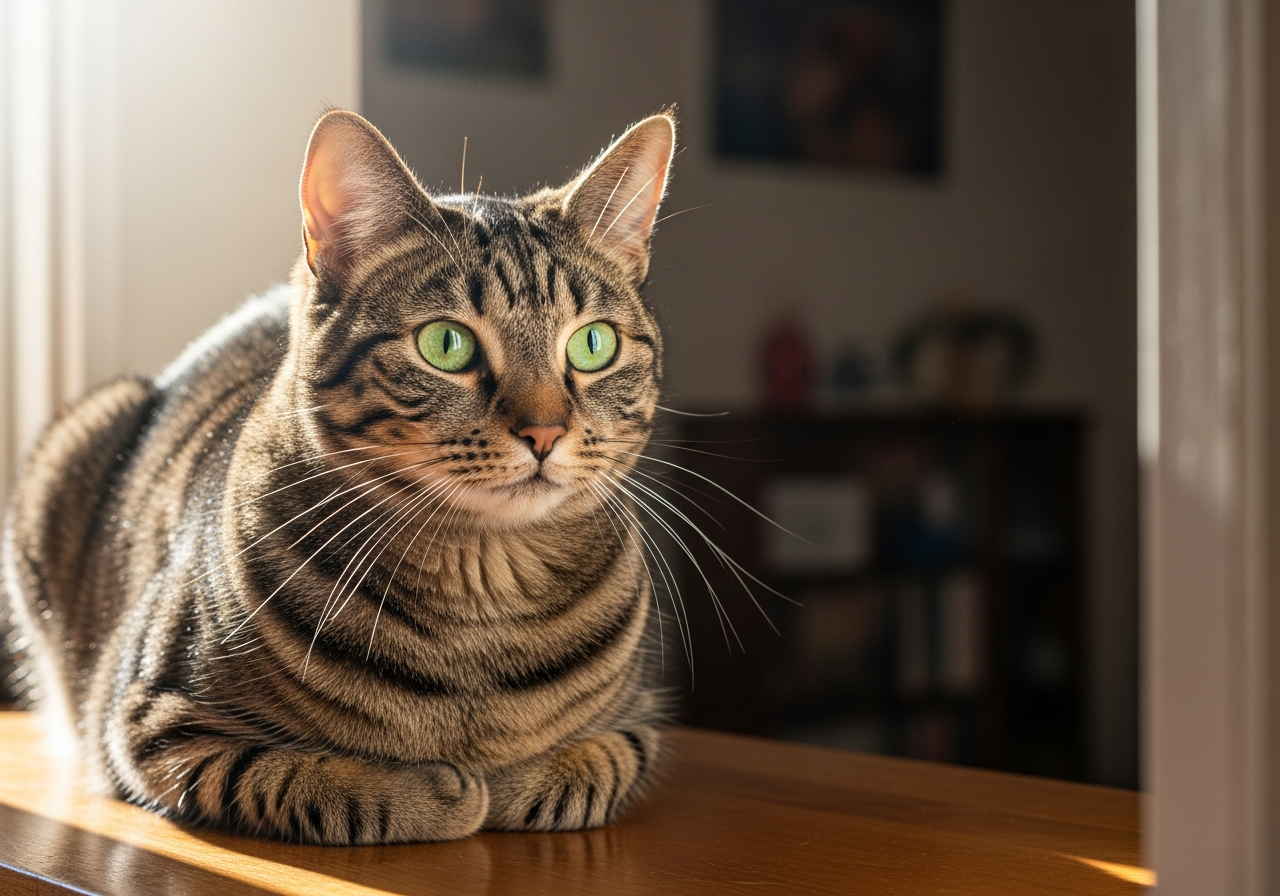
The domestic cat is a small carnivorous mammal and one of the most popular pets in the world, descended from the African wildcat. Cats are agile night hunters with excellent low-light vision, retractable claws, and a strong independent streak, and they typically live 12 to 18 years. There are around 70 recognized breeds.
Top questions about the Cat
Popular questions
Also available in Español (Gato)
Cat facts at a glance
- Weight 4.5 kg
- Length 50 cm
- Top speed 48 km/h
- Lifespan 15 years
| Scientific name | Felis catus |
|---|---|
| Diet | Carnivore |
| Habitat | Domesticated, worldwide alongside people |
| Lifespan | 12–18 years |
| Weight | 3.5–5 kg (8–11 lb) |
| Top speed | 48 km/h (30 mph) in short bursts |
| Conservation status | Domesticated |
| Kingdom | Animalia |
|---|---|
| Phylum | Chordata |
| Class | Mammalia |
| Order | Carnivora |
| Family | Felidae |
| Genus | Felis |
Where it lives
The cat (Felis catus) is native to Descended from the African wildcat of the Near East; now kept worldwide. — recorded across Africa, Asia in this guide’s range summary.
For occurrence records, see GBIF species search and sources below.
How big is a cat?
An adult cat measures 50 cm long — about 29% of the height of an average adult person (1.73 m) — and weighs around 4.5 kg, about 6% of an average adult’s body weight (70 kg).
Length vs an average adult’s height (to scale)
What is a group of cats called?
Group name (collective noun)
A group of Cats is called a clowder. It is also known as a glaring.
Baby name
A baby Cat is called a kitten.
Explore more animal collective nouns and baby animal names .
Behavior and the hunt
Even well-fed house cats keep the instincts of a solitary ambush predator. They stalk, pounce, and play out the full hunting sequence, which is why toys that move trigger such intense focus. Cats are most active at dawn and dusk and can sleep 12 to 16 hours a day to conserve energy between hunts.
Senses and the body
Cats have superb low-light vision, sensitive whiskers that gauge gaps and air movement, and hearing that reaches well beyond the human range. Their retractable claws stay sharp for climbing and gripping prey, and a flexible spine lets them right themselves in mid-air and almost always land on their feet.
Cats and humans
Cats domesticated themselves around 10,000 years ago in the Near East, drawn to the rodents that gathered around early farms. Unlike dogs, they were valued more as pest controllers than as workers, and they retain much of their wild independence. Purring, kneading, and slow blinking are all signs of a relaxed, contented cat.
Health and care
Cats need a meat-based diet, fresh water, clean litter, and regular veterinary care. Keeping cats indoors or supervised protects both the cat and local wildlife, since free-roaming cats are skilled hunters of birds and small mammals.
History and domestication
The domestic cat descends from the African wildcat and began living alongside humans around 10,000 years ago in the Near East, drawn to the rodents that gathered around early grain stores. Unlike many domesticated animals, cats are thought to have largely domesticated themselves.
Hunting instincts and behavior
Even well-fed pet cats keep strong predatory instincts, stalking and pouncing on toys or prey. They are crepuscular, most active at dawn and dusk, and sleep for much of the day. Purring, kneading, and slow blinking are signs of contentment and social bonding.
Dig deeper into the Cat
- How Long Do Cats Live?
Most cats live 12–18 years. See indoor vs outdoor lifespan, breed ranges, kidney and dental risks, and vet-backed ways to add healthy years.
- Cat lifespan chart by breed & type
Cat lifespan chart for 20+ breeds and types — indoor vs outdoor averages, typical years, and health notes. Veterinary-source checked companion to our cat longevity guide.
- Indoor vs Outdoor Cat Lifespan
Indoor cats typically live years longer than free-roaming outdoor cats. Compare trauma, disease, obesity, and enrichment trade-offs with practical middle-ground options.
- Why Do Cats Knead?
Cats knead from kitten nursing instinct, scent marking, and comfort. Learn what kneading means, when excessive kneading signals stress, and how to protect furniture without punishing.
- Why Do Cats Purr?
Cats purr via rhythmic laryngeal muscle twitches — for bonding, self-soothing, and sometimes a cry-like solicitation. Mechanisms, healing hypotheses, and when to worry.
- How Fast Is a Cat?
Domestic cats sprint about 48 km/h (30 mph) in short bursts. Compare climb and jump agility vs endurance, cats vs dogs, and indoor enrichment for hunting energy.
- What Do Cats Eat?
Cats are obligate carnivores that need animal protein, taurine, and complete diets. Wet food benefits, free-feeding risks, life-stage feeding, and toxic foods to avoid.
- Where Do Cats Live?
Domestic cats live worldwide with people, descending from African wildcats. Indoor vs outdoor homes, feral colonies, and how housing affects lifespan.
Explore the Cat
Compare
Related Mammals
Range & geography
Did you know? Cat facts
- The domestic cat is a small carnivorous mammal and one of the most popular pets in the world, descended from the African wildcat.
- Indoor cats commonly live 12 to 18 years, and some reach their early 20s. Outdoor cats tend to have shorter lifespans because of traffic, disease, and predators.
- Cats purr when content, but also sometimes when stressed, injured, or healing. The sound is produced by rapid movement of the muscles around the voice box.
- Domestic cats are descended from the African wildcat (Felis lybica), a small wildcat from the Near East and North Africa. They began living alongside humans roughly 10,000 years ago.
- No. Cats cannot see in total darkness, but they see far better than humans in very low light, needing only about one-sixth of the light we do thanks to a reflective layer behind the retina.
- Conservation: Domesticated.
Diet & feeding
Cat feeds primarily as a carnivore. Cats have superb low-light vision, sensitive whiskers that gauge gaps and air movement, and hearing that reaches well beyond the human range. Their retractable claws stay sharp for climbing and gripping prey, and a flexible spine lets them right themselves in mid-air and almost alway
Adaptations
- Even well-fed house cats keep the instincts of a solitary ambush predator. They stalk, pounce, and play out the full hunting sequence, which is why toys that move trigger such intense focus. Cats are most active at dawn and dusk and can sleep 12 to 16 hours a day to conserve energy between hunts.
- Cats have superb low-light vision, sensitive whiskers that gauge gaps and air movement, and hearing that reaches well beyond the human range. Their retractable claws stay sharp for climbing and gripping prey, and a flexible spine lets them right themselves in mid-air and almost always land on their feet.
Behaviour & ecology
- Even well-fed house cats keep the instincts of a solitary ambush predator. They stalk, pounce, and play out the full hunting sequence, which is why toys that move trigger such intense focus. Cats are most active at dawn and dusk and can sleep 12 to 16 hours a day to conserve energy between hunts.
- Cats have superb low-light vision, sensitive whiskers that gauge gaps and air movement, and hearing that reaches well beyond the human range. Their retractable claws stay sharp for climbing and gripping prey, and a flexible spine lets them right themselves in mid-air and almost always land on their feet.
- Cats domesticated themselves around 10,000 years ago in the Near East, drawn to the rodents that gathered around early farms. Unlike dogs, they were valued more as pest controllers than as workers, and they retain much of their wild independence. Purring, kneading, and slow blinking are all signs of a relaxed, contented cat.
Communication
- Cat uses scent, posture, and vocal signals to mark territory and coordinate social behaviour.
- Communication intensity often peaks during breeding seasons and territorial disputes.
Habitat & range
Domesticated, worldwide alongside people
Ecological role
Cat acts as a predator that helps regulate prey populations and maintain balance in domesticated, worldwide alongside people.
Conservation status of the Cat
The cat (Felis catus) is listed as Domesticated on the IUCN Red List. Domesticated animals are species kept and selectively bred by humans over many generations, such as dogs, cats, and livestock. They are not assessed for extinction risk in the wild by the IUCN, because their populations are managed by people rather than subject to natural pressures.
The cat (Felis catus) is assessed on the IUCN Red List. Look up on the IUCN Red List .
Frequently asked questions about the Cat
How long do cats live?
Indoor cats commonly live 12 to 18 years, and some reach their early 20s. Outdoor cats tend to have shorter lifespans because of traffic, disease, and predators.
Why do cats purr?
Cats purr when content, but also sometimes when stressed, injured, or healing. The sound is produced by rapid movement of the muscles around the voice box.
What are cats descended from?
Domestic cats are descended from the African wildcat (Felis lybica), a small wildcat from the Near East and North Africa. They began living alongside humans roughly 10,000 years ago.
Can cats see in complete darkness?
No. Cats cannot see in total darkness, but they see far better than humans in very low light, needing only about one-sixth of the light we do thanks to a reflective layer behind the retina.
How many cat breeds are there?
There are around 70 recognized cat breeds, though the number varies by registry. Most pet cats are not purebred but mixed-breed domestic shorthairs and longhairs.
What is a group of cats called?
A group of Cats is called a clowder. It is also known as a glaring.
What is a baby cat called?
A baby Cat is called a kitten.
Sources & references
This guide is compiled and reviewed against established zoological and conservation references. Key sources for the Cat:
-
IUCN Red List of Threatened Species
Conservation status (Domesticated) reflects the IUCN Red List category for Felis catus.
-
iNaturalist — observations & photos
Search citizen-science observations and community IDs for Felis catus. Useful for range checks and recent sightings — not a substitute for formal Red List status.
-
GBIF — occurrence data
Global Biodiversity Information Facility species search for Felis catus. Explore published occurrence records used in range research.
- IUCN Red List — Felis catus.
Conservation status (Domesticated) and population trends.
- Animal Diversity Web — Felis catus. University of Michigan Museum of Zoology.
Life history, morphology, and range.
-
Global Animal Guide editorial standards
How we research, source, review, and update every guide for accuracy.