Animal Anatomy Explained: How Animal Bodies Are Built
Animal anatomy covers cells, tissues, organs, and body systems — skeletons, digestion, circulation, senses, and coverings. A clear educational overview with examples.
Global Animal Guide · July 10, 2026
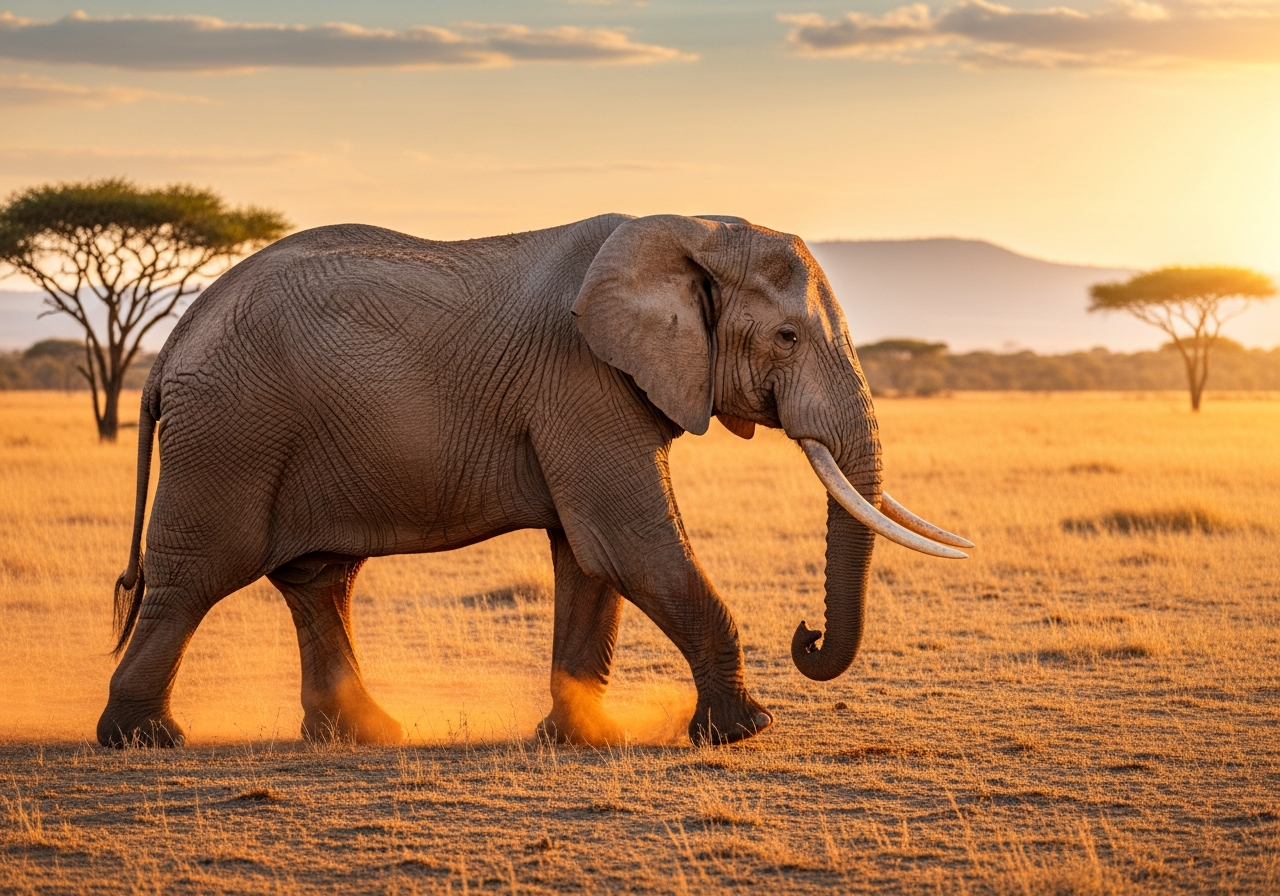
Photo: Muhammad Mahdi Karim Facebook The making of this document was supported by Wikimedia CH. (Submit your project!) For all the files concerned, please see the category Supported by Wikimedia CH. العربية ∙ বাংলা ∙ čeština ∙ Deutsch ∙ English ∙ Esperanto ∙ español ∙ français ∙ galego ∙ हिन्दी ∙ magyar ∙ italiano ∙ 日本語 ∙ македонски ∙ Nederlands ∙ português do Brasil ∙ rumantsch ∙ русский ∙ sicilianu ∙ slovenščina ∙ தமிழ் ∙ українська ∙ 中文 ∙ +/− · GFDL 1.2 · source · credits
Quick answer
Animal anatomy is the study of body structure — from cells and tissues to organs and whole-body form. Anatomy explains how animals move, eat, sense the world, and survive. Comparing anatomy across species reveals shared ancestry (homology) and similar solutions to similar problems (analogy).
Last updated: July 2026.
Levels of organisation
Anatomy is the study of how animal bodies are built, and it is easiest to grasp as a ladder of scales. Each rung adds a capability the rung below could not manage alone.
- Cells — basic living units (neurons, muscle fibres, blood cells)
- Tissues — groups of similar cells (epithelial, connective, muscle, nervous)
- Organs — structures of multiple tissues (heart, liver, eye)
- Organ systems — coordinated organs (digestive, circulatory, nervous)
- Whole-body form — symmetry, appendages, coverings, size
Not every animal climbs the whole ladder. Sponges stop near the bottom: they have specialised cells but no true tissues and no organs, filtering water through a porous body that works more like a living sieve than a machine. Jellyfish reach the tissue rung — real nerve nets and muscle, but no heart and no brain. Only from flatworms upward do organs and organ systems become the norm. This is why “do all animals have organs?” has a genuinely interesting answer: complexity is a strategy, not an inevitability, and a moon jellyfish has thrived for hundreds of millions of years without ever needing one.
The other whole-body variable is symmetry. Radial symmetry, as in the starfish, suits an animal that meets its world equally from all sides. Bilateral symmetry — a left and a right, a front and a back — concentrates sense organs at the leading end. That concentration is called cephalisation, and it is the anatomical seed of every head and brain that followed.
Support and movement
Endoskeletons (vertebrates) grow with the animal. Exoskeletons (arthropods) must be molted. Hydrostatic skeletons (earthworms, cnidarians) use fluid pressure. Muscles pull against these supports to create motion.
Each solution carries a bill. An internal skeleton grows continuously, so an elephant never has a vulnerable soft phase — but bone offers no armour. An exoskeleton is armour and skeleton in one, which is superb until the animal outgrows it: a lobster must shed the whole suit and sit defenceless while a new one hardens. Exoskeletons also scale badly, since a shell strong enough for a very large body would be impossibly heavy — one reason no insect approaches mammalian size. A hydrostatic skeleton needs no hard parts at all: the earthworm squeezes a fluid-filled compartment and lengthens, and the octopus uses the same principle to make a boneless arm as controllable as a limb.
Muscles never push; they only pull. Every skeleton is therefore a system of levers arranged so that opposing muscles can undo each other’s work. Change the lever proportions and you change the animal: the short, thick limb bones of the badger trade speed for digging force, while the elongated foot bones of the cheetah do the reverse.
Digestion and circulation
Complete guts (mouth to anus) allow specialised regions. Incomplete guts (one opening) recycle the same cavity. Closed circulatory systems push blood through vessels; open systems bathe organs in haemolymph. Cephalopods and vertebrates both evolved high-performance closed systems independently in some respects — a lesson in convergent demands of active lifestyles.
The advantage of a one-way gut is that it becomes an assembly line. Food moves in a single direction through zones that can each be tuned to a different job — grinding, acid digestion, enzyme digestion, absorption, water recovery — and the animal can keep eating while earlier meals are still being processed. Diet then reshapes the line. Grazers such as the cow house fermentation chambers full of microbes that break down cellulose the animal cannot digest itself; a carnivore like the gray wolf needs far less gut length because meat is already close to the chemistry of its own tissue.
Circulation follows metabolic demand. Open systems, common in insects and molluscs, are cheap but slow, which is fine for animals whose oxygen arrives another way — insects pipe air directly to their tissues through tracheae, bypassing blood entirely. Animals that must move fast and continuously need pressure and speed, and that means closed vessels. The giraffe shows the logic taken to an extreme: pumping blood several metres up to the brain demands an exceptionally thick-walled heart and tight valves in the neck veins.
Coverings and senses
Scales, feathers, fur, shells, and mucus protect and communicate. Eyes range from simple light spots to camera eyes (vertebrates, cephalopods) and compound eyes (insects). Hearing, smell, electroreception, and magnetoreception expand what “sensing the world” means beyond human experience.
Coverings are rarely single-purpose. Feathers began as insulation and were later co-opted for flight and display; the fur of the polar bear is simultaneously insulation, waterproofing, and camouflage; amphibian skin such as the axolotl’s is thin and permeable because it doubles as a respiratory organ, which is also precisely why amphibians are so exposed to pollutants.
The senses show the same logic of specialisation. A platypus hunts with its eyes shut, reading the faint electrical fields of prey through receptors in its bill. A bat builds an acoustic picture of a dark room. Compound eyes give poor resolution but exceptional motion detection, which is why swatting a fly is hard.
Homology and analogy
Comparing anatomy across species reveals two very different kinds of resemblance, and telling them apart is the core skill of the discipline. Homologous structures share an evolutionary origin even when their functions diverge: the same set of bones — one upper arm bone, two forearm bones, wrist, digits — supports the wing of a bat, the flipper of a humpback whale, and the hand you are reading with. The plan is inherited; the job is negotiable.
Analogous structures are the opposite. The wing of an insect and the wing of a bird do the same job with no shared ancestral wing behind them. The camera eye of an octopus is famously similar to a vertebrate eye yet was built independently, and the giveaway is in the wiring: the octopus retina faces the light directly, while ours is inverted and has a blind spot where the nerve exits. Similar problems, similar solutions, different history.
Why anatomy education matters
Anatomy underpins veterinary care, wildlife rehabilitation, and evolutionary biology. It also answers popular questions: why birds have hollow bones, how snakes swallow large prey, and why insect flight looks so different from bat flight.
Those questions have real answers. Birds have air-filled bones because their lungs are connected to a system of air sacs that reaches into the skeleton, giving a one-way flow of air that extracts oxygen even on the exhale — the reason a bar-headed goose can fly at altitudes where a mammal would collapse. Snakes swallow large prey because the two halves of the lower jaw are not fused but joined by an elastic ligament, and the whole skull is a set of loosely linked struts that walk the meal inward. In every case the pattern is the same: an apparently odd body part turns out to be a solution, and anatomy is how we read it.
Related reading
- Vertebrates explained
- Invertebrates explained
- Warm-blooded vs cold-blooded
- Animal with the best eyesight
Sources
Frequently asked questions
What is animal anatomy?
The study of how animal bodies are structured at every scale — cells, tissues, organs, systems, and overall shape.
What is the difference between anatomy and physiology?
Anatomy is structure; physiology is function — how those structures work.
Do all animals have organs?
No. Sponges lack true organs; cnidarians have tissue-level organisation; complex animals have organ systems.
What is homology?
Homologous structures share evolutionary origin (a bat wing and a human arm) even if functions differ.