What Is a Biome? Habitats Explained Simply
A biome is a large region defined by climate and vegetation — ocean, rainforest, desert, savanna, and more. How biomes shape which animals can live there.
Global Animal Guide · July 16, 2026
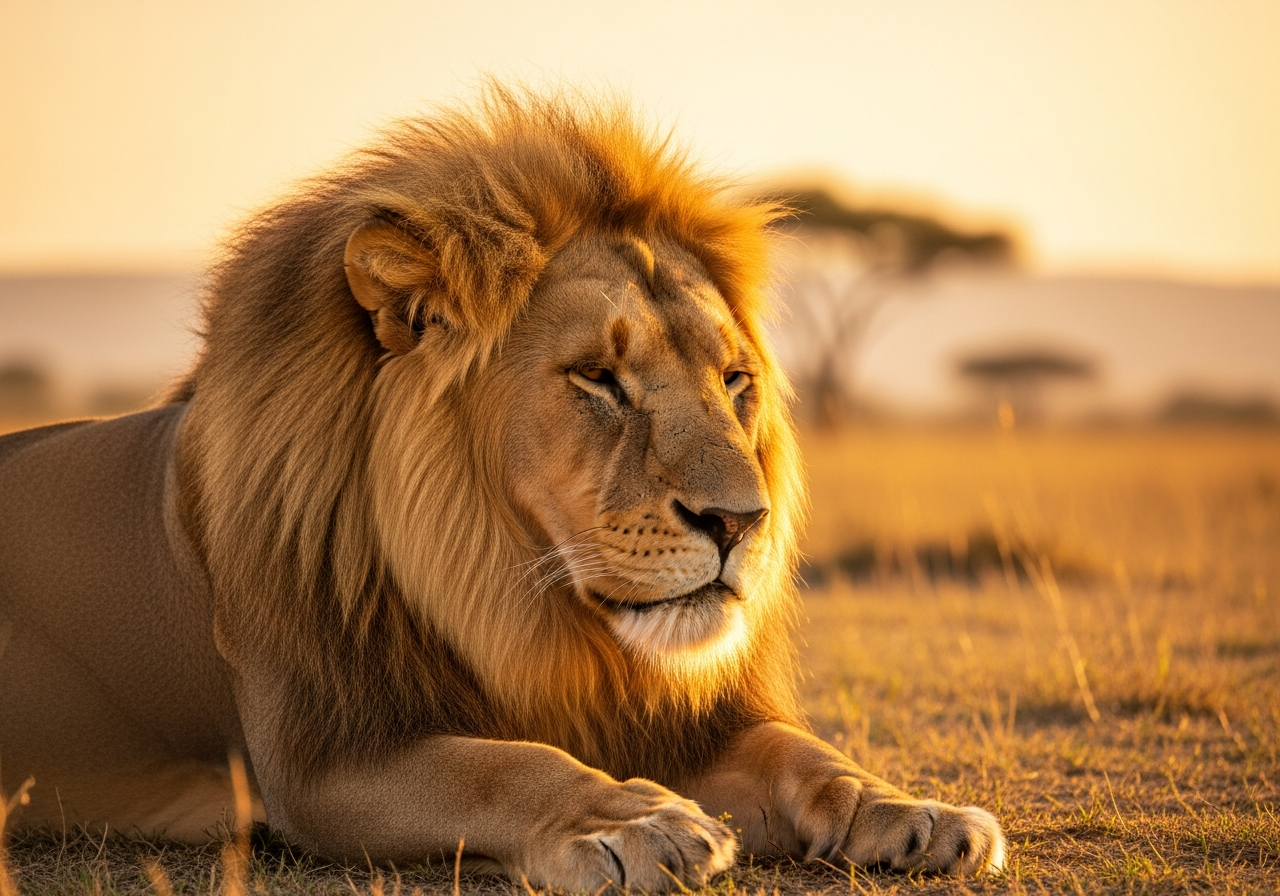
Quick answer
A biome is a major ecological region defined mainly by climate, vegetation, and water — such as rainforest, desert, ocean, or tundra. Animals are adapted to the temperature, food, and cover their biome provides. A habitat is the more local place a species actually uses inside that broader biome.
Last updated: July 2026.
Biomes shape animal life
- Rainforest — canopy specialists, bright frogs, fruit-eaters
- Desert — water-saving mammals, nocturnal hunters
- Savanna — grazing herds and pursuit predators
- Ocean — filter feeders, deep divers, reef communities
- Arctic — insulation, seasonal fasting, ice-edge hunting
What actually defines a biome
Two numbers do most of the work: how warm a place is, and how much rain it gets. Plot annual temperature against annual precipitation and the world’s major biomes fall into recognisable zones on the chart. Warm and wet gives tropical rainforest. Warm and dry gives desert. Warm with a strong dry season gives savanna. Cold and dry gives tundra. Cool with moderate rain gives temperate forest or boreal conifers.
Vegetation is the visible expression of those numbers, and vegetation is what animals actually respond to. A biome is therefore defined by structure and climate, not by species list. What matters to a grazing animal is that there is grass, wind, sightlines, and a dry season — not whether that grass grows in Africa or South America.
The crucial consequence is that biomes are defined by conditions, so the same biome appears in unconnected places. Deserts ring the globe near 30° north and south for a reason: air rising at the equator dumps its rain there — creating the rainforest belt — then travels poleward, cools, and descends as dry air. The Sahara, the Arabian, the Kalahari, and the Australian interior all sit under that descending limb. Mountains add a second mechanism, the rain shadow: air forced upward drops its moisture on the windward slope and arrives on the far side wrung dry. Altitude works as a third axis, compressing the whole latitudinal sequence into a single mountainside — climb high enough in the tropics and you pass through forest, then scrub, then something that functions like tundra.
Biome vs habitat vs ecosystem
These three words are often used interchangeably, and the distinction is genuinely useful.
A biome is the broadest: a climate-and-vegetation zone spanning continents. A habitat is the specific set of conditions one species needs — the actual address. An ecosystem is a community of organisms plus the physical environment they interact with, and it can be almost any size, from a rock pool to the Amazon basin.
The nesting is imperfect on purpose. A red-eyed tree frog lives in the rainforest biome, but its habitat is the water-filled leaf axils and overhanging branches above a pond — a slice of the biome only metres across. Meanwhile, a peregrine falcon occupies cliff-ledge habitat across nearly every biome on earth. The biome tells you the climate; the habitat tells you where the animal actually is.
Why unrelated animals look alike in the same biome
The most striking evidence that biomes shape animals is convergent evolution — the same problem, solved the same way, by species with no shared ancestry.
Deserts demand water conservation and heat management, and desert animals worldwide arrive at matching answers. The fennec fox of the Sahara evolved enormous ears that radiate heat, a solution independently reached by desert foxes and hares on other continents. Small desert rodents across three continents converged on the same body plan: long hind legs for hopping, concentrated urine, seed-hoarding, and a strictly nocturnal schedule. The thorny devil of Australia and the chuckwalla of North America are unrelated lizards running the same playbook of low water loss and behavioural temperature control.
Grasslands produce a different convergence. Open ground with no cover means prey animals must either see danger far off and outrun it, or live in groups that share the watching. The pronghorn on the American prairie and the springbok on African grassland are entirely unrelated, yet both are fast, long-legged, herd-living, and eye-set-high. Their predators converge too: the cheetah and other open-country hunters share the same lightweight build and reliance on the sprint.
Cold biomes converge hardest of all. Bulk conserves heat, and short extremities lose less of it, so Arctic animals trend towards big bodies and small ears — compare the compact profile of a musk ox or polar bear with the lanky, heat-dumping shape of an elephant. Add dense insulation, seasonal fat storage, and white winter coats in the snowshoe hare and willow ptarmigan, and the same set of answers appears in mammals and birds alike.
Reading a biome from an animal’s body
Run this in reverse and an animal’s anatomy tells you where it lives.
Rainforest rewards climbing, gripping, and moving through a three-dimensional world where the food is in the canopy. Hence the prehensile tail of the howler monkey, the hooked claws of the sloth, the arm span of the orangutan, and the fruit-handling bill of the toucan. Sound carries badly through dense leaves, so rainforest animals shout: howler calls travel kilometres. Sightlines are short, so colour signals work at close range — which is part of why poison dart frogs can afford to advertise.
Savanna rewards the opposite. Long sightlines make stealth hard and speed valuable; a dry season forces movement, which is why wildebeest and zebra migrate while rainforest animals rarely do. Height itself is a resource, and the giraffe exploits a browse layer nothing else can reach.
Ocean is the biome that most obviously overrides ancestry. Water is dense, so everything fast becomes torpedo-shaped, whether it is a fish, a reptile, or a mammal. It also strips heat away far faster than air, which is why the sea otter carries the densest fur of any mammal and larger divers rely on blubber and sheer size instead.
Where biomes fail as a model
The scheme has real limits. Boundaries are gradients, not lines — the transition from savanna to forest is a broad zone of mixed woodland, and ecologists call these ecotones, which are often richer than either side because species from both overlap.
Biomes are not permanent. They shift with climate, and are shifting now: treelines creeping up mountains, shrubs advancing across tundra, drylands expanding. An animal adapted to a biome that moves must move with it or fail, and many cannot — a mountain species pushed upslope eventually runs out of mountain.
Finally, some habitats do not fit the climate model at all. Caves, deep-sea vents, and cities are defined by structure rather than by rainfall. The urban “biome” is a genuine anomaly: warmer than its surroundings, lit at night, and dominated by generalists like the raccoon, the red fox, and the pigeon — animals whose success comes precisely from not being specialised to any biome.
Why this matters for conservation
The practical payoff is that biome thinking corrects a common mistake in conservation: saving a species without saving the conditions it needs. Protect a reserve for a tiger but let the surrounding forest fragment, and you have preserved an animal in a place that can no longer support it. Biome-level protection keeps the climate, the vegetation structure, and the whole community intact — which is the only thing that has ever actually worked.
Explore biome hubs
Browse species lists and threats for each major habitat:
Related reading
Sources
Frequently asked questions
What's the difference between a biome and a habitat?
Biome = large climate/vegetation zone. Habitat = the specific conditions a species needs (a pond, canopy gap, burrow system) inside or across biomes.
How many biomes are there?
Classifications vary. This guide groups wildlife into practical hubs such as ocean, rainforest, desert, savanna, arctic, wetlands, and urban.
Can one animal live in more than one biome?
Yes — migratory birds, wide-ranging carnivores, and generalists like red foxes use multiple habitat types.
Why do biomes matter for conservation?
Protecting biomes keeps whole communities of species, not just single charismatic animals.