Why Wildlife Habitats Disappear — and What Reverses It
Habitat loss is the leading driver of species decline worldwide. Here is what causes it, why it matters so much, and the proven approaches that bring habitats back.
Global Animal Guide · June 2, 2026
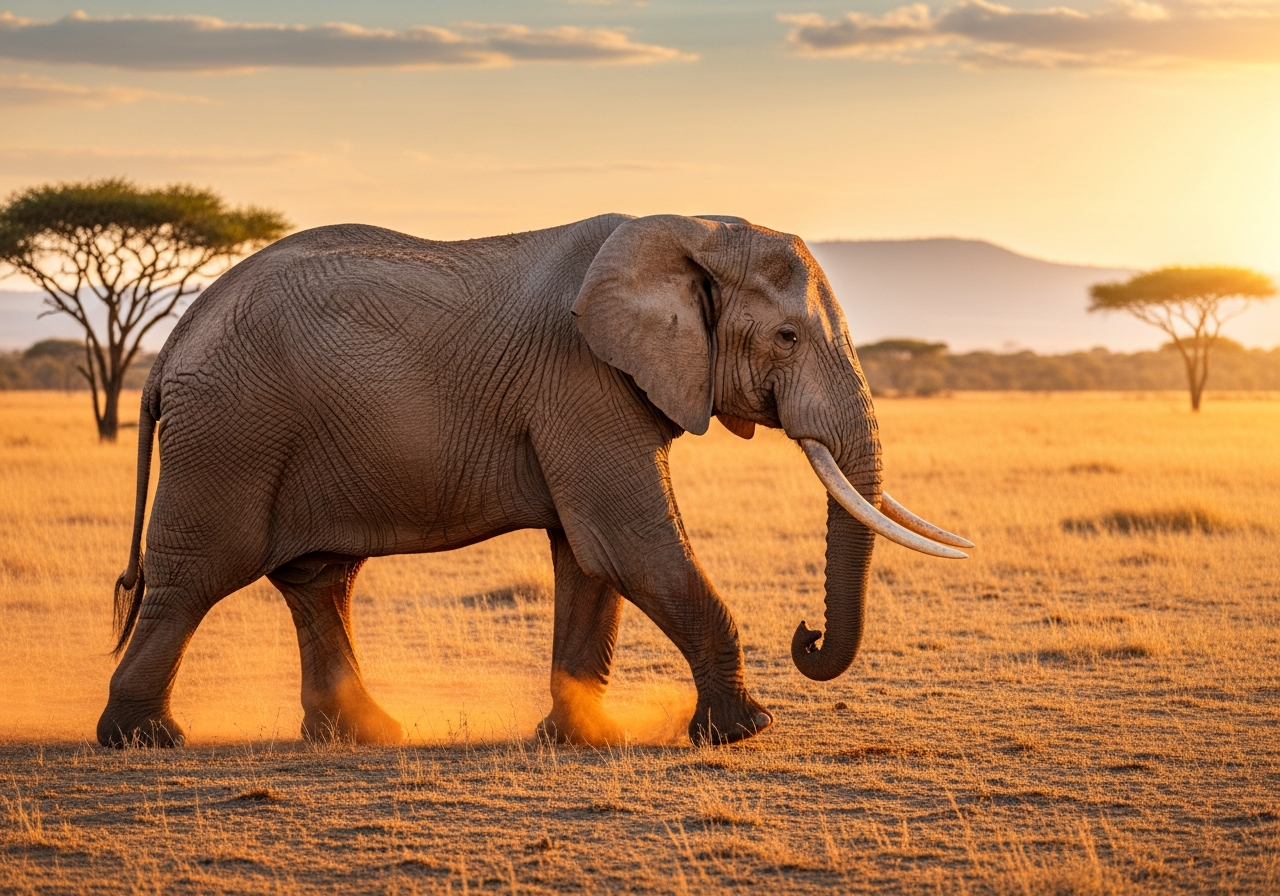
Photo: Muhammad Mahdi Karim Facebook The making of this document was supported by Wikimedia CH. (Submit your project!) For all the files concerned, please see the category Supported by Wikimedia CH. العربية ∙ বাংলা ∙ čeština ∙ Deutsch ∙ English ∙ Esperanto ∙ español ∙ français ∙ galego ∙ हिन्दी ∙ magyar ∙ italiano ∙ 日本語 ∙ македонски ∙ Nederlands ∙ português do Brasil ∙ rumantsch ∙ русский ∙ sicilianu ∙ slovenščina ∙ தமிழ் ∙ українська ∙ 中文 ∙ +/− · GFDL 1.2 · source · credits
Quick answer
Habitat loss is the leading driver of species decline worldwide — forests, wetlands, reefs, and grasslands are cleared, fragmented, or degraded faster than many animals can adapt. The encouraging part is that habitat loss is also one of the most reversible threats when protected areas, restoration, and smarter land use are put in place.
Ask a conservation biologist what threatens wildlife most, and the answer is rarely a single dramatic cause. It is habitat loss — the steady conversion, fragmentation, and degradation of the places animals need to live. Understanding it is the key to understanding almost every endangered species’ story.
Poaching and hunting make headlines because they have villains. Habitat loss has no villain — only farms, roads, houses, and demand — which is precisely why it is both the largest driver of decline and the hardest to photograph.
What “habitat loss” actually means
Habitat loss takes several forms:
- Conversion — Forests, wetlands, and grasslands cleared for agriculture, settlement, or industry.
- Fragmentation — Large, continuous habitats broken into isolated patches by roads, fences, and farmland, so animals can no longer move, feed, or find mates.
- Degradation — Habitat that still exists but no longer functions, due to pollution, invasive species, or the loss of key plants and prey.
A species can be pushed toward extinction by any of these, even without a single individual being hunted.
The three are not equally visible. Conversion shows up on a satellite image; degradation does not. A forest that has lost its large fruiting trees still reads as forest from orbit while having quietly stopped supporting the orangutan or the hornbills that depended on them. Much of the world’s most damaging habitat loss is invisible from above.
Why fragmentation punishes big animals first
Animals are adapted to specific conditions: a particular climate, food source, nesting site, or migration route. Remove or shrink that habitat and populations fall, ranges contract, and small isolated groups become vulnerable to disease, inbreeding, and chance events. This is why so many species in the guide are listed as Vulnerable or Endangered primarily because of where — and how much — habitat remains.
Fragmentation is worse than the raw acreage suggests, and it is worst for the largest animals. A patch of forest has an interior and an edge, and the edge is different habitat: drier, windier, brighter, more accessible to predators and invasive plants. Halve a patch and you do not halve the habitat — you remove interior disproportionately, because a smaller patch is nearly all edge.
Body size compounds the effect. A tiger or a snow leopard needs a territory measured in tens or hundreds of square kilometres; the asian elephant needs seasonal movement between feeding areas. Fragments large enough to hold a viable population of small birds hold no viable population of these animals at all. This is why the javan rhino persists in a single park, and why isolated groups of the mountain gorilla require active management to maintain genetic exchange.
Small isolated populations then face a second problem that has nothing to do with habitat quality. Even in perfect conditions, a population of a few dozen animals can be wiped out by one bad year, one disease outbreak, or a run of male-biased births. Isolation converts ordinary bad luck into extinction.
Degradation: habitat that stops working
Habitat can fail while remaining physically present. A wetland drained at its margins may still hold water but no longer flood on the schedule that triggers amphibian breeding. A grassland invaded by a single aggressive plant may still be green and still be useless to the grazers it evolved with.
The most common form is the loss of a species the habitat is built around. Reefs degraded by bleaching still exist as structure, but the clownfish and the green turtle depend on living coral, not limestone. Kelp forests grazed bare by sea urchins after the loss of the sea otter become barrens — same seabed, no forest. Milkweed removed from farmland leaves the monarch butterfly migrating through a corridor with nowhere to lay eggs.
Degradation is dangerous precisely because it is easy to miss politically. No clearance permit is issued, no headline is written, and the habitat map stays green.
What reverses it
The encouraging part is that habitat loss is one of the most reversible threats:
- Protected areas that are genuinely enforced give populations room to recover.
- Habitat corridors reconnect fragmented patches so animals can move again.
- Restoration — replanting native forest, rewetting drained wetlands, removing invasive species — rebuilds function over time.
- Working with local communities so that protecting habitat is also in people’s economic interest.
Every one of these approaches costs money and takes years. That is exactly why sustained funding for conservation organisations matters: habitat protection is a long game, and the species that depend on it cannot wait.
The qualifier on that first bullet carries most of the weight. A protected area that exists only on a map — no staff, no budget, no enforcement — changes nothing on the ground. The measure that matters is not how much land is designated but how much is genuinely functioning as habitat.
Corridors are the highest-leverage intervention per hectare, because they restore the movement that makes separate populations one population again. An underpass beneath a motorway or a replanted strip between two reserves can turn several unviable groups into a viable whole without acquiring much land at all.
Restoration works, but slowly and unevenly. Rewetting a drained peatland or removing an invasive predator from an island can produce results within years. A cleared old-growth forest is a different matter: the giant panda needs mature bamboo stands, and structure that took centuries to build cannot be replanted on a funding cycle. Protecting intact habitat is always cheaper than rebuilding it.
Where the pressure actually comes from
Habitat is rarely cleared out of carelessness. It is cleared because someone needs food, income, fuel, or somewhere to live — which is why conservation that treats local people as the problem tends to fail, and conservation that makes intact habitat more valuable than cleared habitat tends to hold.
The demand is usually distant. Land is converted for commodities consumed on other continents, so the decisions that determine whether the koala keeps its eucalypt or the jaguar keeps its forest are made in supply chains and planning offices, not in the forest itself. That is discouraging in one sense and useful in another: leverage exists a long way from the trees.
It is also why habitat loss is genuinely reversible in a way that extinction is not. Land can be protected, reconnected, and rebuilt. Populations recover when given room — the bison, the gray wolf, and the whooping crane all came back from far smaller numbers than most people assume. The constraint is rarely biological. It is sustained attention and money over decades.