Asian Elephant
Elephas maximus
Quick answer
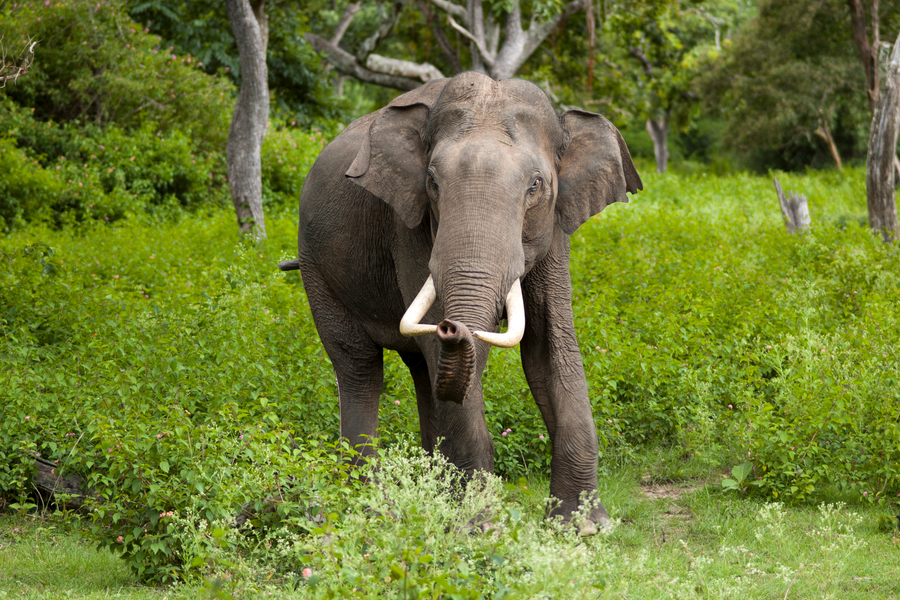
The Asian elephant is the largest land animal in Asia, weighing up to 5,500 kg (12,000 lb) with smaller ears than African elephants and a single 'finger' on the trunk tip. Highly social and intelligent, wild populations are Endangered from habitat loss and human conflict.
Also available in Español (Elefante asiático)
Asian Elephant facts at a glance
| Scientific name | Elephas maximus |
|---|---|
| Diet | Herbivore — grasses, bark, roots, fruit, and crops |
| Habitat | Tropical forests and grasslands across South and Southeast Asia |
| Lifespan | 60–70 years in the wild |
| Weight | Females 2,700 kg; males up to 5,500 kg |
| Top speed | Up to 40 km/h (25 mph) in charge |
| Conservation status | Endangered (IUCN) |
| Kingdom | Animalia |
|---|---|
| Phylum | Chordata |
| Class | Mammalia |
| Order | Proboscidea |
| Family | Elephantidae |
| Genus | Elephas |
Where it lives
Fragmented populations in India, Sri Lanka, Nepal, Bhutan, Bangladesh, Myanmar, Thailand, Cambodia, Laos, Vietnam, Malaysia, Indonesia, and China.
What is a group of asian elephants called?
Group name (collective noun)
A group of Asian Elephants is called a herd.
Baby name
A baby Asian Elephant is called a calf.
Explore more animal collective nouns and baby animal names .
Asian vs African elephants
Asian elephants have smaller ears, a twin-domed head, and only males typically carry visible tusks (tuskless males are common). African elephants have larger ears shaped like the continent, larger size, and both sexes may have tusks.
Human–elephant conflict
As forests shrink, elephants raid crops and villages, leading to retaliatory killing and accidents on roads and railways. Sumatran and Bornean subspecies face acute habitat pressure from palm oil and logging.
Conservation
Fewer than 50,000 Asian elephants may remain in the wild, fragmented across 13 range countries. Corridors linking protected areas, conflict mitigation, and anti-poaching efforts are central to recovery.
Dig deeper into the Asian Elephant
- Are Asian Elephant Endangered
Dig deeper into asian elephant — are asian elephant endangered.
- Asian Elephant Facts 5
Dig deeper into asian elephant — asian elephant facts 5.
- How Long do Asian Elephant Live?
Dig deeper into asian elephant — how long do asian elephant live.
- What do Asian Elephant Eat
Dig deeper into asian elephant — what do asian elephant eat.
- Where do Asian Elephant Live?
Dig deeper into asian elephant — where do asian elephant live.
Explore the Asian Elephant
Compare
Collections
Range & geography
Did you know? Asian Elephant facts
- The Asian elephant is the largest land animal in Asia, weighing up to 5,500 kg (12,000 lb) with smaller ears than African elephants and a single 'finger' on the trunk tip.
- Estimates suggest fewer than 50,000 in the wild, with populations fragmented across India, Sri Lanka, Southeast Asia, and Sumatra.
- Most females are tuskless or have small tushes. Males may have prominent tusks, but tuskless males are common in some populations.
- Asian elephants are smaller, have smaller ears, a different head shape, and typically only males grow large tusks. African savanna elephants are larger with bigger ears.
- Yes — Endangered on the IUCN Red List, mainly from habitat loss, fragmentation, and conflict with people.
- Conservation: Endangered (IUCN).
Diet & feeding
Asian Elephant feeds primarily as a herbivore — grasses, bark, roots, fruit, and crops.
Adaptations
- Asian elephant herds are matriarchal, led by the oldest female and composed of related females and young. Adult males are mostly solitary or form loose bachelor groups. Communication includes infrasonic rumbles, touch, and scent.
- Asian elephants have smaller ears, a twin-domed head, and only males typically carry visible tusks (tuskless males are common). African elephants have larger ears shaped like the continent, larger size, and both sexes may have tusks.
Behaviour & ecology
- Asian elephant herds are matriarchal, led by the oldest female and composed of related females and young. Adult males are mostly solitary or form loose bachelor groups. Communication includes infrasonic rumbles, touch, and scent.
- Asian elephants have smaller ears, a twin-domed head, and only males typically carry visible tusks (tuskless males are common). African elephants have larger ears shaped like the continent, larger size, and both sexes may have tusks.
- As forests shrink, elephants raid crops and villages, leading to retaliatory killing and accidents on roads and railways. Sumatran and Bornean subspecies face acute habitat pressure from palm oil and logging.
Communication
- Asian Elephant uses scent, posture, and vocal signals to mark territory and coordinate social behaviour.
- Communication intensity often peaks during breeding seasons and territorial disputes.
Habitat & range
Tropical forests and grasslands across South and Southeast Asia
Ecological role
Asian Elephant shapes vegetation through grazing or browsing and serves as prey for larger predators where ranges overlap.
Frequently asked questions about the Asian Elephant
How many Asian elephants are left?
Estimates suggest fewer than 50,000 in the wild, with populations fragmented across India, Sri Lanka, Southeast Asia, and Sumatra.
Do female Asian elephants have tusks?
Most females are tuskless or have small tushes. Males may have prominent tusks, but tuskless males are common in some populations.
Asian elephant vs African elephant?
Asian elephants are smaller, have smaller ears, a different head shape, and typically only males grow large tusks. African savanna elephants are larger with bigger ears.
Are Asian elephants endangered?
Yes — Endangered on the IUCN Red List, mainly from habitat loss, fragmentation, and conflict with people.
What do Asian elephants eat?
Up to 150 kg of vegetation daily — grasses, leaves, bark, fruit, and cultivated crops when they overlap with farmland.
What is a group of asian elephants called?
A group of Asian Elephants is called a herd.
What is a baby asian elephant called?
A baby Asian Elephant is called a calf.
Sources & references
This guide is compiled and reviewed against established zoological and conservation references. Key sources for the Asian Elephant:
-
IUCN Red List of Threatened Species
Conservation status (Endangered) reflects the IUCN Red List category for Elephas maximus.
- IUCN Red List — Elephas maximus.
Conservation status (Endangered) and population trends.
- Animal Diversity Web — Elephas maximus. University of Michigan Museum of Zoology.
Life history, morphology, and range.
- Wikipedia — Asian Elephant.
General taxonomy and overview (cross-check primary sources).
-
Global Animal Guide editorial standards
How we research, source, review, and update every guide for accuracy.

Social structure
Asian elephant herds are matriarchal, led by the oldest female and composed of related females and young. Adult males are mostly solitary or form loose bachelor groups. Communication includes infrasonic rumbles, touch, and scent.