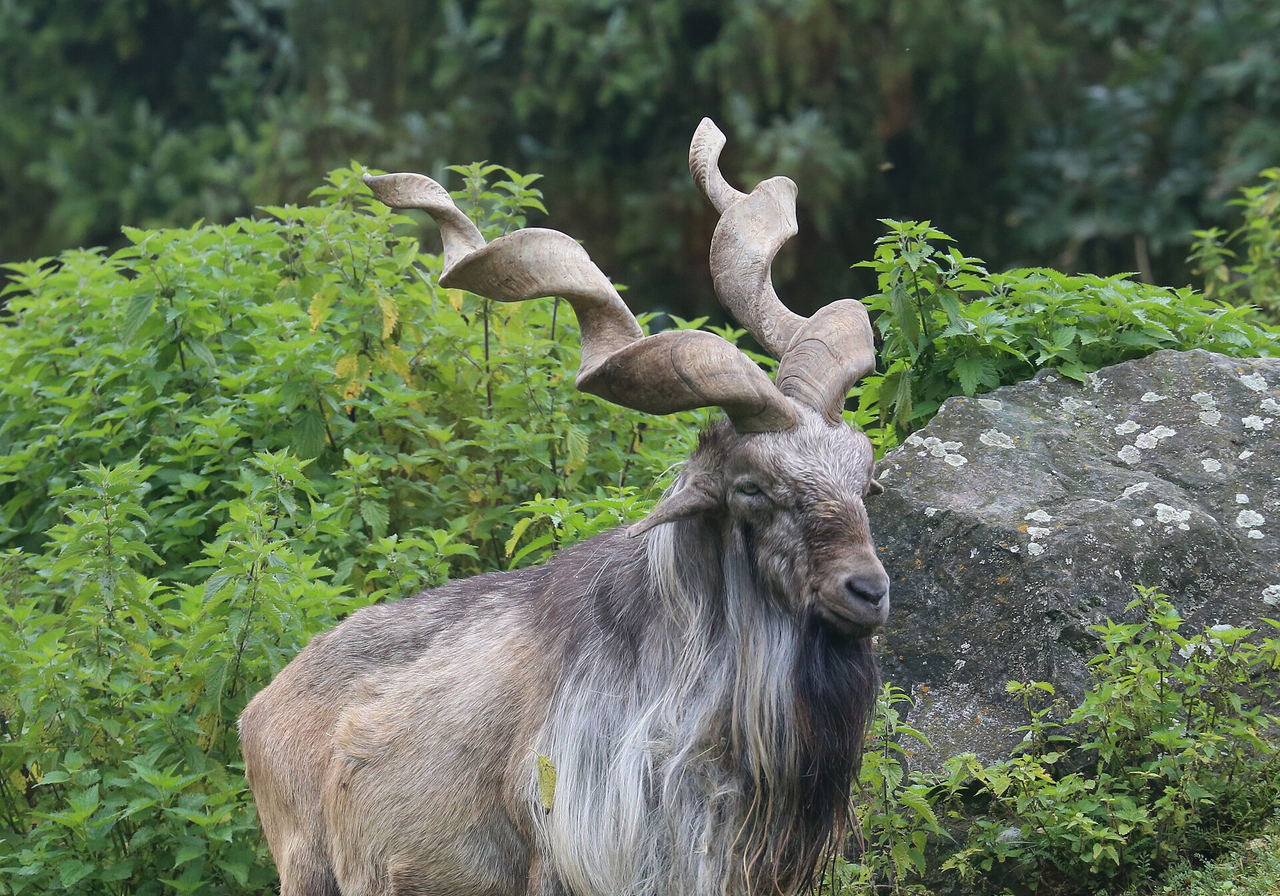
The markhor (Capra falconeri) is a mammal of the family Bovidae, in the order Artiodactyla.
Quick answer
The markhor (Capra falconeri) is a large wild goat of the mountains of central and south Asia, known for the bold, corkscrew-like horns that can reach 160 cm in males. Males weigh 80–110 kg and females 32–50 kg. It lives between 600 and 3,600 m and is the national animal of Pakistan. It is listed as Near Threatened on the IUCN Red List (assessed 2014), with an increasing population.
Top questions about the Markhor
Markhor facts at a glance
- Weight 95 kg
- Length 1.6 m
- Lifespan 12 years
| Scientific name | Capra falconeri |
|---|---|
| Diet | Grasses in spring and summer; leaves, twigs and shrubs in autumn and winter |
| Habitat | Mountains at 600–3,600 m, often scrub forest of oak and pine |
| Body length | 140–180 cm |
| Weight | Males 80–110 kg; females 32–50 kg |
| Horns | Up to 160 cm in males; about 24 cm in females |
| Lifespan | 11–13 years |
| Conservation status | Near Threatened (IUCN Red List, assessed 2014) |
| Kingdom | Animalia |
|---|---|
| Phylum | Chordata |
| Class | Mammalia |
| Order | Artiodactyla |
| Family | Bovidae |
| Genus | Capra |
Where it lives
The markhor (Capra falconeri) is native to Scattered mountain populations in Afghanistan, Pakistan, northern India, Tajikistan, Turkmenistan and Uzbekistan. — recorded across Asia in this guide’s range summary.
For occurrence records, see GBIF species search and sources below.
How big is a markhor?
An adult markhor measures 1.6 m long — about 92% of the height of an average adult person (1.73 m) — and weighs around 95 kg, about 1.4× an average adult’s body weight (70 kg).
Length vs an average adult’s height (to scale)
What is a group of markhors called?
Group name (collective noun)
A group of Markhors is called a herd.
Baby name
A baby Markhor is called a kid.
Explore more animal collective nouns and baby animal names .
Spiral horns
Both sexes carry flared, corkscrew-like horns that twist outwards. They can reach 160 cm in males but only about 24 cm in females, and the angle of the twist differs between subspecies.
Mountain life
Markhors live on steep, arid slopes between 600 and 3,600 m, often in scrub forest of oak and pine. The IUCN Red List records them in Afghanistan, India, Pakistan, Tajikistan, Turkmenistan and Uzbekistan.
Feeding and herds
They are mostly active in the early morning and late afternoon and may forage for 12 to 14 hours a day. They graze on grasses in spring and summer and browse leaves, twigs and shrubs in autumn and winter. Females are social and travel in herds.
Status
Trophy hunting, the trade in body parts for medicine and competition with livestock reduced markhor numbers for decades. The IUCN Red List now classes the species as Near Threatened and records an increasing population.
Explore the Markhor
Close relatives
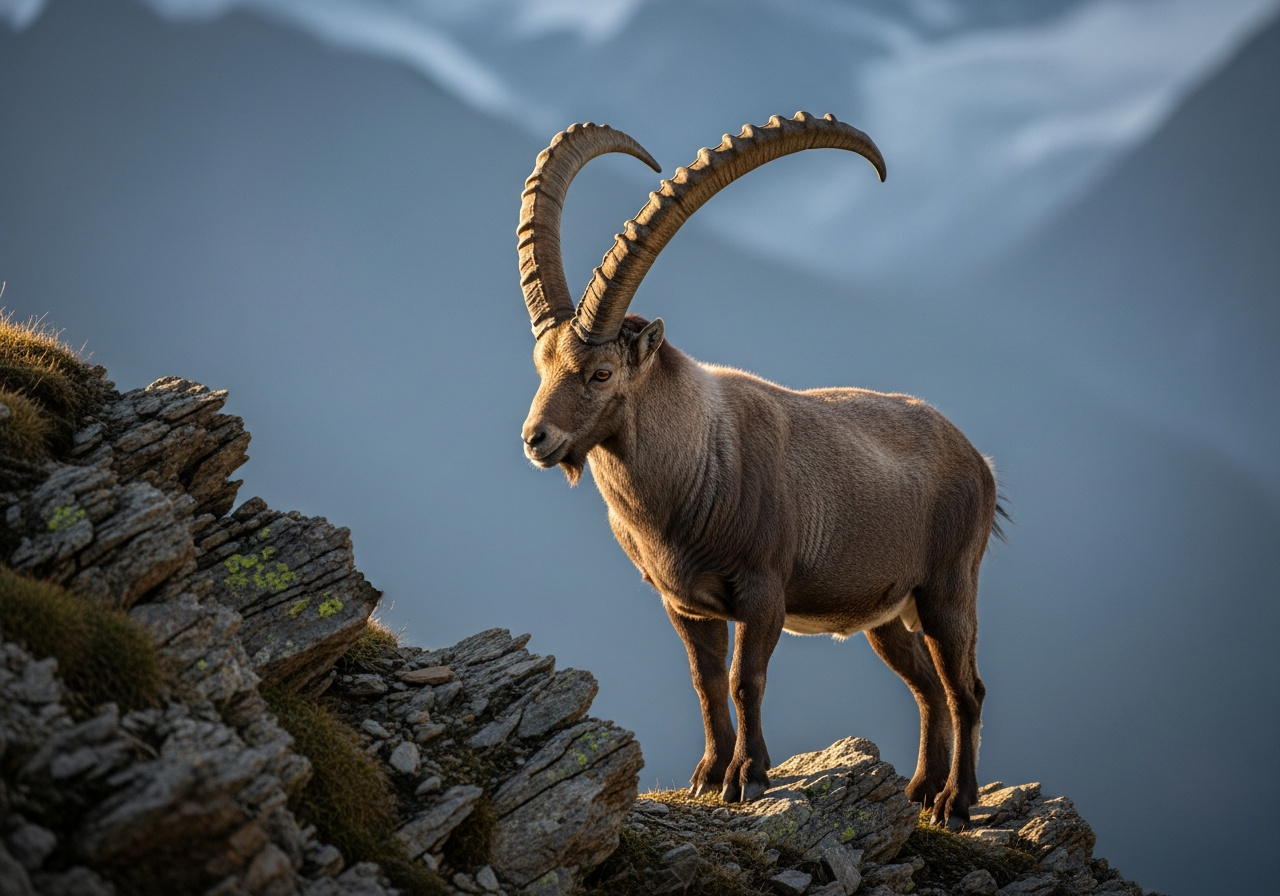
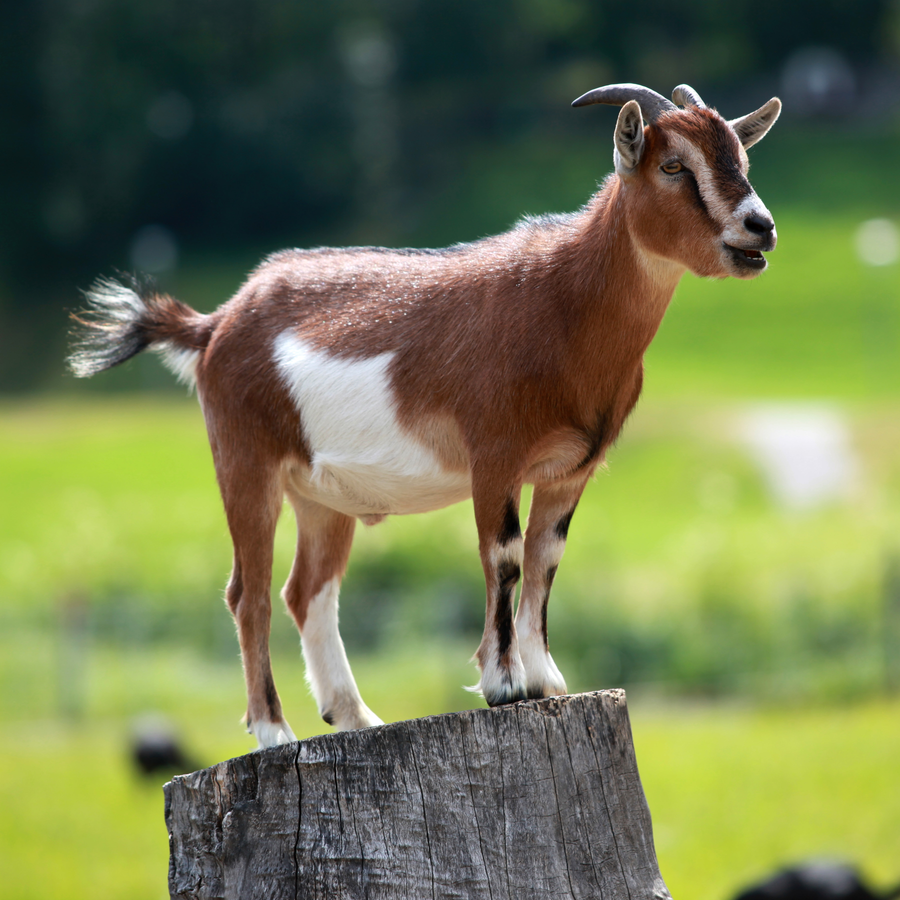
- Domestic Goat Same genus
- Ibex Same genus
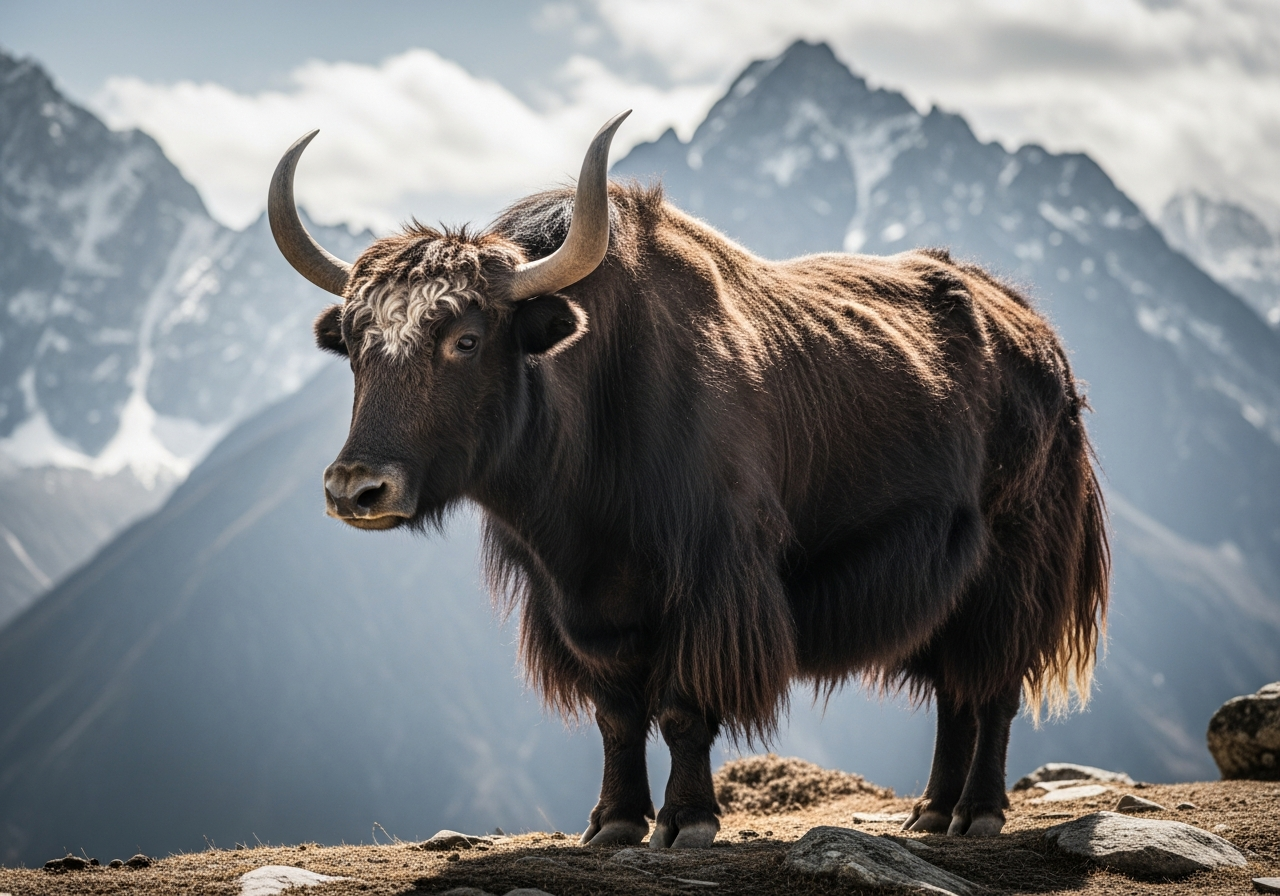
- Cow Same family
- Wildebeest Same family
Range & geography
Did you know? Markhor facts
- Markhors may forage for 12 to 14 hours a day.
- The markhor is the national animal of Pakistan.
Conservation status of the Markhor
The markhor (Capra falconeri) is listed as Near Threatened on the IUCN Red List. Near Threatened (NT) means a species does not yet qualify as threatened but is close to it, or likely to become so in the near future without ongoing conservation. It is a watch-list category just below Vulnerable.
Main threats to the markhor
- Trophy hunting and trade in body parts
- Competition with livestock
Markhor (Capra falconeri) was most recently assessed for the IUCN Red List in 2014. View the full IUCN assessment .
Frequently asked questions about the Markhor
Why does the markhor have spiral horns?
Both sexes grow corkscrew-like horns; in males they can reach 160 cm. The shape differs between subspecies.
Where do markhors live?
In the mountains of Afghanistan, Pakistan, India, Tajikistan, Turkmenistan and Uzbekistan, between 600 and 3,600 m.
Is the markhor the national animal of Pakistan?
Yes.
What is a group of markhors called?
A group of Markhors is called a herd.
What is a baby markhor called?
A baby Markhor is called a kid.
Sources & references
This guide is compiled and reviewed against established zoological and conservation references. Key sources for the Markhor:
-
IUCN Red List of Threatened Species
Conservation status (Near Threatened) reflects the IUCN Red List category for Capra falconeri, most recently assessed in 2014.
-
iNaturalist — observations & photos
Search citizen-science observations and community IDs for Capra falconeri. Useful for range checks and recent sightings — not a substitute for formal Red List status.
-
GBIF — occurrence data
Global Biodiversity Information Facility species search for Capra falconeri. Explore published occurrence records used in range research.
- IUCN Red List of Threatened Species: Capra falconeri (assessed 2014). Checked 16 November 2026.
IUCN Red List category Near Threatened, assessed 2014; population trend increasing; native range.
- Animal Diversity Web: Capra falconeri. University of Michigan Museum of Zoology.
Size, lifespan, range, diet and behaviour.
-
Global Animal Guide editorial standards
How we research, source, review, and update every guide for accuracy.