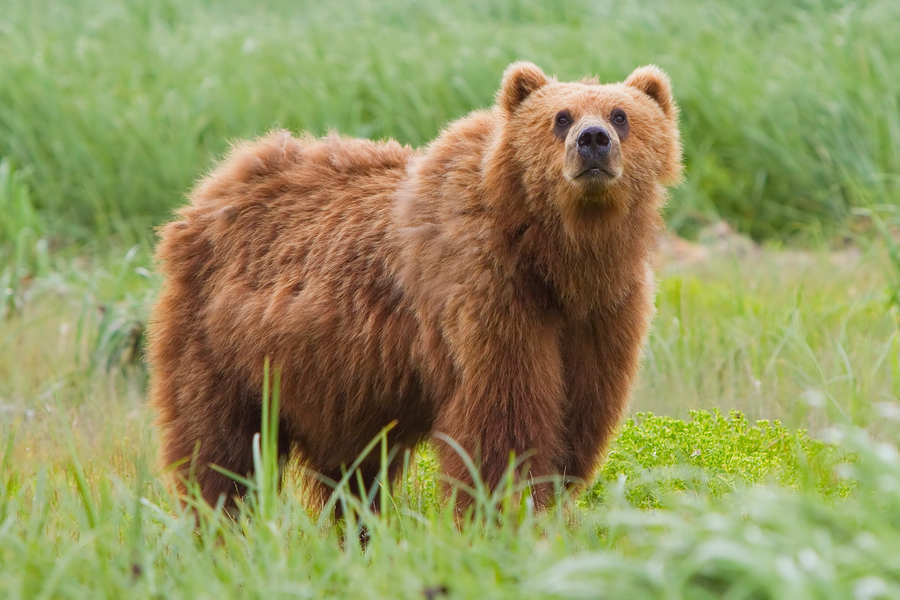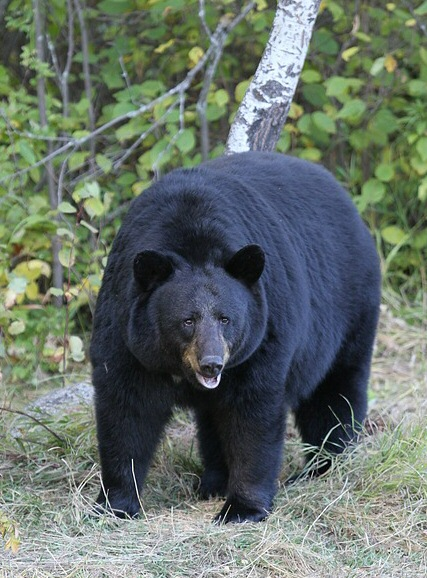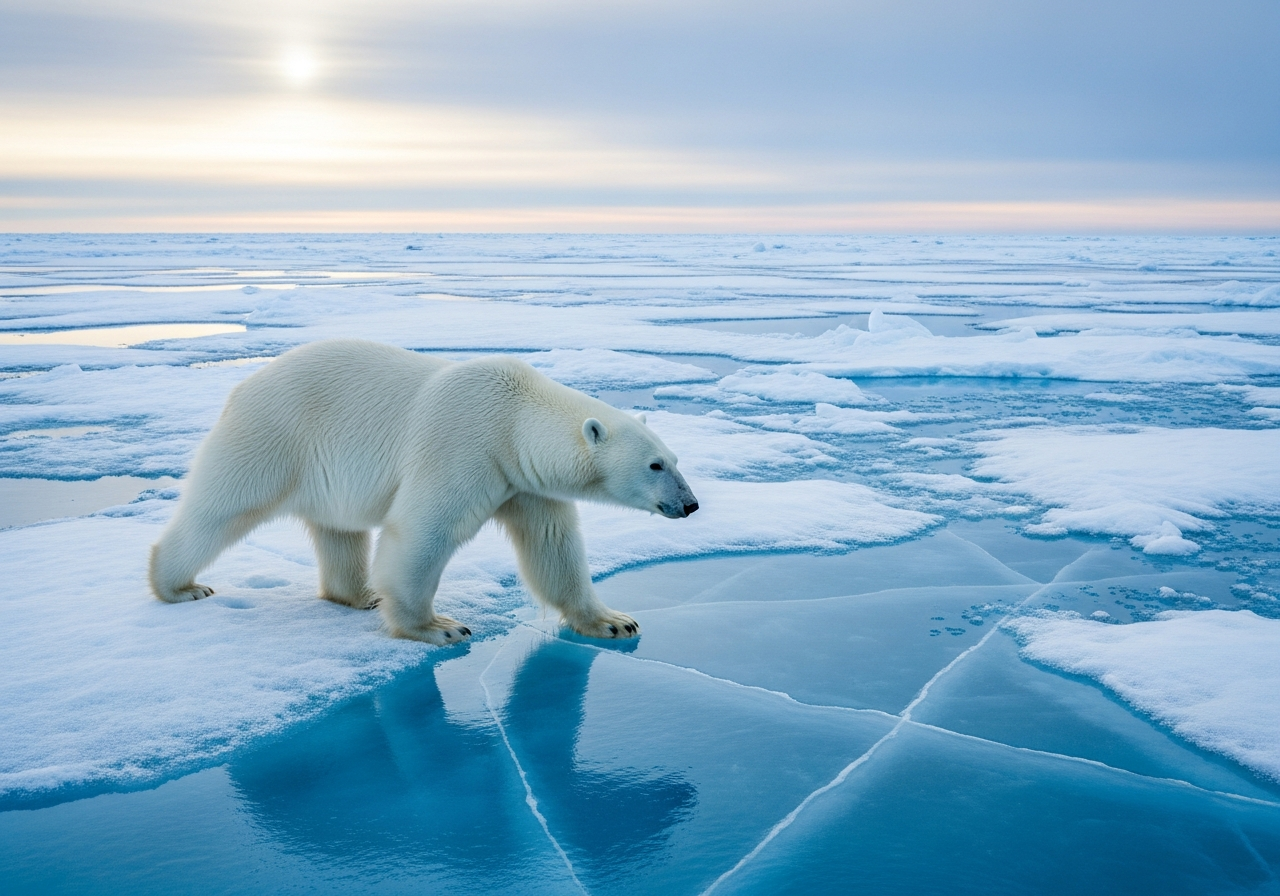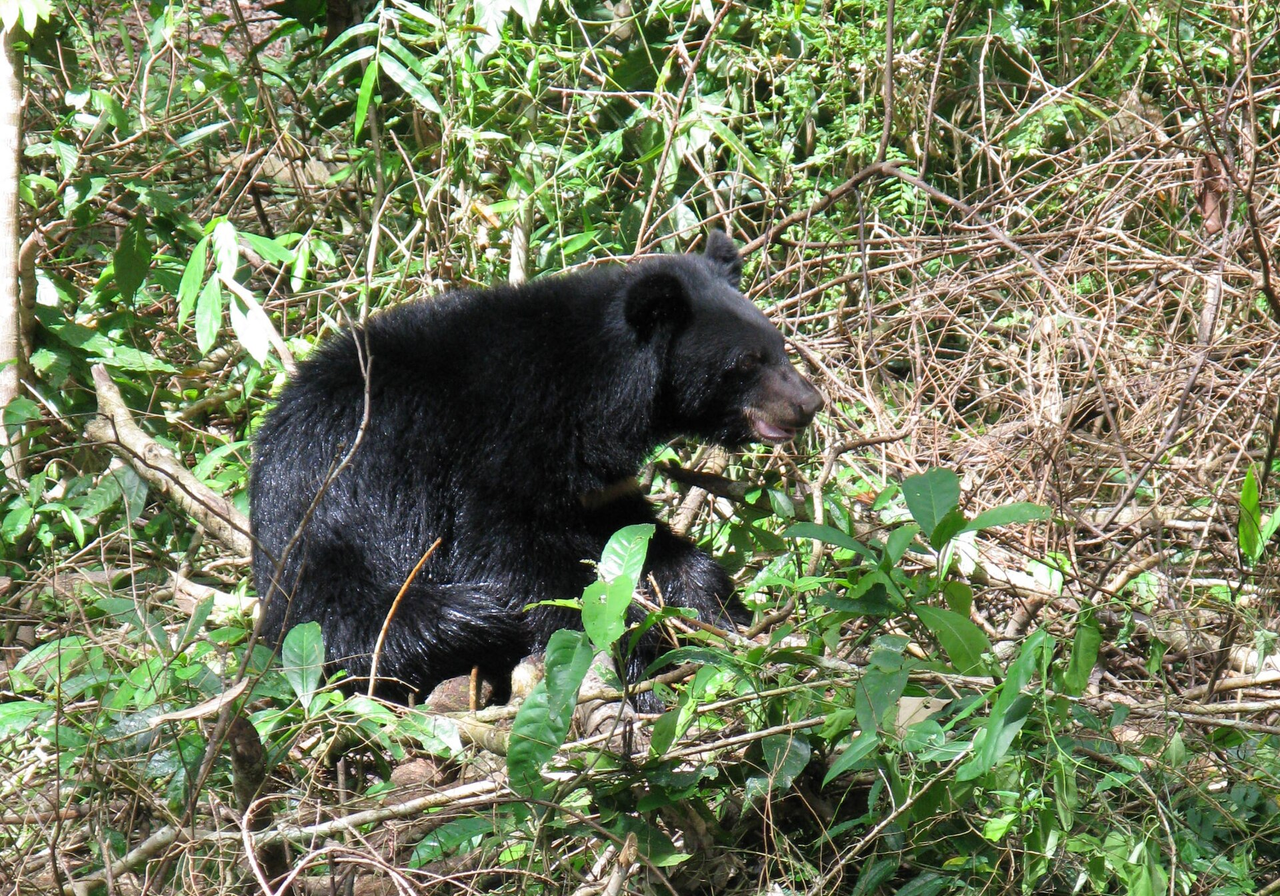
The asiatic black bear (Ursus thibetanus) is a mammal of the bear family, Ursidae, in the order Carnivora.
Quick answer
The Asiatic black bear (Ursus thibetanus), also called the moon bear, is a medium-sized black bear of Asian forests, named for the pale V-shaped mark on its chest. Males weigh 110–150 kg and females 65–90 kg. It eats mostly plants and climbs well. It is listed as Vulnerable on the IUCN Red List (assessed 2016), with a decreasing population. Forest loss and hunting for bile, gallbladders and paws are among the threats.
Top questions about the Asiatic Black Bear
Asiatic Black Bear facts at a glance
- Weight 130 kg
- Length 1.5 m
- Lifespan 25 years
| Scientific name | Ursus thibetanus |
|---|---|
| Also called | Moon bear, Asian black bear |
| Diet | Fruit, nuts, roots and tubers, insects, small animals and carrion |
| Habitat | Moist forest and steep mountains, from sea level to about 3,600 m |
| Head and body length | 120–180 cm |
| Weight | Males 110–150 kg; females 65–90 kg |
| Lifespan | Up to 25 years in the wild; 33 years in captivity |
| Conservation status | Vulnerable (IUCN Red List, assessed 2016) |
| Kingdom | Animalia |
|---|---|
| Phylum | Chordata |
| Class | Mammalia |
| Order | Carnivora |
| Family | Ursidae |
| Genus | Ursus |
Where it lives
The asiatic black bear (Ursus thibetanus) is native to Forests from Iran, Afghanistan and Pakistan along the Himalayas through India, Nepal and Bhutan to Myanmar, Thailand, Laos, Cambodia, Vietnam, China, Taiwan, the Korean Peninsula, Japan and the Russian Far East. — recorded across Asia in this guide’s range summary.
For occurrence records, see GBIF species search and sources below.
How big is a asiatic black bear?
An adult asiatic black bear measures 1.5 m long — about 87% of the height of an average adult person (1.73 m) — and weighs around 130 kg, about 1.9× an average adult’s body weight (70 kg).
Length vs an average adult’s height (to scale)
What is a group of asiatic black bears called?
Group name (collective noun)
A group of Asiatic Black Bears is called a sleuth.
Baby name
A baby Asiatic Black Bear is called a cub.
Explore more animal collective nouns and baby animal names .
How to recognise a moon bear
The coat is black with a pale beige to white V on the chest, the mark that gives the moon bear its name, and often a small white patch on the chin. The ears are large and set further apart than an American black bear's. The body is heavy, the legs thick and the tail barely shows under the long coat.
Where Asiatic black bears live
The IUCN Red List records the species as native to 18 countries and territories across Asia, from Iran, Afghanistan and Pakistan through India, Nepal, Bhutan and Bangladesh to Myanmar, Thailand, Laos, Cambodia, Vietnam, China, Taiwan, the Korean Peninsula, Japan and the Russian Far East. The bears live in moist forest and on steep mountain slopes, moving higher in summer and lower in winter.
Diet and behaviour
Asiatic black bears are omnivores that eat mostly plants: fruit, nuts, roots and tubers, with insects, small animals and carrion. In autumn they move to lower slopes for nuts from oak-family trees to build fat for winter. They are strong swimmers and good climbers, and often rest in a tree hole or cave by day.
Threats: forest loss and the bile trade
The IUCN Red List classes the species as Vulnerable, with numbers falling. It lists farming, plantations, logging, roads and hunting among the threats, and records national and international trade in the bears for medicine. Animal Diversity Web notes that bile and gallbladders are taken for use in some traditional medicine, and that the bears are also hunted for their paws and skins.
Explore the Asiatic Black Bear
Close relatives
- Brown Bear Same genus
- Polar Bear Same genus
- Grizzly Bear Same genus
- American Black Bear Same genus
Collections
Range & geography
Did you know? Asiatic Black Bear facts
- The Asiatic black bear's ears are larger and set further apart than an American black bear's.
- The IUCN Red List records the species from sea level up to 4,300 metres.
Conservation status of the Asiatic Black Bear
The asiatic black bear (Ursus thibetanus) is listed as Vulnerable on the IUCN Red List. Vulnerable (VU) means a species faces a high risk of extinction in the medium-term future. It is the lowest-risk of the three 'threatened' IUCN categories — one step below Endangered, which is itself below Critically Endangered — and is often an early warning that a population is in trouble.
Main threats to the asiatic black bear
- Forest loss to farming, plantations and logging
- Hunting and trade for bile, gallbladders and paws
Asiatic Black Bear (Ursus thibetanus) was most recently assessed for the IUCN Red List in 2016. View the full IUCN assessment .
Frequently asked questions about the Asiatic Black Bear
Why is it called a moon bear?
Because of the pale, crescent-like V-shaped mark on its chest, which stands out against the black coat.
Is the Asiatic black bear endangered?
It is listed as Vulnerable on the IUCN Red List (assessed 2016), one step below Endangered, and its population is decreasing.
What do Asiatic black bears eat?
Mostly plants: fruit, nuts, roots and tubers. They also eat insects, small animals and carrion.
Why are Asiatic black bears hunted?
For their bile and gallbladders, which are used in some traditional medicine, and for their paws and skins. The IUCN Red List records both national and international trade.
What is a group of asiatic black bears called?
A group of Asiatic Black Bears is called a sleuth.
What is a baby asiatic black bear called?
A baby Asiatic Black Bear is called a cub.
Sources & references
This guide is compiled and reviewed against established zoological and conservation references. Key sources for the Asiatic Black Bear:
-
IUCN Red List of Threatened Species
Conservation status (Vulnerable) reflects the IUCN Red List category for Ursus thibetanus, most recently assessed in 2016.
-
iNaturalist — observations & photos
Search citizen-science observations and community IDs for Ursus thibetanus. Useful for range checks and recent sightings — not a substitute for formal Red List status.
-
GBIF — occurrence data
Global Biodiversity Information Facility species search for Ursus thibetanus. Explore published occurrence records used in range research.
- Garshelis, D. & Steinmetz, R. (2020). Ursus thibetanus (amended version of 2016 assessment). The IUCN Red List of Threatened Species 2020: e.T22824A166528664. Checked 16 November 2026.
IUCN Red List category Vulnerable, assessed 2016; population trend decreasing; native range, threats and trade.
- Animal Diversity Web: Ursus thibetanus. University of Michigan Museum of Zoology.
Size, lifespan, habitat, diet and use of bile and gallbladders.
-
Global Animal Guide editorial standards
How we research, source, review, and update every guide for accuracy.