The laughing gull (Leucophaeus atricilla) is a bird of the family Laridae, in the order Charadriiformes.
Quick answer
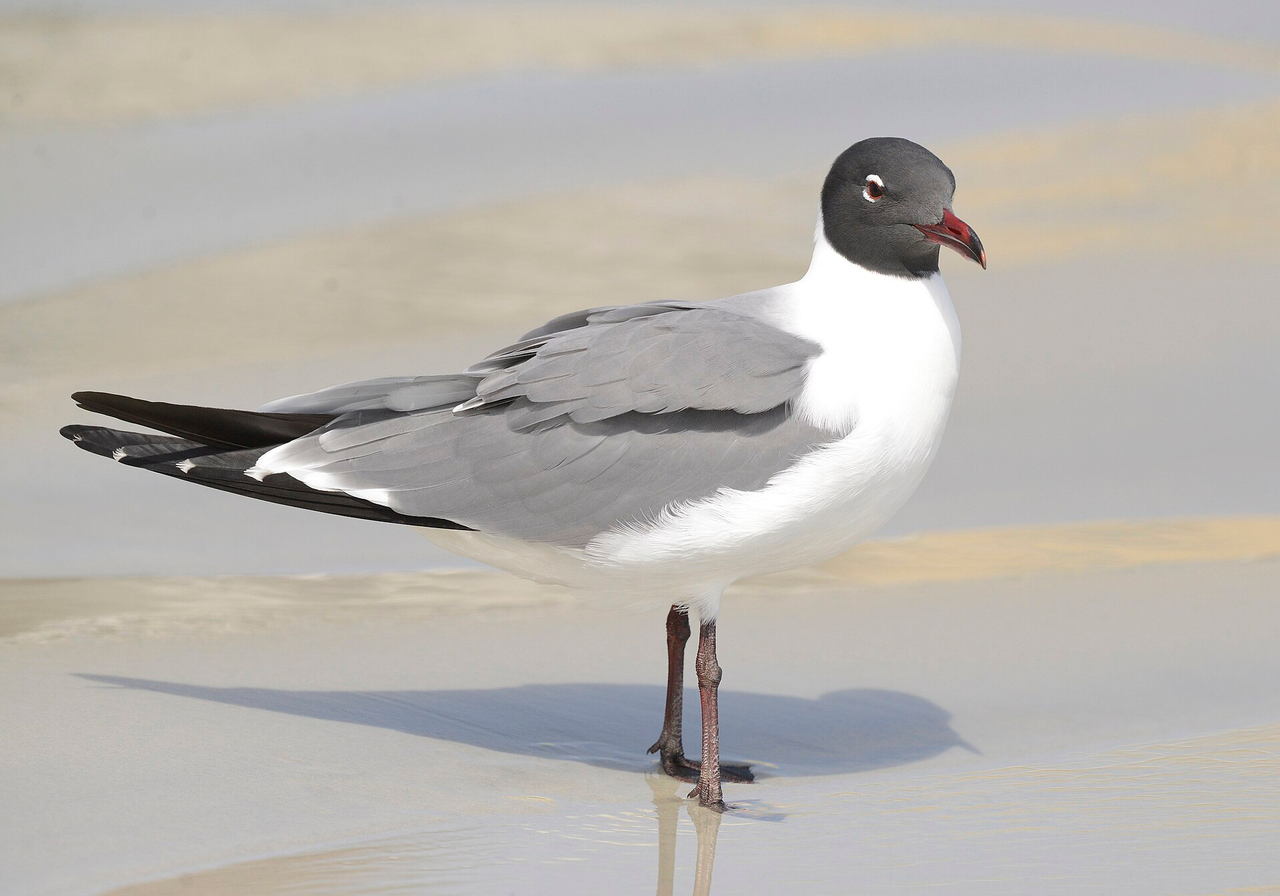
The laughing gull (Leucophaeus atricilla) is a medium-sized gull of the Atlantic and Gulf coasts of the Americas, named for its call, which sounds like 'ha ha ha'. Breeding adults have a black hood, white underparts and slate-grey wings with black tips. It weighs about 300 g and eats fish, crabs, insects and scraps, and often steals food from pelicans and terns. It is listed as Least Concern on the IUCN Red List (assessed 2018), with an increasing population.
Top questions about the Laughing Gull
Laughing Gull facts at a glance
- Weight 310 g
| Scientific name | Leucophaeus atricilla (the IUCN Red List uses Larus atricilla) |
|---|---|
| Diet | Fish, crabs, shellfish and insects; also scraps, refuse and food stolen from other birds |
| Habitat | Coasts, beaches, salt marshes and estuaries; rarely inland |
| Range | Breeds from Maine to Florida, around the Gulf of Mexico and in the Caribbean; winters south to Peru and Brazil |
| Weight | About 300 g on average |
| Lifespan | Ringed birds have lived almost 20 years |
| Conservation status | Least Concern (IUCN Red List, assessed 2018) |
| Kingdom | Animalia |
|---|---|
| Phylum | Chordata |
| Class | Aves |
| Order | Charadriiformes |
| Family | Laridae |
| Genus | Leucophaeus |
Where it lives
The laughing gull (Leucophaeus atricilla) is native to Breeds on Atlantic coasts from Maine to Florida, around the Gulf of Mexico, on the Pacific coast of north-western Mexico and in the Caribbean; winters along coasts south to northern Peru and north-eastern Brazil. — recorded across North America, South America in this guide’s range summary.
For occurrence records, see GBIF species search and sources below.
What is a group of laughing gulls called?
Group name (collective noun)
A group of Laughing Gulls is called a colony.
Baby name
A baby Laughing Gull is called a chick.
Explore more animal collective nouns and baby animal names .
How to recognise one
In the breeding season adults have a black hood, white underparts and slate-grey wings with black outer flight feathers. The hood fades in winter. Young birds are brown and pass through several in-between plumages, with partial hoods and spotted tails, before they look like adults.
A bold scavenger
Laughing gulls eat insects, fish, shellfish and crabs, taking food from the surface in flight. They are not expert fishers and often steal a catch from pelicans or terns. They also take eggs and chicks of other birds, and food from rubbish, fishing boats and people.
Colonies on the coast
They nest in colonies on barrier beaches and islands in estuaries, sometimes alongside other gulls and terns. The nest is built of sticks and grass and usually holds one to three olive-brown eggs.
Status
Laughing gulls were once killed for feathers to decorate hats. After they were protected, numbers recovered, and the IUCN Red List now classes the species as Least Concern with an increasing population.
Explore the Laughing Gull
Close relatives
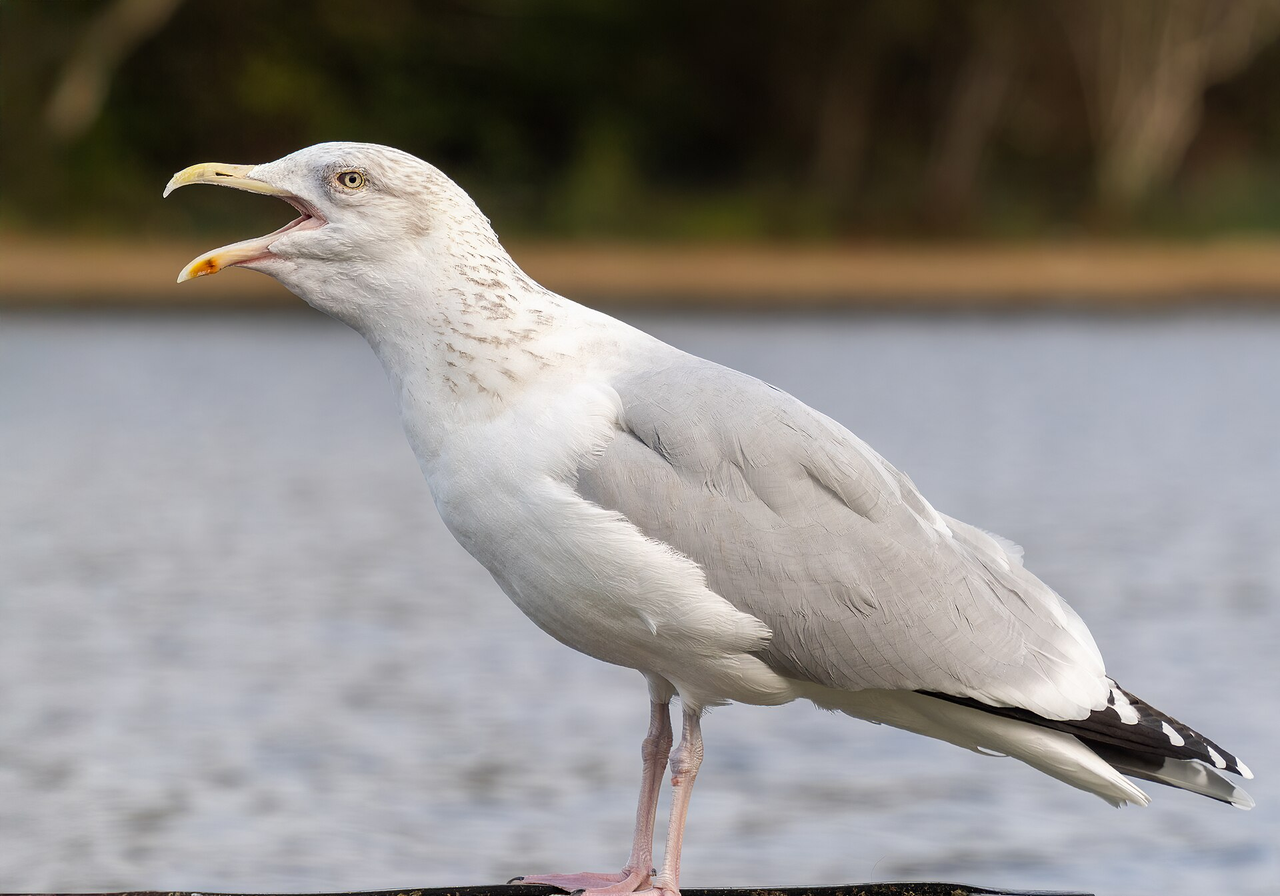
- European Herring Gull Same family
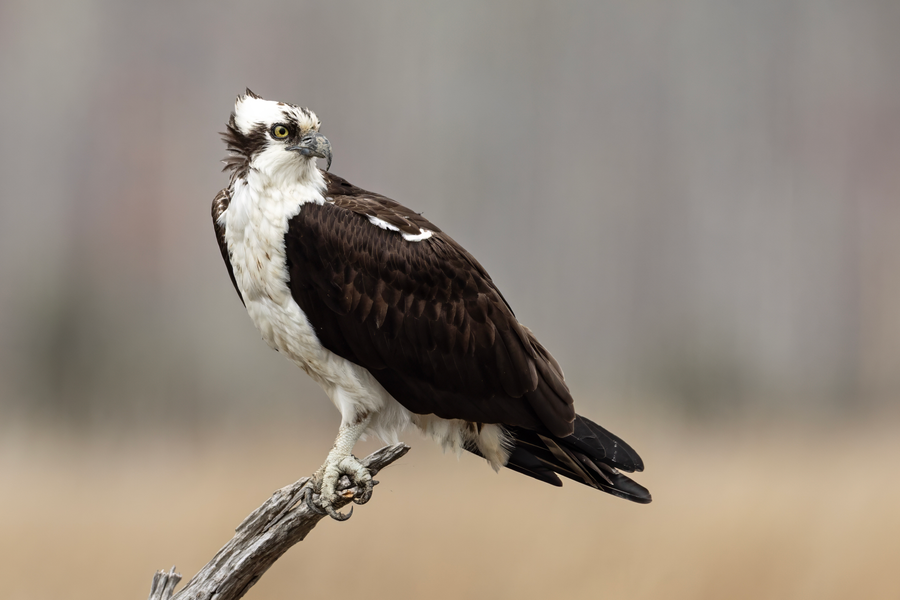
- Killdeer Same order
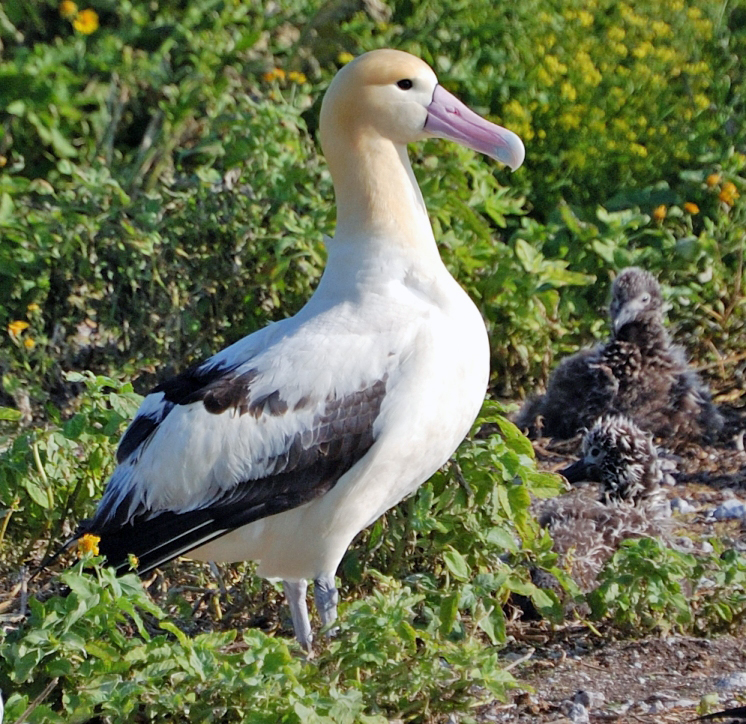
- Razorbill Same order
- Common Murre Same order
Did you know? Laughing Gull facts
- Laughing gulls often snatch fish from pelicans that have just made a catch.
- The full black hood is a breeding-season look; young birds go through several plumages before they get one.
Conservation status of the Laughing Gull
The laughing gull (Leucophaeus atricilla) is listed as Least Concern on the IUCN Red List. Least Concern (LC) is the IUCN's lowest-risk category, assigned to widespread, abundant species that have been evaluated and found not to be threatened. It does not mean a species faces no pressures — only that it is not currently at risk of extinction.
Laughing Gull (Leucophaeus atricilla) was most recently assessed for the IUCN Red List in 2018. View the full IUCN assessment .
Frequently asked questions about the Laughing Gull
Why is it called a laughing gull?
Its call sounds like a loud 'ha ha ha'.
What do laughing gulls eat?
Fish, crabs, shellfish and insects, plus eggs of other birds, scraps and refuse. They often steal food from pelicans and terns.
Where do laughing gulls live?
On coasts of the Americas: they breed from Maine to Florida, around the Gulf of Mexico and in the Caribbean, and winter as far south as Peru and north-eastern Brazil.
Are laughing gulls endangered?
No. The IUCN Red List classes them as Least Concern (assessed 2018), and the population is increasing.
What is a group of laughing gulls called?
A group of Laughing Gulls is called a colony.
What is a baby laughing gull called?
A baby Laughing Gull is called a chick.
Sources & references
This guide is compiled and reviewed against established zoological and conservation references. Key sources for the Laughing Gull:
-
IUCN Red List of Threatened Species
Conservation status (Least Concern) reflects the IUCN Red List category for Leucophaeus atricilla, most recently assessed in 2018.
-
iNaturalist — observations & photos
Search citizen-science observations and community IDs for Leucophaeus atricilla. Useful for range checks and recent sightings — not a substitute for formal Red List status.
-
GBIF — occurrence data
Global Biodiversity Information Facility species search for Leucophaeus atricilla. Explore published occurrence records used in range research.
-
eBird — bird observations
Cornell Lab eBird target search for Laughing Gull. Check recent checklists and seasonal abundance where birders report this species.
- IUCN Red List of Threatened Species: Larus atricilla (BirdLife International, assessed 2018). Checked 17 November 2026.
IUCN Red List category Least Concern, last assessed 8 August 2018; population trend increasing.
- Animal Diversity Web: Larus atricilla. University of Michigan Museum of Zoology.
Plumage, diet, nesting, history of hunting and longevity (US Bird Banding Laboratory figure).
- Tobias, J. A. et al. (2022). AVONET: morphological, ecological and geographical data for all birds. Ecology Letters 25: 581–597. doi:10.1111/ele.13898
Average body mass.
- Gill, F., Donsker, D. & Rasmussen, P. (Eds). IOC World Bird List v15.2.
English and scientific name, classification and range.
-
Global Animal Guide editorial standards
How we research, source, review, and update every guide for accuracy.