The killdeer (Charadrius vociferus) is a bird of the family Charadriidae, in the order Charadriiformes.
Quick answer
The killdeer (Charadrius vociferus) is a plover of the Americas, named for its shrill 'kill-deer' call. Unusually for a shorebird, it often nests far from water, laying its eggs on bare gravel, fields or even flat roofs. It has two black breast bands and an orange rump, weighs about 88 g, and fakes a broken wing to lure predators away. It is now listed as Near Threatened.
Top questions about the Killdeer
Killdeer facts at a glance
- Weight 90 g
- Length 27 cm
| Scientific name | Charadrius vociferus |
|---|---|
| Diet | Insects, worms, snails and other invertebrates |
| Habitat | Fields, lawns, gravel areas, shores and mudflats |
| Length | 23–27 cm |
| Weight | Average about 88 g |
| Oldest known | At least 10 years 11 months |
| Conservation status | Near Threatened (IUCN Red List, assessed 2024) |
| Kingdom | Animalia |
|---|---|
| Phylum | Chordata |
| Class | Aves |
| Order | Charadriiformes |
| Family | Charadriidae |
| Genus | Charadrius |
Where it lives
The killdeer (Charadrius vociferus) is native to Breeds across North America to Central America and on the coasts of Ecuador and Peru; northern birds winter south to northern South America. — recorded across North America, South America in this guide’s range summary.
For occurrence records, see GBIF species search and sources below.
How big is a killdeer?
An adult killdeer measures 27 cm long — about 16% of the height of an average adult person (1.73 m) — and weighs around 90 g, a small fraction of an average adult’s body weight (70 kg).
Length vs an average adult’s height (to scale)
What is a baby killdeer called?
Baby name
A baby Killdeer is called a chick.
Explore more animal collective nouns and baby animal names .
Identification
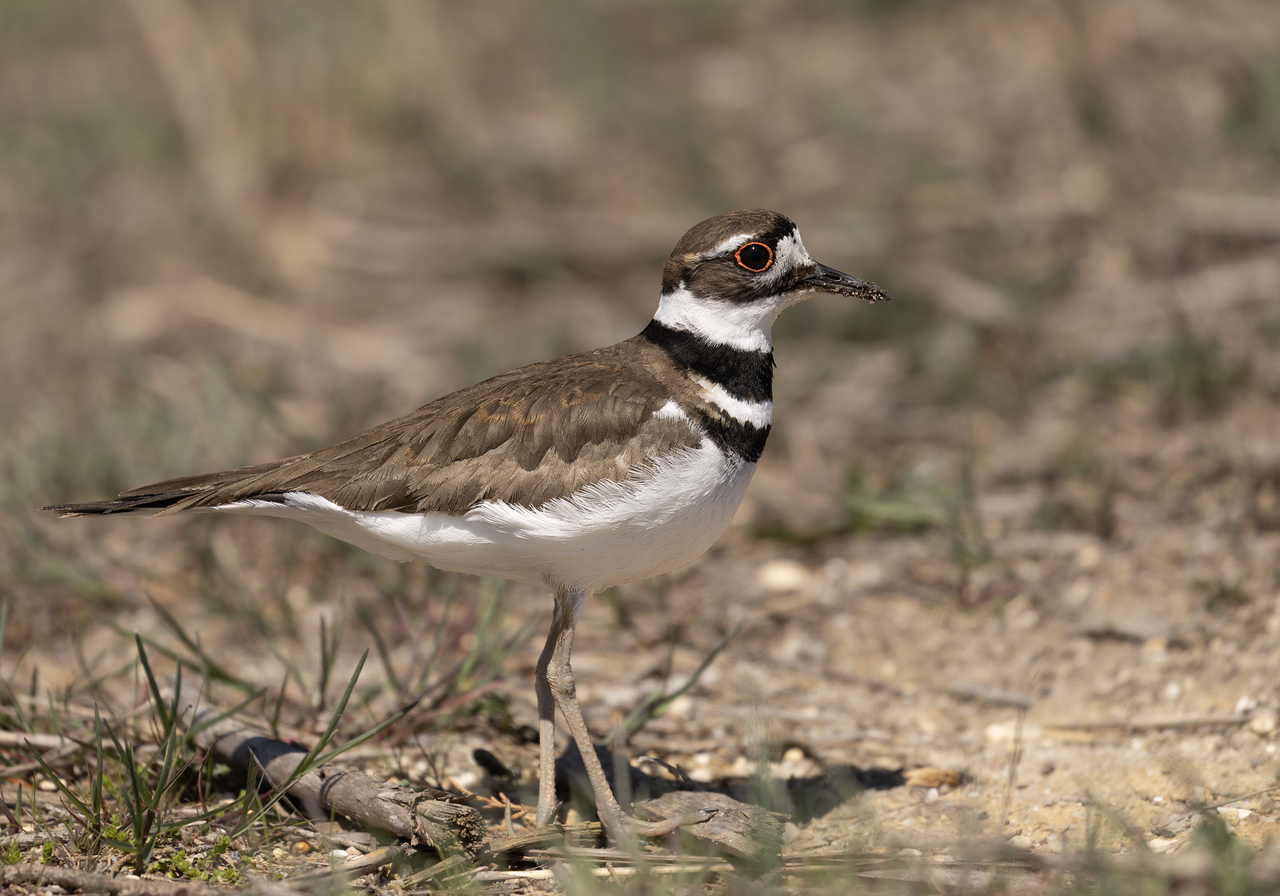
Killdeer are brown above and white below, with two black bands across the breast, a white forehead, a red eye-ring and a bright orange-buff rump that shows in flight. The loud 'kill-deer' or 'dee-dee' call is often the first sign of one.
The broken-wing display
When a predator or person approaches the nest, a killdeer limps away calling, dragging one wing as if injured. Once the intruder follows it far enough, the bird 'recovers' and flies off. Against cattle and other large animals it may instead fluff up and run at them.
Nests on gravel
The nest is just a shallow scrape on open ground, often lined with pebbles. Killdeer use farm fields, parking lots, roadsides and gravel rooftops. The speckled eggs are well camouflaged, and the downy chicks can run within hours of hatching.
Why it is Near Threatened
BirdLife International lists the killdeer as Near Threatened (2024). Its estimate is about 2.3 million mature birds, still abundant and widespread, but data covering most of the range show a decline of more than 20% over three generations, and the causes are not yet clear.
Explore the Killdeer
Close relatives
- Razorbill Same order
- Common Murre Same order
- Atlantic Puffin Same order
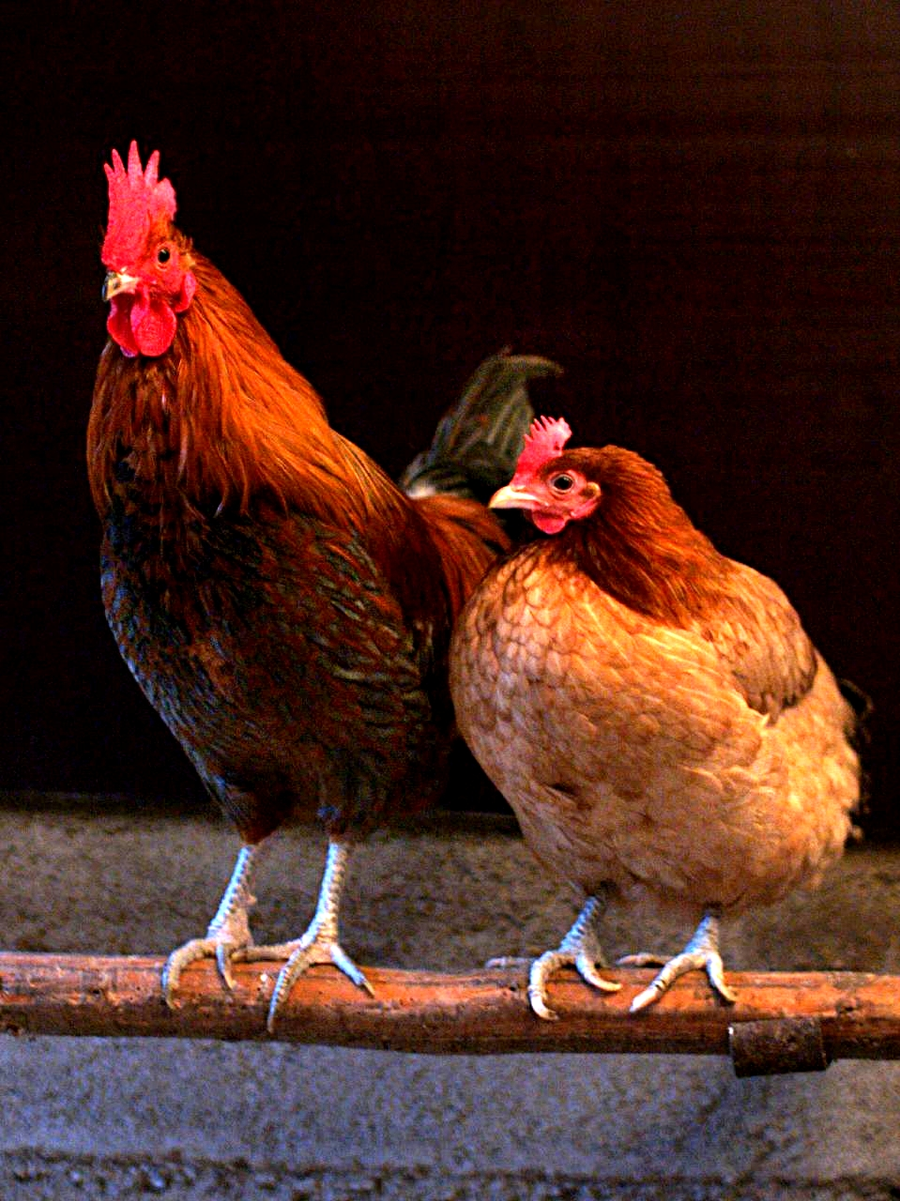
- Chicken Same class
Range & geography
Did you know? Killdeer facts
- Killdeer chicks can run within hours of hatching.
- They often nest on gravel rooftops and parking lots.
Conservation status of the Killdeer
The killdeer (Charadrius vociferus) is listed as Near Threatened on the IUCN Red List. Near Threatened (NT) means a species does not yet qualify as threatened but is close to it, or likely to become so in the near future without ongoing conservation. It is a watch-list category just below Vulnerable.
Killdeer (Charadrius vociferus) was most recently assessed for the IUCN Red List in 2024. Look up on the IUCN Red List .
Frequently asked questions about the Killdeer
Why is it called a killdeer?
The name imitates its loud, repeated call, which sounds like 'kill-deer'.
Why does a killdeer pretend to be hurt?
It is a distraction display. By limping away with a 'broken' wing, it lures predators away from its eggs or chicks.
Is the killdeer endangered?
Not endangered, but it was assessed as Near Threatened in 2024 because the population has declined by more than 20% over three generations.
Is a killdeer a shorebird?
Yes. It is a plover, but it lives inland far more than most shorebirds, on fields, lawns and gravel.
What is a baby killdeer called?
A baby Killdeer is called a chick.
Sources & references
This guide is compiled and reviewed against established zoological and conservation references. Key sources for the Killdeer:
-
IUCN Red List of Threatened Species
Conservation status (Near Threatened) reflects the IUCN Red List category for Charadrius vociferus, most recently assessed in 2024.
-
iNaturalist — observations & photos
Search citizen-science observations and community IDs for Charadrius vociferus. Useful for range checks and recent sightings — not a substitute for formal Red List status.
-
GBIF — occurrence data
Global Biodiversity Information Facility species search for Charadrius vociferus. Explore published occurrence records used in range research.
-
eBird — bird observations
Cornell Lab eBird target search for Killdeer. Check recent checklists and seasonal abundance where birders report this species.
- BirdLife International (2026). Species factsheet: Killdeer Charadrius vociferus. BirdLife DataZone. Checked 1 November 2026.
IUCN Red List category Near Threatened (assessed 2024), population estimate and trend.
- Animal Diversity Web: Charadrius vociferus. University of Michigan Museum of Zoology.
Size, lifespan and behaviour.
- Tobias, J. A. et al. (2022). AVONET: morphological, ecological and geographical data for all birds. Ecology Letters 25: 581–597. doi:10.1111/ele.13898
Average body mass.
- Gill, F., Donsker, D. & Rasmussen, P. (Eds). IOC World Bird List v15.2.
English and scientific name, classification and range.
-
Global Animal Guide editorial standards
How we research, source, review, and update every guide for accuracy.