The razorbill (Alca torda) is a bird of the family Alcidae, in the order Charadriiformes.
Quick answer
The razorbill (Alca torda) is a black-and-white seabird of the North Atlantic with a deep, blunt bill crossed by a white line. It nests on sea cliffs and dives for fish, using its wings to swim underwater. It is the closest living relative of the extinct great auk. Razorbills weigh 505–730 g, can live over 40 years, and are listed as Least Concern with an increasing population.
Top questions about the Razorbill
Razorbill facts at a glance
- Weight 610 g
- Lifespan 13 years
| Scientific name | Alca torda |
|---|---|
| Diet | Small fish such as sandeels, sprats and herring; krill |
| Habitat | Rocky sea cliffs and islands; open sea in winter |
| Weight | 505–730 g |
| Lifespan | Typically 13 years; oldest ringed bird nearly 42 |
| Range | North Atlantic, from Canada and Greenland to Britain and the Baltic |
| Conservation status | Least Concern (IUCN Red List, assessed 2021) |
| Kingdom | Animalia |
|---|---|
| Phylum | Chordata |
| Class | Aves |
| Order | Charadriiformes |
| Family | Alcidae |
| Genus | Alca |
Where it lives
The razorbill (Alca torda) is native to Cliffs and islands of the North Atlantic from eastern Canada and Greenland to Iceland, Britain, Scandinavia and the Baltic; winters at sea south to the Mediterranean and North Carolina. — recorded across North America, Europe, Oceans in this guide’s range summary.
For occurrence records, see GBIF species search and sources below.
What is a group of razorbills called?
Group name (collective noun)
A group of Razorbills is called a colony.
Baby name
A baby Razorbill is called a chick.
Explore more animal collective nouns and baby animal names .
Identification
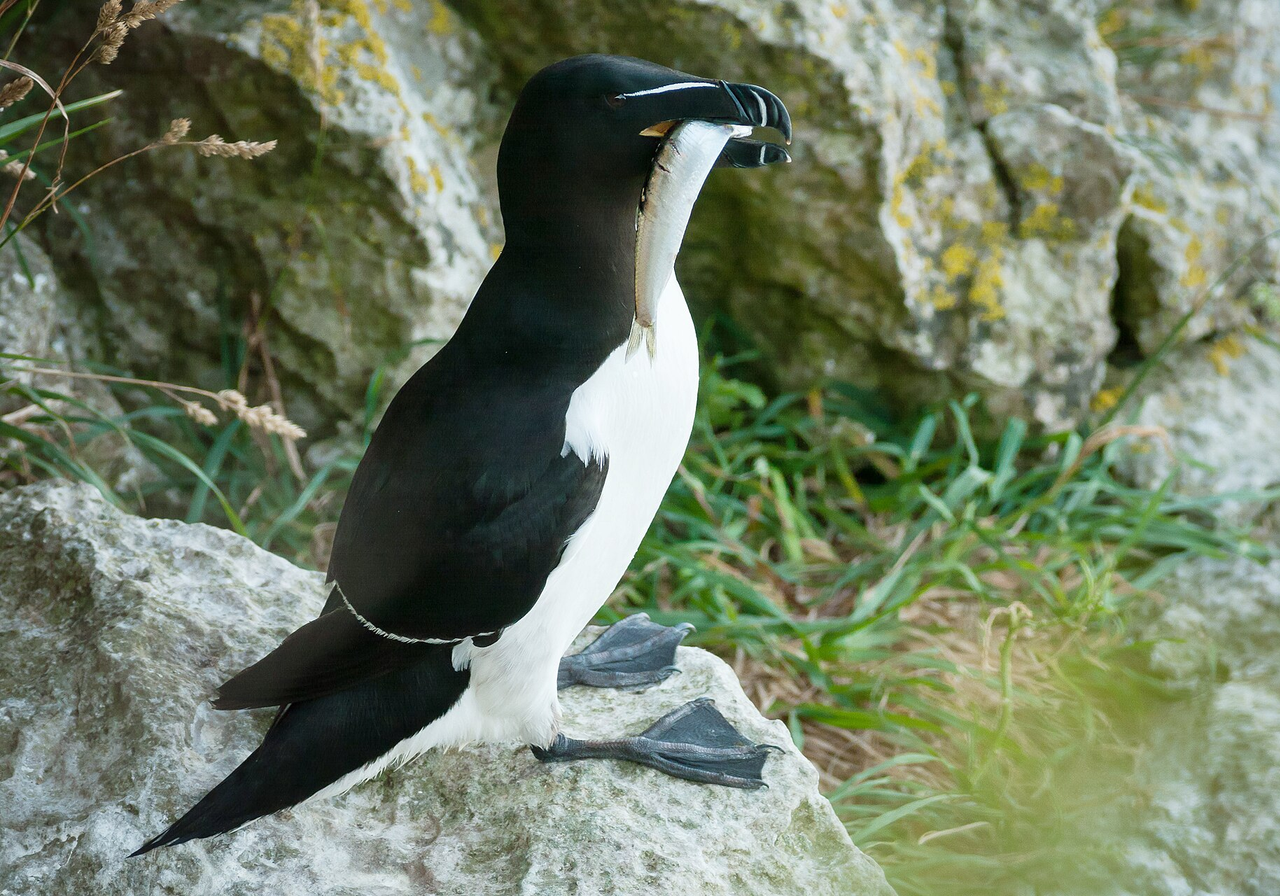
Razorbills are black above and white below, with a thick, flattened bill crossed by a white vertical line and a thin white line from the bill to the eye. The tail is longer and more pointed than a guillemot's. In winter the throat and cheeks turn white.
Flying underwater
Razorbills are expert divers that use their wings to swim. Most dives are V-shaped plunges after schools of small fish, which they carry back to the chick crosswise in the bill.
Relative of the great auk
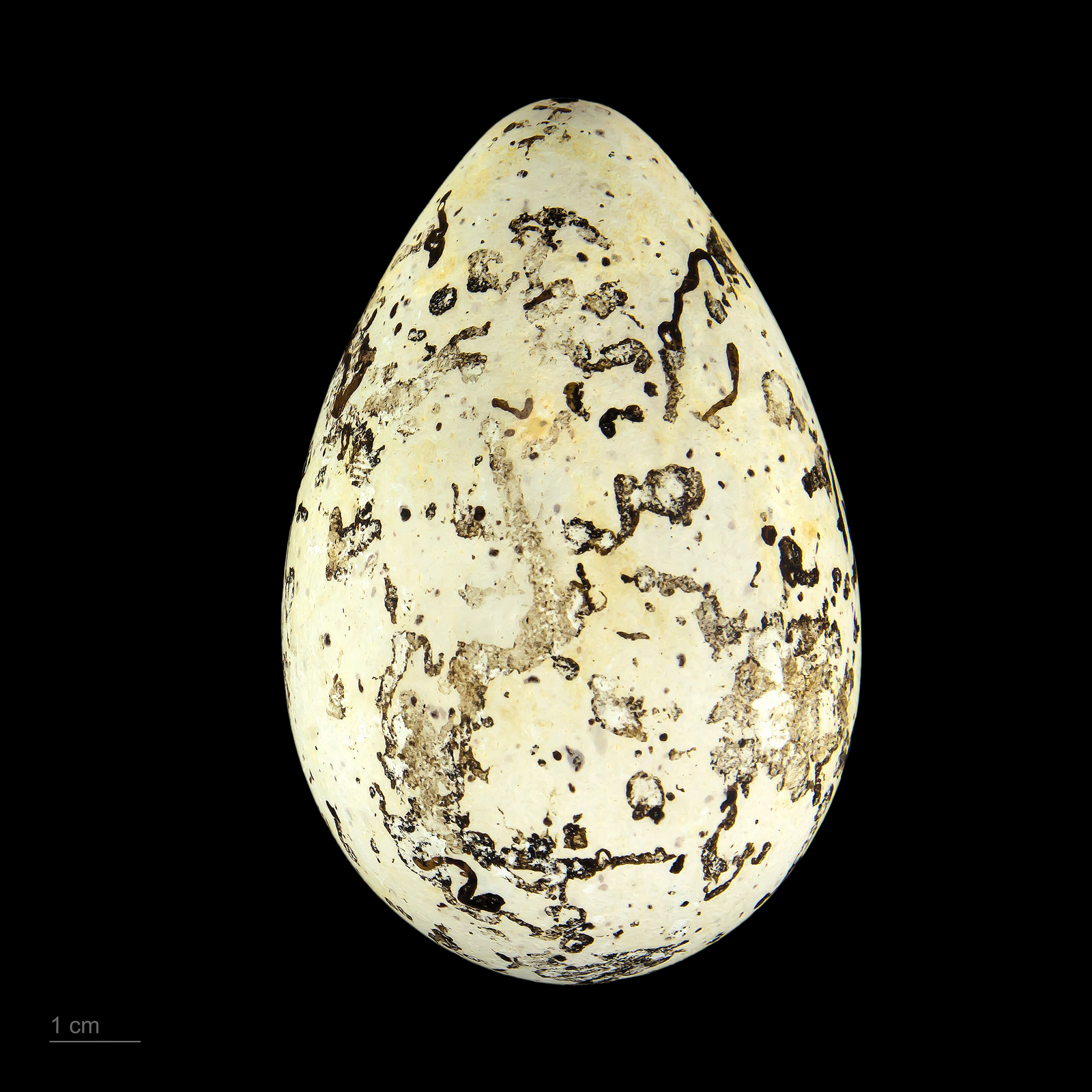
The razorbill is the only living member of the genus Alca and the closest relative of the great auk, a large flightless seabird hunted to extinction in the 1840s.
Status
BirdLife International lists the razorbill as Least Concern (2021), estimating 838,000 to 1.66 million mature birds and an increasing trend. BTO ringing data give a typical life expectancy of 13 years, and the oldest ringed razorbill lived almost 42 years.
Explore the Razorbill
Close relatives
- Common Murre Same family
- Atlantic Puffin Same family
- Killdeer Same order
- Chicken Same class
Did you know? Razorbill facts
- Razorbills carry fish to their chick crosswise in the bill.
- The oldest ringed razorbill lived almost 42 years.
Conservation status of the Razorbill
The razorbill (Alca torda) is listed as Least Concern on the IUCN Red List. Least Concern (LC) is the IUCN's lowest-risk category, assigned to widespread, abundant species that have been evaluated and found not to be threatened. It does not mean a species faces no pressures — only that it is not currently at risk of extinction.
Razorbill (Alca torda) was most recently assessed for the IUCN Red List in 2021. Look up on the IUCN Red List .
Frequently asked questions about the Razorbill
What is the difference between a razorbill and a guillemot?
Razorbills have a deep, blunt bill with a white line and a blacker back; guillemots (common murres) have a slender, pointed bill and are browner.
Are razorbills related to penguins?
No. They are auks, in the same family as puffins and guillemots. They look a little like penguins but can fly and live in the Northern Hemisphere.
How long do razorbills live?
Typically about 13 years, but one ringed razorbill lived almost 42 years.
Where do razorbills nest?
On ledges and in crevices on sea cliffs and rocky islands around the North Atlantic.
What is a group of razorbills called?
A group of Razorbills is called a colony.
What is a baby razorbill called?
A baby Razorbill is called a chick.
Sources & references
This guide is compiled and reviewed against established zoological and conservation references. Key sources for the Razorbill:
-
IUCN Red List of Threatened Species
Conservation status (Least Concern) reflects the IUCN Red List category for Alca torda, most recently assessed in 2021.
-
iNaturalist — observations & photos
Search citizen-science observations and community IDs for Alca torda. Useful for range checks and recent sightings — not a substitute for formal Red List status.
-
GBIF — occurrence data
Global Biodiversity Information Facility species search for Alca torda. Explore published occurrence records used in range research.
-
eBird — bird observations
Cornell Lab eBird target search for Razorbill. Check recent checklists and seasonal abundance where birders report this species.
- BirdLife International (2026). Species factsheet: Razorbill Alca torda. BirdLife DataZone. Checked 1 November 2026.
IUCN Red List category Least Concern (assessed 2021), population estimate and trend.
- Animal Diversity Web: Alca torda. University of Michigan Museum of Zoology.
Size, lifespan and behaviour.
- BTO BirdFacts: Razorbill. British Trust for Ornithology.
Typical lifespan, oldest ringed bird and UK body weight.
- Tobias, J. A. et al. (2022). AVONET: morphological, ecological and geographical data for all birds. Ecology Letters 25: 581–597. doi:10.1111/ele.13898
Average body mass.
- Gill, F., Donsker, D. & Rasmussen, P. (Eds). IOC World Bird List v15.2.
English and scientific name, classification and range.
-
Global Animal Guide editorial standards
How we research, source, review, and update every guide for accuracy.