Image sourcing: see credits & licences
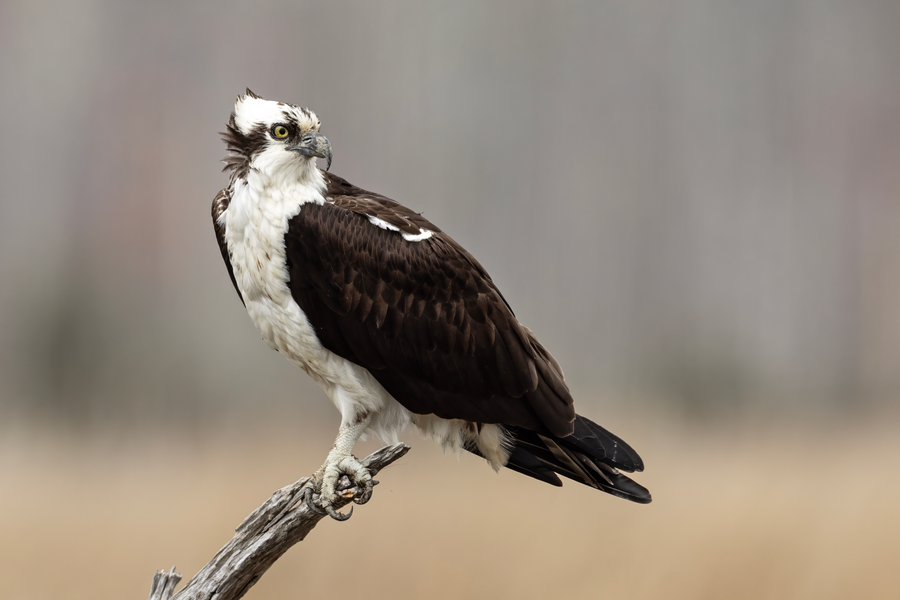
The osprey (Pandion haliaetus) is a bird of the family Pandionidae, in the order Accipitriformes.
Quick answer
The osprey (Pandion haliaetus) is a fish-specialist raptor with reversible outer toes and spiny foot pads for gripping slippery prey. It nests on coasts, rivers, and lakes nearly worldwide — from the United States and Canada to the UK, Scandinavia, and Australia — and is listed Least Concern after recovering from mid-century pesticide declines.
Top questions about the Osprey
Also available in Español (Águila pescadora)
Osprey facts at a glance
- Weight 1.6 kg
- Length 58 cm
- Top speed 80 km/h
- Lifespan 20 years
| Scientific name | Pandion haliaetus |
|---|---|
| Diet | Fish |
| Habitat | Coastal bays, rivers, lakes, and reservoirs |
| Lifespan | Around 20 years in the wild (varies by population and captivity). |
| Weight | About 1.6 kg typical adult mass (sex and region vary). |
| Top speed | Up to roughly 80 km/h when moving at speed. |
| Conservation status | Least Concern (IUCN) |
| Kingdom | Animalia |
|---|---|
| Phylum | Chordata |
| Class | Aves |
| Order | Accipitriformes |
| Family | Pandionidae |
| Genus | Pandion |
Where it lives
The osprey (Pandion haliaetus) is native to Nearly worldwide coasts and large inland waters, including the United States, Canada, UK, Scandinavia, and Australia. — recorded across North America, Europe, Asia, Africa, Oceania in this guide’s range summary.
For occurrence records, see GBIF species search and sources below.
How big is a osprey?
An adult osprey measures 58 cm long — about 34% of the height of an average adult person (1.73 m) — and weighs around 1.6 kg, about 2% of an average adult’s body weight (70 kg).
Length vs an average adult’s height (to scale)
What is a group of ospreys called?
Group name (collective noun)
A group of Ospreys is called a kettle.
Baby name
A baby Osprey is called a chick.
Explore more animal collective nouns and baby animal names .
Built for catching fish
Ospreys are the only living members of the family Pandionidae. Their outer toe can swing backward like an owl's, creating a two-and-two grip, while barbed pads on the soles stop fish from wriggling free. Adults typically weigh about 1.6 kg with a wingspan near 1.5–1.8 m, and they often plunge feet-first from 10–40 m above the water.
Almost exclusively piscivorous
Roughly 99% of an osprey's diet is live fish — mullet, flounder, trout, perch, and other surface-feeding species depending on region. They take both freshwater and saltwater fish and will travel several kilometres from the nest to productive shallows. Prey is usually carried head-first for aerodynamic flight.
Cosmopolitan waterside nests
Breeding pairs occupy coastal bays, large lakes, reservoirs, and slow rivers across every continent except Antarctica. In North America and Europe they favour stick nests on channel markers, dead trees, and purpose-built platforms. Northern populations migrate; many Australian and tropical birds stay year-round near good fishing grounds.
DDT collapse and recovery
Osprey numbers crashed in the 1950s–70s when DDT thinned eggshells and wrecked nesting success in North America and Europe. Bans on organochlorine pesticides, nest platforms, and legal protection drove a strong rebound, and the species is now Least Concern — though local threats still include entanglement in fishing line and disturbance at busy marina nests.
Explore the Osprey
Close relatives
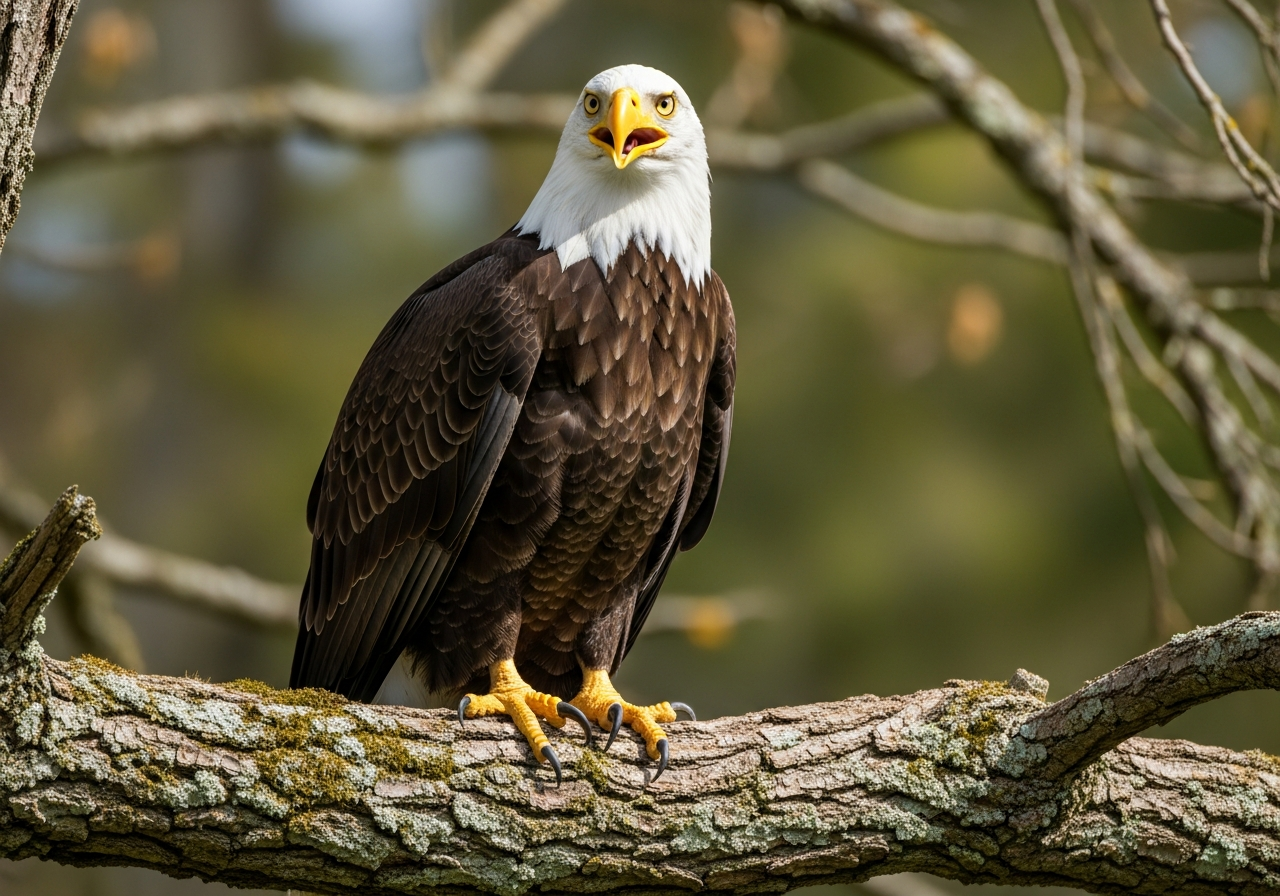
- Bald Eagle Same order
- Secretary Bird Same order
- Northern Goshawk Same order
- Northern Harrier Same order
Conservation status of the Osprey
The osprey (Pandion haliaetus) is listed as Least Concern on the IUCN Red List. Least Concern (LC) is the IUCN's lowest-risk category, assigned to widespread, abundant species that have been evaluated and found not to be threatened. It does not mean a species faces no pressures — only that it is not currently at risk of extinction.
The osprey (Pandion haliaetus) is assessed on the IUCN Red List. Look up on the IUCN Red List .
Frequently asked questions about the Osprey
Can ospreys eat saltwater fish?
Yes. Ospreys hunt in both fresh and salt water and commonly take coastal species such as mullet and flounder as well as inland trout and perch.
Why do ospreys dive feet-first?
Their talons and reversible outer toes are specialised for gripping fish; diving feet-first protects the head and lets them snatch prey near the surface without swimming underwater like a cormorant.
Are ospreys related to eagles?
They are raptors in Accipitriformes but sit in their own family, Pandionidae, separate from true eagles and hawks — a reflection of their extreme fish-hunting specialisation.
How fast can an osprey fly?
In level flight they often cruise around 40–50 km/h, and stoops toward prey can approach roughly 80 km/h.
Do ospreys migrate?
Many northern breeders migrate to warmer coasts and inland waters for winter, while some tropical and Australian populations remain resident where fish are available year-round.
What is a group of ospreys called?
A group of Ospreys is called a kettle.
What is a baby osprey called?
A baby Osprey is called a chick.
Sources & references
This guide is compiled and reviewed against established zoological and conservation references. Key sources for the Osprey:
-
IUCN Red List of Threatened Species
Conservation status (Least Concern) reflects the IUCN Red List category for Pandion haliaetus.
-
iNaturalist — observations & photos
Search citizen-science observations and community IDs for Pandion haliaetus. Useful for range checks and recent sightings — not a substitute for formal Red List status.
-
GBIF — occurrence data
Global Biodiversity Information Facility species search for Pandion haliaetus. Explore published occurrence records used in range research.
-
eBird — bird observations
Cornell Lab eBird target search for Osprey. Check recent checklists and seasonal abundance where birders report this species.
-
Global Animal Guide editorial standards
How we research, source, review, and update every guide for accuracy.