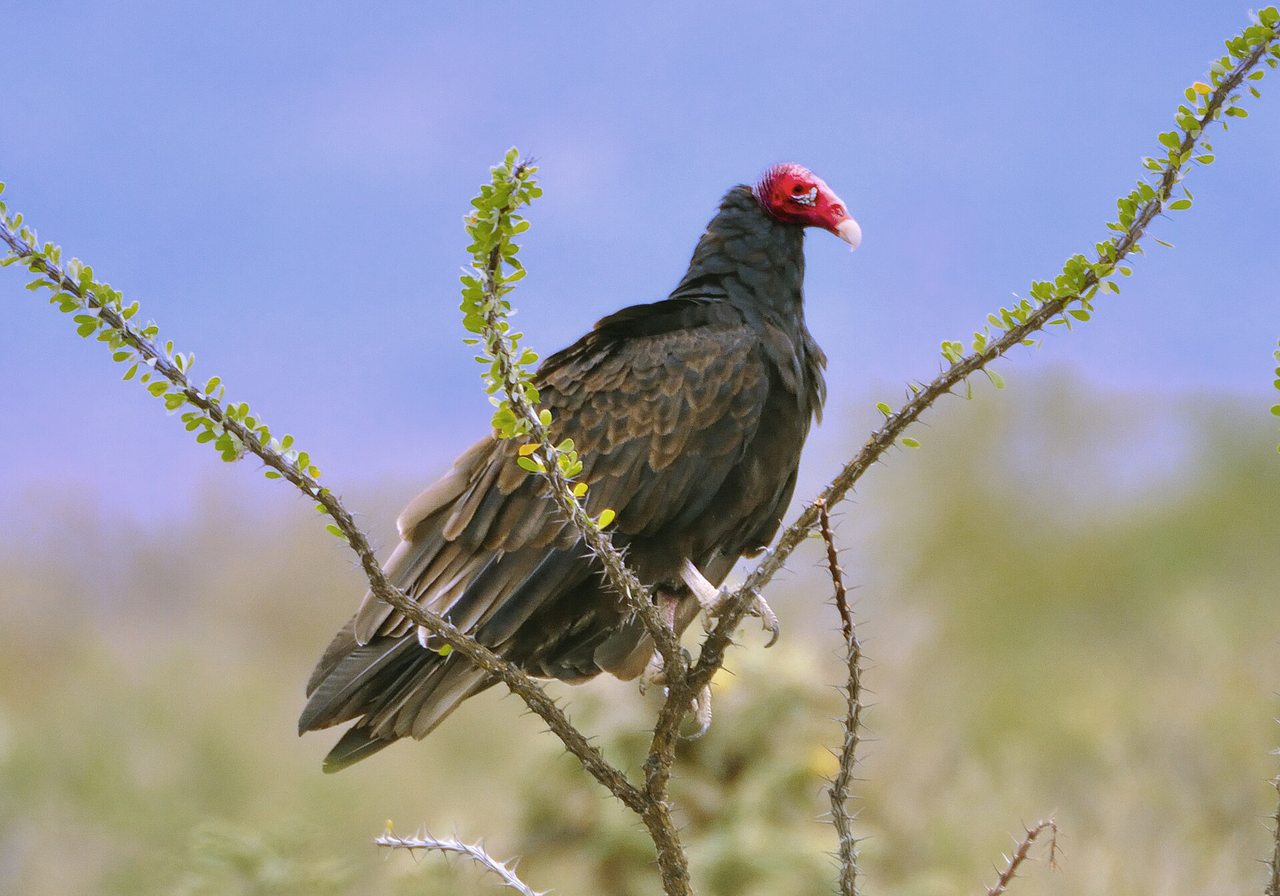
The turkey vulture (Cathartes aura) is a bird of the family Cathartidae, in the order Accipitriformes.
Quick answer
The turkey vulture (Cathartes aura) is a large scavenger found from southern Canada to the tip of South America. Unlike most birds it has a keen sense of smell and can find carrion hidden under trees by its odour. Adults have a bare red head and dark plumage, and soar with wings held in a shallow V. It is the most widespread vulture in the Americas and is listed as Least Concern.
Top questions about the Turkey Vulture
Turkey Vulture facts at a glance
- Weight 1.5 kg
- Lifespan 10 years
| Scientific name | Cathartes aura |
|---|---|
| Diet | Scavenger: carrion of mammals, birds, reptiles and fish |
| Habitat | Open country, farmland, forest edges and towns |
| Weight | Average about 1.5 kg |
| Lifespan | Average about 10 years; oldest banded bird 16 years 10 months |
| Range | Southern Canada to Tierra del Fuego |
| Conservation status | Least Concern (IUCN Red List, assessed 2018) |
| Kingdom | Animalia |
|---|---|
| Phylum | Chordata |
| Class | Aves |
| Order | Accipitriformes |
| Family | Cathartidae |
| Genus | Cathartes |
Where it lives
The turkey vulture (Cathartes aura) is native to Southern Canada through the United States, Central America and the Caribbean to Tierra del Fuego. — recorded across North America, South America in this guide’s range summary.
For occurrence records, see GBIF species search and sources below.
What is a group of turkey vultures called?
Group name (collective noun)
A group of Turkey Vultures is called a committee. It is also known as a kettle or a wake.
Baby name
A baby Turkey Vulture is called a chick.
Explore more animal collective nouns and baby animal names .
Finding food by smell
Most birds rely on sight, but the turkey vulture has an unusually large olfactory system and can detect the gases released by decaying flesh. That lets it find carcasses hidden under a forest canopy. Black vultures, which often follow turkey vultures, take advantage of this and sometimes push them off the food.
How to recognise one
Adults are dark brown-black with a small, bare red head. In flight the underside of the wings shows silvery flight feathers behind dark coverts. Turkey vultures hold their wings slightly raised in a V and rock from side to side while soaring, rarely flapping. Young birds have greyish heads.
Clean-up crew
Turkey vultures eat dead animals of almost any kind and rarely kill anything themselves. By removing carcasses they limit the spread of disease, and their digestive system destroys many bacteria. Northern populations migrate south in winter, often travelling in large flocks that ride rising warm air.
Conservation
BirdLife International lists the turkey vulture as Least Concern (2018) with a stable population and an extremely large range. Like other scavengers it can be poisoned by lead from ammunition left in carcasses and by pesticides.
Explore the Turkey Vulture
Close relatives
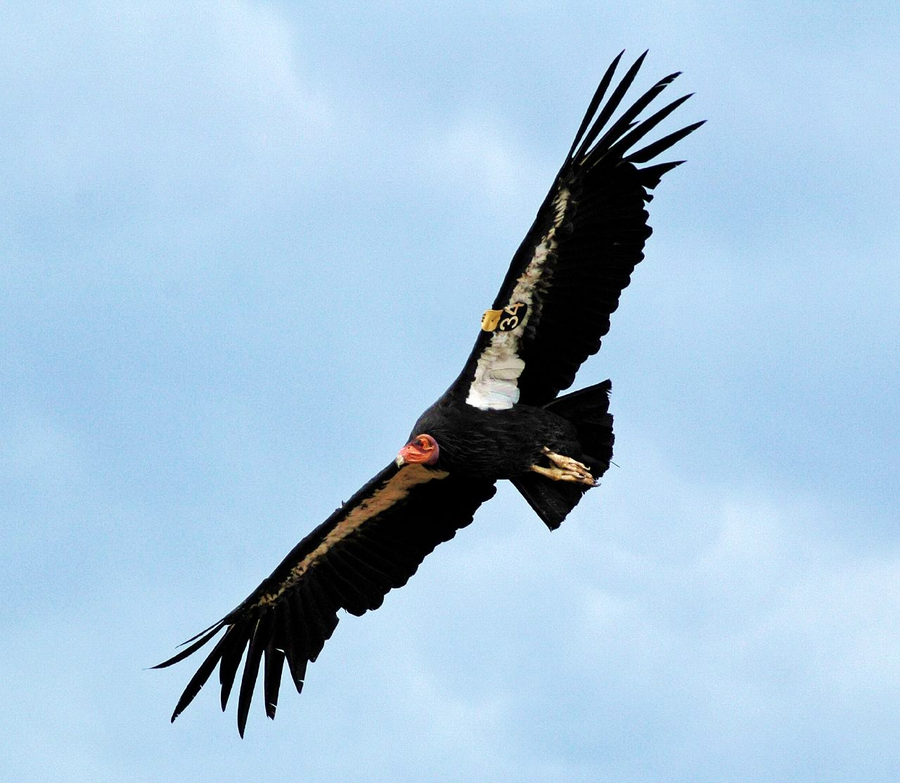
- California Condor Same family
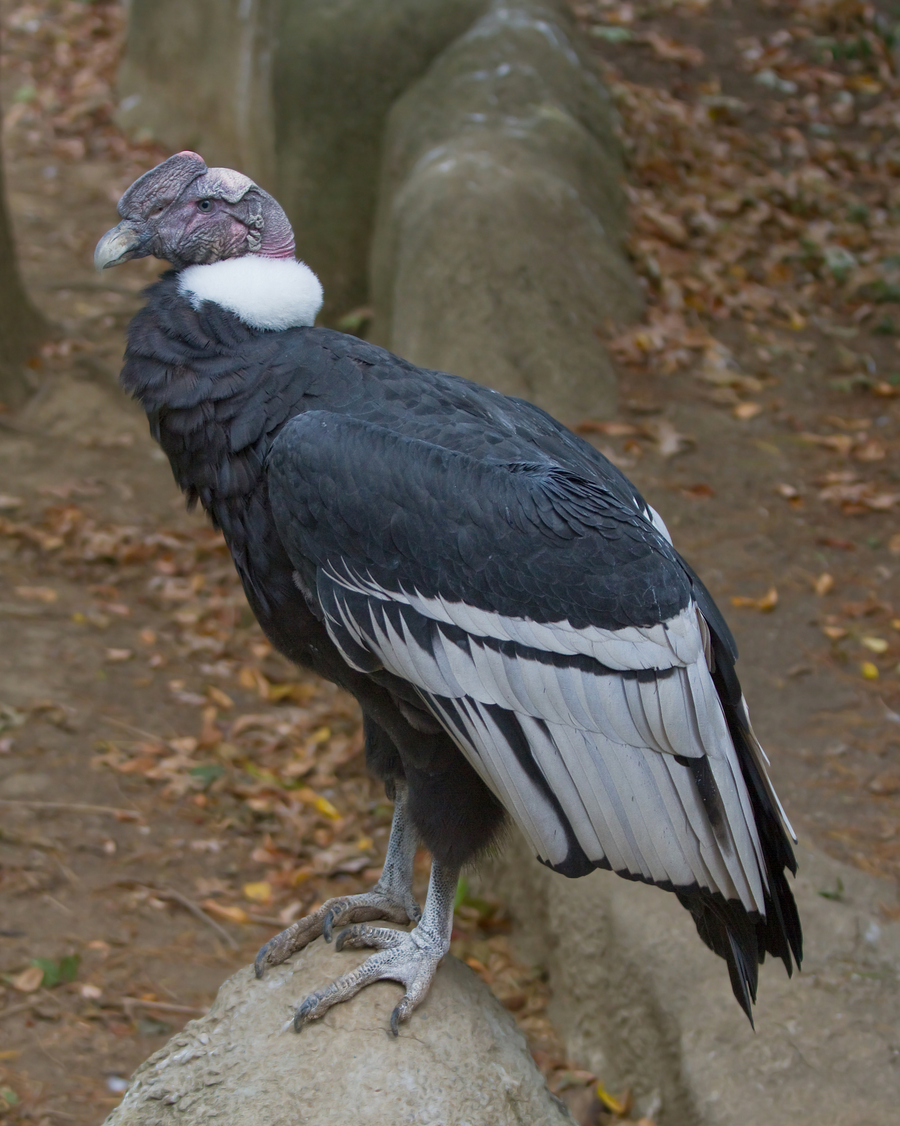
- Andean Condor Same family
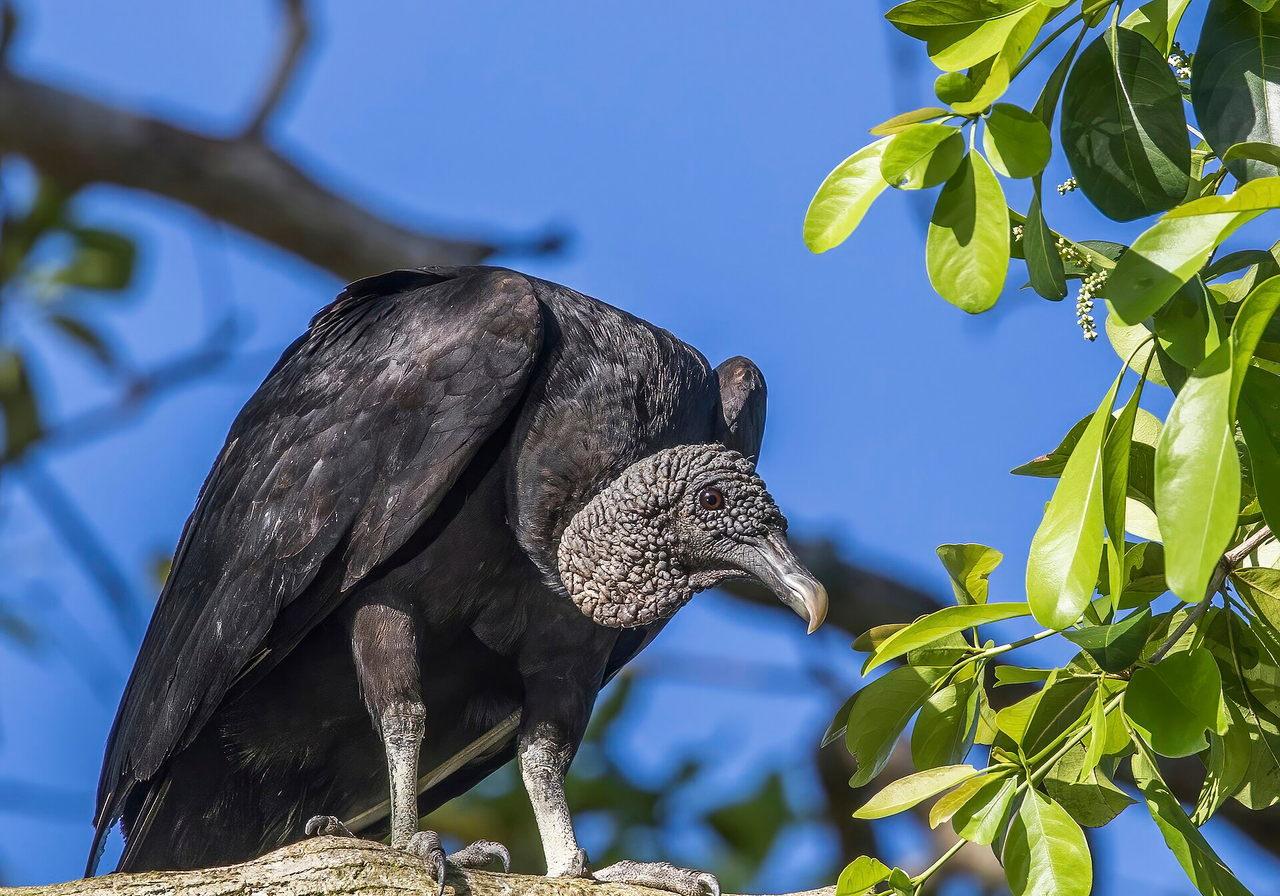
- Black Vulture Same family
- Osprey Same order
Did you know? Turkey Vulture facts
- Turkey vultures cool down by excreting onto their own legs, a habit called urohidrosis.
- The oldest banded turkey vulture on record lived 16 years and 10 months.
Conservation status of the Turkey Vulture
The turkey vulture (Cathartes aura) is listed as Least Concern on the IUCN Red List. Least Concern (LC) is the IUCN's lowest-risk category, assigned to widespread, abundant species that have been evaluated and found not to be threatened. It does not mean a species faces no pressures — only that it is not currently at risk of extinction.
Turkey Vulture (Cathartes aura) was most recently assessed for the IUCN Red List in 2018. Look up on the IUCN Red List .
Frequently asked questions about the Turkey Vulture
Why is it called a turkey vulture?
The adult's bare red head and dark body reminded early European settlers of a male wild turkey.
Can turkey vultures smell?
Yes. They have one of the best senses of smell of any bird and can locate carrion hidden from view by its odour.
Are turkey vultures dangerous?
No. They feed almost entirely on animals that are already dead and do not attack people or healthy pets. A disturbed bird may vomit to lighten itself and deter predators.
What is the difference between a turkey vulture and a buzzard?
In North America people often call turkey vultures 'buzzards', but in Europe a buzzard is a hawk (Buteo buteo). Turkey vultures belong to the New World vulture family, Cathartidae.
What is a group of turkey vultures called?
A group of Turkey Vultures is called a committee. It is also known as a kettle or a wake.
What is a baby turkey vulture called?
A baby Turkey Vulture is called a chick.
Sources & references
This guide is compiled and reviewed against established zoological and conservation references. Key sources for the Turkey Vulture:
-
IUCN Red List of Threatened Species
Conservation status (Least Concern) reflects the IUCN Red List category for Cathartes aura, most recently assessed in 2018.
-
iNaturalist — observations & photos
Search citizen-science observations and community IDs for Cathartes aura. Useful for range checks and recent sightings — not a substitute for formal Red List status.
-
GBIF — occurrence data
Global Biodiversity Information Facility species search for Cathartes aura. Explore published occurrence records used in range research.
-
eBird — bird observations
Cornell Lab eBird target search for Turkey Vulture. Check recent checklists and seasonal abundance where birders report this species.
- BirdLife International (2026). Species factsheet: Turkey Vulture Cathartes aura. BirdLife DataZone. Checked 1 November 2026.
IUCN Red List category Least Concern (assessed 2018), population estimate and trend.
- Animal Diversity Web: Cathartes aura. University of Michigan Museum of Zoology.
Size, lifespan and diet.
- Tobias, J. A. et al. (2022). AVONET: morphological, ecological and geographical data for all birds. Ecology Letters 25: 581–597. doi:10.1111/ele.13898
Average body mass.
- Gill, F., Donsker, D. & Rasmussen, P. (Eds). IOC World Bird List v15.2.
English and scientific name, classification and range.
-
Global Animal Guide editorial standards
How we research, source, review, and update every guide for accuracy.