The great blue heron (Ardea herodias) is a bird of the family Ardeidae, in the order Pelecaniformes.
Quick answer
The great blue heron (Ardea herodias) is the largest heron in North America, standing tall in marshes, rivers and coasts from Canada to Central America. It is 97–137 cm long, weighs about 2.1–2.5 kg and spears fish with a quick strike of its dagger-like bill. Most live around 15 years. It is common, increasing and listed as Least Concern.
Top questions about the Great Blue Heron
Great Blue Heron facts at a glance
- Weight 2.5 kg
- Length 1.2 m
- Lifespan 15 years
| Scientific name | Ardea herodias |
|---|---|
| Diet | Mostly fish; also frogs, small mammals, insects and birds |
| Habitat | Marshes, lakes, rivers, estuaries and coasts |
| Length | 97–137 cm (38–54 in) |
| Weight | 2.1–2.5 kg |
| Lifespan | Usually about 15 years; oldest known wild bird 23 |
| Conservation status | Least Concern (IUCN Red List, assessed 2020) |
| Kingdom | Animalia |
|---|---|
| Phylum | Chordata |
| Class | Aves |
| Order | Pelecaniformes |
| Family | Ardeidae |
| Genus | Ardea |
Where it lives
The great blue heron (Ardea herodias) is native to North and Central America and the Caribbean, with a population on the Galápagos Islands; northern birds winter south to northern South America. — recorded across North America, South America in this guide’s range summary.
For occurrence records, see GBIF species search and sources below.
How big is a great blue heron?
An adult great blue heron measures 1.2 m long — about 68% of the height of an average adult person (1.73 m) — and weighs around 2.5 kg, about 4% of an average adult’s body weight (70 kg).
Length vs an average adult’s height (to scale)
What is a group of great blue herons called?
Group name (collective noun)
A group of Great Blue Herons is called a siege.
Baby name
A baby Great Blue Heron is called a chick.
Explore more animal collective nouns and baby animal names .
Patient hunter
A great blue heron hunts by standing still or wading slowly in shallow water, then striking with its neck at lightning speed. Fish are the main prey, swallowed head first, but it also takes frogs, crayfish, snakes, voles and even ducklings. It hunts by day and, thanks to good night vision, often at dusk and after dark.
Identification
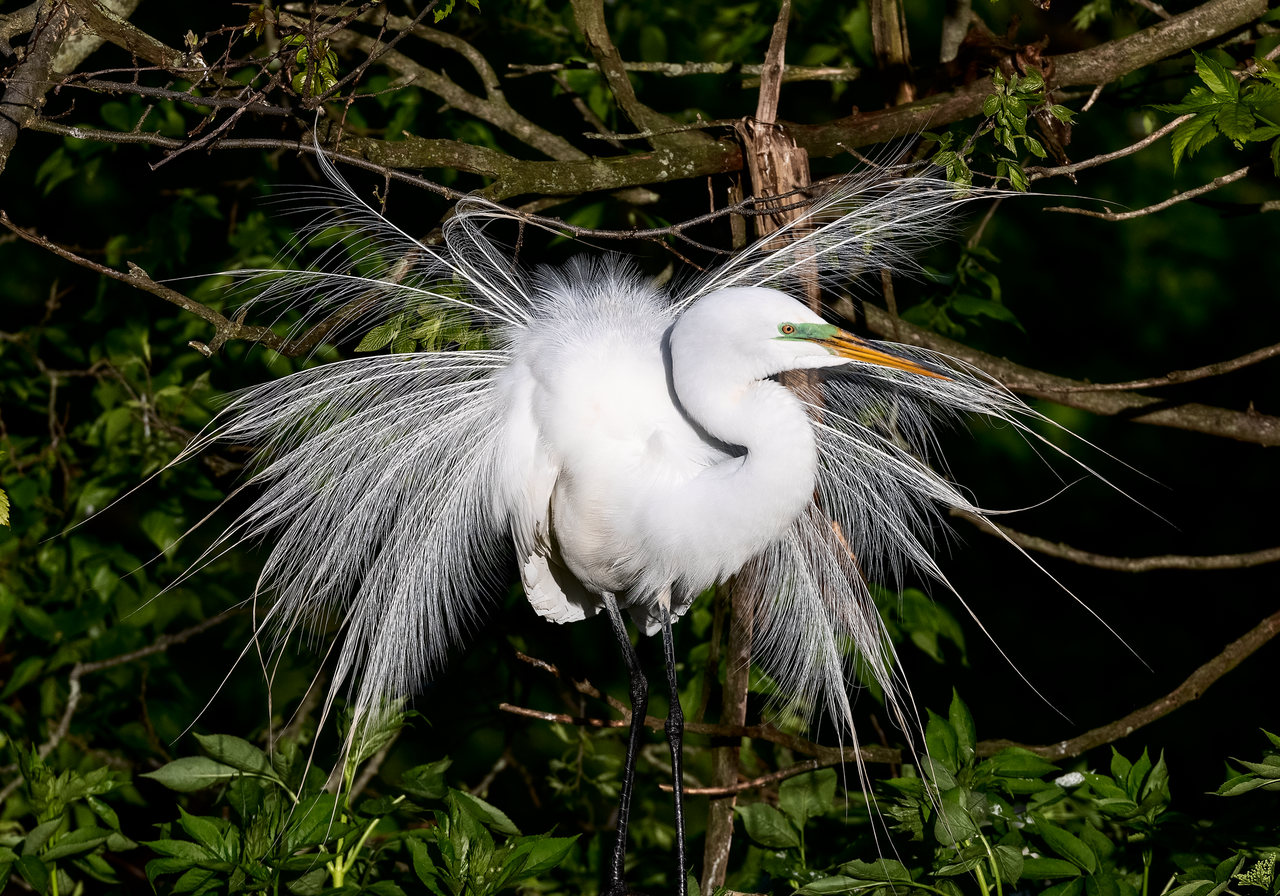
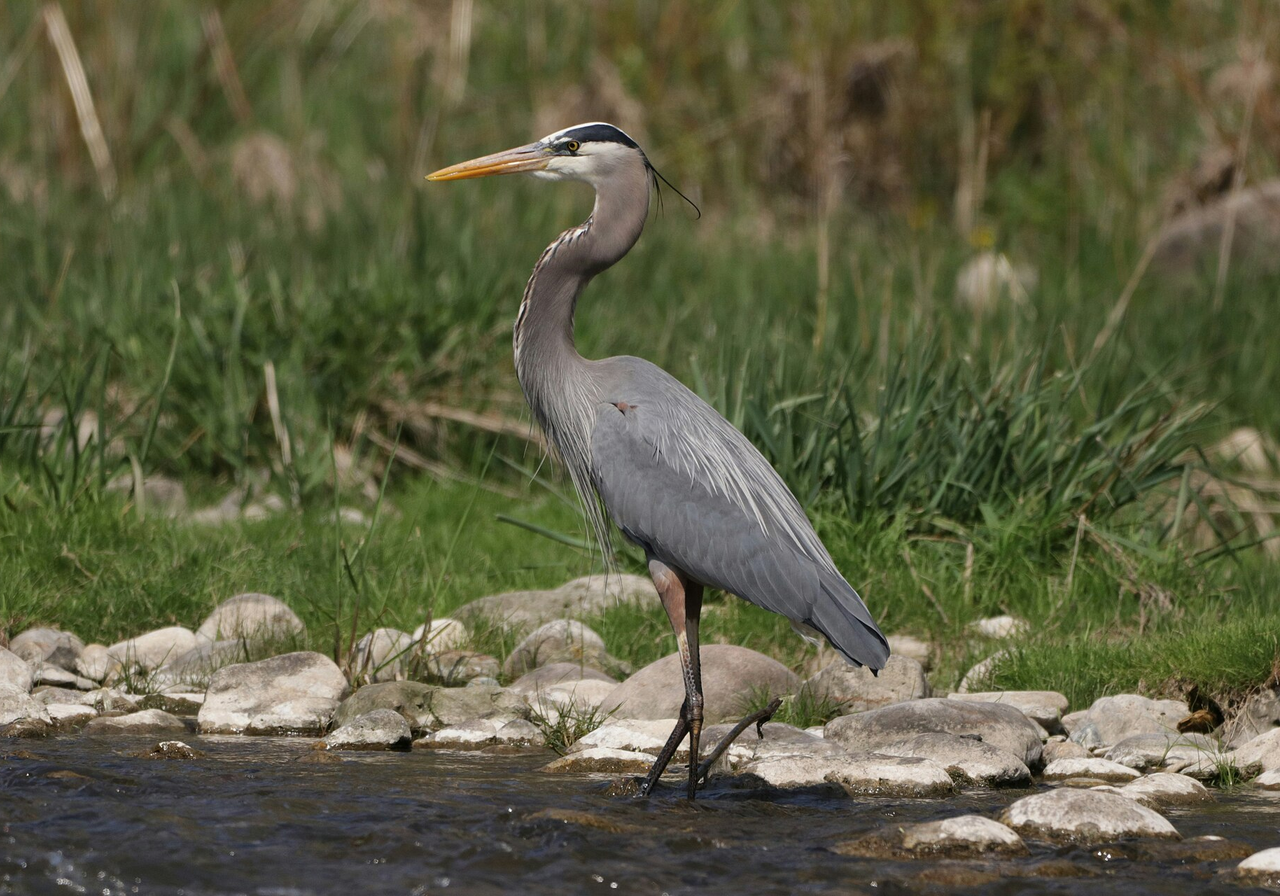
It is mostly blue-grey with a white face, a black stripe above the eye that ends in plumes, and a heavy yellowish bill. In flight it tucks its neck into an S-shape and trails its legs behind. In southern Florida and the Caribbean an all-white form, the 'great white heron', also occurs.
Colonies and nests
Great blue herons usually nest in colonies, called heronries or rookeries, building platforms of sticks high in trees near water. Some colonies hold hundreds of nests. Both parents incubate the eggs and feed the chicks, and more than half of young birds die in their first year.
Range and status
The species breeds across much of North America and Central America and on the Galápagos Islands, with northern birds moving south in winter. BirdLife International lists it as Least Concern (2020), estimates between 500,000 and 5 million mature birds, and reports an increasing trend.
Explore the Great Blue Heron
Close relatives
- Grey Heron Same genus
- Great Egret Same genus
- Shoebill Same order
- Brown Pelican Same order
Range & geography
Did you know? Great Blue Heron facts
- Herons fly with their necks folded into an S, while cranes fly with their necks stretched out.
- Animal Diversity Web reports that about 69% of great blue herons die before their first birthday.
Conservation status of the Great Blue Heron
The great blue heron (Ardea herodias) is listed as Least Concern on the IUCN Red List. Least Concern (LC) is the IUCN's lowest-risk category, assigned to widespread, abundant species that have been evaluated and found not to be threatened. It does not mean a species faces no pressures — only that it is not currently at risk of extinction.
Great Blue Heron (Ardea herodias) was most recently assessed for the IUCN Red List in 2020. Look up on the IUCN Red List .
Frequently asked questions about the Great Blue Heron
How big is a great blue heron?
It is 97–137 cm long and weighs about 2.1–2.5 kg, making it the largest heron in North America.
What does a great blue heron eat?
Mostly fish, plus frogs, crayfish, insects, snakes, small mammals and occasionally birds.
Is the great blue heron the same as the grey heron?
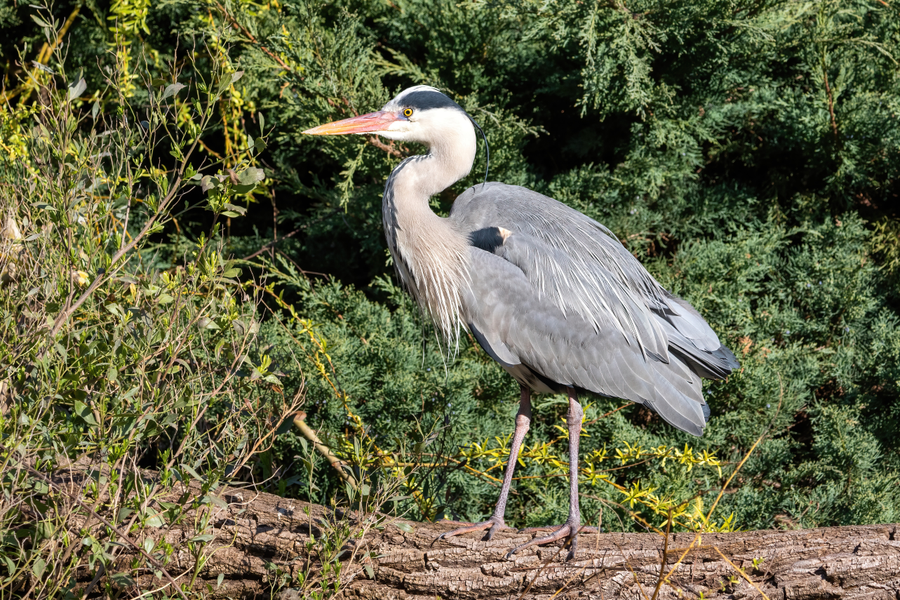
No. They are close relatives that look alike. The grey heron (Ardea cinerea) lives in Europe, Asia and Africa and is smaller; the great blue heron lives in the Americas.
How long do great blue herons live?
Most live around 15 years. The oldest known wild bird was 23 years old.
What is a group of great blue herons called?
A group of Great Blue Herons is called a siege.
What is a baby great blue heron called?
A baby Great Blue Heron is called a chick.
Sources & references
This guide is compiled and reviewed against established zoological and conservation references. Key sources for the Great Blue Heron:
-
IUCN Red List of Threatened Species
Conservation status (Least Concern) reflects the IUCN Red List category for Ardea herodias, most recently assessed in 2020.
-
iNaturalist — observations & photos
Search citizen-science observations and community IDs for Ardea herodias. Useful for range checks and recent sightings — not a substitute for formal Red List status.
-
GBIF — occurrence data
Global Biodiversity Information Facility species search for Ardea herodias. Explore published occurrence records used in range research.
-
eBird — bird observations
Cornell Lab eBird target search for Great Blue Heron. Check recent checklists and seasonal abundance where birders report this species.
- BirdLife International (2026). Species factsheet: Great Blue Heron Ardea herodias. BirdLife DataZone. Checked 1 November 2026.
IUCN Red List category Least Concern (assessed 2020), population estimate and trend.
- Animal Diversity Web: Ardea herodias. University of Michigan Museum of Zoology.
Size, lifespan and diet.
- Tobias, J. A. et al. (2022). AVONET: morphological, ecological and geographical data for all birds. Ecology Letters 25: 581–597. doi:10.1111/ele.13898
Average body mass.
- Gill, F., Donsker, D. & Rasmussen, P. (Eds). IOC World Bird List v15.2.
English and scientific name, classification and range.
-
Global Animal Guide editorial standards
How we research, source, review, and update every guide for accuracy.