Image sourcing: see credits & licences
The California condor (Gymnogyps californianus) is a bird of the family Cathartidae, in the order Cathartiformes.
Quick answer
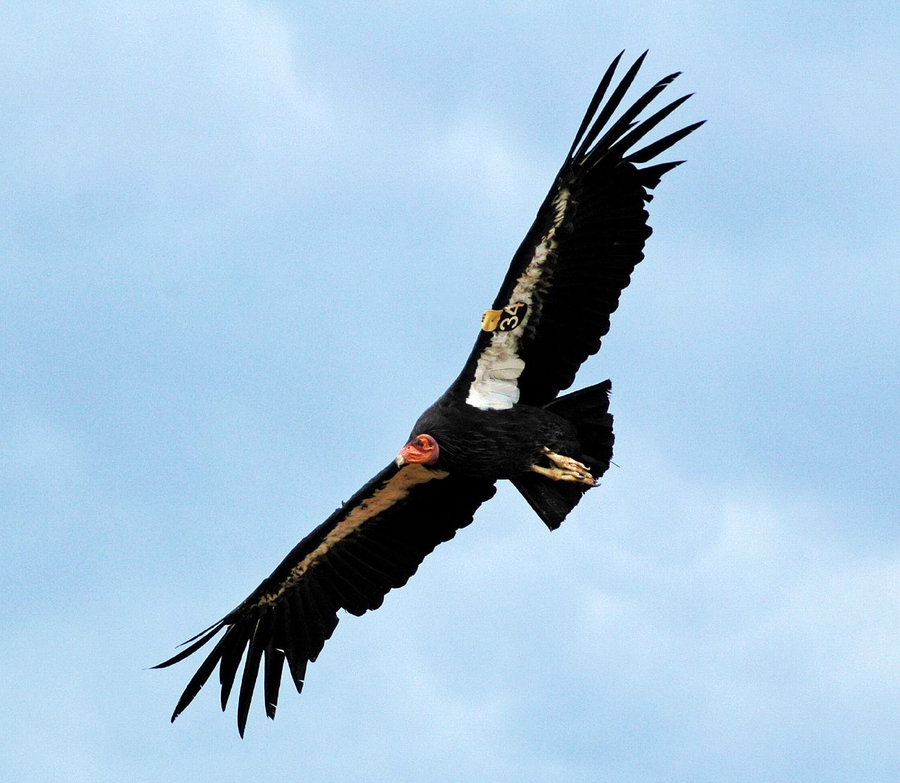
The California condor (Gymnogyps californianus) is North America's largest flying land bird, soaring on wings near 3 m across while scavenging carcasses in California, Arizona, Utah, and Baja California. Adults weigh about 10 kg and are Critically Endangered — every wild bird descends from a 1980s captive-breeding rescue.
Top questions about the California Condor
Also available in Español (Cóndor de California)
California Condor facts at a glance
- Weight 10 kg
- Length 1.2 m
- Top speed 90 km/h
- Lifespan 60 years
| Scientific name | Gymnogyps californianus |
|---|---|
| Diet | Carnivore (carrion) |
| Habitat | Cliffs, foothills, and open ranchland |
| Lifespan | Around 60 years in the wild (varies by population and captivity). |
| Weight | About 10 kg typical adult mass (sex and region vary). |
| Top speed | Up to roughly 90 km/h when moving at speed. |
| Conservation status | Critically Endangered (IUCN) |
| Kingdom | Animalia |
|---|---|
| Phylum | Chordata |
| Class | Aves |
| Order | Cathartiformes |
| Family | Cathartidae |
| Genus | Gymnogyps |
Where it lives
The california condor (Gymnogyps californianus) is native to Reintroduced to California, Arizona, Utah, and Baja California. — recorded across North America in this guide’s range summary.
For occurrence records, see GBIF species search and sources below.
How big is a california condor?
An adult california condor measures 1.2 m long — about 69% of the height of an average adult person (1.73 m) — and weighs around 10 kg, about 14% of an average adult’s body weight (70 kg).
Length vs an average adult’s height (to scale)
What is a group of california condors called?
Group name (collective noun)
A group of California Condors is called a committee.
Baby name
A baby California Condor is called a chick.
Explore more animal collective nouns and baby animal names .
Giant New World vulture
Bald orange heads reduce bacterial buildup when feeding inside carcasses. Condors soar for hours on thermals with minimal flapping. Breeding pairs raise a single chick every two years.
Obligate scavenger
They eat large mammal carcasses — deer, cattle, marine mammals on coasts — never killing healthy prey. Lead fragments in gut piles from hunter-shot game are a primary poisoning source.
Reintroduced Southwest skies
Extinct in the wild by 1987, then reintroduced to California, Arizona, Utah, and Baja California cliffs, foothills, and ranchland. Across its range it is tied to cliffs, foothills, and open ranchland, and field accounts emphasise this species’ distinctive ecology rather than generic habitat labels.
Critically Endangered, intensively managed
Captive breeding saved the species. Lead ammunition bans in condor range, nest monitoring, and chick fostering continue; IUCN still lists them Critically Endangered.
Explore the California Condor
Close relatives
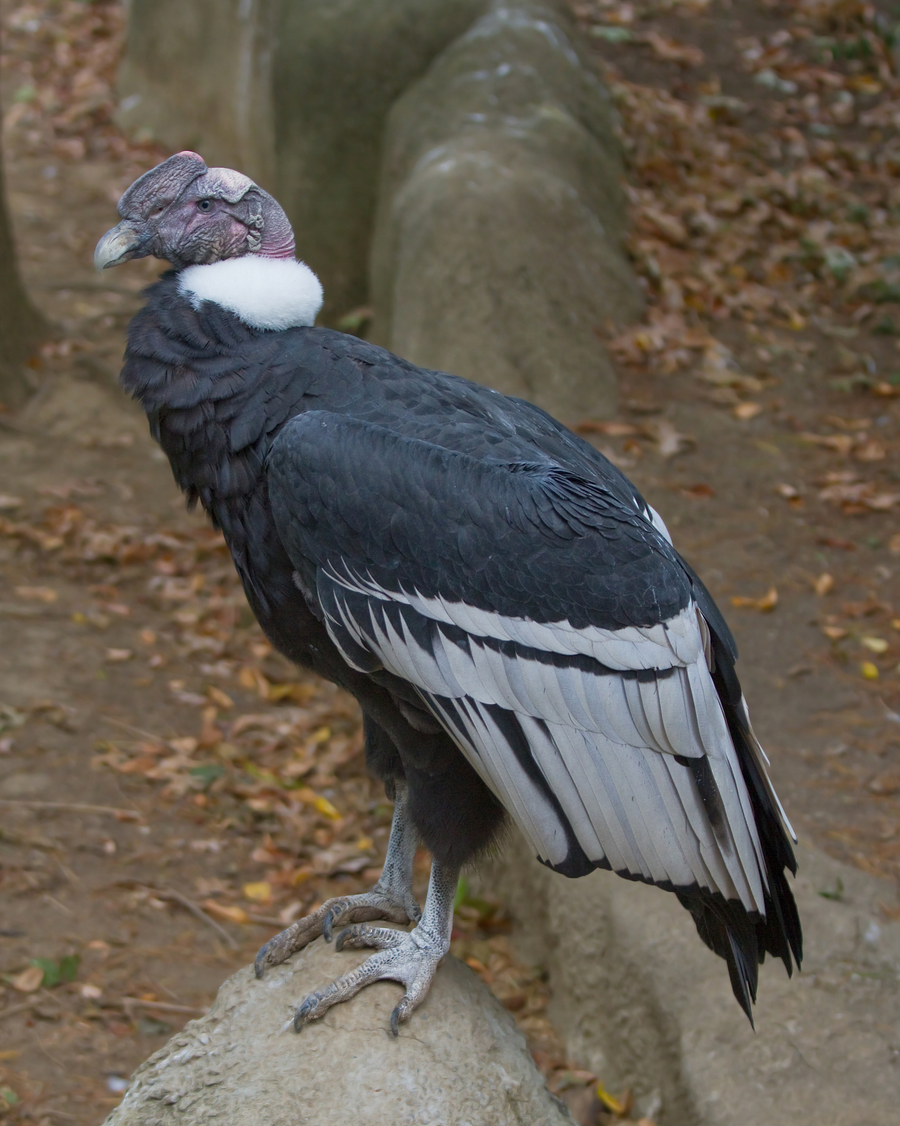
- Andean Condor Same family
- Chicken Same class
- Wandering Albatross Same class
- Southern Cassowary Same class
Collections
Range & geography
Conservation status of the California Condor
The california condor (Gymnogyps californianus) is listed as Critically Endangered on the IUCN Red List. Critically Endangered (CR) is the highest-risk category the IUCN Red List assigns to a wild species before Extinct in the Wild. It means a species faces an extremely high probability of extinction — usually because its population has collapsed, its range has shrunk drastically, or very few mature individuals remain. Species at this level typically depend on active conservation to survive.
Main threats to the california condor
- Lead poisoning from ingested bullet fragments
- Microtrash ingestion by chicks
- Collision and electrocution on power infrastructure
- Dependence on captive breeding and releases
California Condor (Gymnogyps californianus) was most recently assessed for the IUCN Red List in 2020. Look up on the IUCN Red List .
Frequently asked questions about the California Condor
Why did California condors almost go extinct?
Lead poisoning, shooting, and habitat loss collapsed numbers until all remaining wild birds were brought into captivity in the 1980s.
How big is a California condor's wingspan?
About 2.7–3 m — the largest of any North American land bird.
Do California condors hunt live animals?
No — they are scavengers that feed on carrion (Gymnogyps californianus; diet: Carnivore (carrion)).
Why is lead ammunition a problem?
Condors ingest lead fragments from carcasses and gut piles, causing fatal poisoning.
Where can you see California condors?
Reintroduced areas of California, the Grand Canyon region of Arizona/Utah, and Baja California.
What is a group of california condors called?
A group of California Condors is called a committee.
What is a baby california condor called?
A baby California Condor is called a chick.
Sources & references
This guide is compiled and reviewed against established zoological and conservation references. Key sources for the California Condor:
-
IUCN Red List of Threatened Species
Conservation status (Critically Endangered) reflects the IUCN Red List category for Gymnogyps californianus, most recently assessed in 2020.
-
iNaturalist — observations & photos
Search citizen-science observations and community IDs for Gymnogyps californianus. Useful for range checks and recent sightings — not a substitute for formal Red List status.
-
GBIF — occurrence data
Global Biodiversity Information Facility species search for Gymnogyps californianus. Explore published occurrence records used in range research.
-
eBird — bird observations
Cornell Lab eBird target search for California Condor. Check recent checklists and seasonal abundance where birders report this species.
-
Global Animal Guide editorial standards
How we research, source, review, and update every guide for accuracy.