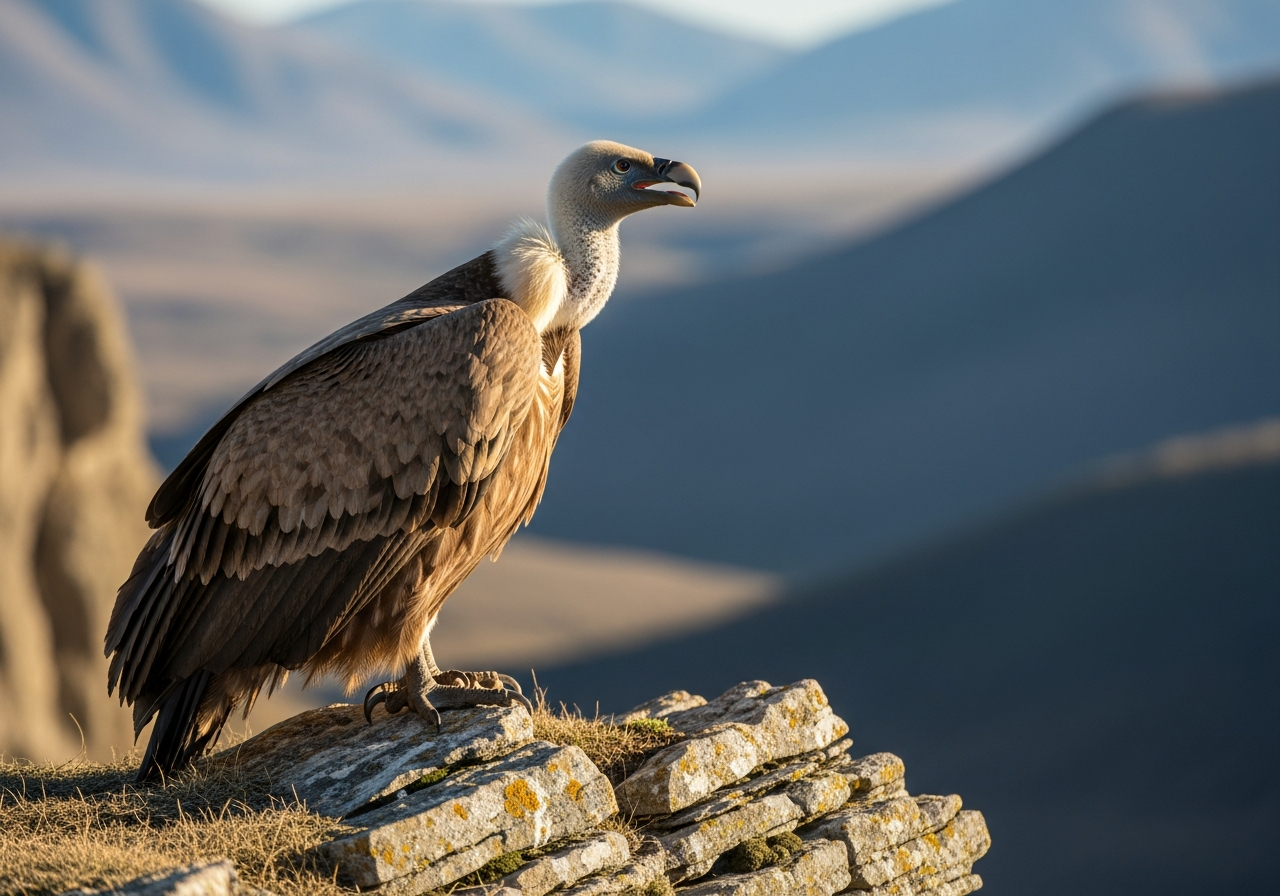
The bearded vulture (Gypaetus barbatus) is a bird of the family Accipitridae, in the order Accipitriformes.
Quick answer
The bearded vulture (Gypaetus barbatus), or lammergeier, is a huge mountain vulture whose diet is about 85% bone. It drops large bones onto rocks to break them, then swallows the pieces, which its very acidic stomach digests. It lives in high mountains of southern Europe, Africa and Asia, has a wingspan of up to 2.8 m, and is listed as Near Threatened (2021).
Top questions about the Bearded Vulture
Bearded Vulture facts at a glance
- Weight 5.7 kg
- Length 1.1 m
- Lifespan 21 years
| Scientific name | Gypaetus barbatus |
|---|---|
| Other name | Lammergeier |
| Diet | Mostly bones (about 85%), plus carrion |
| Habitat | Remote mountains, usually above 1,000 m |
| Size | 94–125 cm long; wingspan 231–283 cm |
| Weight | 4.5–7 kg (average about 5.7 kg) |
| Lifespan | Average about 21 years in the wild |
| Conservation status | Near Threatened (IUCN Red List, assessed 2021) |
| Kingdom | Animalia |
|---|---|
| Phylum | Chordata |
| Class | Aves |
| Order | Accipitriformes |
| Family | Accipitridae |
| Genus | Gypaetus |
Where it lives
The bearded vulture (Gypaetus barbatus) is native to High mountains of southern Europe, north, east and southern Africa, the Caucasus, Central Asia and the Himalayas. — recorded across Europe, Africa, Asia in this guide’s range summary.
For occurrence records, see GBIF species search and sources below.
How big is a bearded vulture?
An adult bearded vulture measures 1.1 m long — about 64% of the height of an average adult person (1.73 m) — and weighs around 5.7 kg, about 8% of an average adult’s body weight (70 kg).
Length vs an average adult’s height (to scale)
What is a group of bearded vultures called?
Group name (collective noun)
A group of Bearded Vultures is called a committee. It is also known as a kettle or a wake.
Baby name
A baby Bearded Vulture is called a chick.
Explore more animal collective nouns and baby animal names .
A diet of bones
Bearded vultures eat what other scavengers leave: bones. Animal Diversity Web puts bone at about 85% of the diet, mostly from dead sheep, goats, ibex and other hoofed mammals. Bones too large to swallow are carried up and dropped onto rock slabs until they split. Stomach acid strong enough to dissolve bone lets the bird digest the marrow-rich fragments.
Orange by choice
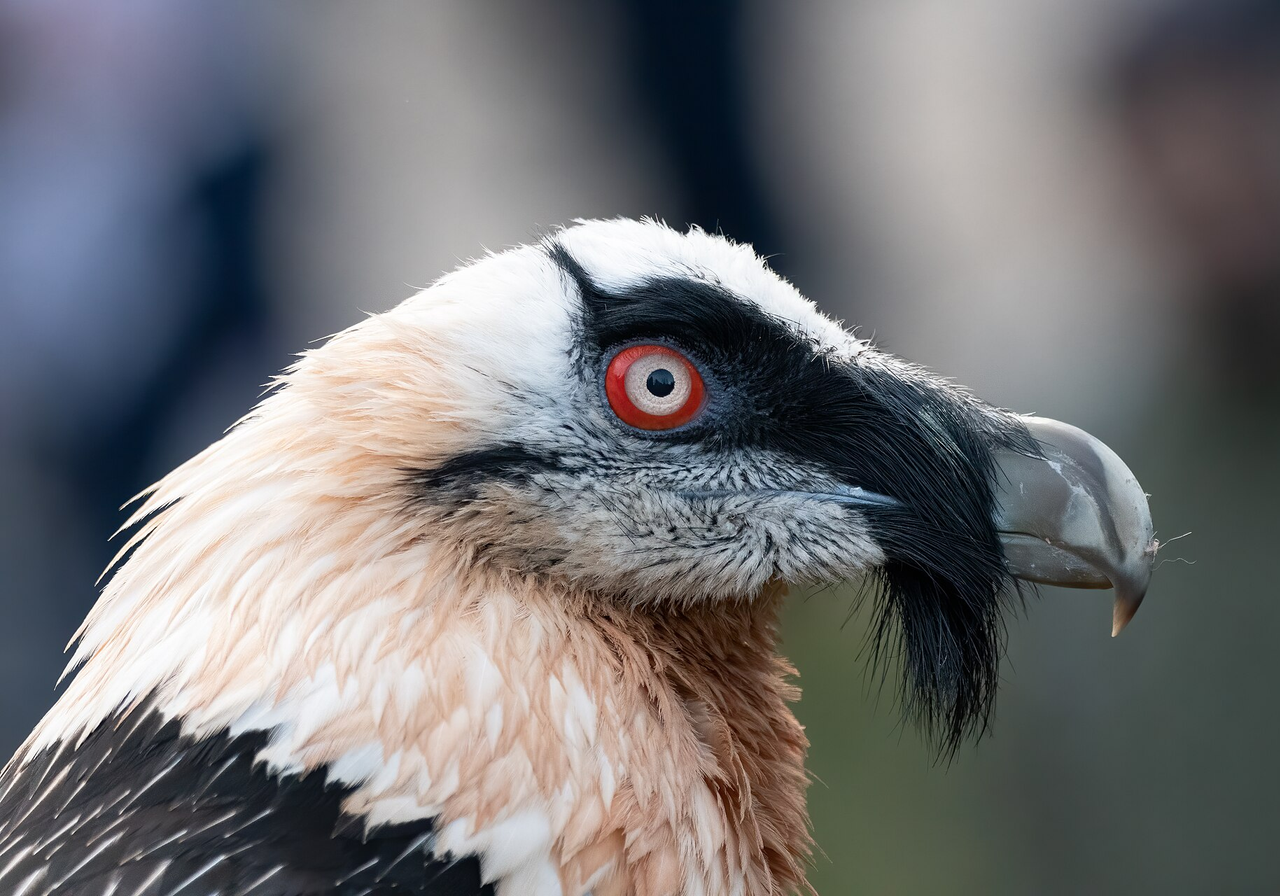
Adults have rusty-orange underparts, but the colour is not made by the feathers. The birds bathe in iron-rich mud and water, which stains the white plumage. The black stripe through the eye and the tuft of bristles under the bill give the species its 'beard'.
Where it lives
The species is spread thinly across mountain ranges: the Pyrenees, Alps, Crete and Corsica in Europe, the Atlas Mountains, the Ethiopian Highlands and the Drakensberg in Africa, and the Caucasus, Central Asia and the Himalayas. It forages over huge areas; BirdLife records flights of up to 700 km in a day.
Conservation
BirdLife International lists the bearded vulture as Near Threatened (2021), with an estimated 1,675 to 6,700 mature birds and a falling trend. Some European populations are stable or growing thanks to protection and reintroduction, including the Alps, where the species had been wiped out, but declines are suspected to be rapid in parts of the Himalayas and India.
Explore the Bearded Vulture
Close relatives
- Bald Eagle Same family
- Harpy Eagle Same family
- Northern Goshawk Same family
- Common Buzzard Same family
Range & geography
Did you know? Bearded Vulture facts
- Its scientific name, Gypaetus barbatus, means 'bearded vulture-eagle'.
- Chicks are fed scraps of meat and skin; adults switch to a diet that is mostly bone.
Conservation status of the Bearded Vulture
The bearded vulture (Gypaetus barbatus) is listed as Near Threatened on the IUCN Red List. Near Threatened (NT) means a species does not yet qualify as threatened but is close to it, or likely to become so in the near future without ongoing conservation. It is a watch-list category just below Vulnerable.
Bearded Vulture (Gypaetus barbatus) was most recently assessed for the IUCN Red List in 2021. Look up on the IUCN Red List .
Frequently asked questions about the Bearded Vulture
Why does the bearded vulture eat bones?
Bones are a food few other animals can use, so there is little competition for them. Bone marrow is rich in fat, and the vulture's very acidic stomach can digest the bone itself.
What is a lammergeier?
Lammergeier is another name for the bearded vulture. It comes from German and means roughly 'lamb vulture', from an old belief that the bird killed lambs.
Why are bearded vultures orange?
They stain their pale feathers by bathing in iron-rich mud and water. Captive birds without access to it stay white underneath.
How big is a bearded vulture?
It is 94–125 cm long with a wingspan of 231–283 cm and weighs 4.5–7 kg, making it one of the largest birds of prey in Europe.
Is the bearded vulture endangered?
Globally it is listed as Near Threatened (2021). It is rarer and more threatened in some regions, and it was reintroduced to the Alps after being wiped out there.
What is a group of bearded vultures called?
A group of Bearded Vultures is called a committee. It is also known as a kettle or a wake.
What is a baby bearded vulture called?
A baby Bearded Vulture is called a chick.
Sources & references
This guide is compiled and reviewed against established zoological and conservation references. Key sources for the Bearded Vulture:
-
IUCN Red List of Threatened Species
Conservation status (Near Threatened) reflects the IUCN Red List category for Gypaetus barbatus, most recently assessed in 2021.
-
iNaturalist — observations & photos
Search citizen-science observations and community IDs for Gypaetus barbatus. Useful for range checks and recent sightings — not a substitute for formal Red List status.
-
GBIF — occurrence data
Global Biodiversity Information Facility species search for Gypaetus barbatus. Explore published occurrence records used in range research.
-
eBird — bird observations
Cornell Lab eBird target search for Bearded Vulture. Check recent checklists and seasonal abundance where birders report this species.
- BirdLife International (2026). Species factsheet: Bearded Vulture Gypaetus barbatus. BirdLife DataZone. Checked 1 November 2026.
IUCN Red List category Near Threatened (assessed 2021), population estimate and trend.
- Animal Diversity Web: Gypaetus barbatus. University of Michigan Museum of Zoology.
Size, lifespan and diet.
- Tobias, J. A. et al. (2022). AVONET: morphological, ecological and geographical data for all birds. Ecology Letters 25: 581–597. doi:10.1111/ele.13898
Average body mass.
- Gill, F., Donsker, D. & Rasmussen, P. (Eds). IOC World Bird List v15.2.
English and scientific name, classification and range.
-
Global Animal Guide editorial standards
How we research, source, review, and update every guide for accuracy.