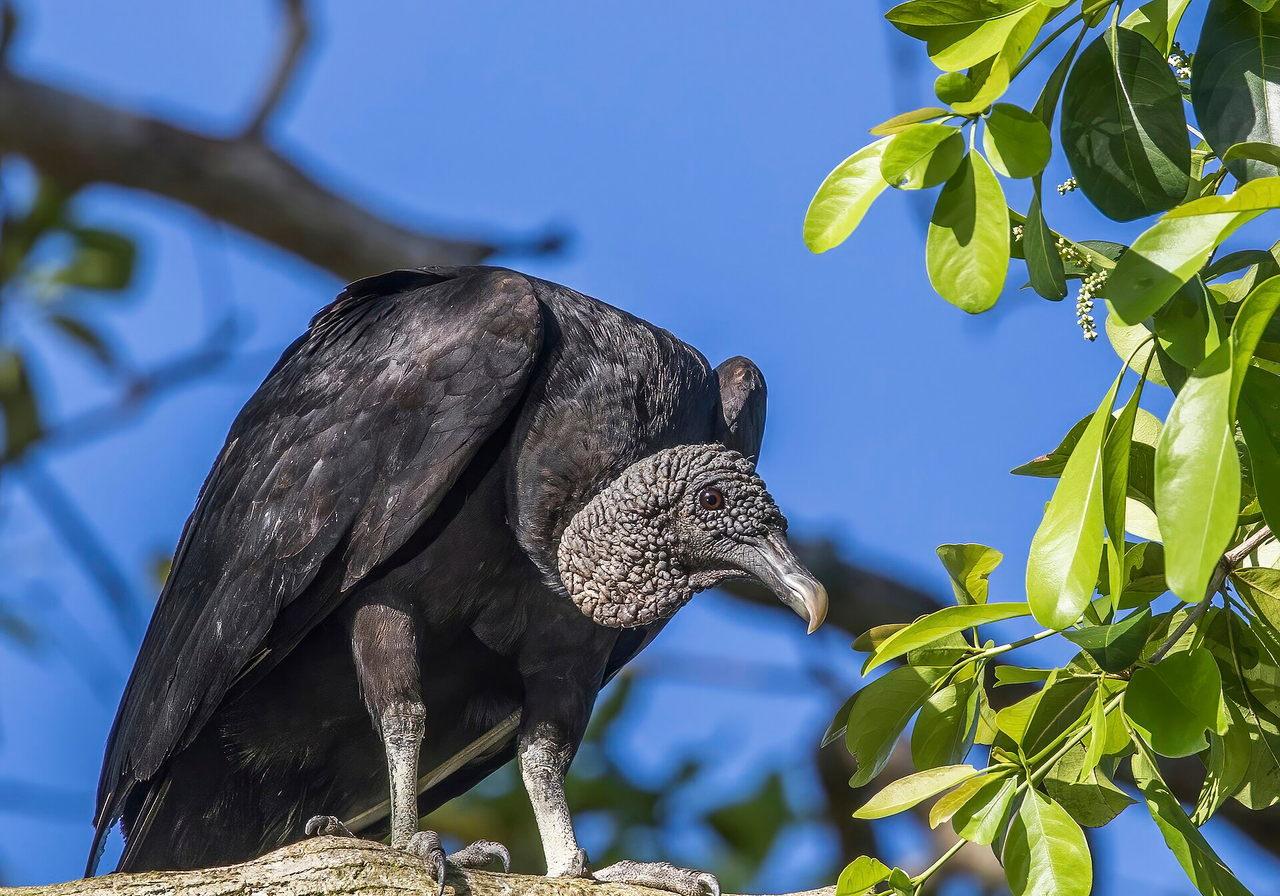
The black vulture (Coragyps atratus) is a bird of the family Cathartidae, in the order Accipitriformes.
Quick answer
The black vulture (Coragyps atratus) is a large, black scavenger of the Americas with a bare, wrinkled grey head and white patches near the wingtips. It finds food by sight and often follows turkey vultures to carcasses, then crowds them out in groups. It ranges from the south-eastern United States to South America. BirdLife estimates 50 to 100 million mature birds and lists it as Least Concern.
Top questions about the Black Vulture
Black Vulture facts at a glance
- Weight 1.9 kg
- Length 69 cm
| Scientific name | Coragyps atratus |
|---|---|
| Other name | American black vulture |
| Diet | Carrion; occasionally newborn or weak animals |
| Habitat | Open country, forest edges, farmland and towns |
| Size | 50–69 cm long; wingspan 137–152 cm |
| Weight | 2–2.7 kg |
| Conservation status | Least Concern (IUCN Red List, assessed 2025) |
| Kingdom | Animalia |
|---|---|
| Phylum | Chordata |
| Class | Aves |
| Order | Accipitriformes |
| Family | Cathartidae |
| Genus | Coragyps |
Where it lives
The black vulture (Coragyps atratus) is native to South-eastern and south-central United States through Mexico and Central America to central Chile and Argentina. — recorded across North America, South America in this guide’s range summary.
For occurrence records, see GBIF species search and sources below.
How big is a black vulture?
An adult black vulture measures 69 cm long — about 40% of the height of an average adult person (1.73 m) — and weighs around 1.9 kg, about 3% of an average adult’s body weight (70 kg).
Length vs an average adult’s height (to scale)
What is a group of black vultures called?
Group name (collective noun)
A group of Black Vultures is called a committee. It is also known as a kettle or a wake.
Baby name
A baby Black Vulture is called a chick.
Explore more animal collective nouns and baby animal names .
Identification
Black vultures are black with a short, square tail and a bare, wrinkled grey-black head. In flight, white patches at the base of the outer flight feathers make the wingtips look pale. They flap quickly between short glides, unlike the rocking soar of turkey vultures.
Sight, not smell
Black vultures find food by sight and by watching other scavengers. They often follow turkey vultures, which can smell carrion, and then use their numbers to push them off the carcass.
Status
BirdLife International lists the black vulture as Least Concern (2025), estimating 50 to 100 million mature birds. In North America its range has been spreading north. The oldest banded bird reported by Animal Diversity Web was 25 years old.
Explore the Black Vulture
Close relatives
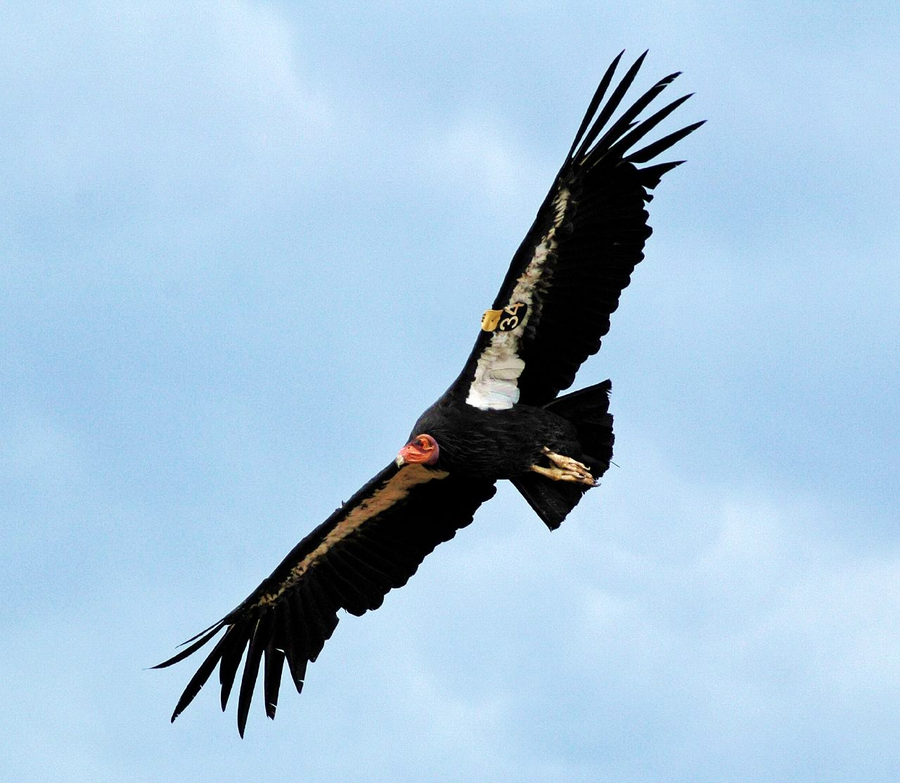
- California Condor Same family
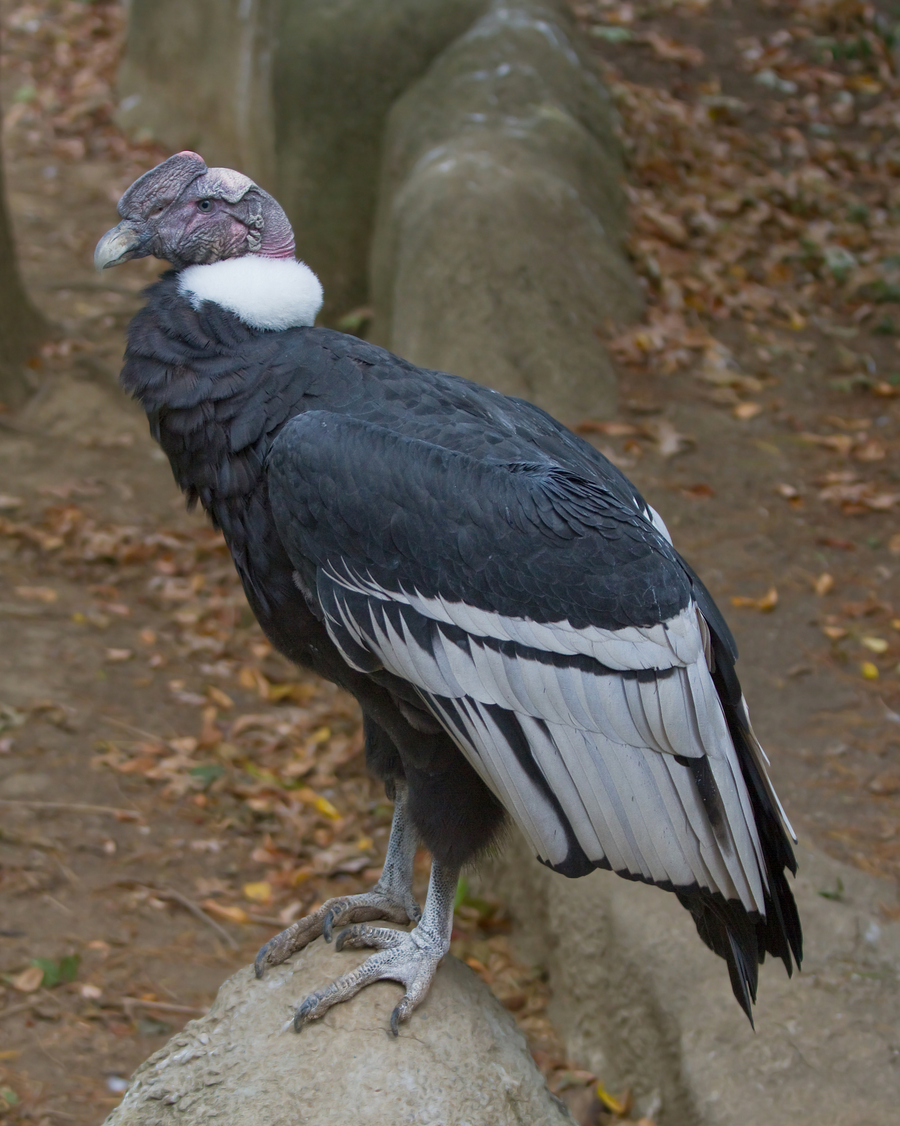
- Andean Condor Same family
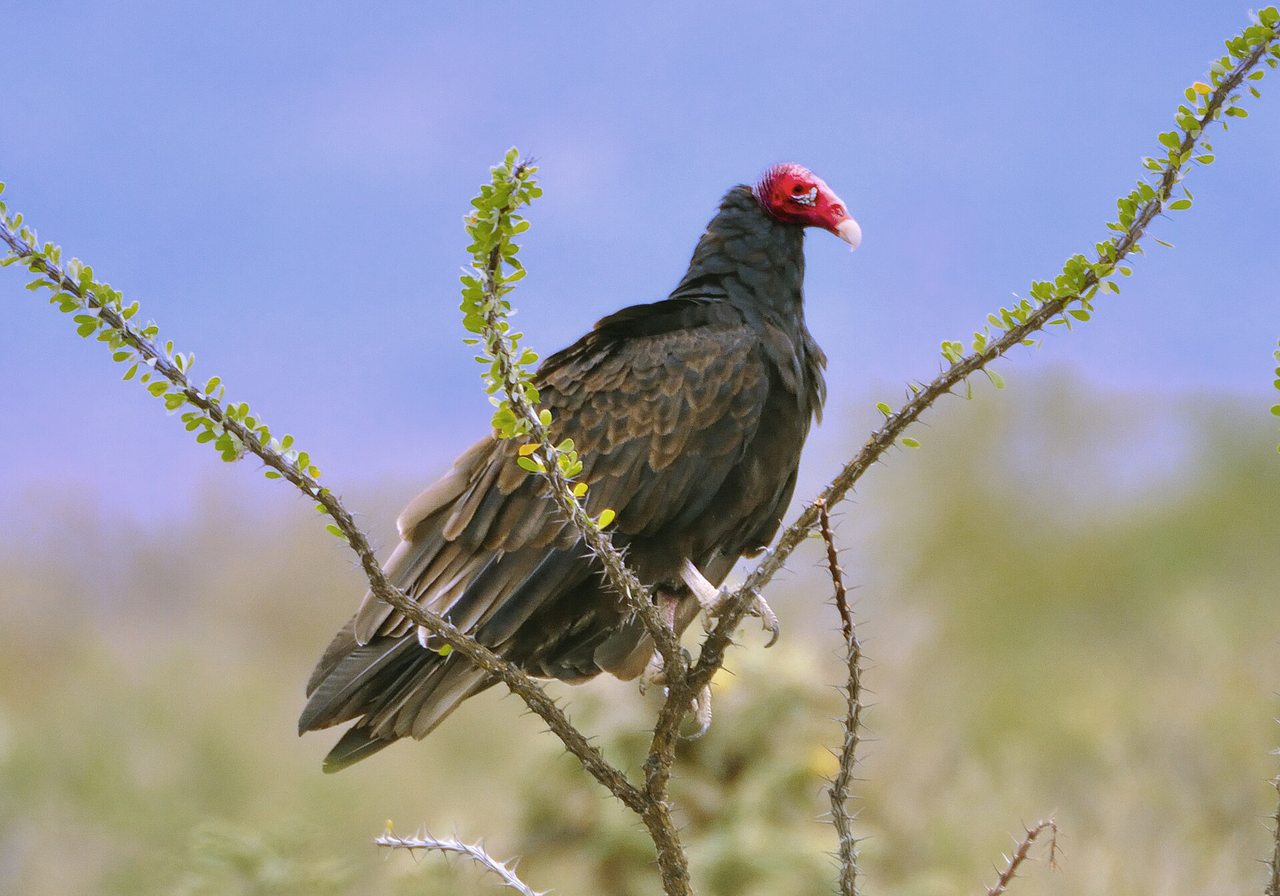
- Turkey Vulture Same family
- Osprey Same order
Did you know? Black Vulture facts
- Black vultures lay their eggs on bare ground in caves, logs or old buildings.
- Groups of related birds roost and feed together.
Conservation status of the Black Vulture
The black vulture (Coragyps atratus) is listed as Least Concern on the IUCN Red List. Least Concern (LC) is the IUCN's lowest-risk category, assigned to widespread, abundant species that have been evaluated and found not to be threatened. It does not mean a species faces no pressures — only that it is not currently at risk of extinction.
Black Vulture (Coragyps atratus) was most recently assessed for the IUCN Red List in 2025. Look up on the IUCN Red List .
Frequently asked questions about the Black Vulture
What is the difference between a black vulture and a turkey vulture?
Black vultures have a grey-black head, a short tail and white wingtip patches; turkey vultures have a red head (in adults), a longer tail and silvery flight feathers along the whole wing.
Can black vultures smell?
Their sense of smell is weak. They find food mainly by sight and by following turkey vultures.
Where do black vultures live?
From the south-eastern and south-central United States through Mexico and Central America to South America.
Are black vultures dangerous?
Not to people. They mainly eat carrion, although they occasionally attack newborn livestock.
What is a group of black vultures called?
A group of Black Vultures is called a committee. It is also known as a kettle or a wake.
What is a baby black vulture called?
A baby Black Vulture is called a chick.
Sources & references
This guide is compiled and reviewed against established zoological and conservation references. Key sources for the Black Vulture:
-
IUCN Red List of Threatened Species
Conservation status (Least Concern) reflects the IUCN Red List category for Coragyps atratus, most recently assessed in 2025.
-
iNaturalist — observations & photos
Search citizen-science observations and community IDs for Coragyps atratus. Useful for range checks and recent sightings — not a substitute for formal Red List status.
-
GBIF — occurrence data
Global Biodiversity Information Facility species search for Coragyps atratus. Explore published occurrence records used in range research.
-
eBird — bird observations
Cornell Lab eBird target search for Black Vulture. Check recent checklists and seasonal abundance where birders report this species.
- BirdLife International (2026). Species factsheet: American Black Vulture Coragyps atratus. BirdLife DataZone. Checked 1 November 2026.
IUCN Red List category Least Concern (assessed 2025), population estimate and trend.
- Animal Diversity Web: Coragyps atratus. University of Michigan Museum of Zoology.
Size, lifespan and behaviour.
- Tobias, J. A. et al. (2022). AVONET: morphological, ecological and geographical data for all birds. Ecology Letters 25: 581–597. doi:10.1111/ele.13898
Average body mass.
- Gill, F., Donsker, D. & Rasmussen, P. (Eds). IOC World Bird List v15.2.
English and scientific name, classification and range.
-
Global Animal Guide editorial standards
How we research, source, review, and update every guide for accuracy.
Social roosts
Black vultures roost and feed in groups, often of related birds, and share information about food. They nest on the ground in caves, hollow logs or abandoned buildings, laying their eggs without a nest.