The Spix's macaw (Cyanopsitta spixii) is a bird of the family Psittacidae, in the order Psittaciformes.
Quick answer
Spix's macaw (Cyanopsitta spixii) is a small blue macaw from the dry caatinga of north-eastern Brazil, famous as the species of Blu in the film Rio. Trapping for the pet trade and habitat loss wiped it out in the wild: the last known wild bird disappeared at the end of 2000, and it is listed as Extinct in the Wild. Every living Spix's macaw comes from captive-breeding programmes.
Top questions about the Spix's Macaw
Spix's Macaw facts at a glance
- Lifespan 28 years
| Scientific name | Cyanopsitta spixii |
|---|---|
| Diet | Seeds and nuts, mainly from two caatinga shrubs |
| Former habitat | Caatinga scrub with gallery woodland of caraiba trees |
| Former range | Near the rio São Francisco, north Bahia, Brazil |
| Lifespan | About 28 years |
| Last wild bird | Disappeared at the end of 2000 |
| Conservation status | Extinct in the Wild (IUCN Red List, assessed 2019) |
| Kingdom | Animalia |
|---|---|
| Phylum | Chordata |
| Class | Aves |
| Order | Psittaciformes |
| Family | Psittacidae |
| Genus | Cyanopsitta |
Where it lives
The spix's macaw (Cyanopsitta spixii) is native to Formerly the caatinga of north Bahia, Brazil, near the rio São Francisco; extinct in the wild since 2000. — recorded across South America in this guide’s range summary.
For occurrence records, see GBIF species search and sources below.
What is a group of spix's macaws called?
Group name (collective noun)
A group of Spix's Macaws is called a pandemonium.
Baby name
A baby Spix's Macaw is called a chick.
Explore more animal collective nouns and baby animal names .
A dull-blue macaw
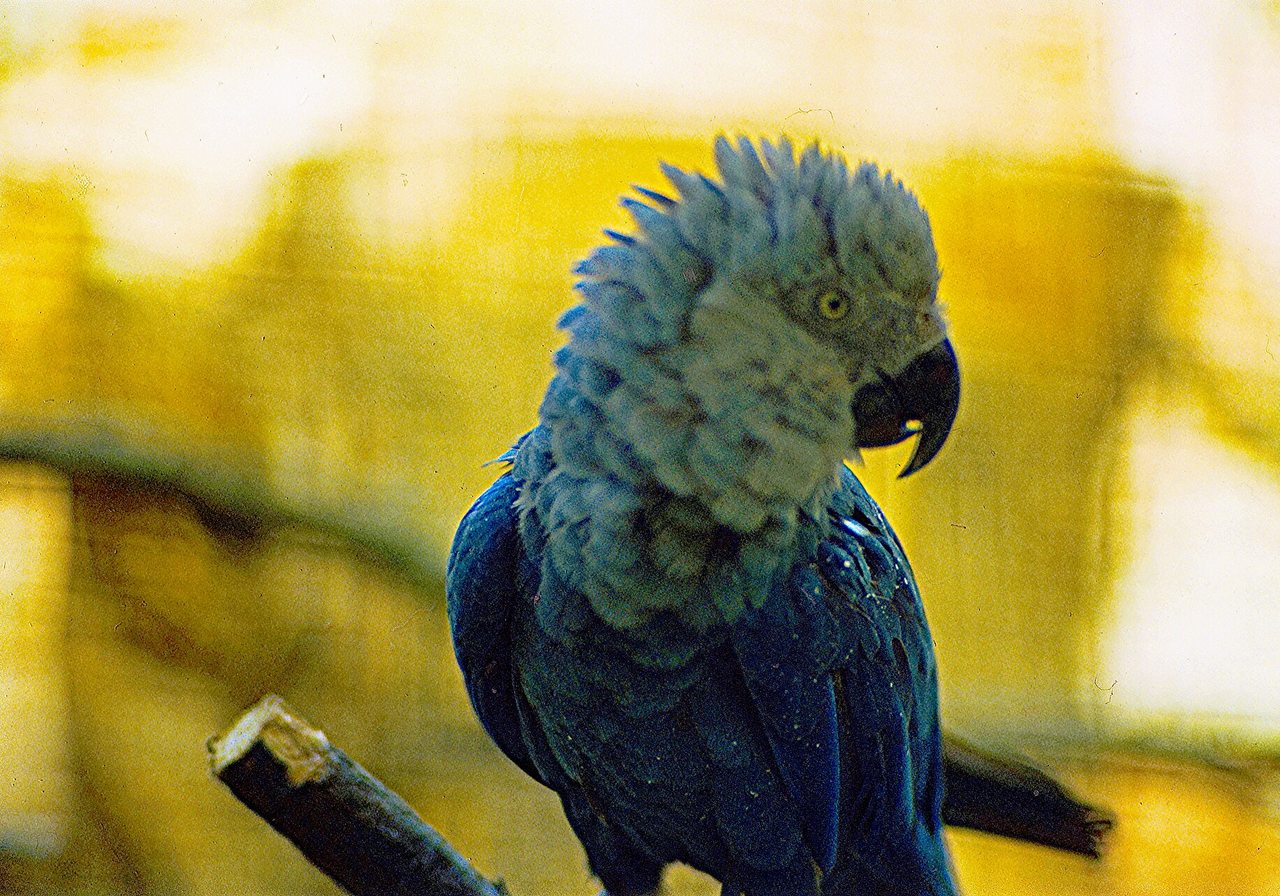
Spix's macaw is smaller and plainer than the big macaws. Adults are dull blue, deeper blue on the back and tail, with a pale grey-blue head, bare dark-grey skin around the eyes and a blackish bill. It is the only species in its genus, Cyanopsitta.
Lost from the wild
The species was known for more than 150 years only from a few traded birds before it was traced in 1985–86 to the rio São Francisco area of north Bahia. Just three birds remained, and they were trapped for trade in 1987 and 1988. A lone male was found in 1990 and paired with a female blue-winged macaw; he disappeared at the end of 2000 and has not been seen since.
What it needed
In the wild it lived in caatinga, a dry thorn-scrub biome, and depended on gallery woodland dominated by caraiba trees (Tabebuia caraiba) for nest holes. It fed mainly on the seeds of two local shrubs in the spurge family. Clearing of those riverside woods, together with trapping, removed both its homes and its numbers.
Captive breeding
The species is listed on CITES Appendix I and protected under Brazilian law. A coordinated captive-breeding programme held more than 100 birds by 2015, largely at Al-Wabra Wildlife Preservation in Qatar, with others in Germany and Brazil. Brazil's 'Macaw in Nature' project has worked since 2012 to restore its habitat and return birds to the wild.
Explore the Spix's Macaw
Close relatives
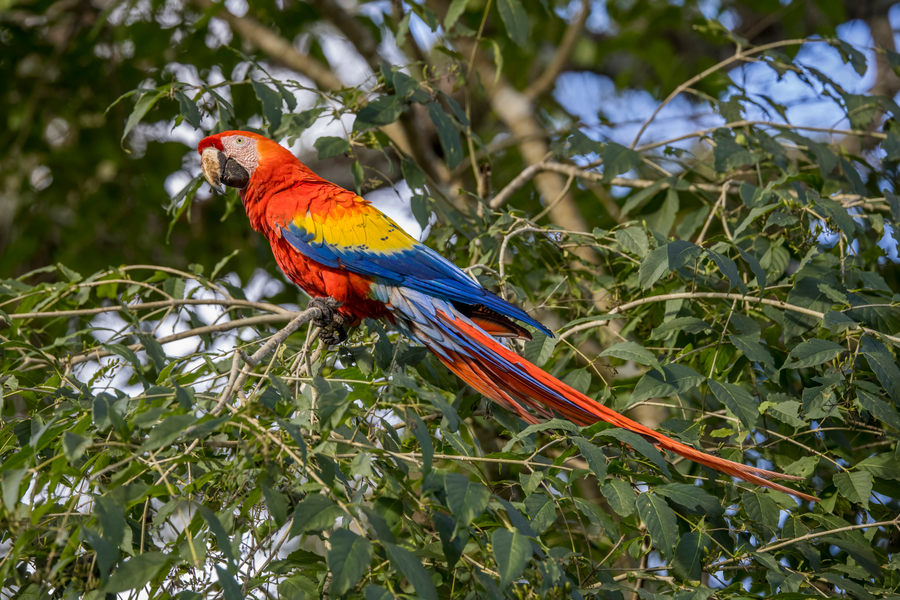
- Scarlet Macaw Same family
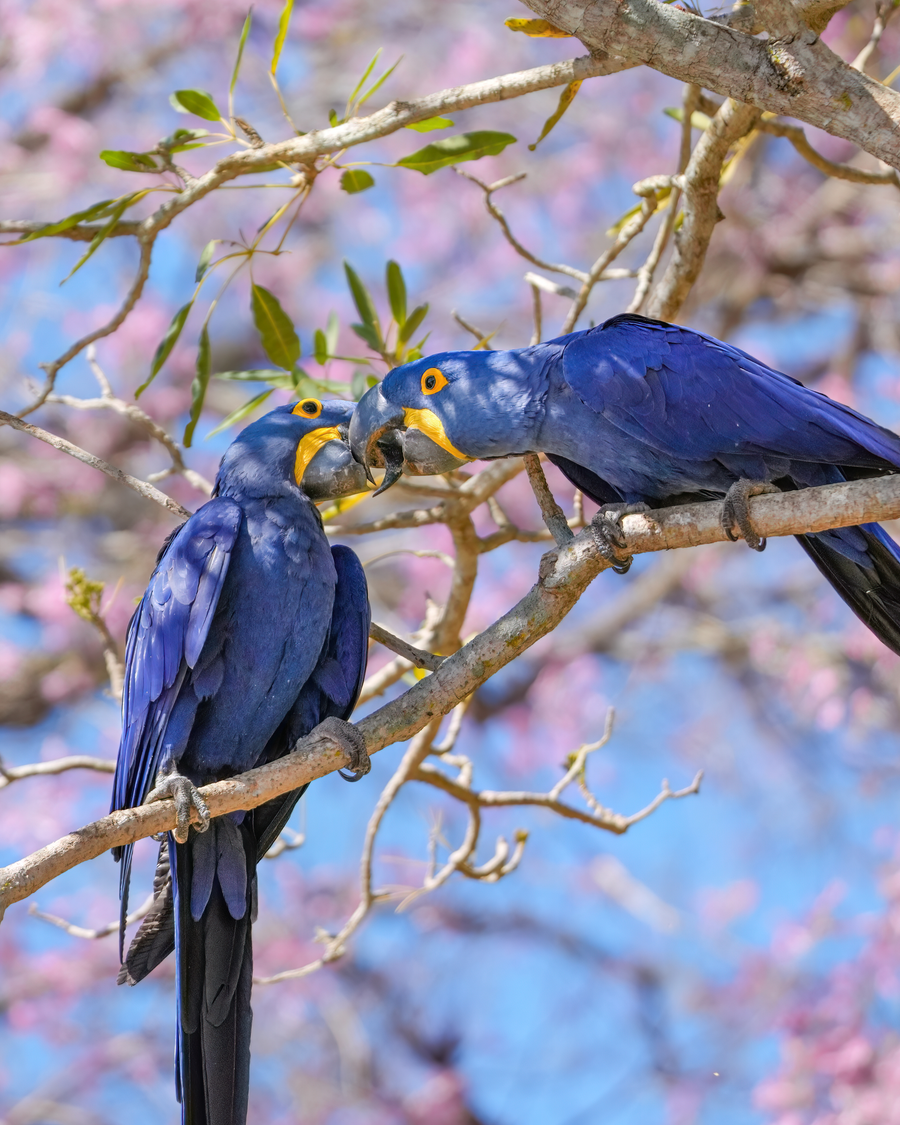
- Hyacinth Macaw Same family
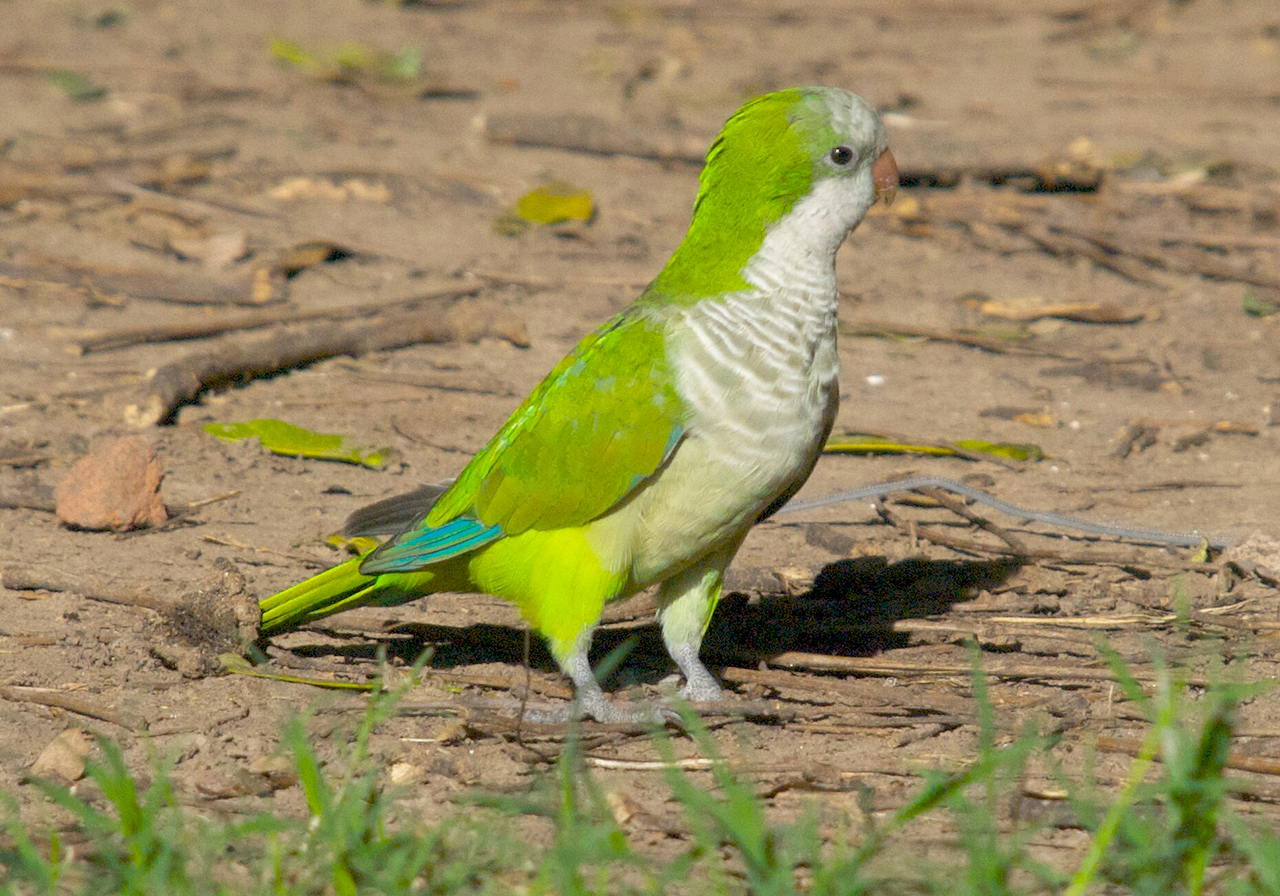
- Monk Parakeet Same family
- African Grey Parrot Same family
Range & geography
Did you know? Spix's Macaw facts
- The species is named after Johann Baptist von Spix, the German naturalist who collected the first known specimen.
- It is listed on CITES Appendix I, which bans commercial international trade in wild-caught birds.
Conservation status of the Spix's Macaw
The Spix's macaw (Cyanopsitta spixii) is listed as Extinct in the Wild on the IUCN Red List. Extinct in the Wild (EW) means a species survives only in captivity, in cultivation or as a population released well outside its past range. No wild population is known. It is the last IUCN category before Extinct, and recovery depends on captive breeding and, where possible, returning animals to restored habitat.
Main threats to the Spix's macaw
- Trapping for the pet trade
- Loss of riverside caraiba woodland
Spix's Macaw (Cyanopsitta spixii) was most recently assessed for the IUCN Red List in 2019. Look up on the IUCN Red List .
Frequently asked questions about the Spix's Macaw
Is Blu from Rio a Spix's macaw?
Yes. Blu and Jewel in the 2011 animated film Rio are Spix's macaws, which is why so many people search for this species.
Is Spix's macaw extinct?
It is Extinct in the Wild, not fully extinct. The last known wild bird disappeared in 2000, but captive-bred birds survive in breeding programmes.
Why did Spix's macaw disappear?
BirdLife International attributes its decline mainly to trapping for the pet trade, together with loss of the riverside woodland it nested in.
Where did Spix's macaw live?
Only in the caatinga of north Bahia, Brazil, near the rio São Francisco.
What is a group of spix's macaws called?
A group of Spix's Macaws is called a pandemonium.
What is a baby spix's macaw called?
A baby Spix's Macaw is called a chick.
Sources & references
This guide is compiled and reviewed against established zoological and conservation references. Key sources for the Spix's Macaw:
-
IUCN Red List of Threatened Species
Conservation status (Extinct in the Wild) reflects the IUCN Red List category for Cyanopsitta spixii, most recently assessed in 2019.
-
iNaturalist — observations & photos
Search citizen-science observations and community IDs for Cyanopsitta spixii. Useful for range checks and recent sightings — not a substitute for formal Red List status.
-
GBIF — occurrence data
Global Biodiversity Information Facility species search for Cyanopsitta spixii. Explore published occurrence records used in range research.
-
eBird — bird observations
Cornell Lab eBird target search for Spix's Macaw. Check recent checklists and seasonal abundance where birders report this species.
- BirdLife International (2026). Species factsheet: Spix's Macaw Cyanopsitta spixii. BirdLife DataZone. Checked 1 November 2026.
IUCN Red List category Extinct in the Wild (assessed 2019), population estimate and trend.
- Animal Diversity Web: Cyanopsitta spixii. University of Michigan Museum of Zoology.
Size, lifespan and diet.
- Tobias, J. A. et al. (2022). AVONET: morphological, ecological and geographical data for all birds. Ecology Letters 25: 581–597. doi:10.1111/ele.13898
Average body mass.
- Gill, F., Donsker, D. & Rasmussen, P. (Eds). IOC World Bird List v15.2.
English and scientific name, classification and range.
-
Global Animal Guide editorial standards
How we research, source, review, and update every guide for accuracy.