Image sourcing: see credits & licences
The scarlet macaw (Ara macao) is a bird of the family Psittacidae, in the order Psittaciformes.
Quick answer
The scarlet macaw (Ara macao) is a large Neotropical parrot with brilliant red, yellow, and blue plumage and a powerful beak for cracking hard nuts. It lives in humid forests from southern Mexico through Central America into Amazonia, weighs about 1 kg, and is listed Least Concern overall, though some regional populations are depleted by trapping and deforestation.
Top questions about the Scarlet Macaw
Also available in Español (Guacamayo escarlata)
Scarlet Macaw facts at a glance
- Weight 1 kg
- Length 85 cm
- Top speed 55 km/h
- Lifespan 40 years
| Scientific name | Ara macao |
|---|---|
| Diet | Herbivore (fruits, nuts, seeds) |
| Habitat | Tropical rainforest canopy and river-edge forest |
| Lifespan | Around 40 years in the wild (varies by population and captivity). |
| Weight | About 1 kg typical adult mass (sex and region vary). |
| Top speed | Up to roughly 55 km/h when moving at speed. |
| Conservation status | Least Concern (IUCN) |
| Kingdom | Animalia |
|---|---|
| Phylum | Chordata |
| Class | Aves |
| Order | Psittaciformes |
| Family | Psittacidae |
| Genus | Ara |
Where it lives
The scarlet macaw (Ara macao) is native to Humid forests from southern Mexico through Central America into Amazonia. — recorded across North America, South America in this guide’s range summary.
For occurrence records, see GBIF species search and sources below.
How big is a scarlet macaw?
An adult scarlet macaw measures 85 cm long — about 49% of the height of an average adult person (1.73 m) — and weighs around 1.0 kg, about 1% of an average adult’s body weight (70 kg).
Length vs an average adult’s height (to scale)
What is a group of scarlet macaws called?
Group name (collective noun)
A group of Scarlet Macaws is called a pandemonium.
Baby name
A baby Scarlet Macaw is called a chick.
Explore more animal collective nouns and baby animal names .
Rainbow canopy parrot
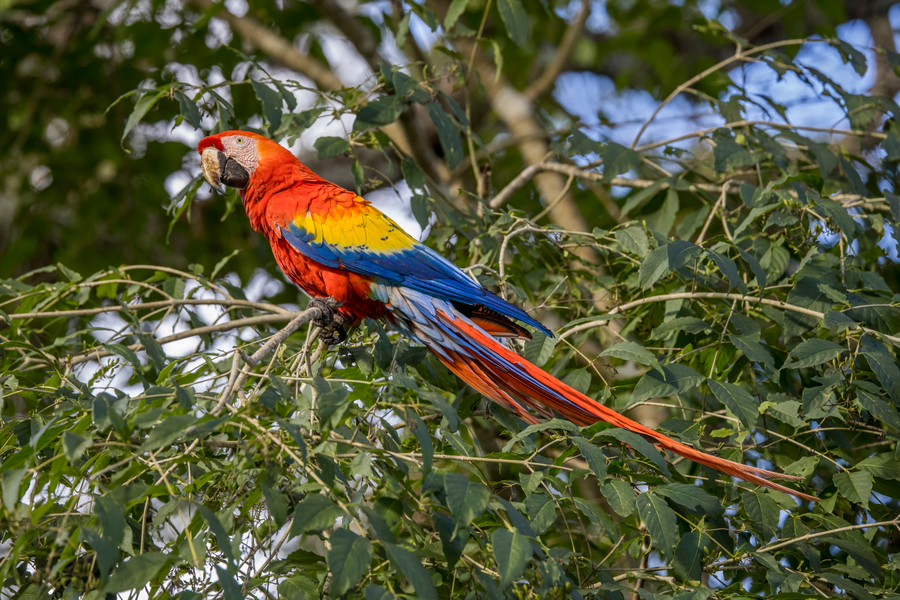
Scarlet macaws are among the most recognisable New World parrots: long graduated tails, bare white facial skin with fine feather lines, and a heavy hooked bill. Pairs often fly together calling loudly above the canopy.
Nuts, seeds, and clay licks
They crack palm nuts and other hard fruits and seeds that defeat softer-billed birds. In parts of Amazonia and Central America they visit riverbank clay licks, possibly to obtain minerals or bind plant toxins.
Mexico to Amazonia
Humid rainforest canopy and river-edge forest from southern Mexico through Central America into the Amazon basin. They need large fruiting trees and nest cavities in tall snags.
Local declines despite global LC
Globally Least Concern, yet pet trade and forest clearing have erased or thinned birds from parts of Central America. Protected areas and nest-box programmes support recovering flocks in places such as Costa Rica and Peru.
Explore the Scarlet Macaw
Close relatives
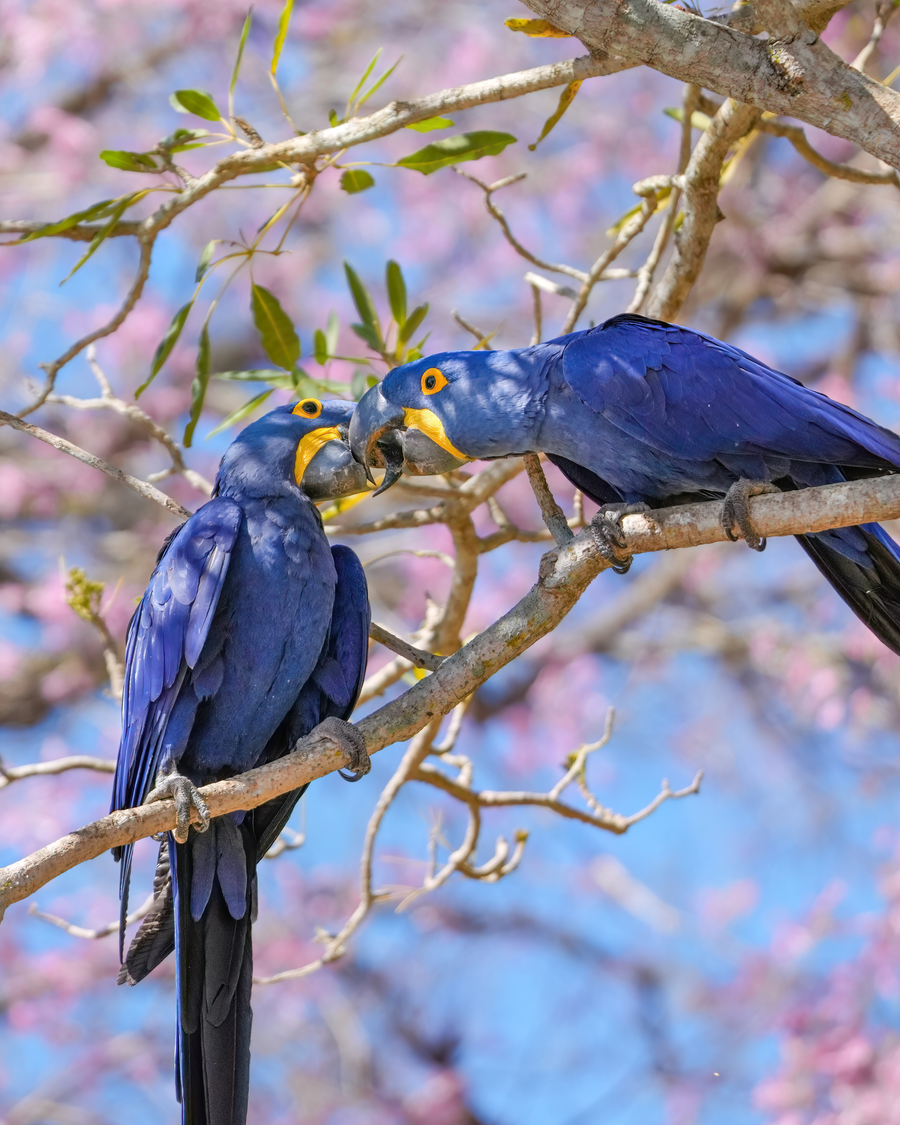
- Hyacinth Macaw Same family
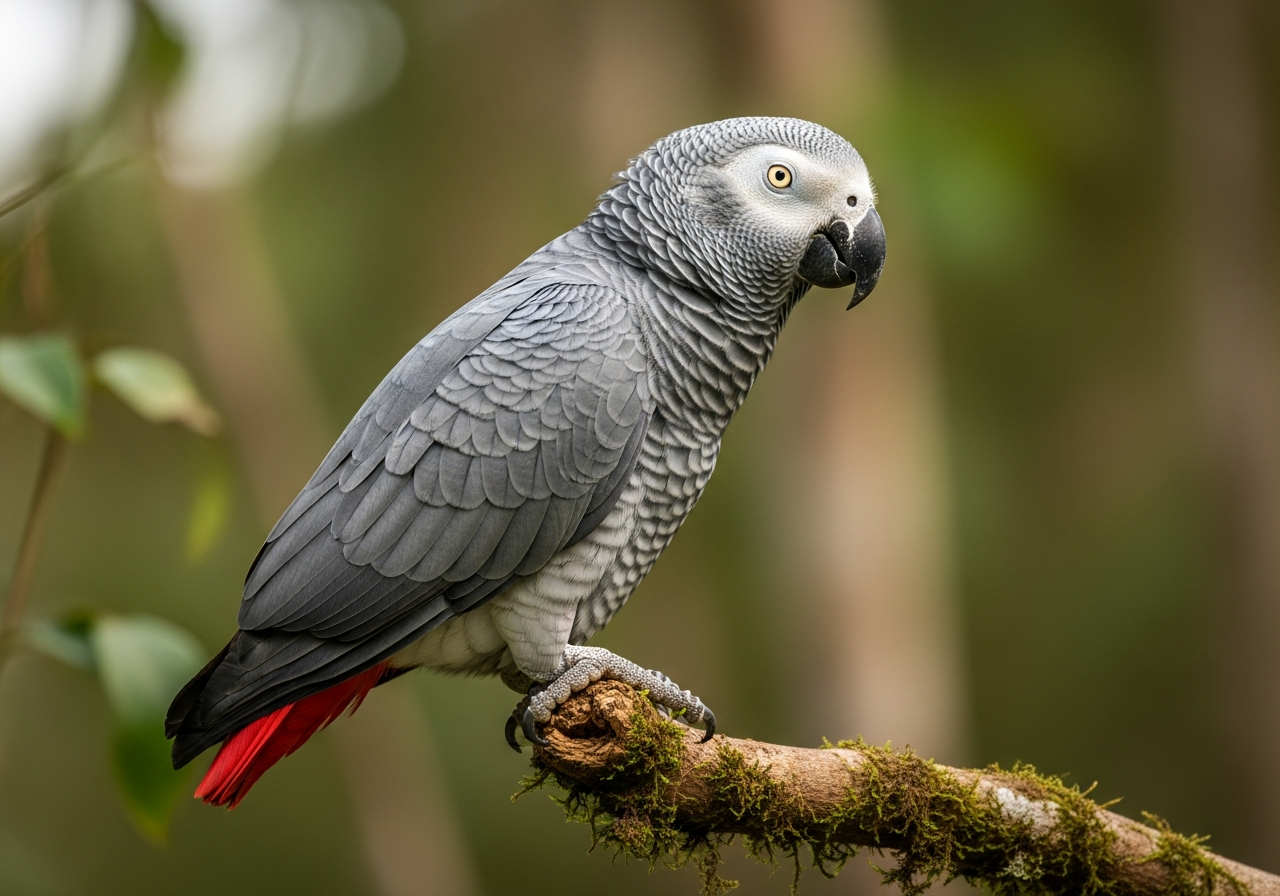
- African Grey Parrot Same family
- Kakapo Same order
- Sulphur-crested Cockatoo Same order
Range & geography
Conservation status of the Scarlet Macaw
The scarlet macaw (Ara macao) is listed as Least Concern on the IUCN Red List. Least Concern (LC) is the IUCN's lowest-risk category, assigned to widespread, abundant species that have been evaluated and found not to be threatened. It does not mean a species faces no pressures — only that it is not currently at risk of extinction.
The scarlet macaw (Ara macao) is assessed on the IUCN Red List. Look up on the IUCN Red List .
Frequently asked questions about the Scarlet Macaw
Why do scarlet macaws eat clay?
At riverside clay licks they may gain minerals and help neutralise toxins in unripe seeds and fruits.
How long do scarlet macaws live?
Decades are typical; well-cared-for birds can approach 40–50 years. Native range summary: Humid forests from southern Mexico through Central America into Amazonia.
Are scarlet macaws endangered?
The species is Least Concern globally, but several regional populations remain threatened by trapping and habitat loss.
What do scarlet macaws eat?
Hard fruits, nuts, seeds, and some flowers and leaf buds from rainforest trees — especially palms and other canopy species.
Where do scarlet macaws nest?
In high tree cavities, often in dead or living emergent trees above the main canopy.
What is a group of scarlet macaws called?
A group of Scarlet Macaws is called a pandemonium.
What is a baby scarlet macaw called?
A baby Scarlet Macaw is called a chick.
Sources & references
This guide is compiled and reviewed against established zoological and conservation references. Key sources for the Scarlet Macaw:
-
IUCN Red List of Threatened Species
Conservation status (Least Concern) reflects the IUCN Red List category for Ara macao.
-
iNaturalist — observations & photos
Search citizen-science observations and community IDs for Ara macao. Useful for range checks and recent sightings — not a substitute for formal Red List status.
-
GBIF — occurrence data
Global Biodiversity Information Facility species search for Ara macao. Explore published occurrence records used in range research.
-
eBird — bird observations
Cornell Lab eBird target search for Scarlet Macaw. Check recent checklists and seasonal abundance where birders report this species.
-
Global Animal Guide editorial standards
How we research, source, review, and update every guide for accuracy.