Image sourcing: see credits & licences
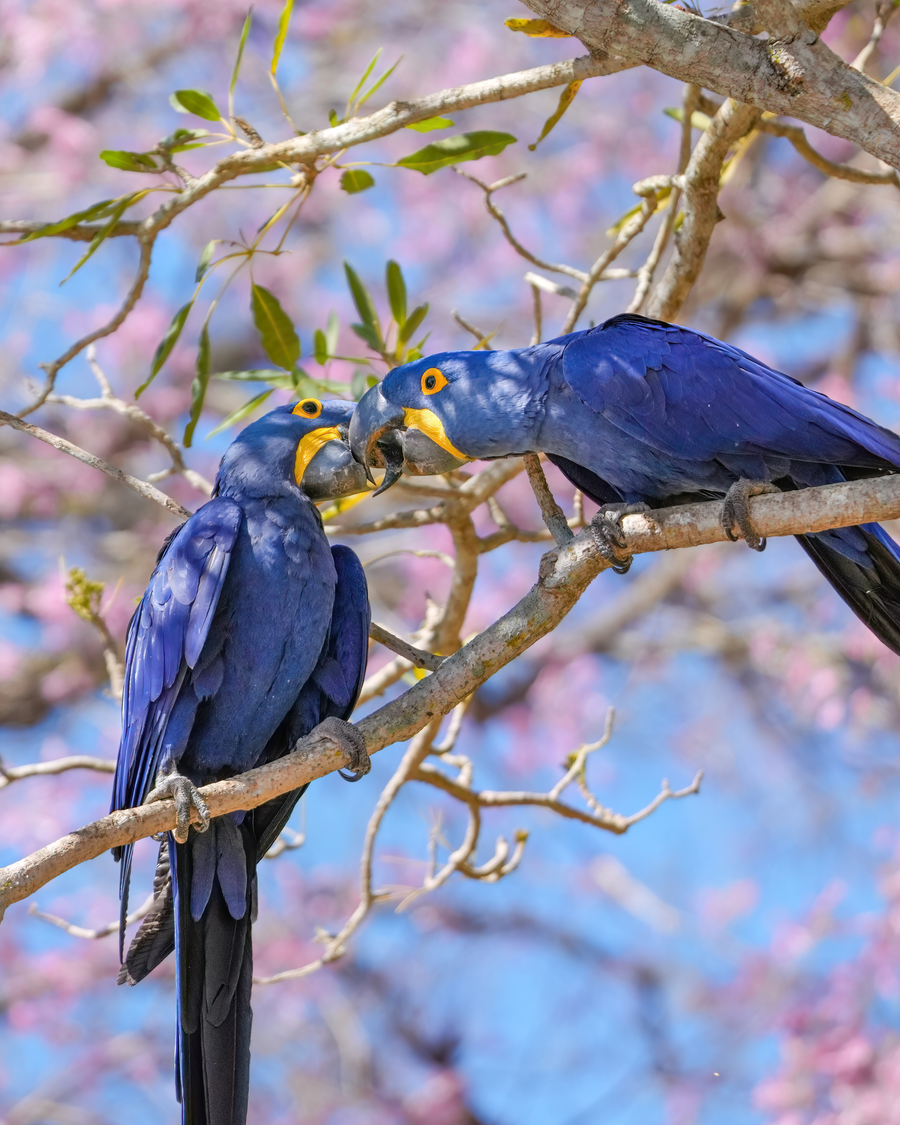
The hyacinth macaw (Anodorhynchus hyacinthinus) is a bird of the family Psittacidae, in the order Psittaciformes.
Quick answer
The hyacinth macaw (Anodorhynchus hyacinthinus) is the world's largest flying parrot — a cobalt-blue giant of Brazil's Pantanal, Bolivia, and Paraguay. Adults weigh about 1.5 kg, crack extremely hard palm nuts with their beak, and are listed Vulnerable after trapping for the pet trade and loss of nest trees.
Top questions about the Hyacinth Macaw
Also available in Español (Guacamayo jacinto)
Hyacinth Macaw facts at a glance
- Weight 1.5 kg
- Length 1 m
- Top speed 50 km/h
- Lifespan 50 years
| Scientific name | Anodorhynchus hyacinthinus |
|---|---|
| Diet | Herbivore (nuts and fruits) |
| Habitat | Palm groves, gallery forest, and wetlands |
| Lifespan | Around 50 years in the wild (varies by population and captivity). |
| Weight | About 1.5 kg typical adult mass (sex and region vary). |
| Top speed | Up to roughly 50 km/h when moving at speed. |
| Conservation status | Vulnerable (IUCN) |
| Kingdom | Animalia |
|---|---|
| Phylum | Chordata |
| Class | Aves |
| Order | Psittaciformes |
| Family | Psittacidae |
| Genus | Anodorhynchus |
Where it lives
The hyacinth macaw (Anodorhynchus hyacinthinus) is native to Pantanal wetlands and dry forests of Brazil, Bolivia, and Paraguay. — recorded across South America in this guide’s range summary.
For occurrence records, see GBIF species search and sources below.
How big is a hyacinth macaw?
An adult hyacinth macaw measures 1 m long — about 58% of the height of an average adult person (1.73 m) — and weighs around 1.5 kg, about 2% of an average adult’s body weight (70 kg).
Length vs an average adult’s height (to scale)
What is a group of hyacinth macaws called?
Group name (collective noun)
A group of Hyacinth Macaws is called a pandemonium.
Baby name
A baby Hyacinth Macaw is called a chick.
Explore more animal collective nouns and baby animal names .
Largest flying parrot
Length can approach 1 m including the long tail. Bare yellow skin frames the eyes and lower beak, contrasting with intense blue plumage. The bill is among the strongest of any parrot.
Palm-nut specialist
Favoured foods include nuts of acuri and bocaiuva palms that few other animals open. Pairs often feed in small groups along gallery forest and cattle-ranch palm stands.
Pantanal and dry forests
Palm groves, gallery forest, and wetlands of the Pantanal and adjacent dry forests in Brazil, Bolivia, and Paraguay. Across its range it is tied to palm groves, gallery forest, and wetlands, and field accounts emphasise this species’ distinctive ecology rather than generic habitat labels.
Vulnerable to trade and nest theft
IUCN lists hyacinth macaws Vulnerable. Illegal chick trapping and cutting of nest trees drove historic crashes; ranchers' nest-box programmes in the Pantanal have aided local recovery.
Explore the Hyacinth Macaw
Close relatives
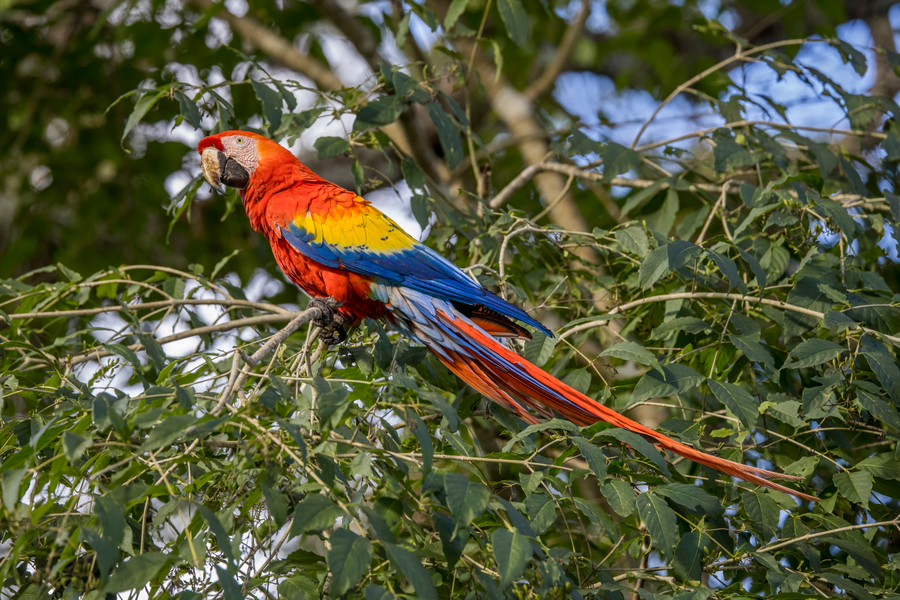
- Scarlet Macaw Same family
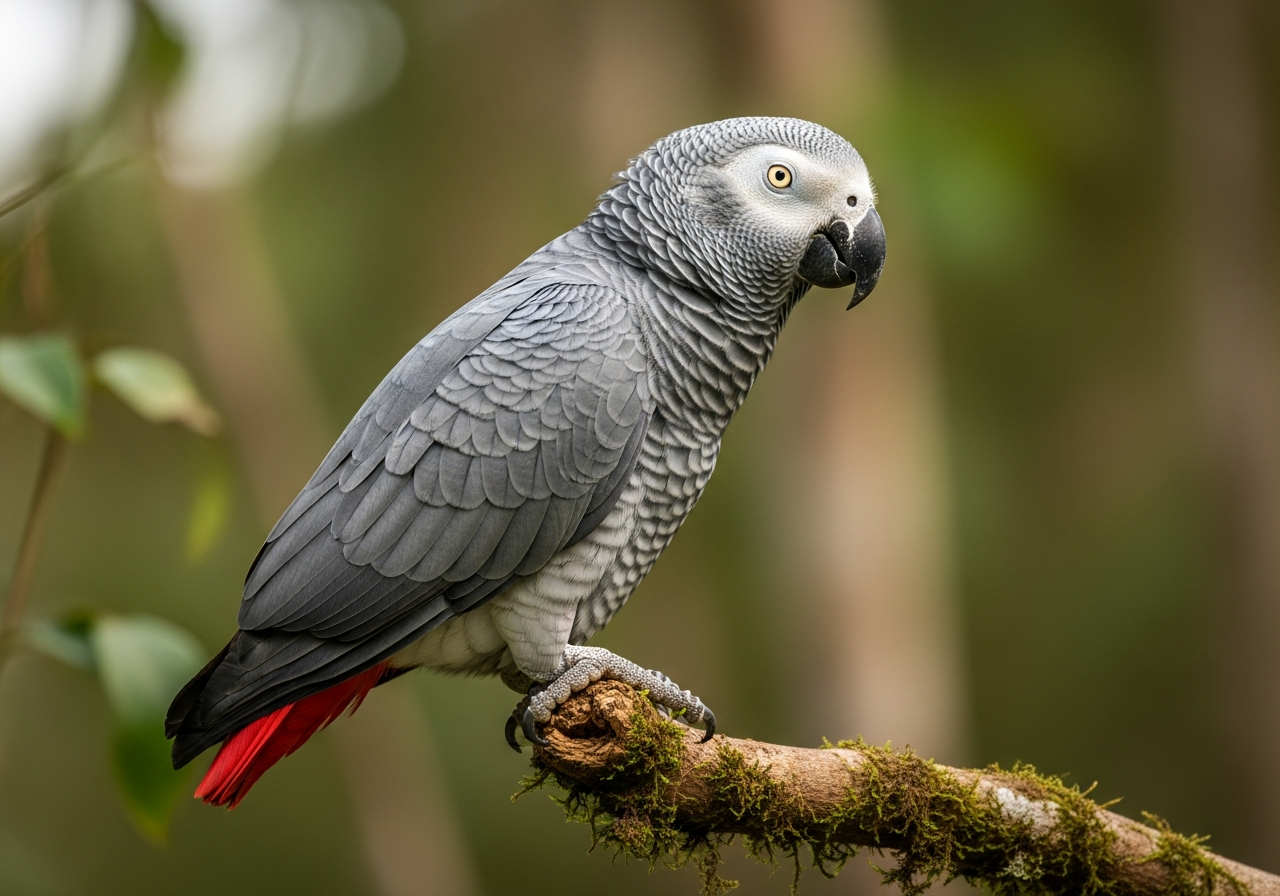
- African Grey Parrot Same family
- Kakapo Same order
- Sulphur-crested Cockatoo Same order
Collections
Range & geography
Conservation status of the Hyacinth Macaw
The hyacinth macaw (Anodorhynchus hyacinthinus) is listed as Vulnerable on the IUCN Red List. Vulnerable (VU) means a species faces a high risk of extinction in the medium-term future. It is the lowest-risk of the three 'threatened' IUCN categories — one step below Endangered, which is itself below Critically Endangered — and is often an early warning that a population is in trouble.
Main threats to the hyacinth macaw
- Capture for the illegal pet trade
- Habitat loss from cattle ranching and agriculture
- Nest tree shortage in modified landscapes
- Hunting in parts of the range
Hyacinth Macaw (Anodorhynchus hyacinthinus) was most recently assessed for the IUCN Red List in 2016. Look up on the IUCN Red List .
Frequently asked questions about the Hyacinth Macaw
Is the hyacinth macaw the biggest parrot?
It is the longest and heaviest flying parrot; the flightless kākāpō can be heavier.
What nuts can hyacinth macaws crack?
Extremely hard palm nuts such as acuri and bocaiuva that defeat most other birds.
Why are hyacinth macaws Vulnerable?
Past pet-trade trapping and loss of large nest trees sharply reduced numbers.
Where do hyacinth macaws live?
Pantanal wetlands and dry forests of Brazil, Bolivia, and Paraguay. Native range summary: Pantanal wetlands and dry forests of Brazil, Bolivia, and Paraguay.
Do hyacinth macaws need nest boxes?
In cattle country, purpose-built nest boxes replace scarce natural cavities and boost breeding success.
What is a group of hyacinth macaws called?
A group of Hyacinth Macaws is called a pandemonium.
What is a baby hyacinth macaw called?
A baby Hyacinth Macaw is called a chick.
Sources & references
This guide is compiled and reviewed against established zoological and conservation references. Key sources for the Hyacinth Macaw:
-
IUCN Red List of Threatened Species
Conservation status (Vulnerable) reflects the IUCN Red List category for Anodorhynchus hyacinthinus, most recently assessed in 2016.
-
iNaturalist — observations & photos
Search citizen-science observations and community IDs for Anodorhynchus hyacinthinus. Useful for range checks and recent sightings — not a substitute for formal Red List status.
-
GBIF — occurrence data
Global Biodiversity Information Facility species search for Anodorhynchus hyacinthinus. Explore published occurrence records used in range research.
-
eBird — bird observations
Cornell Lab eBird target search for Hyacinth Macaw. Check recent checklists and seasonal abundance where birders report this species.
-
Global Animal Guide editorial standards
How we research, source, review, and update every guide for accuracy.