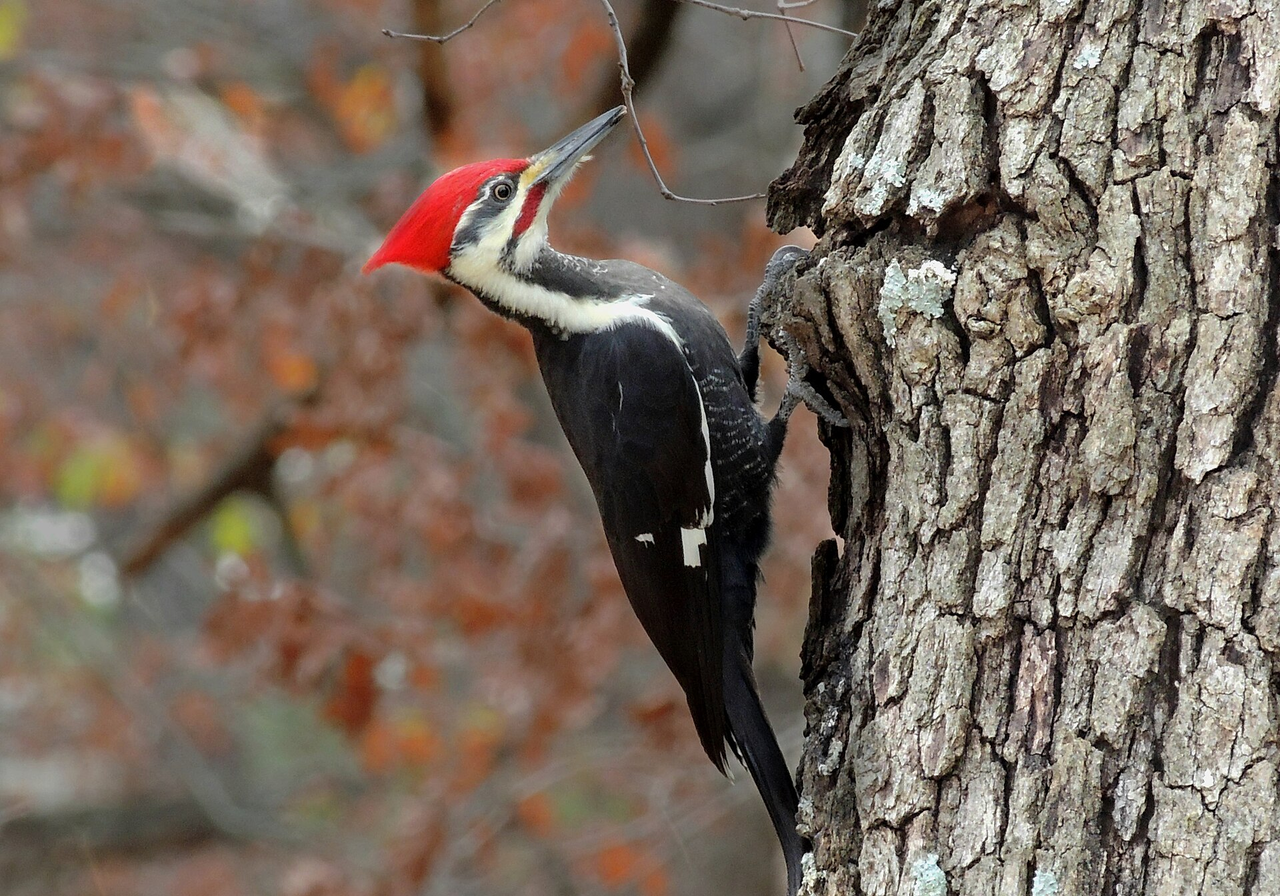
The pileated woodpecker (Dryocopus pileatus) is a bird of the woodpecker family, Picidae, in the order Piciformes.
Quick answer
The pileated woodpecker (Dryocopus pileatus) is the largest woodpecker in most of North America, a crow-sized black bird with a flaming red crest. It chisels big rectangular holes in dead trees to reach carpenter ants and beetle larvae. It lives in mature forests across Canada and the eastern and north-western United States, and its population is increasing. It is listed as Least Concern.
Top questions about the Pileated Woodpecker
Pileated Woodpecker facts at a glance
- Weight 290 g
| Scientific name | Dryocopus pileatus |
|---|---|
| Diet | Mainly carpenter ants and wood-boring beetle larvae; also fruit and nuts |
| Habitat | Mature forest with large dead trees |
| Weight | Average about 290 g |
| Oldest known | Nearly 13 years (banded wild bird) |
| Range | Southern Canada, eastern and north-western USA |
| Conservation status | Least Concern (IUCN Red List, assessed 2025) |
| Kingdom | Animalia |
|---|---|
| Phylum | Chordata |
| Class | Aves |
| Order | Piciformes |
| Family | Picidae |
| Genus | Dryocopus |
Where it lives
The pileated woodpecker (Dryocopus pileatus) is native to Mature forests of southern Canada and the eastern and north-western United States. — recorded across North America in this guide’s range summary.
For occurrence records, see GBIF species search and sources below.
What is a group of pileated woodpeckers called?
Group name (collective noun)
A group of Pileated Woodpeckers is called a descent.
Baby name
A baby Pileated Woodpecker is called a chick.
Explore more animal collective nouns and baby animal names .
Rectangular holes
Pileated woodpeckers dig deep, oblong holes into dead or decaying wood, sometimes big enough to weaken a small tree. They are after colonies of carpenter ants and the larvae of wood-boring beetles, which they extract with a long, barbed tongue. In autumn and winter they also eat wild fruit and nuts.
Identification
This is a big, dull-black woodpecker with a bright red crest, white stripes on the face and neck, and white wing linings that flash in flight. Males have a red stripe from the bill (a 'moustache'); females have a black one. The loud, laughing call and slow, deep drumming carry far through the woods.
Homes for other animals
Each year a pair excavates a new nest cavity, usually in a dead tree. Old cavities are later used by ducks, owls, other birds, bats and small mammals, which makes the pileated woodpecker an important cavity builder in North American forests.
Status
BirdLife International lists the species as Least Concern (2025), estimating about 2.6 million mature birds and an increasing trend. It declined when eastern forests were cleared in the 1800s but has recovered as forests regrew and it learned to use younger woods and suburbs with large trees.
Explore the Pileated Woodpecker
Close relatives
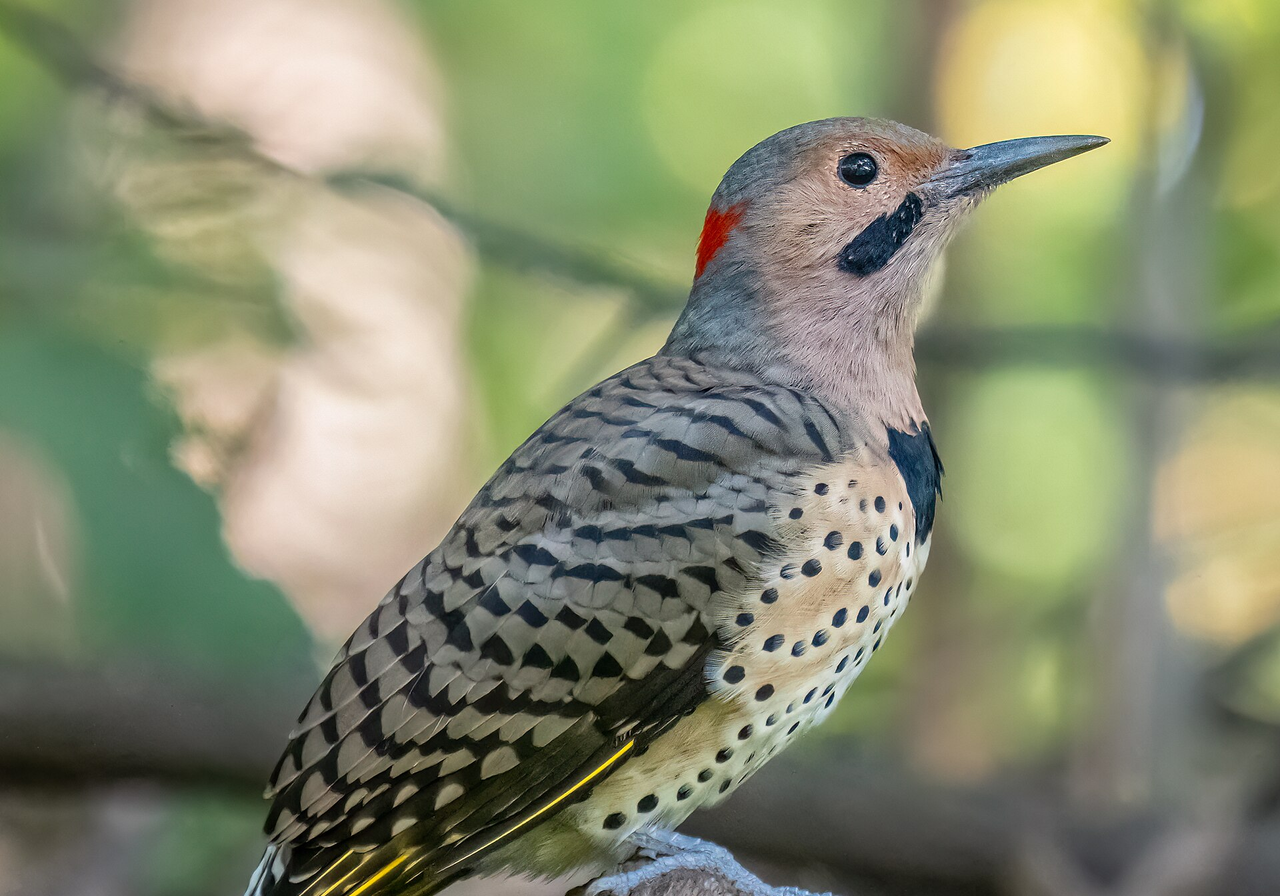
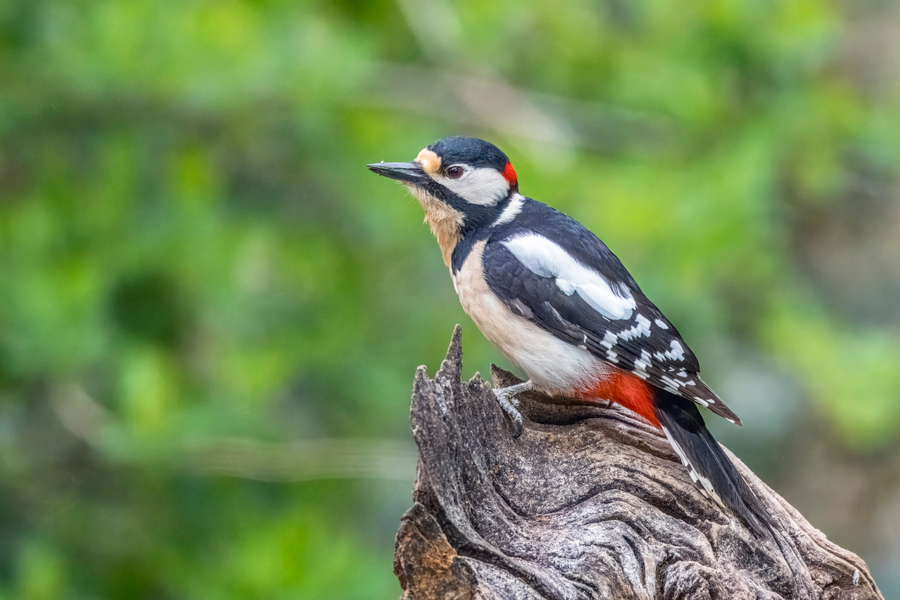
- Great Spotted Woodpecker Same family
- Northern Flicker Same family
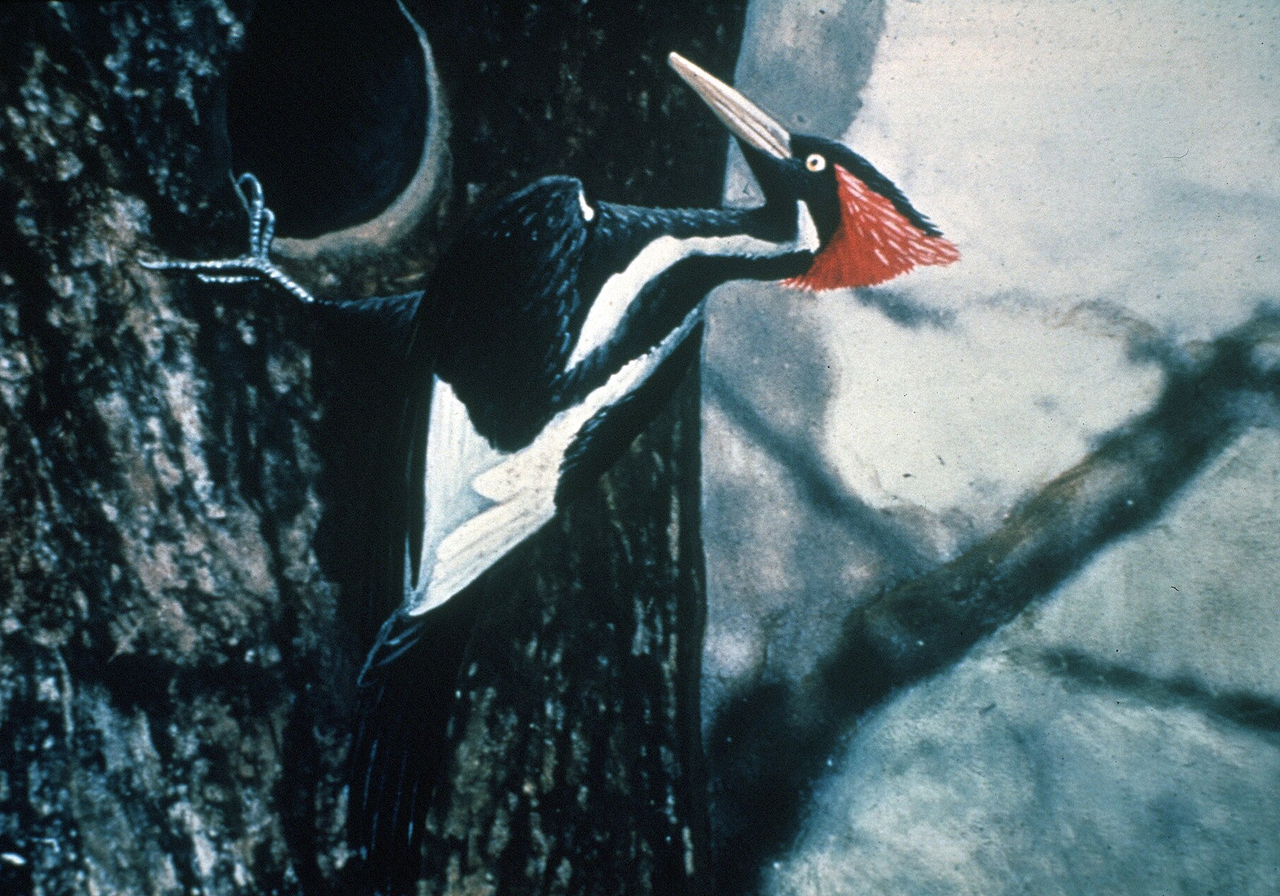
- Ivory-billed Woodpecker Same family
- Toco Toucan Same order
Range & geography
Did you know? Pileated Woodpecker facts
- BirdLife estimates about 2.6 million mature pileated woodpeckers.
- Pairs stay together on the same territory all year.
Conservation status of the Pileated Woodpecker
The pileated woodpecker (Dryocopus pileatus) is listed as Least Concern on the IUCN Red List. Least Concern (LC) is the IUCN's lowest-risk category, assigned to widespread, abundant species that have been evaluated and found not to be threatened. It does not mean a species faces no pressures — only that it is not currently at risk of extinction.
Pileated Woodpecker (Dryocopus pileatus) was most recently assessed for the IUCN Red List in 2025. Look up on the IUCN Red List .
Frequently asked questions about the Pileated Woodpecker
How big is a pileated woodpecker?
It is about the size of a crow and weighs around 290 g, making it the largest woodpecker in most of North America.
Is the pileated woodpecker rare?
No. It is fairly common in mature forests across its range, and BirdLife International reports that its population is increasing.
How do you say 'pileated'?
Both PIE-lee-ay-ted and PIL-ee-ay-ted are used. The word refers to the bird's crest, from the Latin 'pileatus', meaning capped.
What is the difference between a pileated and an ivory-billed woodpecker?
The ivory-billed woodpecker is larger, has an ivory-coloured bill and large white patches on the folded wing, and may now be extinct. The pileated has a dark bill and mostly black upperparts.
What is a group of pileated woodpeckers called?
A group of Pileated Woodpeckers is called a descent.
What is a baby pileated woodpecker called?
A baby Pileated Woodpecker is called a chick.
Sources & references
This guide is compiled and reviewed against established zoological and conservation references. Key sources for the Pileated Woodpecker:
-
IUCN Red List of Threatened Species
Conservation status (Least Concern) reflects the IUCN Red List category for Dryocopus pileatus, most recently assessed in 2025.
-
iNaturalist — observations & photos
Search citizen-science observations and community IDs for Dryocopus pileatus. Useful for range checks and recent sightings — not a substitute for formal Red List status.
-
GBIF — occurrence data
Global Biodiversity Information Facility species search for Dryocopus pileatus. Explore published occurrence records used in range research.
-
eBird — bird observations
Cornell Lab eBird target search for Pileated Woodpecker. Check recent checklists and seasonal abundance where birders report this species.
- BirdLife International (2026). Species factsheet: Pileated Woodpecker Hylatomus pileatus. BirdLife DataZone. Checked 1 November 2026.
IUCN Red List category Least Concern (assessed 2025), population estimate and trend.
- Animal Diversity Web: Dryocopus pileatus. University of Michigan Museum of Zoology.
Size, lifespan and diet.
- Tobias, J. A. et al. (2022). AVONET: morphological, ecological and geographical data for all birds. Ecology Letters 25: 581–597. doi:10.1111/ele.13898
Average body mass.
- Gill, F., Donsker, D. & Rasmussen, P. (Eds). IOC World Bird List v15.2.
English and scientific name, classification and range.
-
Global Animal Guide editorial standards
How we research, source, review, and update every guide for accuracy.