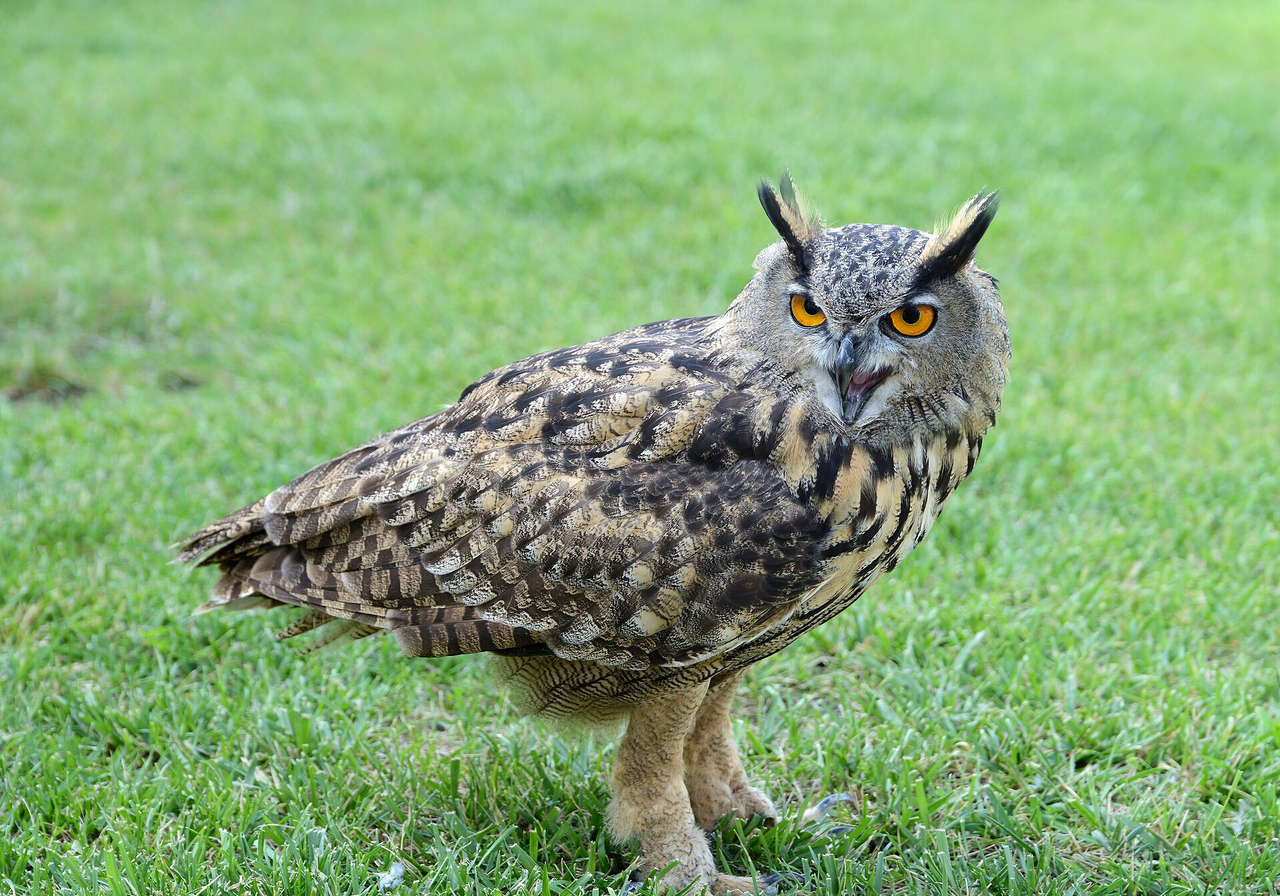
The Eurasian eagle-owl (Bubo bubo) is a bird of the family Strigidae, in the order Strigiformes.
Quick answer
The Eurasian eagle-owl (Bubo bubo) is one of the largest owls in the world, with blazing orange eyes and long ear tufts. It lives across Europe and Asia in rocky country with cliffs, gorges and woodland, and hunts mammals up to the size of hares and young foxes as well as other birds. It averages about 2.7 kg and can live around 20 years in the wild. It is listed as Least Concern.
Top questions about the Eurasian Eagle-Owl
Eurasian Eagle-Owl facts at a glance
- Weight 2.7 kg
- Lifespan 20 years
| Scientific name | Bubo bubo |
|---|---|
| Diet | Carnivore: rodents, hares, hedgehogs, birds |
| Habitat | Rocky country with cliffs and ravines, open forest and taiga |
| Weight | Average about 2.7 kg; females larger than males |
| Lifespan | About 20 years in the wild; 60+ years recorded in captivity |
| Range | Europe and Asia |
| Conservation status | Least Concern (IUCN Red List, assessed 2025) |
| Kingdom | Animalia |
|---|---|
| Phylum | Chordata |
| Class | Aves |
| Order | Strigiformes |
| Family | Strigidae |
| Genus | Bubo |
Where it lives
The eurasian eagle-owl (Bubo bubo) is native to Rocky and wooded country across Europe and Asia from Iberia and Scandinavia to the Russian Far East, and parts of North Africa. — recorded across Europe, Asia, Africa in this guide’s range summary.
For occurrence records, see GBIF species search and sources below.
What is a group of eurasian eagle-owls called?
Group name (collective noun)
A group of Eurasian Eagle-Owls is called a parliament.
Baby name
A baby Eurasian Eagle-Owl is called an owlet.
Explore more animal collective nouns and baby animal names .
A top predator of the night
Eagle-owls take a wide range of prey: rats, voles, rabbits and hares, hedgehogs, and birds as large as herons and ducks. They also kill other birds of prey, including buzzards and smaller owls. Hunting mostly at dusk and through the night, they watch from a perch and glide down onto prey on silent wings.
Cliffs, gorges and woods
BirdLife describes its habitat as mainly rocky country with cliffs, ravines and caves, mixed with patches of woodland or scattered trees. It also uses taiga, wooded steppe, river gorges, old quarries and farmland near rocky outcrops. The same nest site, often a sheltered ledge, may be used for many years.
Calls and display
The male's call is a deep, booming 'oo-hu' that carries a long way on still nights. The ear tufts are feathers, not ears; they are raised in alarm or display. When threatened, an eagle-owl fluffs its feathers and spreads its wings to look even bigger.
Conservation
BirdLife International lists the species as Least Concern (2025) with an estimated 180,000 to 300,000 mature individuals, although the trend is suspected to be decreasing. Electrocution on power lines, collisions, persecution and loss of prey have caused local declines, while protection has allowed it to return to parts of western Europe.
Explore the Eurasian Eagle-Owl
Close relatives
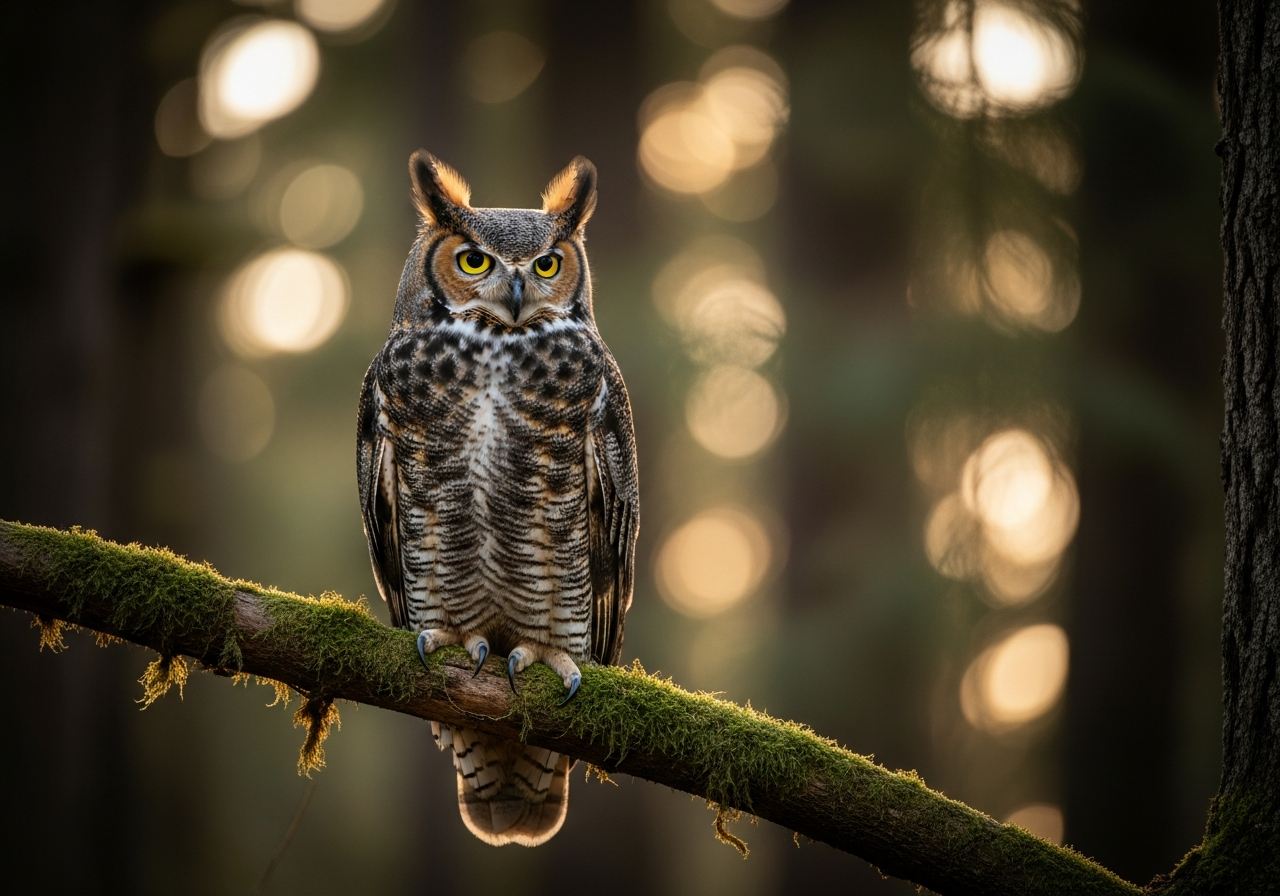
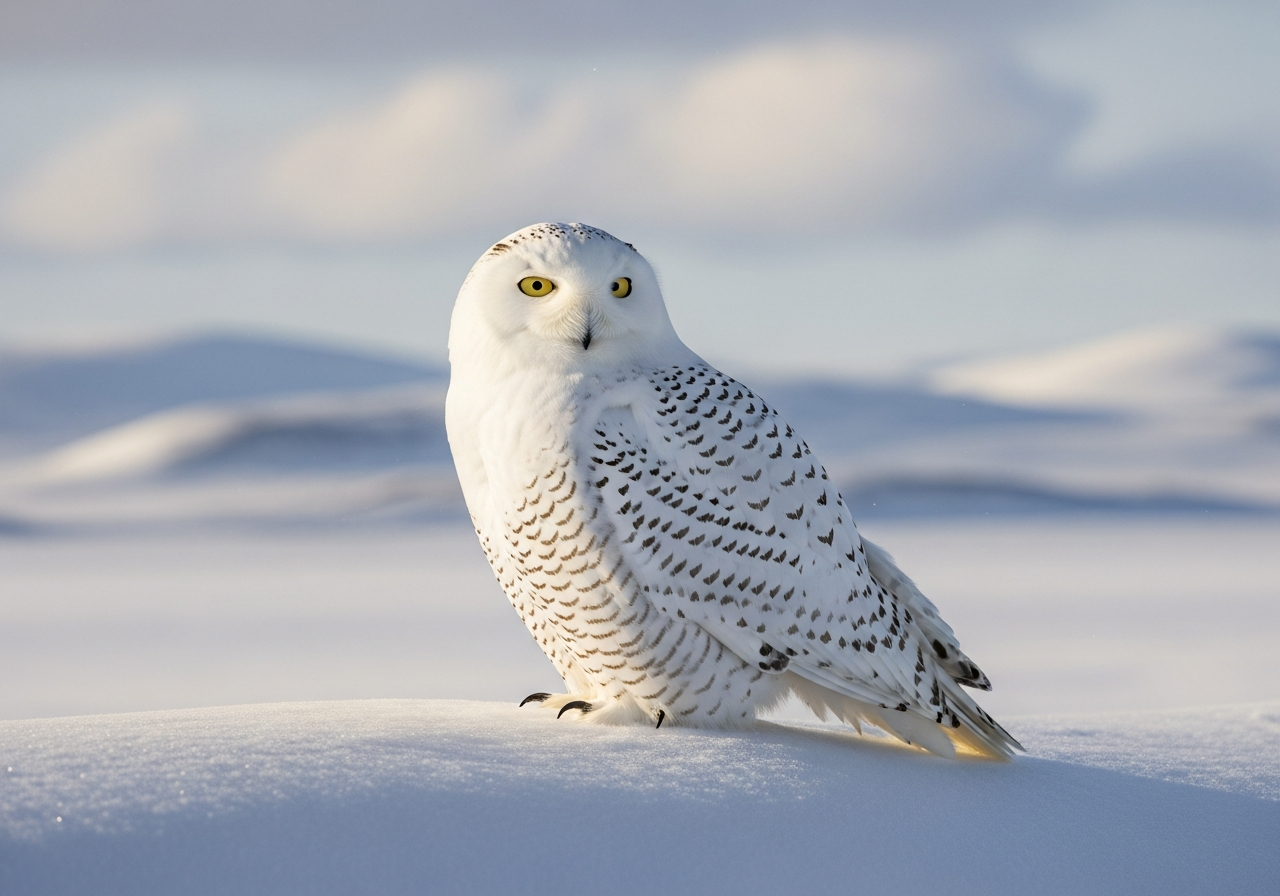
- Snowy Owl Same genus
- Great Horned Owl Same genus
- Burrowing Owl Same family
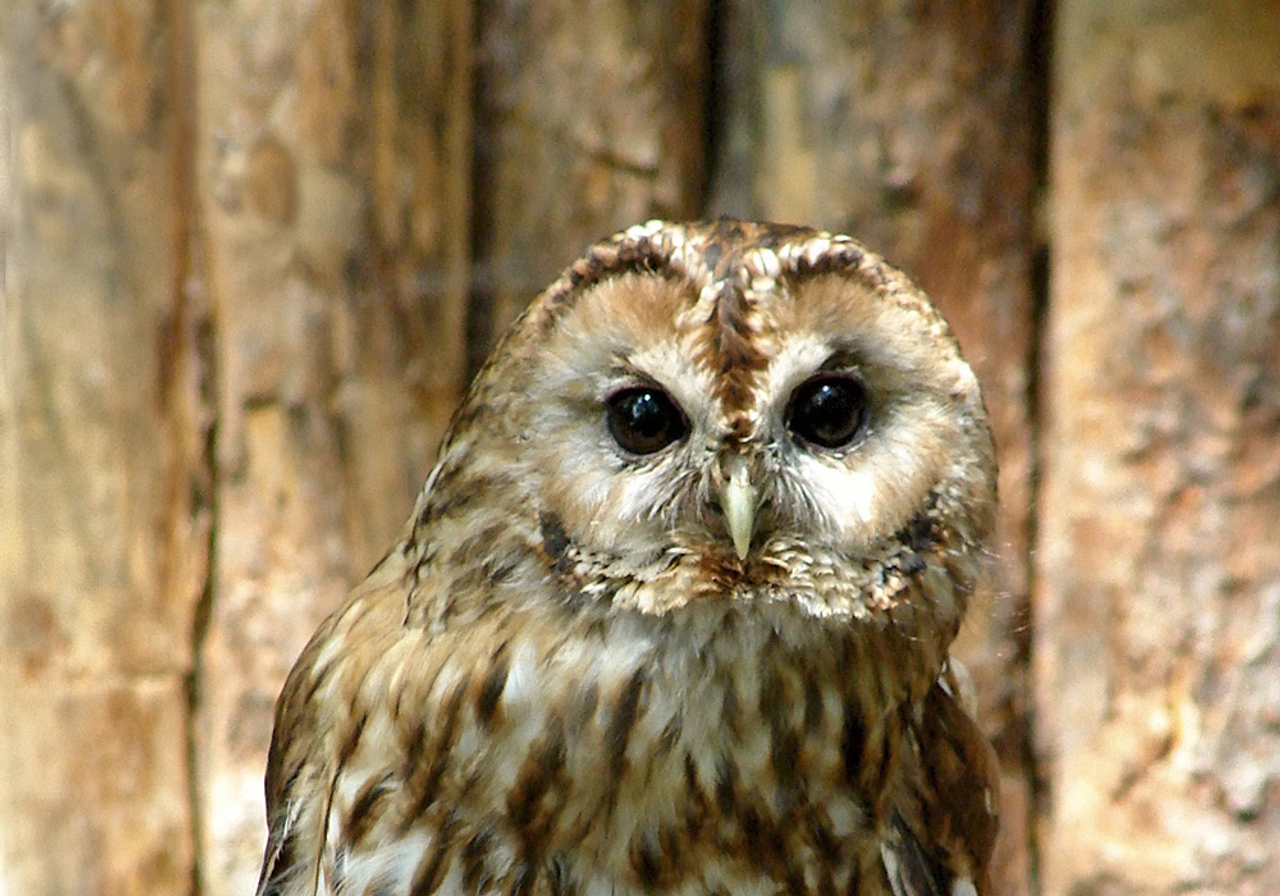
- Tawny Owl Same family
Range & geography
Did you know? Eurasian Eagle-Owl facts
- Its scientific name, Bubo bubo, is a tautonym: the genus and species names are the same.
- As in most owls, females are larger and heavier than males.
Conservation status of the Eurasian Eagle-Owl
The Eurasian eagle-owl (Bubo bubo) is listed as Least Concern on the IUCN Red List. Least Concern (LC) is the IUCN's lowest-risk category, assigned to widespread, abundant species that have been evaluated and found not to be threatened. It does not mean a species faces no pressures — only that it is not currently at risk of extinction.
Eurasian Eagle-Owl (Bubo bubo) was most recently assessed for the IUCN Red List in 2025. Look up on the IUCN Red List .
Frequently asked questions about the Eurasian Eagle-Owl
Is the Eurasian eagle-owl the biggest owl?
It is one of the two largest owls in the world, alongside Blakiston's fish owl. Big females can weigh well over 3 kg.
Can an eagle-owl kill a fox?
Eagle-owls have taken young foxes and are powerful enough to kill prey the size of hares, but most of their diet is rodents and birds.
Do eagle-owls live in Britain?
There is no native wild population in Britain. Small numbers of birds, most likely escapes from captivity, have bred there.
How long do eagle-owls live?
Around 20 years in the wild, and more than 60 years has been recorded in captivity.
What is a group of eurasian eagle-owls called?
A group of Eurasian Eagle-Owls is called a parliament.
What is a baby eurasian eagle-owl called?
A baby Eurasian Eagle-Owl is called an owlet.
Sources & references
This guide is compiled and reviewed against established zoological and conservation references. Key sources for the Eurasian Eagle-Owl:
-
IUCN Red List of Threatened Species
Conservation status (Least Concern) reflects the IUCN Red List category for Bubo bubo, most recently assessed in 2025.
-
iNaturalist — observations & photos
Search citizen-science observations and community IDs for Bubo bubo. Useful for range checks and recent sightings — not a substitute for formal Red List status.
-
GBIF — occurrence data
Global Biodiversity Information Facility species search for Bubo bubo. Explore published occurrence records used in range research.
-
eBird — bird observations
Cornell Lab eBird target search for Eurasian Eagle-Owl. Check recent checklists and seasonal abundance where birders report this species.
- BirdLife International (2026). Species factsheet: Eurasian Eagle-owl Bubo bubo. BirdLife DataZone. Checked 1 November 2026.
IUCN Red List category Least Concern (assessed 2025), population estimate and trend.
- Animal Diversity Web: Bubo bubo. University of Michigan Museum of Zoology.
Size, lifespan and diet.
- Tobias, J. A. et al. (2022). AVONET: morphological, ecological and geographical data for all birds. Ecology Letters 25: 581–597. doi:10.1111/ele.13898
Average body mass.
- Gill, F., Donsker, D. & Rasmussen, P. (Eds). IOC World Bird List v15.2.
English and scientific name, classification and range.
-
Global Animal Guide editorial standards
How we research, source, review, and update every guide for accuracy.