What Would Happen If Bees Disappeared?
Bees pollinate a huge share of the food we eat. Here's what would really happen if bees disappeared — and simple ways you can help save them.
Global Animal Guide · June 8, 2026
Quick answer
If bees disappeared, we'd lose a major share of the world's pollination, hitting many fruits, vegetables, nuts, and seeds — making food scarcer, less varied, and more expensive, and damaging the wild plants and animals that depend on them. Humans probably wouldn't starve (wind-pollinated staples like wheat and rice would survive), but diets and ecosystems would be far poorer.
Why bees matter so much
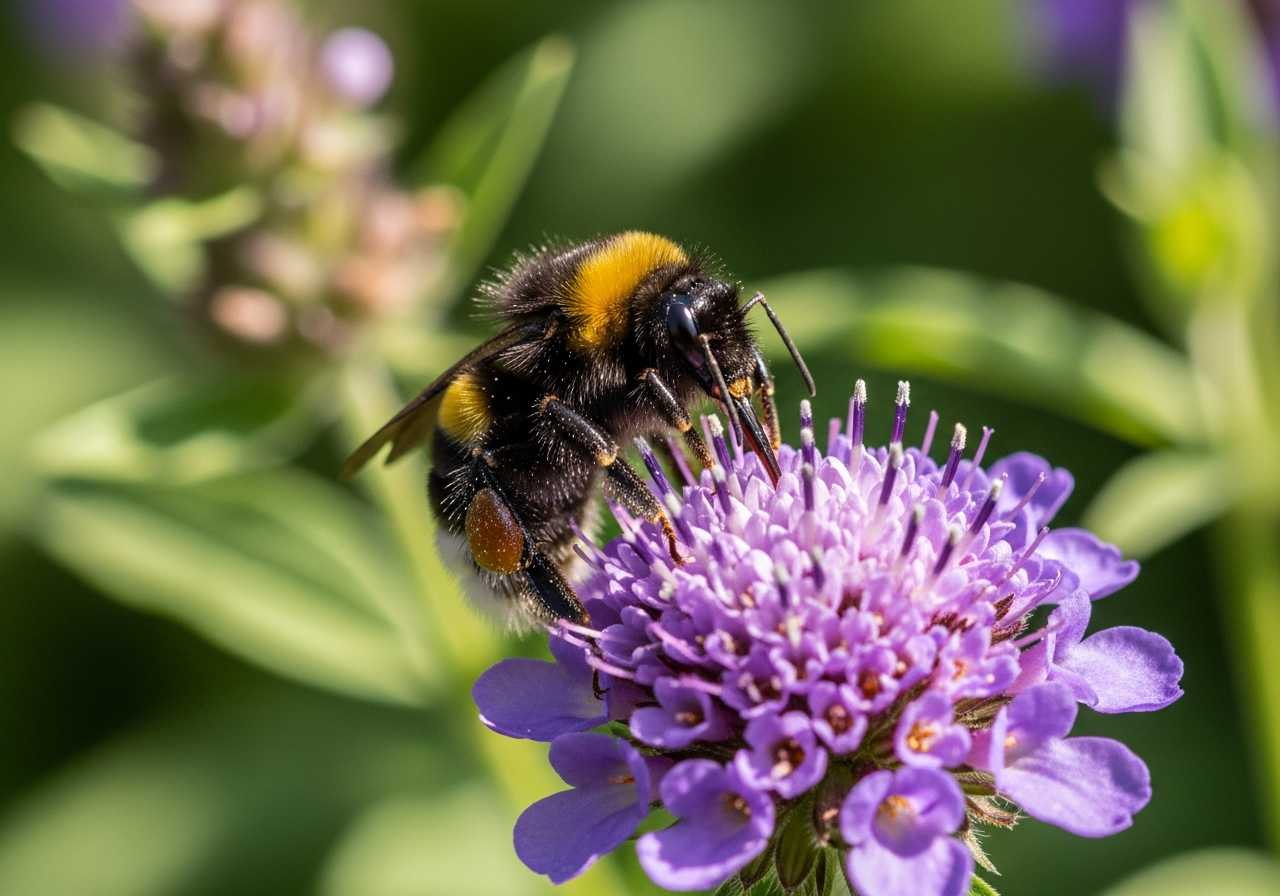
Bees are among the world’s most important pollinators. As they move between flowers collecting nectar, they transfer pollen, fertilising plants so they can produce fruit and seeds. A large proportion of the crops humans eat — including apples, almonds, blueberries, coffee, and many vegetables — rely on animal pollinators, with bees doing much of the heavy lifting.
What makes bees exceptional is not that they visit flowers — many insects do — but that they are the only major group that feeds its young on pollen. A butterfly sips nectar and moves on, carrying whatever dust happens to stick to it. A bee harvests pollen as protein for its larvae, so it collects deliberately, in bulk, trip after trip, all day. Its body is built for the job: branched, electrostatically charged hairs that grab grains, and specialised baskets to carry them home.
The second key is flower constancy. A foraging bee works one plant species at a time, ignoring other blooms until that species stops paying. This matters, because pollen is only useful if it arrives on a flower of the same species — apple pollen on a dandelion is wasted. A visitor moving randomly delivers mostly useless pollen; a constant forager delivers it exactly where it counts. That is why bees are worth far more per visit than their numbers alone suggest.
What we’d actually lose
Without bees, pollinator-dependent crops would fail or need costly hand-pollination (already done in some places where pollinators have crashed). Supermarket shelves wouldn’t go empty — wind-pollinated grains would carry on — but many fruits, vegetables, and nuts would become scarce and expensive. Wild plants would set fewer seeds, reducing food and habitat for birds, mammals, and other insects, sending ripples through entire ecosystems.
The split runs along a clear line. The crops supplying most of humanity’s raw calories — wheat, rice, maize, barley, oats — are wind-pollinated grasses that never needed an insect and would not notice bees vanishing. Potatoes and cassava are grown from tubers. The apocalyptic version of this story, in which humans starve, is not what the biology predicts.
What collapses instead is nearly everything that makes a diet worth eating: apples, pears, cherries, plums, almonds, blueberries, melons, squash, cucumbers, oilseed rape, and the clover and alfalfa that feed dairy and beef herds. These are disproportionately the sources of vitamin C, vitamin A, folate, and many minerals. A world of bread and rice means widespread micronutrient deficiency — a public-health crisis rather than a famine.
The degree of dependence varies more than most summaries admit. Almonds are effectively total: no pollinator, no crop. Oilseed rape is partially self-fertile and would still yield, just less. Tomatoes need buzz pollination, in which a bumblebee grips the flower and vibrates its flight muscles at a frequency that shakes pollen loose from sealed anthers — a honey bee physically cannot do this, which is why glasshouses buy bumblebee colonies rather than hives. Cocoa is pollinated by midges and figs by their own dedicated wasps, so chocolate and figs would survive a bee extinction untouched.
Hand-pollination is the fallback, and we know its price. In parts of Sichuan, China, orchard workers have pollinated pear and apple blossom by hand with brushes for years after local pollinators collapsed. Vanilla has been hand-pollinated commercially for over a century — a large part of why it is among the most expensive spices on earth. The technique works. It cannot scale to a planet’s worth of orchards.
The wild knock-on effects
The agricultural story is the one that gets told, but the ecological one is larger. Most flowering plants in the wild are animal-pollinated, and bees are their principal visitors. Fewer bees means fewer seeds and fewer berries — so less food for the blackbird, the blue tit, and every small mammal that fattens on autumn fruit before winter.
That shortfall climbs. Seed-eating birds feed the kestrel and the barn owl; berry crops sustain the black bear and the red fox through lean seasons. Plants that fail to set seed thin out over generations, and the shrubs that vanish take their structure with them — nesting cover, shade, the roots that hold soil. Ecologists call this a pollination cascade: the losses do not stay in the flowerbed.
Why bees are in trouble
Bee populations face habitat loss, pesticides, disease and parasites, and climate change. Both managed honeybees and the many wild bee species (the UK alone has over 250 species, most of them solitary) are under pressure — and wild bees are often the unsung pollinators doing as much work as honeybees.
The threats compound rather than simply add. Habitat loss removes both flowers and nest sites — bare ground for mining bees, hollow stems for carpenter bees, tussocks for bumblebee queens. Intensive farming strips out the flower-rich margins that once fed bees between crop blooms, so a bee in a monoculture faces feast in May and famine in July.
Pesticides rarely kill outright at field doses. The subtler damage is sublethal: impaired navigation, weaker immune response, reduced colony growth. A bee that cannot find its way home is as lost to the colony as a dead one. Parasites and disease hit managed hives hardest — the Varroa mite, which feeds on honey bee larvae and spreads viruses as it goes, has reshaped beekeeping worldwide — and those pathogens spill into wild populations.
Climate change adds phenological mismatch. Warming springs push plants into flower earlier, but bee emergence is cued by a different mix of signals, so the two drift apart. A solitary bee that emerges after its host plant has finished blooming starves regardless of how much habitat is protected.
One correction to the popular framing matters most: honey bees are a managed livestock species, in no danger of extinction. The bees genuinely at risk are the roughly 20,000 wild species — mason, mining, and leafcutter bees, and bumblebees — most solitary, many specialised on particular plants. “Save the bees” campaigns that add hives can make things worse, because dense managed colonies compete with wild bees for a fixed supply of flowers and pass disease to them.
Bees are not the only pollinators
If bees disappeared, the gap would be filled partly, unevenly, and slowly. Hoverflies already matter in orchards. Moths work the night shift on pale, scented flowers. Beetles pollinate magnolias and water lilies, an arrangement older than bees themselves. The monarch butterfly and its kin contribute inefficiently, since long legs hold their bodies clear of the pollen. Vertebrates matter too: the hummingbird family services tubular flowers across the Americas, and nectar-feeding bats — relatives of the flying fox — pollinate agave and many tropical trees at night.
None of this rescues the situation. These groups are not interchangeable with bees: they lack the pollen-hauling anatomy, the flower constancy, and the foraging intensity of an insect provisioning a nest — and most are declining for the same reasons bees are. Pollination would not stop; it would become patchy and unreliable, which for a farmer is the difference between a crop and a gamble.
How you can help bees (it’s easier than you think)
Plant nectar-rich, pollinator-friendly flowers across the seasons; let part of your lawn grow wild; avoid pesticides; provide a shallow water source with stones to land on; leave a “bee hotel” or undisturbed ground for solitary bees; and support pesticide-free, wildlife-friendly farming. Small gardens add up to a national feeding network.
Two refinements make a real difference. Target the gaps: spring and late summer are when bees starve, so early bulbs and late-flowering plants such as ivy beat another mid-June bloom. And prefer single flowers to double ones — ornamental doubles are bred with extra petals in place of the reproductive parts, so they offer a bee nothing at all.
Beyond the garden, resist the urge to keep honey bees as a conservation act; it is agriculture, not restoration. Protecting scruffy, undisturbed ground does more for wild bees than any hive, because for most species the limiting factor is nowhere to nest, not nothing to eat.
Related reading
- How do honeybees make honey?
- Keystone species explained
- Symbiotic relationships in nature
- Food chains and food webs explained
- How to help wildlife from home
Sources
Related reading: Honey bee · Conservation hub · Support wildlife protection
Frequently asked questions
Would humans go extinct without bees?
Unlikely — wind-pollinated staples would survive — but food would be scarcer, costlier, and far less varied.
Do only honeybees pollinate?
No — wild bees, including hundreds of solitary species, are major pollinators too.
How can I help save bees?
Plant pollinator-friendly flowers, skip pesticides, and leave wild patches and water.