American Black Bear
Ursus americanus
Quick answer
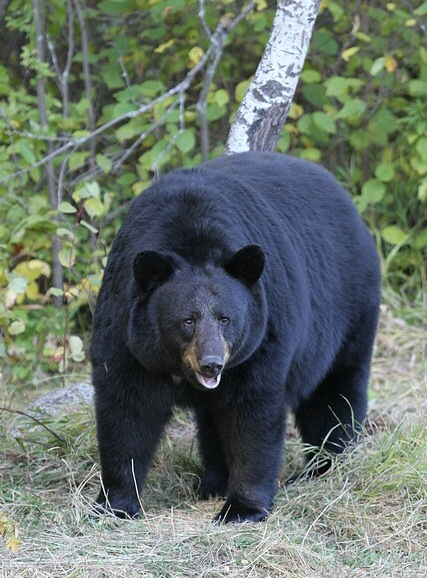
The American black bear is the most common bear in North America, found from Canada to Mexico in forests, swamps, and even suburbs. Despite the name, colours range from jet black to cinnamon, blonde, and the rare white Kermode or 'spirit bear' of British Columbia. Adults typically weigh 45–250 kg and are skilled tree climbers.
Also available in Español (American Black Bear)
American Black Bear facts at a glance
| Scientific name | Ursus americanus |
|---|---|
| Diet | Omnivore — nuts, berries, insects, carrion, and occasional small mammals |
| Habitat | Forests, mountains, and wetlands across North America |
| Lifespan | 15–25 years in the wild |
| Weight | 45–250 kg (100–550 lb); males larger than females |
| Top speed | Up to 48 km/h (30 mph) in short bursts |
| Conservation status | Least Concern (IUCN) |
| Kingdom | Animalia |
|---|---|
| Phylum | Chordata |
| Class | Mammalia |
| Order | Carnivora |
| Family | Ursidae |
| Genus | Ursus |
Where it lives
Forests, swamps, and mountains from Alaska and Canada through the United States to northern Mexico, including the Appalachian and Pacific coast ranges.
What is a group of american black bears called?
Group name (collective noun)
A group of American Black Bears is called a sleuth. It is also known as a sloth.
Baby name
A baby American Black Bear is called a cub.
Explore more animal collective nouns and baby animal names .
Adaptability and range
Black bears thrive in a wider variety of habitats than grizzlies, including eastern hardwood forests, western conifer woods, Florida swamps, and desert margins where food and cover exist. Their ability to climb trees and tolerate human-altered landscapes helps explain their continued abundance across the continent.
Diet and foraging
Black bears are opportunistic omnivores. Spring diet includes emerging plants and carrion; summer brings berries and insects; autumn is a feeding frenzy on acorns, beechnuts, and apples where available. In some areas they raid cornfields or bird feeders, which can lead to habituation and removal.
Behaviour and reproduction
Solitary for much of the year, females raise cubs for about 17 months before driving them off. Cubs are born in winter dens while the mother is in torpor. Black bears communicate through scent marking, vocalisations, and body posture; they are generally shy of humans unless food-trained.
Conservation and coexistence
Listed Least Concern with an estimated North American population exceeding 600,000, black bears still face road mortality, habitat loss, and illegal trade in bile and paws in some markets. Securing garbage, removing bird feeders, and using bear-resistant bins in overlap areas keeps both bears and people safer.
Dig deeper into the American Black Bear
- Are Black Bear Dangerous
Dig deeper into american black bear — are black bear dangerous.
- Black Bear Facts 5
Dig deeper into american black bear — black bear facts 5.
- How Long do Black Bear Live?
Dig deeper into american black bear — how long do black bear live.
- What do Black Bear Eat
Dig deeper into american black bear — what do black bear eat.
- Where do Black Bear Live?
Dig deeper into american black bear — where do black bear live.
Explore the American Black Bear
Did you know? American Black Bear facts
- The American black bear is the most common bear in North America, found from Canada to Mexico in forests, swamps, and even suburbs.
- No. Colour phases include cinnamon, blonde, brown, and the rare white Kermode bear on Canada's Pacific coast. All are the same species, Ursus americanus.
- Stay calm, do not run, make yourself look large, and back away slowly. If a black bear attacks defensively, fight back. If it is a predatory encounter — extremely rare — fight back aggressively.
- Yes. Black bears are excellent climbers and often escape danger or reach food by climbing, even as adults — unlike most large brown bears.
- Black bears are generally smaller. Large male black bears may reach 250 kg, while grizzlies commonly exceed that. Black bears also lack the prominent shoulder hump of brown bears.
- Conservation: Least Concern (IUCN).
Diet & feeding
American Black Bear feeds primarily as a omnivore — nuts, berries, insects, carrion, and occasional small mammals. Black bears are opportunistic omnivores. Spring diet includes emerging plants and carrion; summer brings berries and insects; autumn is a feeding frenzy on acorns, beechnuts, and apples where available. In
Adaptations
- Black bears thrive in a wider variety of habitats than grizzlies, including eastern hardwood forests, western conifer woods, Florida swamps, and desert margins where food and cover exist. Their ability to climb trees and tolerate human-altered landscapes helps explain their continued abundance across the continent.
- Black bears are opportunistic omnivores. Spring diet includes emerging plants and carrion; summer brings berries and insects; autumn is a feeding frenzy on acorns, beechnuts, and apples where available. In some areas they raid cornfields or bird feeders, which can lead to habituation and removal.
Behaviour & ecology
- Black bears thrive in a wider variety of habitats than grizzlies, including eastern hardwood forests, western conifer woods, Florida swamps, and desert margins where food and cover exist. Their ability to climb trees and tolerate human-altered landscapes helps explain their continued abundance across the continent.
- Black bears are opportunistic omnivores. Spring diet includes emerging plants and carrion; summer brings berries and insects; autumn is a feeding frenzy on acorns, beechnuts, and apples where available. In some areas they raid cornfields or bird feeders, which can lead to habituation and removal.
- Solitary for much of the year, females raise cubs for about 17 months before driving them off. Cubs are born in winter dens while the mother is in torpor. Black bears communicate through scent marking, vocalisations, and body posture; they are generally shy of humans unless food-trained.
Communication
- American Black Bear uses scent, posture, and vocal signals to mark territory and coordinate social behaviour.
- Communication intensity often peaks during breeding seasons and territorial disputes.
Habitat & range
Forests, mountains, and wetlands across North America
Ecological role
American Black Bear plays a recognised ecological role in forests, mountains, and wetlands across north america.
Frequently asked questions about the American Black Bear
Are black bears always black?
No. Colour phases include cinnamon, blonde, brown, and the rare white Kermode bear on Canada's Pacific coast. All are the same species, Ursus americanus.
What should I do if I see a black bear?
Stay calm, do not run, make yourself look large, and back away slowly. If a black bear attacks defensively, fight back. If it is a predatory encounter — extremely rare — fight back aggressively.
Can black bears climb trees?
Yes. Black bears are excellent climbers and often escape danger or reach food by climbing, even as adults — unlike most large brown bears.
How big are black bears compared to grizzlies?
Black bears are generally smaller. Large male black bears may reach 250 kg, while grizzlies commonly exceed that. Black bears also lack the prominent shoulder hump of brown bears.
What is a spirit bear?
The Kermode or spirit bear is a white colour phase of the American black bear found on a few islands in British Columbia. It is not a separate species or albino — the pale coat comes from a recessive gene.
What is a group of american black bears called?
A group of American Black Bears is called a sleuth. It is also known as a sloth.
What is a baby american black bear called?
A baby American Black Bear is called a cub.
Sources & references
This guide is compiled and reviewed against established zoological and conservation references. Key sources for the American Black Bear:
-
IUCN Red List of Threatened Species
Conservation status (Least Concern) reflects the IUCN Red List category for Ursus americanus.
- IUCN Red List — Ursus americanus.
Conservation status (Least Concern) and population trends.
- Animal Diversity Web — Ursus americanus. University of Michigan Museum of Zoology.
Life history, morphology, and range.
- Wikipedia — American Black Bear.
General taxonomy and overview (cross-check primary sources).
-
Global Animal Guide editorial standards
How we research, source, review, and update every guide for accuracy.