Quick answer
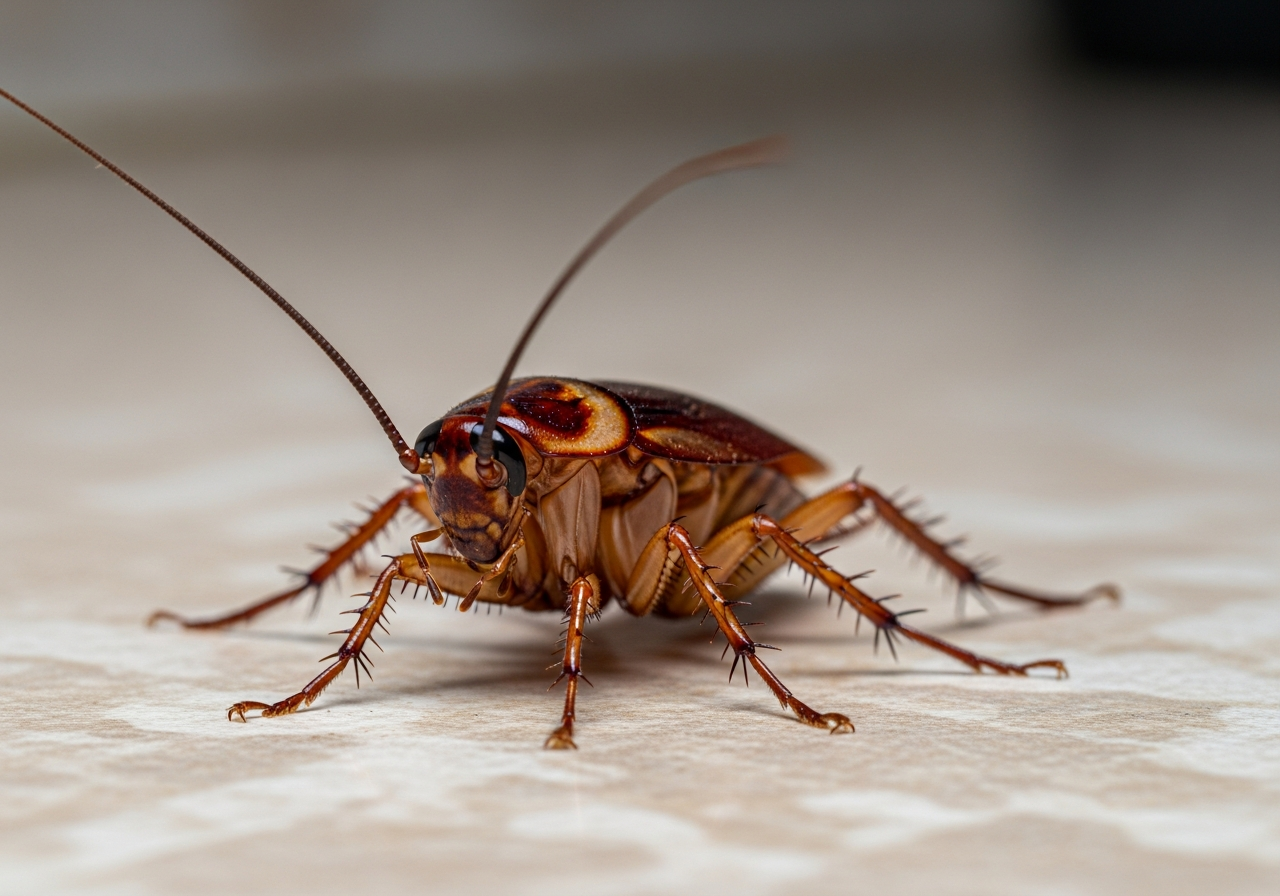
Cockroaches are flattened, fast-moving insects known for their toughness and ability to thrive in many environments. Most of the thousands of species live in the wild, but a few have become common household pests. They are omnivores that eat almost anything and can survive for weeks without food.
Top questions about the Cockroach
Cockroach facts at a glance
- Weight 1 g
- Length 3 cm
- Top speed 5 km/h
- Lifespan 1 years
| Scientific name | Order Blattodea |
|---|---|
| Diet | Omnivore (almost anything organic) |
| Habitat | Forests, burrows, and human buildings worldwide |
| Lifespan | Several months to about a year |
| Size | About 1–8 cm depending on species |
| Top speed | ~5 km/h (3 mph), very fast for its size |
| Conservation status | Least Concern (IUCN) |
| Kingdom | Animalia |
|---|---|
| Phylum | Arthropoda |
| Class | Insecta |
| Order | Blattodea |
Where it lives
The cockroach (Blattodea) is native to Native to tropical forests but now found worldwide, with a few species living alongside people in buildings. — recorded across Africa, Asia, Europe, North America, South America, Oceania in this guide’s range summary.
For occurrence records, see GBIF species search and sources below.
How big is a cockroach?
An adult cockroach measures 3 cm long — about 2% of the height of an average adult person (1.73 m) — and weighs around 1 g, a small fraction of an average adult’s body weight (70 kg).
Length vs an average adult’s height (to scale)
What is a group of cockroaches called?
Group name (collective noun)
A group of Cockroaches is called an intrusion.
Baby name
A baby Cockroach is called a nymph.
Explore more animal collective nouns and baby animal names .
Built for survival
Cockroaches have flat, flexible bodies that let them squeeze into tiny cracks, and they can move very quickly to escape danger. They are highly adaptable, tolerating a wide range of conditions and going for weeks without food. These traits have made them successful for hundreds of millions of years.
Diet and behavior
As omnivores, cockroaches eat almost anything organic, including plants, crumbs, grease, paper, and decaying matter. Most species are active at night and prefer dark, warm, humid hiding places. They are social to a degree and often gather in groups, guided by chemical scent trails.
Pests and ecology
Only a small number of cockroach species are household pests, but those that are can contaminate food and trigger allergies in some people. The great majority of cockroach species live outdoors in forests and other habitats, where they help recycle decaying plant material and serve as food for other animals.
Life cycle
Cockroaches develop through incomplete metamorphosis, hatching from egg cases as small nymphs that look like wingless adults. They molt several times as they grow. Many females carry or hide a protective egg case called an ootheca, which holds multiple eggs.
Dig deeper into the Cockroach
- Cockroach: Key Facts
Cockroaches are flattened, fast-moving insects known for their toughness and ability to thrive in many environments.
- What Do Cockroachs Eat?
What cockroachs eat: Omnivore (almost anything organic), foraging style, and seasonal shifts in Forests, burrows, and human buildings worldwide.
- Where Do Cockroachs Live?
Where cockroachs live: Forests, burrows, and human buildings worldwide, native range cues, and human overlap. Status Least Concern.
Explore the Cockroach
Related Insects
Did you know? Cockroach facts
- Cockroaches are flattened, fast-moving insects known for their toughness and ability to thrive in many environments.
- Cockroaches are omnivores that eat almost any organic material, including food crumbs, grease, plants, paper, and decaying matter. This flexible diet helps them survive in many places.
- Cockroaches are very hardy and can survive for several weeks without food, drawing on stored energy. Access to water is generally more important to their survival than food.
- No. Only a small number of the thousands of cockroach species are household pests. Most live outdoors in forests and other habitats, where they help break down decaying material.
- Depending on the species and conditions, cockroaches generally live from several months to about a year. They grow through several molts before reaching adulthood.
- Conservation: Least Concern (IUCN).
Diet & feeding
Cockroach feeds primarily as a omnivore (almost anything organic). As omnivores, cockroaches eat almost anything organic, including plants, crumbs, grease, paper, and decaying matter. Most species are active at night and prefer dark, warm, humid hiding places. They are social to a degree and often gather in groups, gui
Adaptations
- Cockroaches have flat, flexible bodies that let them squeeze into tiny cracks, and they can move very quickly to escape danger. They are highly adaptable, tolerating a wide range of conditions and going for weeks without food. These traits have made them successful for hundreds of millions of years.
- As omnivores, cockroaches eat almost anything organic, including plants, crumbs, grease, paper, and decaying matter. Most species are active at night and prefer dark, warm, humid hiding places. They are social to a degree and often gather in groups, guided by chemical scent trails.
Behaviour & ecology
- Cockroaches have flat, flexible bodies that let them squeeze into tiny cracks, and they can move very quickly to escape danger. They are highly adaptable, tolerating a wide range of conditions and going for weeks without food. These traits have made them successful for hundreds of millions of years.
- As omnivores, cockroaches eat almost anything organic, including plants, crumbs, grease, paper, and decaying matter. Most species are active at night and prefer dark, warm, humid hiding places. They are social to a degree and often gather in groups, guided by chemical scent trails.
- Only a small number of cockroach species are household pests, but those that are can contaminate food and trigger allergies in some people. The great majority of cockroach species live outdoors in forests and other habitats, where they help recycle decaying plant material and serve as food for other animals.
Communication
- Cockroach uses scent, posture, and vocal signals to mark territory and coordinate social behaviour.
- Communication intensity often peaks during breeding seasons and territorial disputes.
Habitat & range
Forests, burrows, and human buildings worldwide
Ecological role
Cockroach participates in pollination, decomposition, or prey-base support for birds and other insectivores.
Conservation status of the Cockroach
The cockroach (Blattodea) is listed as Least Concern on the IUCN Red List. Least Concern (LC) is the IUCN's lowest-risk category, assigned to widespread, abundant species that have been evaluated and found not to be threatened. It does not mean a species faces no pressures — only that it is not currently at risk of extinction.
The cockroach (Blattodea) is assessed on the IUCN Red List. Look up on the IUCN Red List .
Frequently asked questions about the Cockroach
What do cockroaches eat?
Cockroaches are omnivores that eat almost any organic material, including food crumbs, grease, plants, paper, and decaying matter. This flexible diet helps them survive in many places.
How long can a cockroach live without food?
Cockroaches are very hardy and can survive for several weeks without food, drawing on stored energy. Access to water is generally more important to their survival than food.
Are all cockroaches pests?
No. Only a small number of the thousands of cockroach species are household pests. Most live outdoors in forests and other habitats, where they help break down decaying material.
How long do cockroaches live?
Depending on the species and conditions, cockroaches generally live from several months to about a year. They grow through several molts before reaching adulthood.
Why are cockroaches so hard to get rid of?
Cockroaches are fast, reproduce quickly, hide in tiny cracks, and can survive on very little food. These traits make household infestations difficult to eliminate without thorough effort.
Can cockroaches fly?
Some cockroach species have functional wings and can fly or glide short distances, while others have reduced wings or cannot fly at all. Most rely on running to escape danger.
What is a group of cockroaches called?
A group of Cockroaches is called an intrusion.
What is a baby cockroach called?
A baby Cockroach is called a nymph.
Sources & references
This guide is compiled and reviewed against established zoological and conservation references. Key sources for the Cockroach:
-
IUCN Red List of Threatened Species
Conservation status (Least Concern) reflects the IUCN Red List category for Blattodea.
-
iNaturalist — observations & photos
Search citizen-science observations and community IDs for Blattodea. Useful for range checks and recent sightings — not a substitute for formal Red List status.
-
GBIF — occurrence data
Global Biodiversity Information Facility species search for Blattodea. Explore published occurrence records used in range research.
- IUCN Red List — Blattodea.
Conservation status (Least Concern) and population trends.
- Wikipedia — Cockroach.
General taxonomy and overview (cross-check primary sources).
-
Global Animal Guide editorial standards
How we research, source, review, and update every guide for accuracy.