Image sourcing: see credits & licences
Quick answer
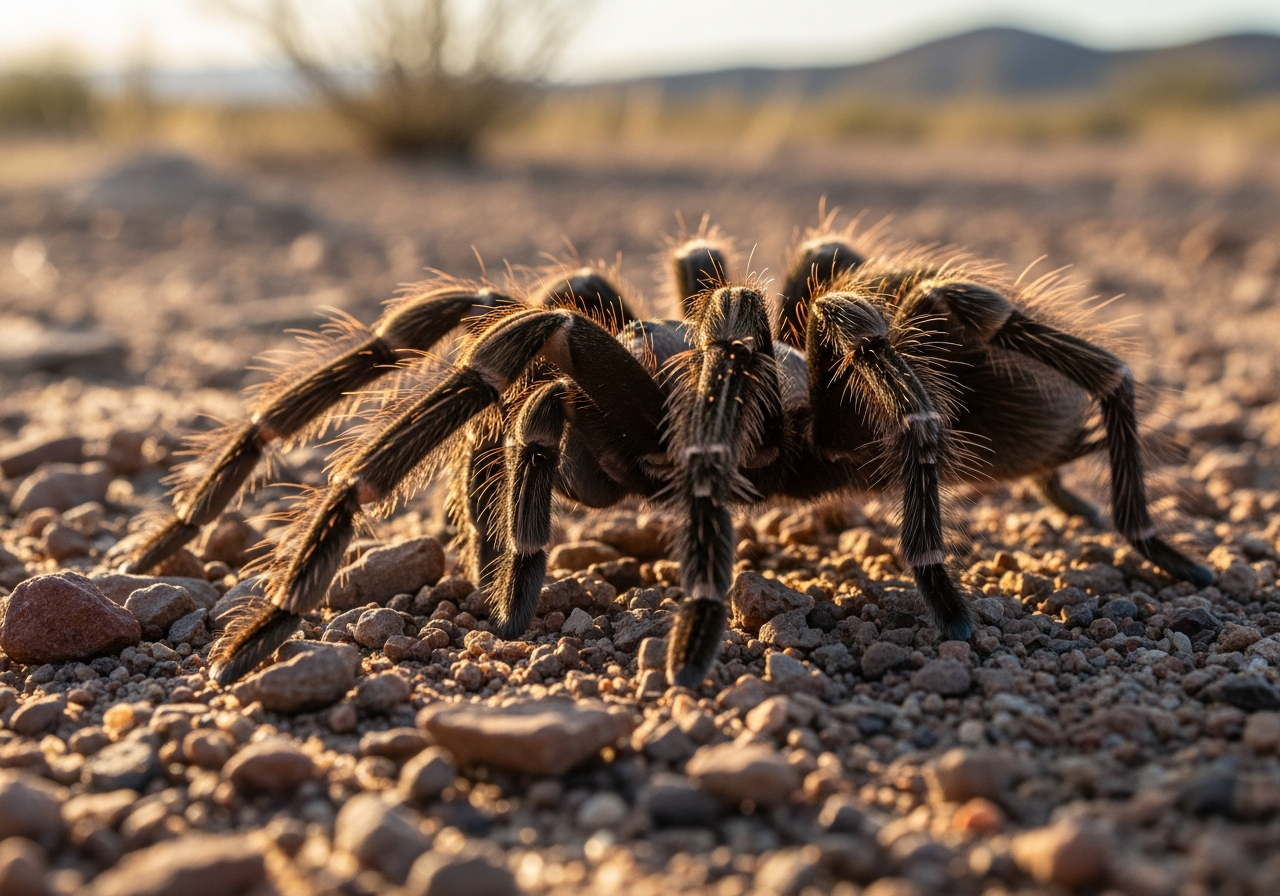
Tarantulas are a family of large, hairy spiders found across the warmer parts of the world, with around 1,000 species. Despite their fearsome look, most are not dangerous to humans, with venom milder than a bee sting. The biggest, the Goliath birdeater, can span 30 cm (12 in) across the legs. Females are long-lived, with some surviving 20 to 30 years.
Top questions about the Tarantula
Tarantula facts at a glance
- Weight 85 g
- Length 13 cm
- Top speed 2 km/h
- Lifespan 20 years
| Scientific name | Theraphosidae (family) |
|---|---|
| Diet | Carnivore |
| Habitat | Deserts, rainforests, and grasslands |
| Lifespan | Females up to 20–30 years |
| Leg span | Up to 30 cm (12 in) in the largest |
| Top speed | Slow; short quick dashes |
| Conservation status | Varies by species (most Least Concern) |
| Kingdom | Animalia |
|---|---|
| Phylum | Arthropoda |
| Class | Arachnida |
| Order | Araneae |
| Family | Theraphosidae |
Where it lives
The tarantula (Theraphosidae) is native to Warm regions worldwide, including the Americas, Africa, and Asia, with the greatest diversity in South America. — recorded across North America, South America, Africa, Asia in this guide’s range summary.
For occurrence records, see GBIF species search and sources below.
How big is a tarantula?
An adult tarantula measures 13 cm long — about 8% of the height of an average adult person (1.73 m) — and weighs around 85 g, a small fraction of an average adult’s body weight (70 kg).
Length vs an average adult’s height (to scale)
What is a group of tarantulas called?
Group name (collective noun)
A group of Tarantulas is called a clutter. It is also known as a cluster.
Baby name
A baby Tarantula is called a spiderling.
Explore more animal collective nouns and baby animal names .
Big, hairy, and mostly harmless
Tarantulas are among the largest spiders, but their reputation is far scarier than the reality. Almost all species have venom no more harmful to a healthy person than a bee sting, and they bite only in self-defense. They are ambush predators that pounce on insects, and larger species may take small lizards or rodents.
Urticating hairs
Many New World tarantulas have a clever defense: they flick irritating barbed hairs from their abdomen at attackers using their back legs. These 'urticating' hairs cause itching and irritation to the eyes and skin of would-be predators, buying the spider time to escape.
Molting and growth
Like all spiders, tarantulas grow by molting, shedding their entire exoskeleton to reveal a larger new one underneath. During a molt they are soft and vulnerable, and they can even regrow lost legs over successive molts. The process leaves behind an eerily lifelike empty 'spider' shell.
Long lives and the pet trade
Female tarantulas are remarkably long-lived for invertebrates, with some species reaching 20 to 30 years, while males live only a few years. Their docile nature and longevity have made several species popular exotic pets, though wild collection and habitat loss threaten some species.
Dig deeper into the Tarantula
- How Long Do Tarantulas Live?
Tarantula lifespan is typically Females up to 20–30 years. What shortens or extends life, life stages, and status (Least Concern).
- Tarantula: Key Facts
Tarantulas are a family of large, hairy spiders found across the warmer parts of the world, with around 1,000 species.
- What Do Tarantulas Eat?
What tarantulas eat: Carnivore, foraging style, and seasonal shifts in Deserts, rainforests, and grasslands.
- Where Do Tarantulas Live?
Where tarantulas live: Deserts, rainforests, and grasslands, native range cues, and human overlap. Status Least Concern.
Explore the Tarantula
Related Invertebrates
Range & geography
Did you know? Tarantula facts
- Tarantulas are a family of large, hairy spiders found across the warmer parts of the world, with around 1,000 species.
- For almost all species, no. A tarantula bite is roughly comparable to a bee sting for a healthy person, and tarantulas bite only when threatened. Their irritating defensive hairs are usually more of a nuisance than the venom.
- The largest tarantula, the Goliath birdeater of South America, can have a leg span of up to about 30 cm (12 in) and weigh over 150 g, making it the biggest spider by mass.
- Tarantulas are carnivores that mainly eat insects such as crickets and beetles. Larger species occasionally catch small lizards, frogs, or rodents, ambushing prey rather than spinning webs to trap it.
- Female tarantulas can live 20 to 30 years depending on the species, while males usually live only a few years and often die not long after maturing.
- Conservation: Varies by species (most Least Concern).
Diet & feeding
Tarantula feeds primarily as a carnivore. Like all spiders, tarantulas grow by molting, shedding their entire exoskeleton to reveal a larger new one underneath. During a molt they are soft and vulnerable, and they can even regrow lost legs over successive molts. The process leaves behind an eerily lifelike empty 'spide
Adaptations
- Tarantulas are among the largest spiders, but their reputation is far scarier than the reality. Almost all species have venom no more harmful to a healthy person than a bee sting, and they bite only in self-defense. They are ambush predators that pounce on insects, and larger species may take small lizards or rodents.
- Many New World tarantulas have a clever defense: they flick irritating barbed hairs from their abdomen at attackers using their back legs. These 'urticating' hairs cause itching and irritation to the eyes and skin of would-be predators, buying the spider time to escape.
Behaviour & ecology
- Tarantulas are among the largest spiders, but their reputation is far scarier than the reality. Almost all species have venom no more harmful to a healthy person than a bee sting, and they bite only in self-defense. They are ambush predators that pounce on insects, and larger species may take small lizards or rodents.
- Many New World tarantulas have a clever defense: they flick irritating barbed hairs from their abdomen at attackers using their back legs. These 'urticating' hairs cause itching and irritation to the eyes and skin of would-be predators, buying the spider time to escape.
- Like all spiders, tarantulas grow by molting, shedding their entire exoskeleton to reveal a larger new one underneath. During a molt they are soft and vulnerable, and they can even regrow lost legs over successive molts. The process leaves behind an eerily lifelike empty 'spider' shell.
Communication
- Tarantula uses scent, posture, and vocal signals to mark territory and coordinate social behaviour.
- Communication intensity often peaks during breeding seasons and territorial disputes.
Habitat & range
Deserts, rainforests, and grasslands
Ecological role
Tarantula acts as a predator that helps regulate prey populations and maintain balance in deserts, rainforests, and grasslands.
Conservation status of the Tarantula
The tarantula (Theraphosidae) is listed as Least Concern on the IUCN Red List. Least Concern (LC) is the IUCN's lowest-risk category, assigned to widespread, abundant species that have been evaluated and found not to be threatened. It does not mean a species faces no pressures — only that it is not currently at risk of extinction.
The tarantula (Theraphosidae) is assessed on the IUCN Red List. Look up on the IUCN Red List .
Frequently asked questions about the Tarantula
Are tarantulas dangerous to humans?
For almost all species, no. A tarantula bite is roughly comparable to a bee sting for a healthy person, and tarantulas bite only when threatened. Their irritating defensive hairs are usually more of a nuisance than the venom.
How big can tarantulas get?
The largest tarantula, the Goliath birdeater of South America, can have a leg span of up to about 30 cm (12 in) and weigh over 150 g, making it the biggest spider by mass.
What do tarantulas eat?
Tarantulas are carnivores that mainly eat insects such as crickets and beetles. Larger species occasionally catch small lizards, frogs, or rodents, ambushing prey rather than spinning webs to trap it.
How long do tarantulas live?
Female tarantulas can live 20 to 30 years depending on the species, while males usually live only a few years and often die not long after maturing.
Why do tarantulas flick their hairs?
Many tarantulas defend themselves by flicking barbed urticating hairs from their abdomen at predators. The hairs irritate skin, eyes, and noses, deterring attackers without the spider needing to bite.
What is a group of tarantulas called?
A group of Tarantulas is called a clutter. It is also known as a cluster.
What is a baby tarantula called?
A baby Tarantula is called a spiderling.
Sources & references
This guide is compiled and reviewed against established zoological and conservation references. Key sources for the Tarantula:
-
IUCN Red List of Threatened Species
Conservation status (Least Concern) reflects the IUCN Red List category for Theraphosidae.
-
iNaturalist — observations & photos
Search citizen-science observations and community IDs for Theraphosidae. Useful for range checks and recent sightings — not a substitute for formal Red List status.
-
GBIF — occurrence data
Global Biodiversity Information Facility species search for Theraphosidae. Explore published occurrence records used in range research.
- IUCN Red List — Theraphosidae.
Conservation status (Least Concern) and population trends.
- Wikipedia — Tarantula.
General taxonomy and overview (cross-check primary sources).
-
Global Animal Guide editorial standards
How we research, source, review, and update every guide for accuracy.