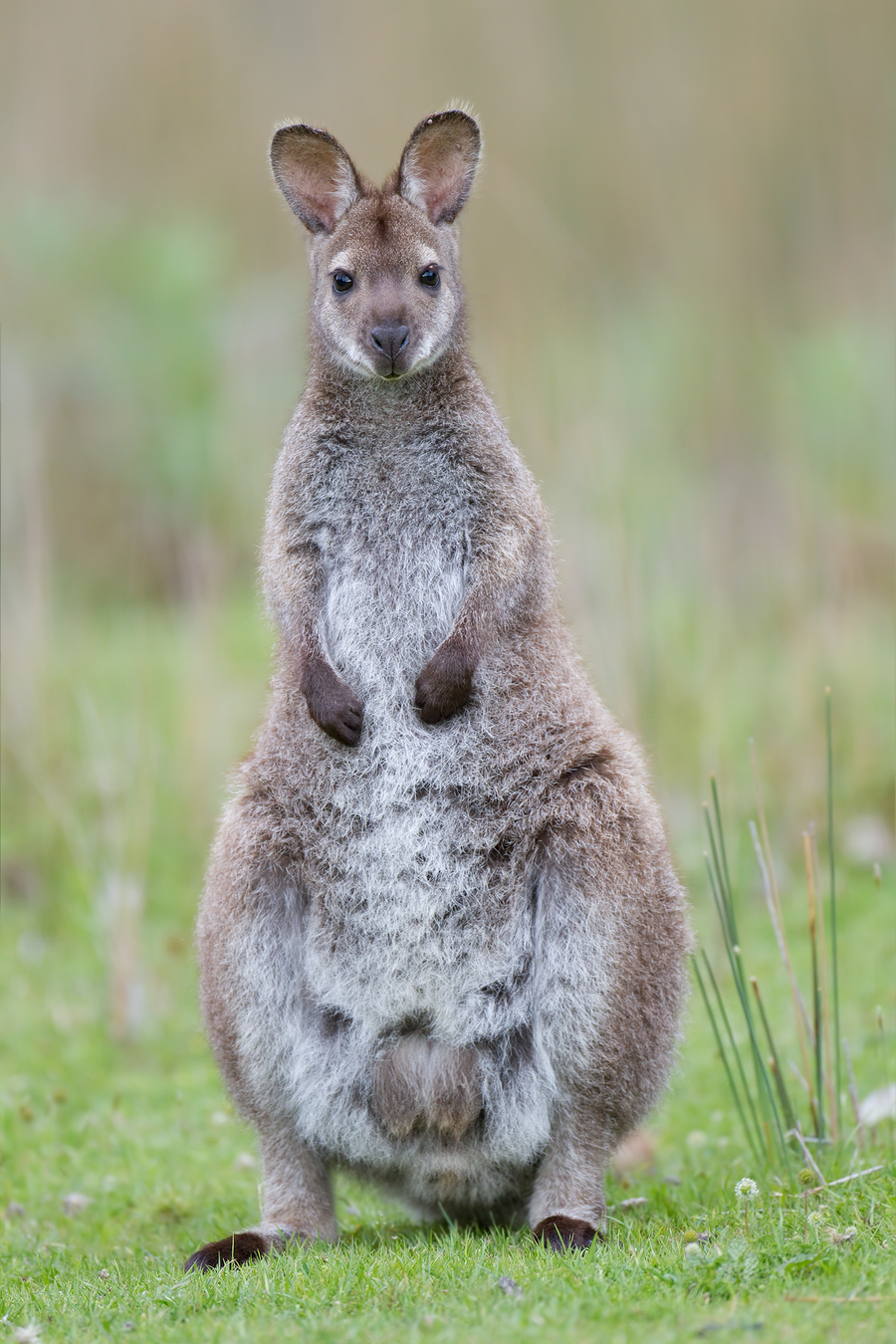
Photo: Noodle snacks (https://www.jjharrison.com.au/)Bennett's Wallaby) · CC BY-SA 3.0 · source · credits
The red-necked wallaby (Notamacropus rufogriseus) is a mammal of the kangaroo family, Macropodidae, in the order Diprotodontia.
Quick answer
The red-necked wallaby (Notamacropus rufogriseus) is a medium-sized marsupial of eastern Australia and Tasmania, named for the rusty-red fur across its neck and shoulders. Males weigh up to about 26 kg (57 lb), hop at around 40 km/h, and live roughly 9 years in the wild.
Top questions about the Red-necked Wallaby
Also available in Español (Ualabí de cuello rojo)
Red-necked Wallaby facts at a glance
- Weight 18 kg
- Length 1.4 m
- Top speed 40 km/h
- Lifespan 9 years
| Scientific name | Notamacropus rufogriseus |
|---|---|
| Diet | Grasses, herbs, and leaves |
| Habitat | Eucalyptus forest, woodland, and coastal scrub of eastern Australia and Tasmania |
| Lifespan | Around 9 years in the wild; 15 or more in captivity |
| Weight | 11–26 kg (24–57 lb); males much heavier than females |
| Top speed | Around 40 km/h (25 mph) when hopping at full pace |
| Conservation status | Least Concern (IUCN) |
| Kingdom | Animalia |
|---|---|
| Phylum | Chordata |
| Class | Mammalia |
| Order | Diprotodontia |
| Family | Macropodidae |
| Genus | Notamacropus |
Where it lives
The red-necked wallaby (Notamacropus rufogriseus) is native to Eastern Australia from Queensland to Victoria, plus Tasmania and the Bass Strait islands; feral populations in New Zealand, Britain, and France. — recorded across Oceania in this guide’s range summary.
For occurrence records, see GBIF species search and sources below.
How big is a red-necked wallaby?
An adult red-necked wallaby measures 1.4 m long — about 81% of the height of an average adult person (1.73 m) — and weighs around 18 kg, about 26% of an average adult’s body weight (70 kg).
Length vs an average adult’s height (to scale)
Physical description
This is one of the largest wallabies: big males can reach 26 kg and about 1.5 m from nose to tail tip. The coat is grizzled grey-fawn with the namesake reddish wash over the nape and shoulders, a pale cheek stripe, and a black nose and paws. Females are roughly two-thirds the male's weight.
Behaviour
Red-necked wallabies are mainly solitary grazers, resting in shady forest by day and emerging at dusk to feed in clearings, though they gather loosely where grazing is good. Males establish dominance with upright 'boxing' bouts, balancing on the tail to kick — the classic macropod fighting stance.
Diet
They feed mainly on grasses and herbs, cropping them close with sharp incisors, and browse leaves when grass is scarce. Like other kangaroos they ferment plant fibre in a large fore-stomach, which lets them extract moisture efficiently and survive dry spells with little drinking.
Reproduction and the pouch
After a gestation of about 30 days, a jellybean-sized joey crawls unaided into the pouch, where it stays for seven to nine months. It continues to suckle as a 'footed joey' for months afterward, and mothers can pause the development of a spare embryo — embryonic diapause — until conditions or pouch space allow.
Habitat and range
The species ranges along the Great Dividing Range from Queensland through New South Wales into Victoria, plus Tasmania and the Bass Strait islands, where the local form is known as Bennett's wallaby. Escaped and released animals have established feral populations in New Zealand, Britain, and France.
Conservation
The red-necked wallaby is listed as Least Concern and is common across much of its range, sometimes so abundant that it is managed as a pasture pest. Foxes and domestic dogs take young wallabies, and road mortality is significant, but overall numbers are secure.
Explore the Red-necked Wallaby
Close relatives
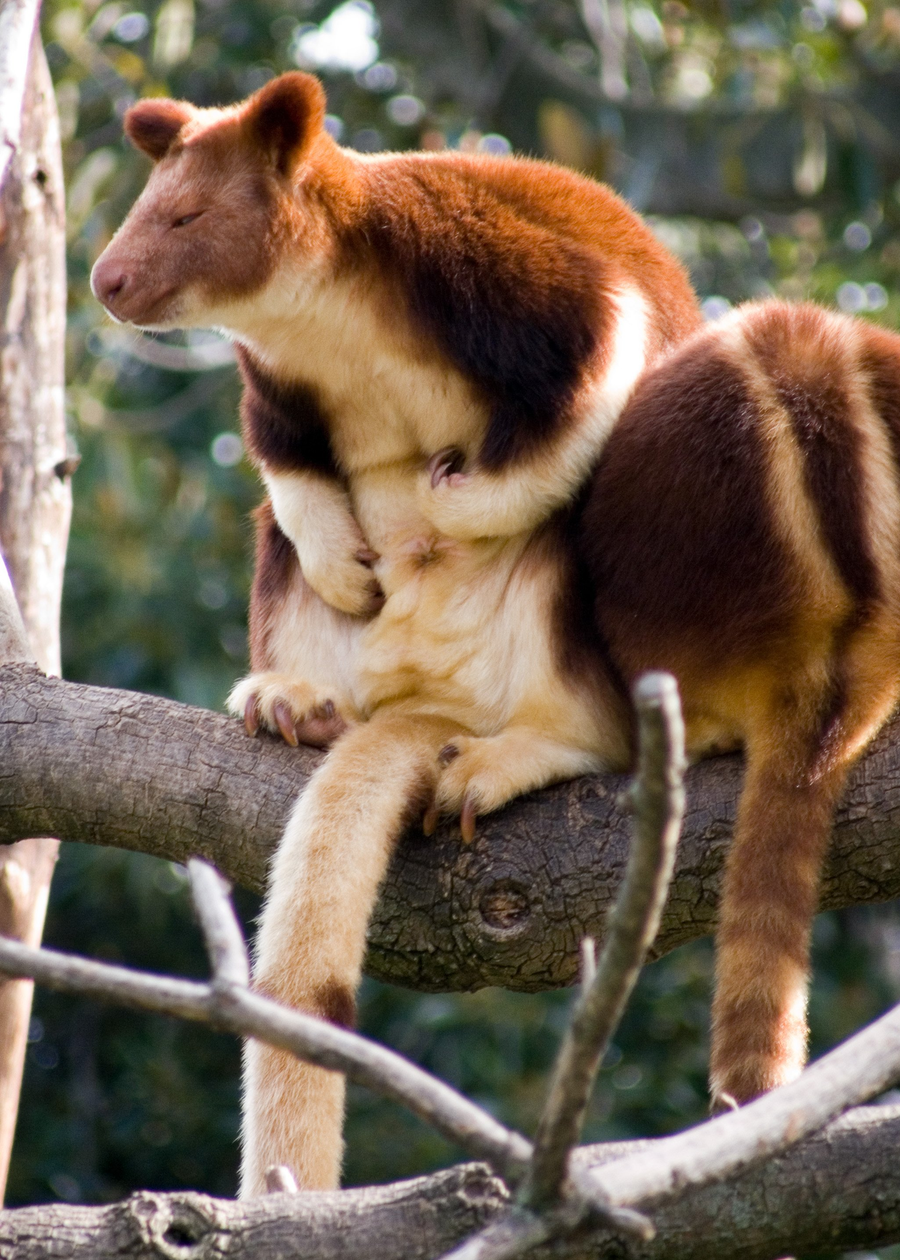
- Goodfellow's Tree-kangaroo Same family
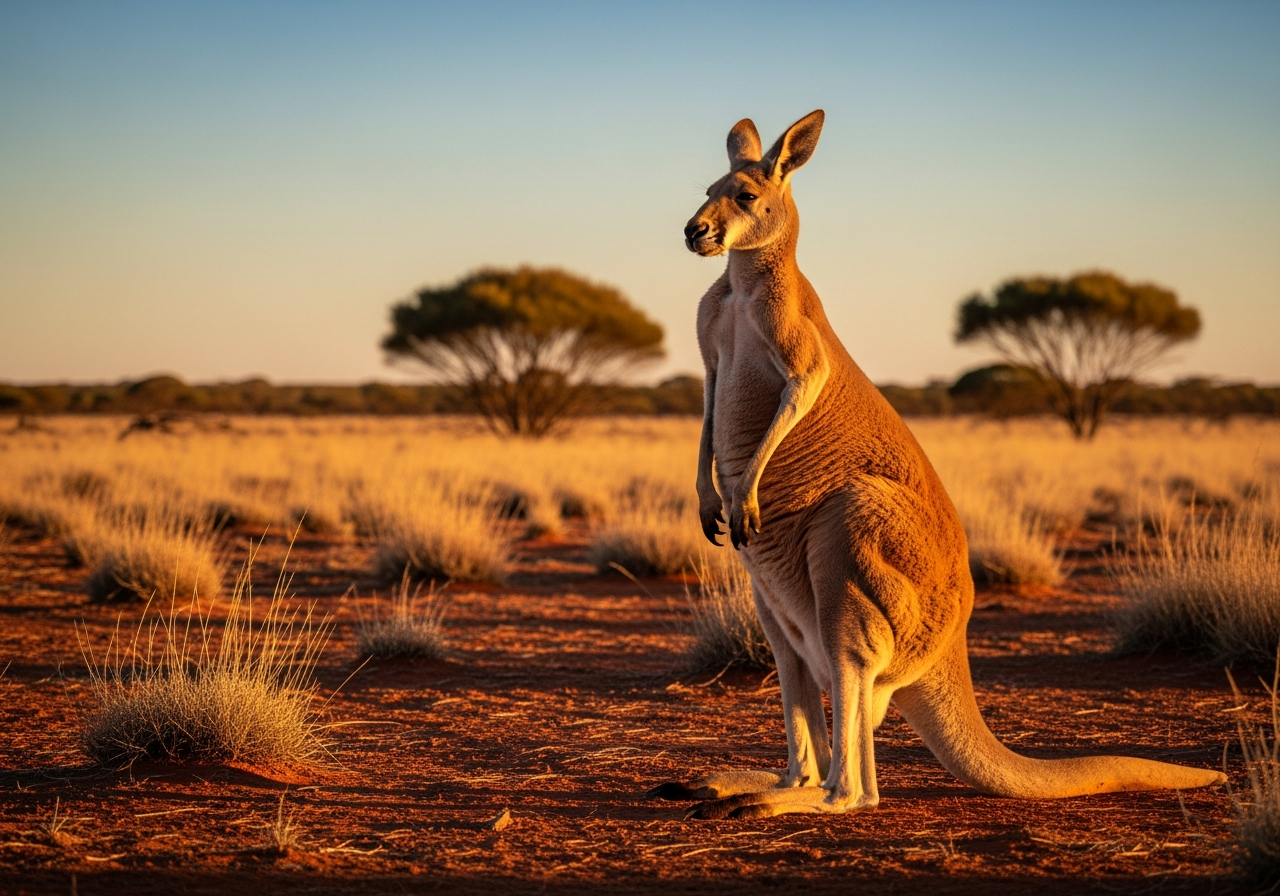
- Red Kangaroo Same family
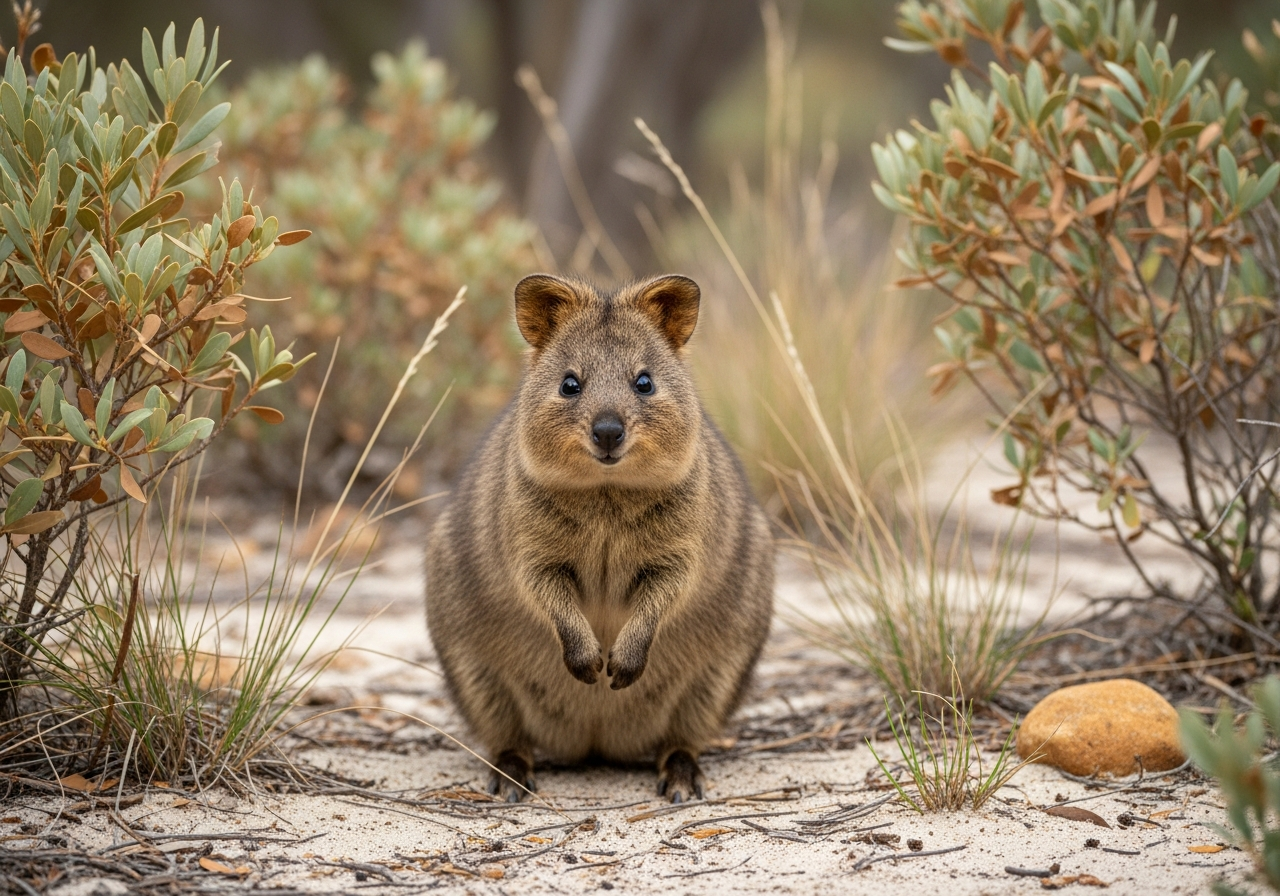
- Quokka Same family
- Sugar Glider Same order
Range & geography
Conservation status of the Red-necked Wallaby
The red-necked wallaby (Notamacropus rufogriseus) is listed as Least Concern on the IUCN Red List. Least Concern (LC) is the IUCN's lowest-risk category, assigned to widespread, abundant species that have been evaluated and found not to be threatened. It does not mean a species faces no pressures — only that it is not currently at risk of extinction.
The red-necked wallaby (Notamacropus rufogriseus) is assessed on the IUCN Red List. Look up on the IUCN Red List .
Frequently asked questions about the Red-necked Wallaby
What is the difference between a wallaby and a kangaroo?
Mostly size: wallabies are small to medium members of the kangaroo family (generally under about 25 kg), with more compact bodies and slightly different molar teeth suited to browsing as well as grazing.
Where do red-necked wallabies live?
In the forests and woodlands of eastern Australia from Queensland to Victoria, and across Tasmania. Feral colonies also survive in New Zealand, England, Scotland, and France.
Are there really wild wallabies in Britain?
Yes — several feral populations descended from zoo escapes and releases. The best-known colony lives on Inchconnachan island in Loch Lomond, Scotland, where they have bred since the 1940s.
How long does a joey stay in the pouch?
About seven to nine months permanently inside the pouch, after which the young wallaby keeps suckling and sheltering for several more months before becoming independent.
Are red-necked wallabies endangered?
No — they are listed as Least Concern by the IUCN and are common, even abundant, in many parts of eastern Australia and Tasmania.
Sources & references
This guide is compiled and reviewed against established zoological and conservation references. Key sources for the Red-necked Wallaby:
-
IUCN Red List of Threatened Species
Conservation status (Least Concern) reflects the IUCN Red List category for Notamacropus rufogriseus.
-
iNaturalist — observations & photos
Search citizen-science observations and community IDs for Notamacropus rufogriseus. Useful for range checks and recent sightings — not a substitute for formal Red List status.
-
GBIF — occurrence data
Global Biodiversity Information Facility species search for Notamacropus rufogriseus. Explore published occurrence records used in range research.
-
Global Animal Guide editorial standards
How we research, source, review, and update every guide for accuracy.