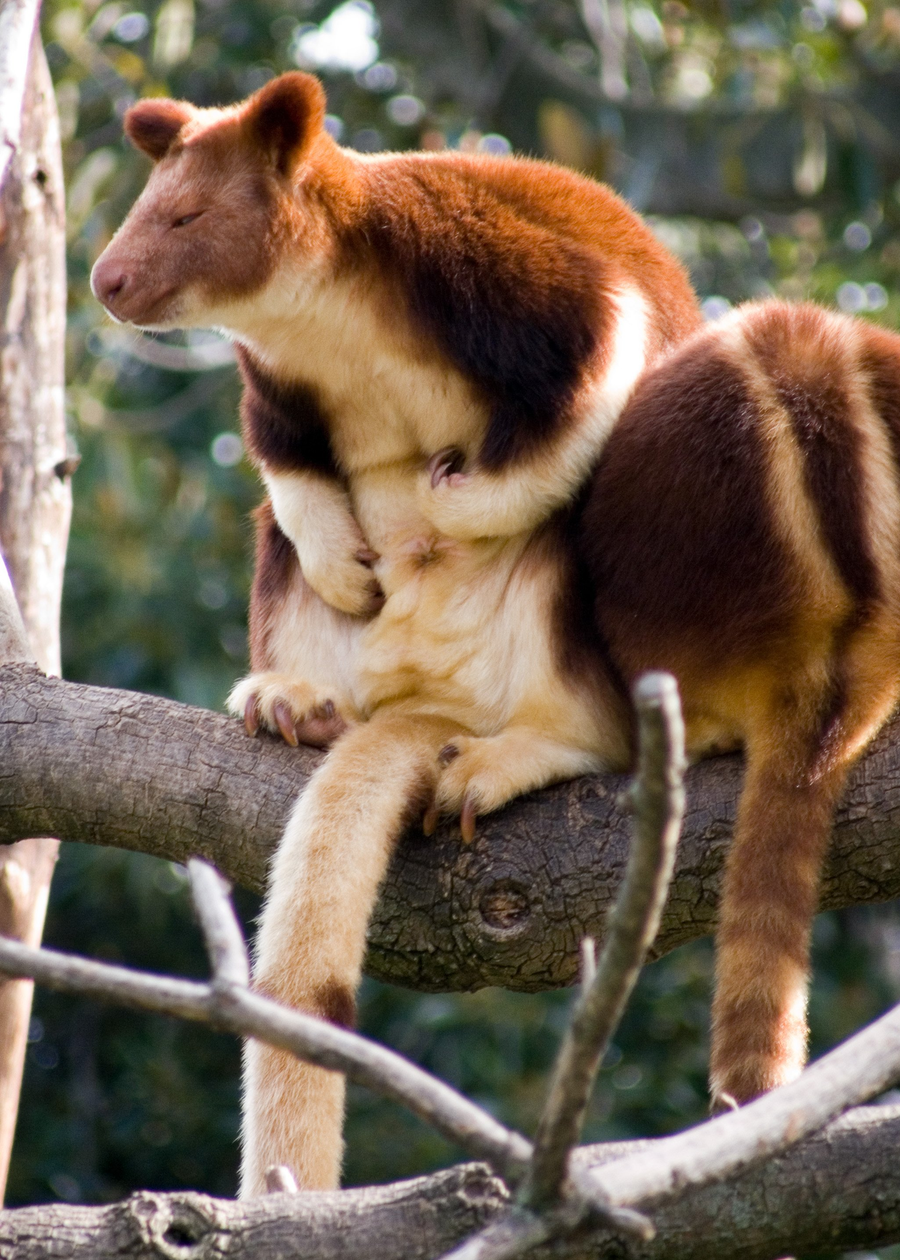
The goodfellow's tree-kangaroo (Dendrolagus goodfellowi) is a mammal of the kangaroo family, Macropodidae, in the order Diprotodontia.
Quick answer
Goodfellow's tree-kangaroo (Dendrolagus goodfellowi) is a striking marsupial of Papua New Guinea's mountain forests — a kangaroo adapted to life in trees, with golden stripes down its back and a long balancing tail. It weighs 6–8.6 kg (13–19 lb), leaps confidently between branches, and is listed Endangered because of hunting and deforestation.
Top questions about the Goodfellow's Tree-kangaroo
Also available in Español (Canguro arborícola de Goodfellow)
Goodfellow's Tree-kangaroo facts at a glance
- Weight 7.5 kg
- Length 1.3 m
- Top speed 16 km/h
- Lifespan 14 years
| Scientific name | Dendrolagus goodfellowi |
|---|---|
| Diet | Leaves, fruit, flowers, and shoots |
| Habitat | Montane rainforest of Papua New Guinea's central highlands |
| Lifespan | Around 14 years in the wild; over 20 in captivity |
| Weight | 6–8.6 kg (13–19 lb) |
| Top speed | An agile climber that leaps metres between branches; slow and awkward on the ground |
| Conservation status | Endangered (IUCN) |
| Kingdom | Animalia |
|---|---|
| Phylum | Chordata |
| Class | Mammalia |
| Order | Diprotodontia |
| Family | Macropodidae |
| Genus | Dendrolagus |
Where it lives
The goodfellow's tree-kangaroo (Dendrolagus goodfellowi) is native to Montane rainforest of Papua New Guinea's central highlands. — recorded across Oceania in this guide’s range summary.
For occurrence records, see GBIF species search and sources below.
How big is a goodfellow's tree-kangaroo?
An adult goodfellow's tree-kangaroo measures 1.3 m long — about 75% of the height of an average adult person (1.73 m) — and weighs around 7.5 kg, about 11% of an average adult’s body weight (70 kg).
Length vs an average adult’s height (to scale)
A kangaroo that climbs
Tree kangaroos are kangaroos returned to the trees their ancestors left. Goodfellow's has strong forelimbs nearly as long as its hind legs, broad padded feet with curved claws, and a long cylindrical tail used as a counterweight. Its chestnut coat carries two golden stripes down the spine and gold bands on the tail.
Life in the canopy
Goodfellow's tree-kangaroo climbs with deliberate, hand-over-hand movements, walks along branches on all fours, and can leap several metres between trees; like other tree kangaroos it can drop from high branches to the ground without injury. It is active in bouts day and night, dozing in forks between feeds.
Diet and digestion
The menu is rainforest foliage — leaves of many tree species, plus fruit, flowers, and shoots, including epiphytes such as orchids. A multi-chambered, fermenting fore-stomach, shared with all kangaroos, lets it extract energy from tough leaves that few other canopy mammals can handle.
Reproduction
A single jellybean-sized joey is born after a pregnancy of around six weeks and crawls to the pouch, where it develops for roughly eight months. After emerging, it keeps returning to the pouch to suckle and stays with its mother well into its second year — a slow breeding rate that makes populations vulnerable.
Habitat and range
The species lives only in the mountain forests along Papua New Guinea's central cordillera, from roughly 1,000 to 3,000 metres elevation, in dense oak and mossy forest. It is one of about a dozen tree-kangaroo species, nearly all confined to New Guinea.
Conservation
Goodfellow's tree-kangaroo is listed as Endangered: it is hunted for meat, and its mountain forests are being cleared for gardens and timber. Community-led conservation, such as the tree-kangaroo programmes of the Tenkile Conservation Alliance, works with villages to end hunting, while zoos coordinate breeding as an insurance population.
Explore the Goodfellow's Tree-kangaroo
Close relatives
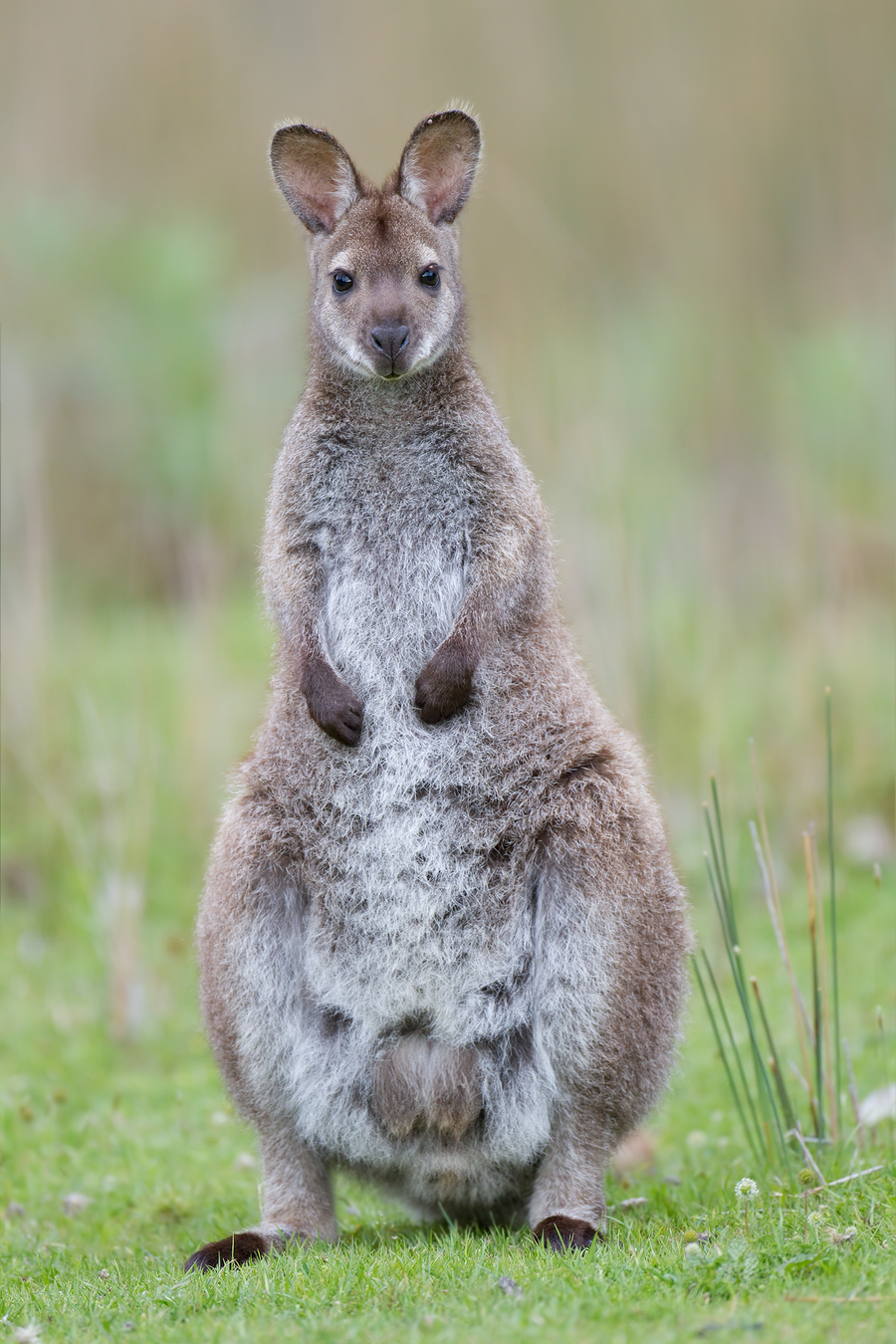
- Red-necked Wallaby Same family
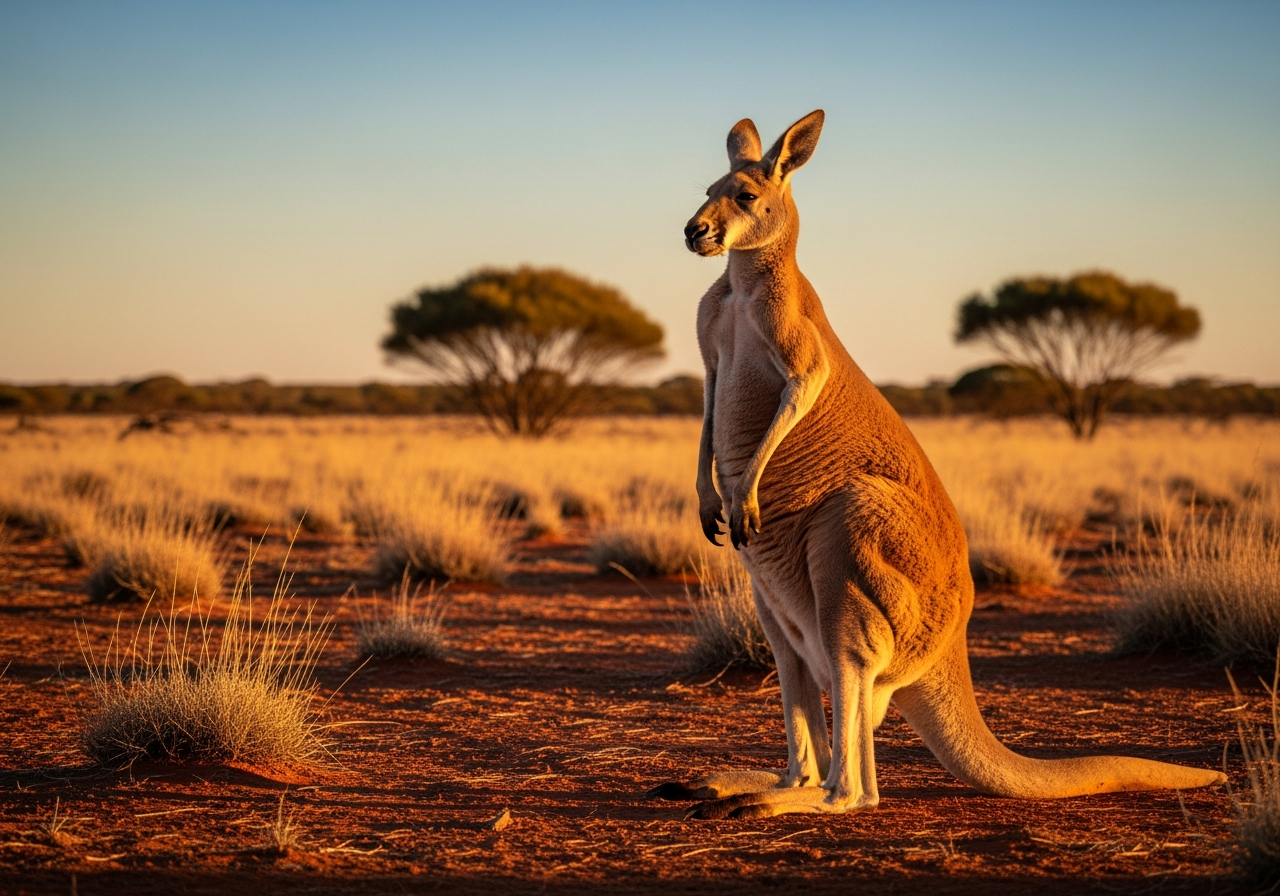
- Red Kangaroo Same family
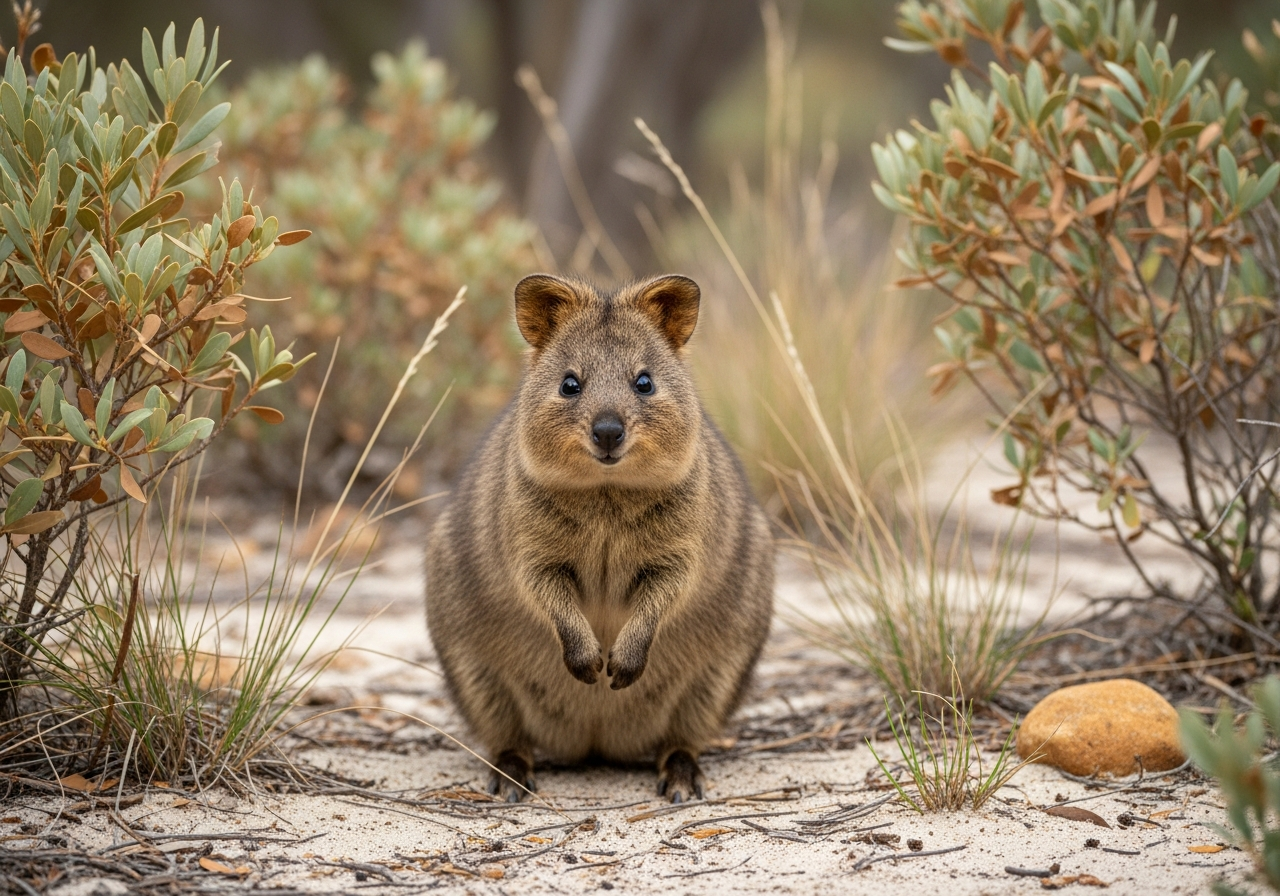
- Quokka Same family
- Sugar Glider Same order
Collections
Range & geography
Conservation status of the Goodfellow's Tree-kangaroo
The goodfellow's tree-kangaroo (Dendrolagus goodfellowi) is listed as Endangered on the IUCN Red List. Endangered (EN) means a species faces a very high risk of extinction in the wild. Populations are usually declining sharply due to habitat loss, hunting, disease, or climate pressure. It sits one level below Critically Endangered on the IUCN Red List.
The goodfellow's tree-kangaroo (Dendrolagus goodfellowi) is assessed on the IUCN Red List. Look up on the IUCN Red List .
Frequently asked questions about the Goodfellow's Tree-kangaroo
How do tree kangaroos climb trees?
With strong, clawed forelimbs and broad gripping soles, moving hind feet independently. The long tail acts purely as a balance — it cannot grip — while the powerful legs allow leaps of several metres between branches.
Why are Goodfellow's tree-kangaroos endangered?
Hunting for meat has reduced numbers, and forest clearing for subsistence gardens and logging is shrinking and fragmenting their mountain habitat. Slow reproduction makes recovery difficult.
How far can a tree kangaroo jump?
Between branches they routinely leap several metres, and tree kangaroos as a group are famous for dropping from heights of many metres to the forest floor without injury.
What do Goodfellow's tree-kangaroos eat?
Mostly leaves from a wide variety of rainforest trees, supplemented with fruit, flowers, and shoots — including epiphytes — all fermented in a kangaroo-style chambered stomach.
Where do Goodfellow's tree-kangaroos live?
Only in the mountain rainforests of Papua New Guinea's central highlands, at elevations of about 1,000–3,000 metres.
Sources & references
This guide is compiled and reviewed against established zoological and conservation references. Key sources for the Goodfellow's Tree-kangaroo:
-
IUCN Red List of Threatened Species
Conservation status (Endangered) reflects the IUCN Red List category for Dendrolagus goodfellowi.
-
iNaturalist — observations & photos
Search citizen-science observations and community IDs for Dendrolagus goodfellowi. Useful for range checks and recent sightings — not a substitute for formal Red List status.
-
GBIF — occurrence data
Global Biodiversity Information Facility species search for Dendrolagus goodfellowi. Explore published occurrence records used in range research.
-
Global Animal Guide editorial standards
How we research, source, review, and update every guide for accuracy.