The red kite (Milvus milvus) is a bird of the family Accipitridae, in the order Accipitriformes.
Quick answer
The red kite (Milvus milvus) is a slender, rusty-red bird of prey with long angled wings and a deeply forked tail, found almost only in Europe. A scavenger and opportunist, it eats carrion, worms and small animals. Once reduced in Britain to a few pairs in Wales, it was reintroduced from 1989 and is now common again. It is listed as Least Concern with an increasing population.
Top questions about the Red Kite
Red Kite facts at a glance
- Weight 1.1 kg
- Lifespan 4 years
| Scientific name | Milvus milvus |
|---|---|
| Diet | Carrion, earthworms, small mammals and birds |
| Habitat | Farmland and grassland with woods for nesting |
| Weight | Average about 1.1 kg |
| Lifespan | Typically 4 years; oldest ringed bird 25 years 8 months |
| Range | Europe (largest numbers in Germany, France and Spain) |
| Conservation status | Least Concern (IUCN Red List, assessed 2020) |
| Kingdom | Animalia |
|---|---|
| Phylum | Chordata |
| Class | Aves |
| Order | Accipitriformes |
| Family | Accipitridae |
| Genus | Milvus |
Where it lives
The red kite (Milvus milvus) is native to Europe, mainly Germany, France, Spain, Switzerland and Britain, with small numbers in North Africa. — recorded across Europe in this guide’s range summary.
For occurrence records, see GBIF species search and sources below.
What is a group of red kites called?
Group name (collective noun)
A group of Red Kites is called a flock.
Baby name
A baby Red Kite is called a chick.
Explore more animal collective nouns and baby animal names .
Identification
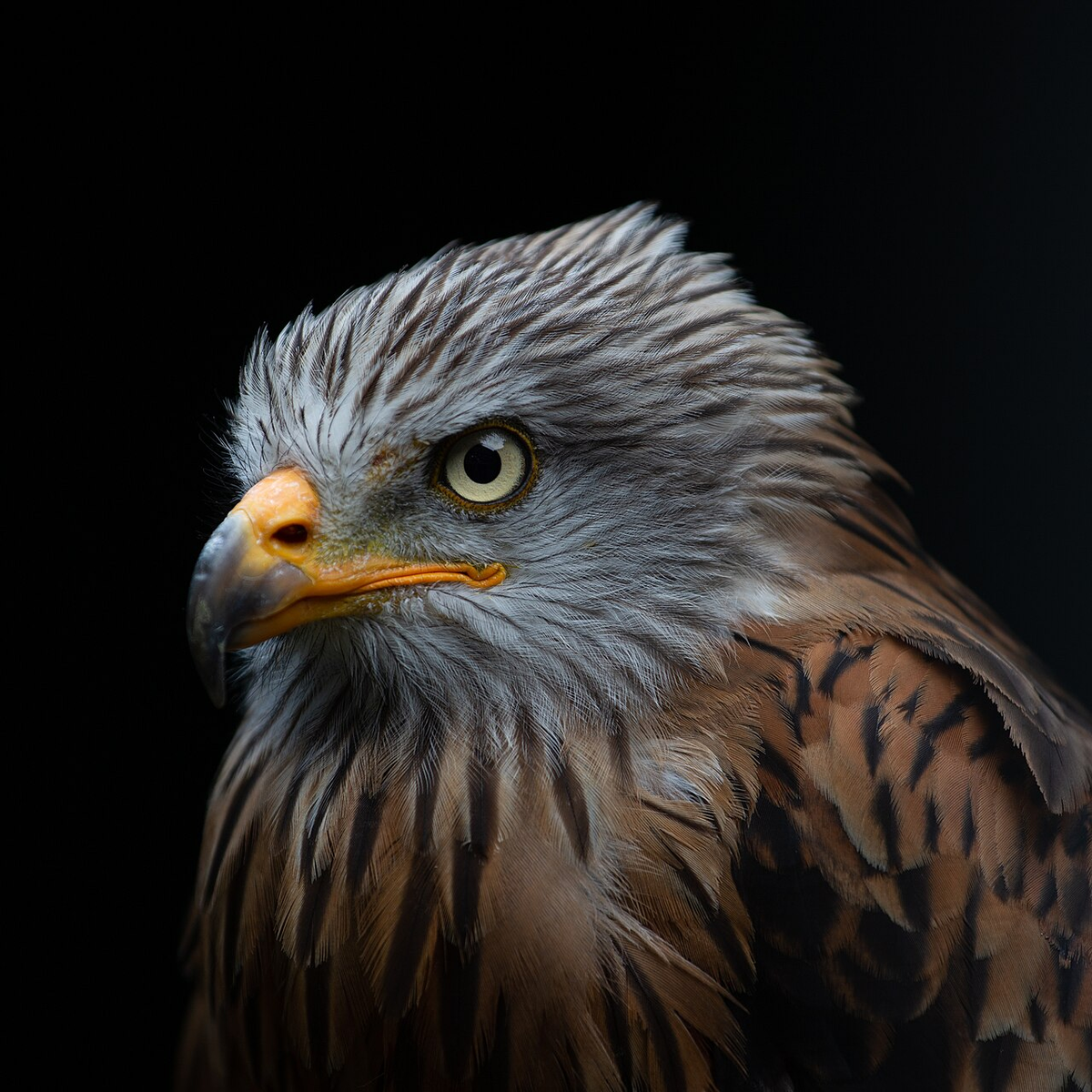
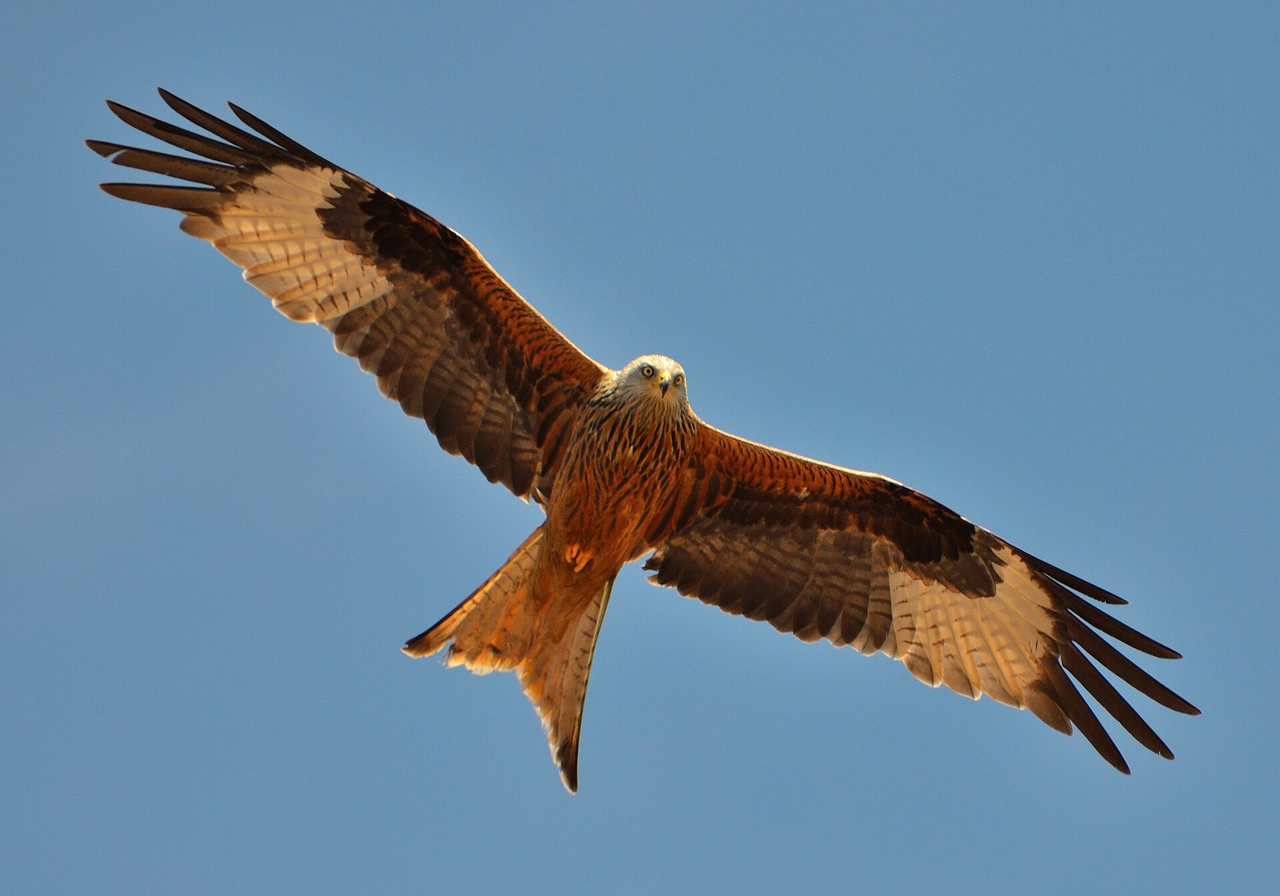
Red kites are rufous with dark streaks, a pale grey head and pale yellow eyes. In flight look for the long, angled wings with a white patch near each tip and the deeply forked chestnut tail, which twists constantly as the bird steers. The call is a thin, whistling 'weee-ooo'.
Scavenger of the skies
Red kites rarely kill large prey. They glide low over fields and roads looking for dead animals, earthworms, insects and small mammals, and often gather where food is put out for them. Their light build lets them stay in the air for hours with little effort.
Britain's comeback
Centuries of persecution left only a few pairs in mid-Wales by the early 20th century. From 1989 birds from Spain and Sweden were released in the Chilterns and northern Scotland, and later at other sites. Together with the Welsh birds they have grown into a population of thousands of pairs.
Status
BirdLife International lists the red kite as Least Concern (2020) with 60,000 to 70,000 mature birds and an increasing trend. Illegal poisoning and rodenticides remain threats in parts of its range.
Explore the Red Kite
Close relatives
- Black Kite Same genus
- Bald Eagle Same family
- Harpy Eagle Same family
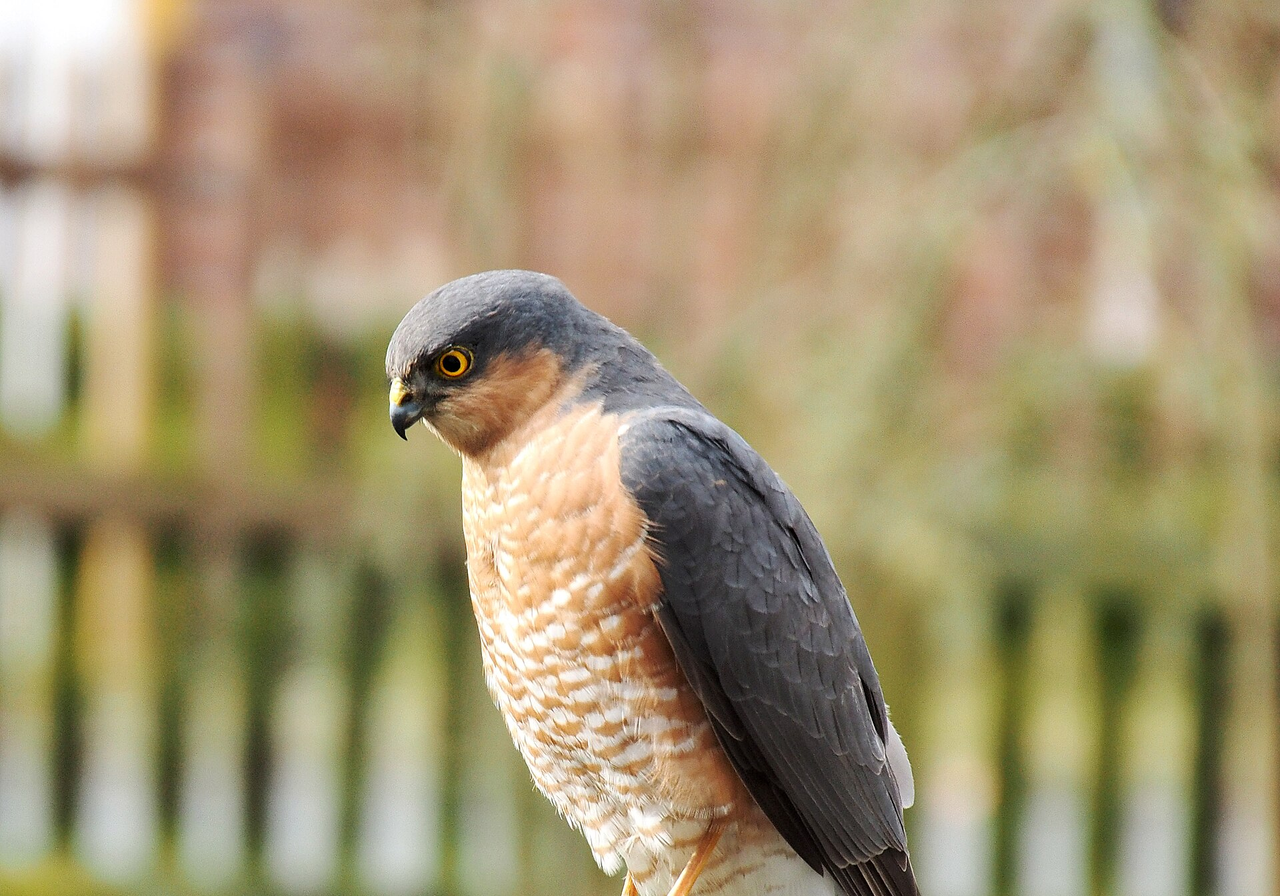
- Northern Goshawk Same family
Did you know? Red Kite facts
- The deeply forked tail twists constantly in flight and works like a rudder.
- The oldest ringed red kite recorded by the BTO lived 25 years and 8 months.
Conservation status of the Red Kite
The red kite (Milvus milvus) is listed as Least Concern on the IUCN Red List. Least Concern (LC) is the IUCN's lowest-risk category, assigned to widespread, abundant species that have been evaluated and found not to be threatened. It does not mean a species faces no pressures — only that it is not currently at risk of extinction.
Red Kite (Milvus milvus) was most recently assessed for the IUCN Red List in 2020. Look up on the IUCN Red List .
Frequently asked questions about the Red Kite
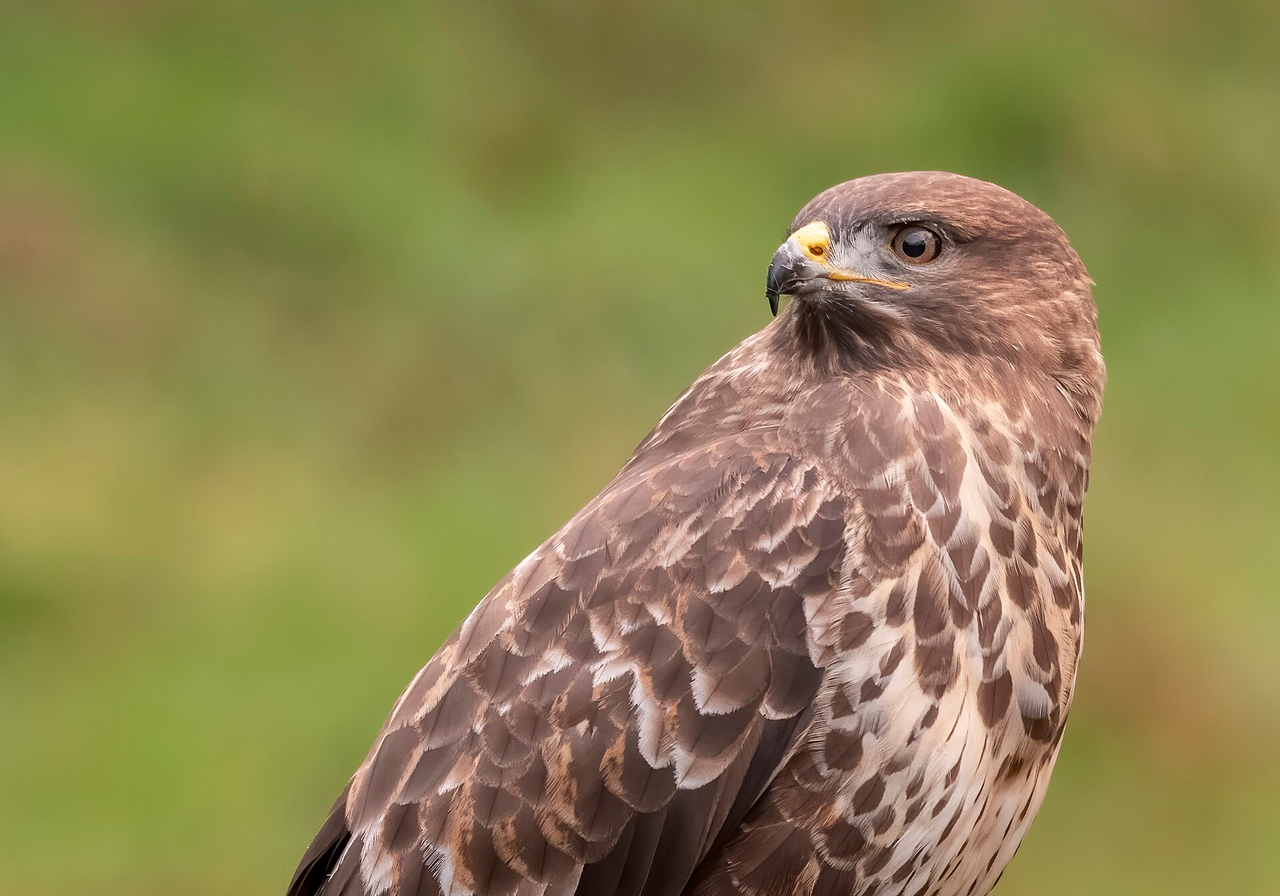
How do you tell a red kite from a buzzard?
Red kites have a deeply forked tail, longer and narrower angled wings, and rusty plumage. Buzzards have a short, rounded tail and broader wings.
Are red kites dangerous to people?
No. They sometimes swoop for food dropped or held outdoors, but they do not attack people.
Where do red kites live?
Almost entirely in Europe. Germany, France and Spain hold most of the world's population, and Britain now has thousands of pairs.
How long do red kites live?
BTO data give a typical life expectancy of about 4 years once a bird reaches breeding age, but the oldest ringed bird lived 25 years and 8 months.
What is a group of red kites called?
A group of Red Kites is called a flock.
What is a baby red kite called?
A baby Red Kite is called a chick.
Sources & references
This guide is compiled and reviewed against established zoological and conservation references. Key sources for the Red Kite:
-
IUCN Red List of Threatened Species
Conservation status (Least Concern) reflects the IUCN Red List category for Milvus milvus, most recently assessed in 2020.
-
iNaturalist — observations & photos
Search citizen-science observations and community IDs for Milvus milvus. Useful for range checks and recent sightings — not a substitute for formal Red List status.
-
GBIF — occurrence data
Global Biodiversity Information Facility species search for Milvus milvus. Explore published occurrence records used in range research.
-
eBird — bird observations
Cornell Lab eBird target search for Red Kite. Check recent checklists and seasonal abundance where birders report this species.
- BirdLife International (2026). Species factsheet: Red Kite Milvus milvus. BirdLife DataZone. Checked 1 November 2026.
IUCN Red List category Least Concern (assessed 2020), population estimate and trend.
- Animal Diversity Web: Milvus milvus. University of Michigan Museum of Zoology.
Size, lifespan and diet.
- BTO BirdFacts: Red Kite. British Trust for Ornithology.
Typical lifespan, oldest ringed bird and UK body weight.
- Tobias, J. A. et al. (2022). AVONET: morphological, ecological and geographical data for all birds. Ecology Letters 25: 581–597. doi:10.1111/ele.13898
Average body mass.
- Gill, F., Donsker, D. & Rasmussen, P. (Eds). IOC World Bird List v15.2.
English and scientific name, classification and range.
-
Global Animal Guide editorial standards
How we research, source, review, and update every guide for accuracy.