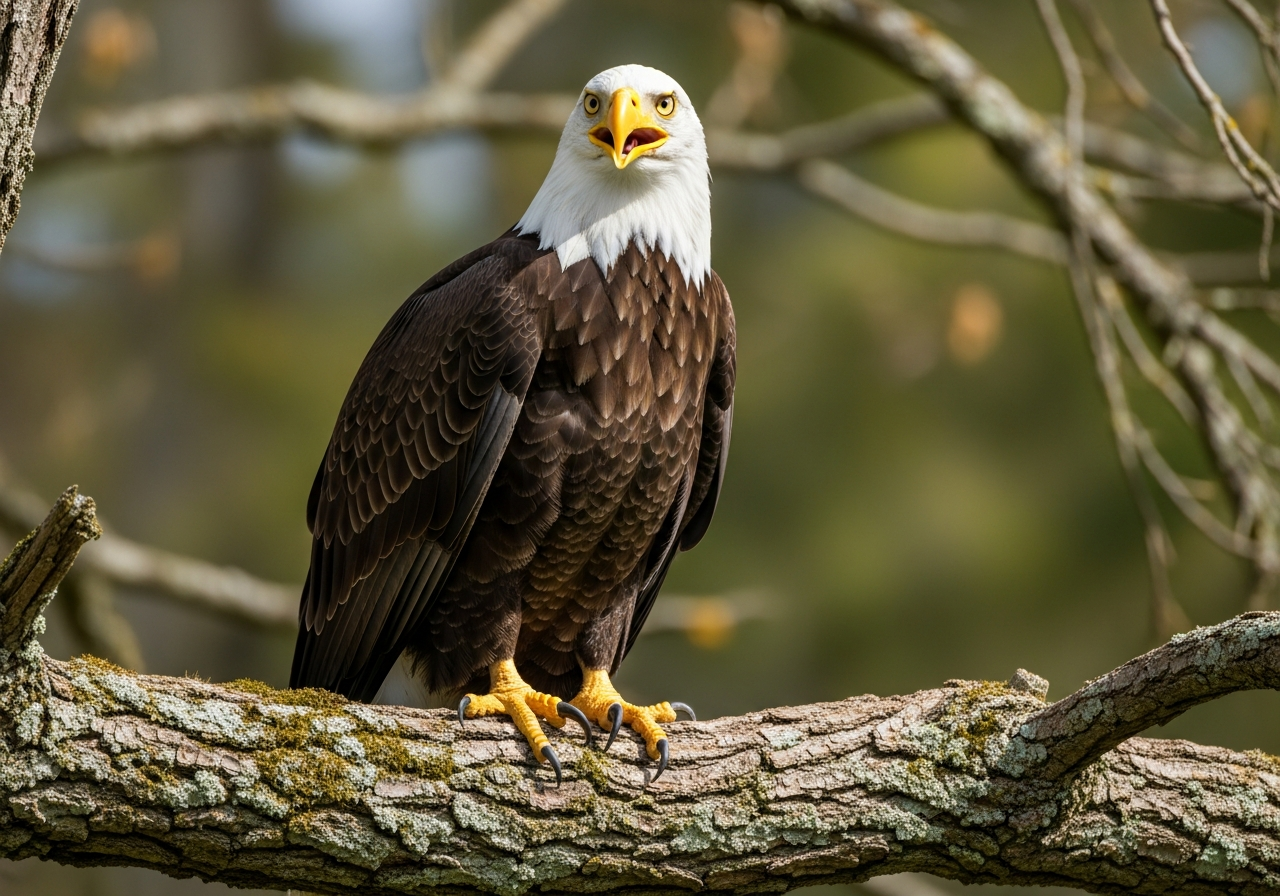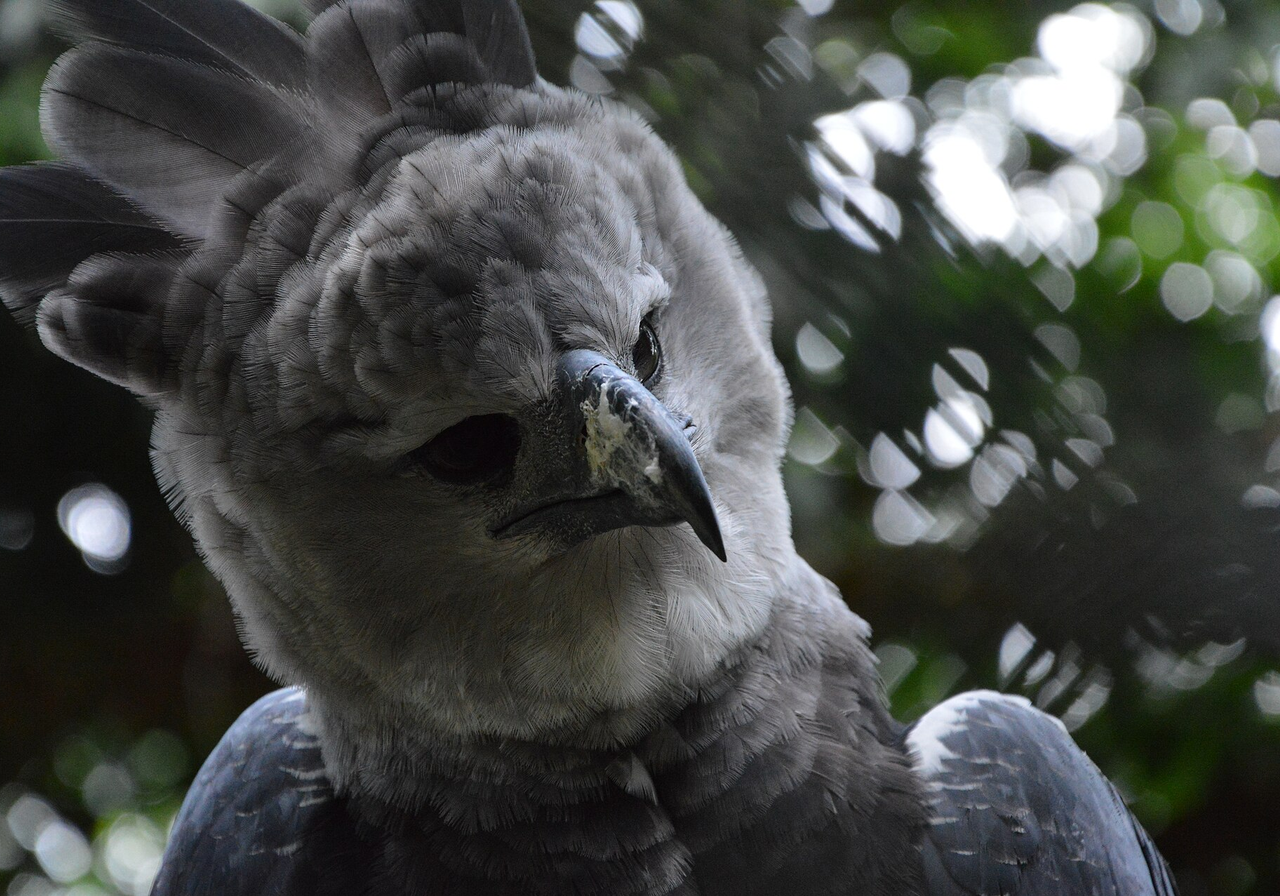
The harpy eagle (Harpia harpyja) is a bird of the family Accipitridae, in the order Accipitriformes.
Quick answer
The harpy eagle (Harpia harpyja) is one of the largest and most powerful eagles in the world, built to snatch sloths and monkeys from the rainforest canopy. It lives in lowland tropical forest from southern Mexico to northern Argentina. Females are much bigger than males and can weigh around 9 kg. BirdLife International lists it as Vulnerable (2021) because forest loss and hunting are reducing its numbers.
Top questions about the Harpy Eagle
Harpy Eagle facts at a glance
- Weight 4.8 kg
- Length 95 cm
- Lifespan 30 years
| Scientific name | Harpia harpyja |
|---|---|
| Diet | Carnivore: sloths, monkeys, opossums and large birds |
| Habitat | Lowland tropical rainforest |
| Length | 89–102 cm (35–40 in), wingspan about 2 m |
| Weight | Average about 4.8 kg; large females 7–9 kg |
| Lifespan | Estimated 25–35 years in the wild |
| Conservation status | Vulnerable (IUCN Red List, assessed 2021) |
| Kingdom | Animalia |
|---|---|
| Phylum | Chordata |
| Class | Aves |
| Order | Accipitriformes |
| Family | Accipitridae |
| Genus | Harpia |
Where it lives
The harpy eagle (Harpia harpyja) is native to Lowland tropical rainforest from southern Mexico through Central America to north-eastern Argentina. — recorded across North America, South America in this guide’s range summary.
For occurrence records, see GBIF species search and sources below.
How big is a harpy eagle?
An adult harpy eagle measures 95 cm long — about 55% of the height of an average adult person (1.73 m) — and weighs around 4.8 kg, about 7% of an average adult’s body weight (70 kg).
Length vs an average adult’s height (to scale)
What is a group of harpy eagles called?
Group name (collective noun)
A group of Harpy Eagles is called a convocation.
Baby name
A baby Harpy Eagle is called an eaglet.
Explore more animal collective nouns and baby animal names .
Built for the canopy
Harpy eagles have short, broad wings and a long tail, a shape that lets them weave between trees instead of soaring over open ground. Their legs are as thick as a child's wrist and the rear talons can reach 12.5 cm. A crown of long grey feathers rises into a double crest when the bird is alert, and a facial disc of feathers may help funnel sound to its ears.
Diet and hunting
Most prey is taken from the trees: two- and three-toed sloths and monkeys make up much of the diet, with opossums, porcupines, coatis, macaws and iguanas also recorded. A harpy usually waits on a perch, watching and listening, then drops onto prey in a short, fast attack and carries it back to a branch to eat.
Slow breeding
Pairs build huge stick nests high in emergent trees such as kapok and Brazil nut. They normally raise a single chick, which stays dependent on its parents for more than a year, so a pair breeds only once every two to three years. That slow pace means populations take a long time to recover from losses.
Why it is Vulnerable
BirdLife International, which assesses birds for the IUCN Red List, lists the harpy eagle as Vulnerable (2021). Its estimate is 100,000 to 250,000 mature birds, and the population is suspected to be falling quickly because of forest loss and degradation, hunting and persecution. It has already disappeared from much of Central America and the Atlantic Forest of Brazil.
Explore the Harpy Eagle
Close relatives
- Bald Eagle Same family
- Northern Goshawk Same family
- Bearded Vulture Same family
- Common Buzzard Same family
Collections
Did you know? Harpy Eagle facts
- The harpy eagle is the national bird of Panama.
- BirdLife puts the harpy eagle's generation length at 20 years, a sign of how slowly the species breeds.
Conservation status of the Harpy Eagle
The harpy eagle (Harpia harpyja) is listed as Vulnerable on the IUCN Red List. Vulnerable (VU) means a species faces a high risk of extinction in the medium-term future. It is the lowest-risk of the three 'threatened' IUCN categories — one step below Endangered, which is itself below Critically Endangered — and is often an early warning that a population is in trouble.
Main threats to the harpy eagle
- Forest loss and degradation
- Hunting and persecution
Harpy Eagle (Harpia harpyja) was most recently assessed for the IUCN Red List in 2021. Look up on the IUCN Red List .
Frequently asked questions about the Harpy Eagle
Is the harpy eagle the biggest eagle?
It is one of the three heaviest eagles, alongside the Philippine eagle and Steller's sea eagle. Large female harpies weigh around 9 kg, and the species has some of the largest talons of any eagle.
What do harpy eagles eat?
Mainly tree-dwelling mammals, especially sloths and monkeys. They also take opossums, porcupines, coatis, large birds such as macaws, and reptiles.
Where do harpy eagles live?
In lowland tropical rainforest from southern Mexico through Central America to Brazil, Bolivia and north-eastern Argentina. The largest remaining populations are in the Amazon basin.
Why is it called a harpy eagle?
It is named after the harpies of Greek myth, winged creatures with the bodies of birds of prey.
How many harpy eagles are left?
BirdLife International estimates 100,000 to 250,000 mature individuals (2021 assessment) and suspects the population is declining rapidly.
What is a group of harpy eagles called?
A group of Harpy Eagles is called a convocation.
What is a baby harpy eagle called?
A baby Harpy Eagle is called an eaglet.
Sources & references
This guide is compiled and reviewed against established zoological and conservation references. Key sources for the Harpy Eagle:
-
IUCN Red List of Threatened Species
Conservation status (Vulnerable) reflects the IUCN Red List category for Harpia harpyja, most recently assessed in 2021.
-
iNaturalist — observations & photos
Search citizen-science observations and community IDs for Harpia harpyja. Useful for range checks and recent sightings — not a substitute for formal Red List status.
-
GBIF — occurrence data
Global Biodiversity Information Facility species search for Harpia harpyja. Explore published occurrence records used in range research.
-
eBird — bird observations
Cornell Lab eBird target search for Harpy Eagle. Check recent checklists and seasonal abundance where birders report this species.
- BirdLife International (2026). Species factsheet: Harpy Eagle Harpia harpyja. BirdLife DataZone. Checked 1 November 2026.
IUCN Red List category Vulnerable (assessed 2021), population estimate and trend.
- Animal Diversity Web: Harpia harpyja. University of Michigan Museum of Zoology.
Size, lifespan and diet.
- Tobias, J. A. et al. (2022). AVONET: morphological, ecological and geographical data for all birds. Ecology Letters 25: 581–597. doi:10.1111/ele.13898
Average body mass.
- Gill, F., Donsker, D. & Rasmussen, P. (Eds). IOC World Bird List v15.2.
English and scientific name, classification and range.
-
Global Animal Guide editorial standards
How we research, source, review, and update every guide for accuracy.