Image sourcing: see credits & licences
Quick answer
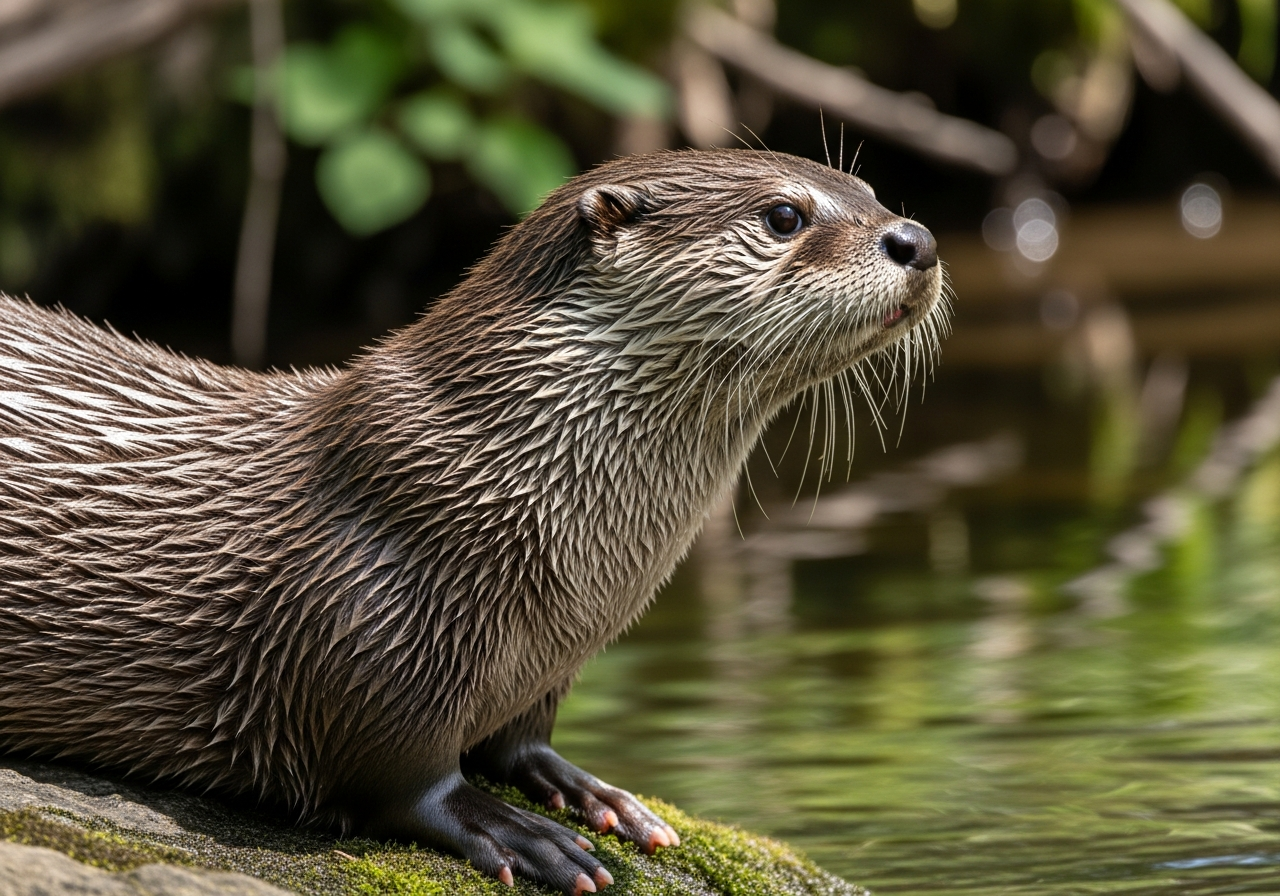
Otters are semi-aquatic carnivorous mammals in the weasel family, found in rivers, lakes, and coasts across the Americas, Europe, Asia, and Africa. There are 13 species, from the small river otters to the sea otter, all with dense waterproof fur, webbed feet, and streamlined bodies built for swimming. They feed mainly on fish, crustaceans, and other aquatic prey, and are known for their playful behavior and use of tools. Most otters live around 10 to 15 years in the wild.
Top questions about the Otter
Otter facts at a glance
- Weight 10 kg
- Length 1 m
- Top speed 12 km/h
- Lifespan 13 years
| Scientific name | Lutrinae |
|---|---|
| Diet | Carnivore (fish, crustaceans, invertebrates) |
| Habitat | Rivers, lakes, wetlands, and coasts |
| Lifespan | 10–15 years in the wild |
| Weight | 1–45 kg depending on species |
| Length | 0.6–1.5 m (2–5 ft) including tail |
| Conservation status | Varies by species |
| Kingdom | Animalia |
|---|---|
| Phylum | Chordata |
| Class | Mammalia |
| Order | Carnivora |
| Family | Mustelidae |
Where it lives
The otter (Lutrinae) is native to Rivers, lakes, and coasts across the Americas, Europe, Asia, and Africa. — recorded across North America, South America, Europe, Asia, Africa in this guide’s range summary.
For occurrence records, see GBIF species search and sources below.
How big is a otter?
An adult otter measures 1 m long — about 58% of the height of an average adult person (1.73 m) — and weighs around 10 kg, about 14% of an average adult’s body weight (70 kg).
Length vs an average adult’s height (to scale)
What is a group of otters called?
Group name (collective noun)
A group of Otters is called a raft. It is also known as a romp or a bevy.
Baby name
A baby Otter is called a pup.
Explore more animal collective nouns and baby animal names .
Behavior and play
Otters are intelligent, social, and famously playful, often seen sliding down muddy or snowy banks and wrestling with one another. This play helps young otters develop hunting and social skills. They are superb swimmers, propelling themselves with powerful tails and webbed feet, and can close their nostrils and ears underwater. Sea otters are known for using rocks as tools to crack open shellfish.
Diet and hunting
Otters are carnivores that hunt in water, feeding mainly on fish, crayfish, crabs, frogs, and other aquatic animals. They have sensitive whiskers that detect the movements of prey in murky water. With a high metabolism and no thick blubber layer, river otters must eat frequently to stay warm, while sea otters consume up to a quarter of their body weight each day. Many otters bring prey to the surface or land to eat.
Habitat and range
Otters live on every continent except Australia and Antarctica, occupying rivers, lakes, wetlands, and coastal waters across the Americas, Europe, Asia, and Africa. They depend on clean water with abundant prey and good bankside cover for resting and denning. Sea otters inhabit kelp forests of the North Pacific, while river otters range widely through freshwater systems. Their dense fur, the thickest of any animal, keeps them warm rather than a layer of body fat.
Conservation
Otter species vary in status, from Least Concern to Endangered, with several threatened by water pollution, habitat loss, and historic hunting for their prized fur. Sea otters were hunted nearly to extinction and remain Endangered, though protection has helped some populations recover. As top predators, otters are sensitive indicators of the health of freshwater and coastal ecosystems. Clean water and protected habitat are central to their survival.
Dig deeper into the Otter
- How Long Do Otters Live?
Otter lifespan is typically 10–15 years in the wild. What shortens or extends life, life stages, and status (Least Concern).
- Otter: Key Facts
Otters are semi-aquatic carnivorous mammals in the weasel family, found in rivers, lakes, and coasts across the Americas, Europe, Asia, and Africa.
- What Do Otters Eat?
What otters eat: Carnivore (fish, crustaceans, invertebrates), foraging style, and seasonal shifts in Rivers, lakes, wetlands, and coasts.
- Where Do Otters Live?
Where otters live: Rivers, lakes, wetlands, and coasts, native range cues, and human overlap. Status Least Concern.
Explore the Otter
Did you know? Otter facts
- Otters are semi-aquatic carnivorous mammals in the weasel family, found in rivers, lakes, and coasts across the Americas, Europe, Asia, and Africa.
- Otters are carnivores that mainly eat fish, along with crabs, crayfish, frogs, and other aquatic animals. Sea otters specialize in shellfish such as sea urchins, clams, and mussels.
- Yes. Sea otters are well known for using rocks as tools, balancing a stone on their chest to smash open hard-shelled prey such as clams and urchins.
- Otters lack the thick blubber of many marine mammals and instead rely on extremely dense, water-repellent fur, the thickest of any animal, to trap air and insulate them.
- Most otters live around 10 to 15 years in the wild, depending on the species, and somewhat longer in captivity where food and shelter are reliable.
- Conservation: Varies by species.
Diet & feeding
Otter feeds primarily as a carnivore (fish, crustaceans, invertebrates). Otters are carnivores that hunt in water, feeding mainly on fish, crayfish, crabs, frogs, and other aquatic animals. They have sensitive whiskers that detect the movements of prey in murky water. With a high metabolism and no thick blubber layer,
Adaptations
- Otters are intelligent, social, and famously playful, often seen sliding down muddy or snowy banks and wrestling with one another. This play helps young otters develop hunting and social skills. They are superb swimmers, propelling themselves with powerful tails and webbed feet, and can close their nostrils and ears underwater. Sea otters are known for using rocks as tools to crack open shellfish.
- Otters are carnivores that hunt in water, feeding mainly on fish, crayfish, crabs, frogs, and other aquatic animals. They have sensitive whiskers that detect the movements of prey in murky water. With a high metabolism and no thick blubber layer, river otters must eat frequently to stay warm, while sea otters consume up to a quarter of their body weight each day. Many otters bring prey to the surface or land to eat.
Behaviour & ecology
- Otters are intelligent, social, and famously playful, often seen sliding down muddy or snowy banks and wrestling with one another. This play helps young otters develop hunting and social skills. They are superb swimmers, propelling themselves with powerful tails and webbed feet, and can close their nostrils and ears underwater. Sea otters are known for using rocks as tools to crack open shellfish.
- Otters are carnivores that hunt in water, feeding mainly on fish, crayfish, crabs, frogs, and other aquatic animals. They have sensitive whiskers that detect the movements of prey in murky water. With a high metabolism and no thick blubber layer, river otters must eat frequently to stay warm, while sea otters consume up to a quarter of their body weight each day. Many otters bring prey to the surface or land to eat.
- Otters live on every continent except Australia and Antarctica, occupying rivers, lakes, wetlands, and coastal waters across the Americas, Europe, Asia, and Africa. They depend on clean water with abundant prey and good bankside cover for resting and denning. Sea otters inhabit kelp forests of the North Pacific, while river otters range widely through freshwater systems. Their dense fur, the thickest of any animal, keeps them warm rather than a layer of body fat.
Communication
- Otter uses scent, posture, and vocal signals to mark territory and coordinate social behaviour.
- Communication intensity often peaks during breeding seasons and territorial disputes.
Habitat & range
Rivers, lakes, wetlands, and coasts
Ecological role
Otter acts as a predator that helps regulate prey populations and maintain balance in rivers, lakes, wetlands, and coasts.
Conservation status of the Otter
The otter (Lutrinae) is listed as Least Concern on the IUCN Red List. Least Concern (LC) is the IUCN's lowest-risk category, assigned to widespread, abundant species that have been evaluated and found not to be threatened. It does not mean a species faces no pressures — only that it is not currently at risk of extinction.
The otter (Lutrinae) is assessed on the IUCN Red List. Look up on the IUCN Red List .
Frequently asked questions about the Otter
What do otters eat?
Otters are carnivores that mainly eat fish, along with crabs, crayfish, frogs, and other aquatic animals. Sea otters specialize in shellfish such as sea urchins, clams, and mussels.
Do otters really use tools?
Yes. Sea otters are well known for using rocks as tools, balancing a stone on their chest to smash open hard-shelled prey such as clams and urchins.
How do otters stay warm in cold water?
Otters lack the thick blubber of many marine mammals and instead rely on extremely dense, water-repellent fur, the thickest of any animal, to trap air and insulate them.
How long do otters live?
Most otters live around 10 to 15 years in the wild, depending on the species, and somewhat longer in captivity where food and shelter are reliable.
Are otters endangered?
It varies by species. Several otters are listed as Least Concern, but others, including the sea otter and some Asian species, are Endangered due to pollution, habitat loss, and past hunting.
Are otters dangerous to humans?
Otters generally avoid people, but they are wild predators with sharp teeth and can bite if cornered or provoked. They are best observed from a respectful distance.
What is a group of otters called?
A group of Otters is called a raft. It is also known as a romp or a bevy.
What is a baby otter called?
A baby Otter is called a pup.
Sources & references
This guide is compiled and reviewed against established zoological and conservation references. Key sources for the Otter:
-
IUCN Red List of Threatened Species
Conservation status (Least Concern) reflects the IUCN Red List category for Lutrinae.
-
iNaturalist — observations & photos
Search citizen-science observations and community IDs for Lutrinae. Useful for range checks and recent sightings — not a substitute for formal Red List status.
-
GBIF — occurrence data
Global Biodiversity Information Facility species search for Lutrinae. Explore published occurrence records used in range research.
- IUCN Red List — Lutrinae.
Conservation status (Least Concern) and population trends.
- Wikipedia — Otter.
General taxonomy and overview (cross-check primary sources).
-
Global Animal Guide editorial standards
How we research, source, review, and update every guide for accuracy.