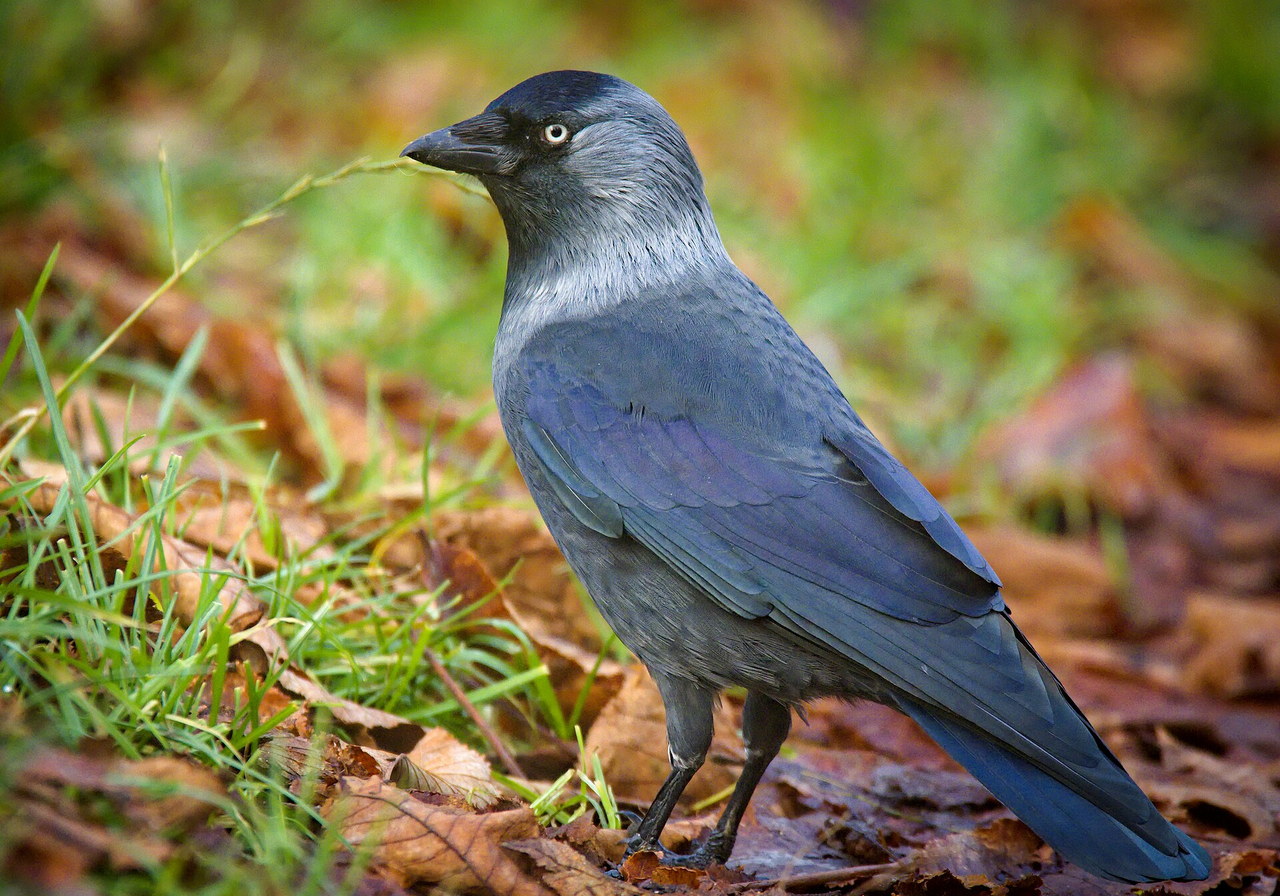
The western jackdaw (Coloeus monedula) is a bird of the crow family, Corvidae, in the order Passeriformes.
Quick answer
The western jackdaw (Coloeus monedula) is the smallest crow in Europe, black with a grey nape and striking pale silver-white eyes. It lives in flocks around farmland, cliffs, old buildings and towns from Europe and North Africa to western Asia, and it famously nests in chimneys. Jackdaws pair for life. BirdLife estimates 39 to 85 million mature birds and lists it as Least Concern.
Top questions about the Western Jackdaw
Western Jackdaw facts at a glance
- Weight 230 g
- Lifespan 5 years
| Scientific name | Coloeus monedula (also Corvus monedula) |
|---|---|
| Diet | Omnivore: insects, seeds, fruit, eggs and scraps |
| Habitat | Farmland, parkland, sea cliffs, towns and villages |
| Weight | UK adults average about 230 g |
| Lifespan | Typically 5 years; oldest ringed bird 18 years |
| Range | Europe, North Africa and western Asia |
| Conservation status | Least Concern (IUCN Red List, assessed 2018) |
| Kingdom | Animalia |
|---|---|
| Phylum | Chordata |
| Class | Aves |
| Order | Passeriformes |
| Family | Corvidae |
| Genus | Coloeus |
Where it lives
The western jackdaw (Coloeus monedula) is native to Europe, north-west Africa and western and central Asia. — recorded across Europe, Asia, Africa in this guide’s range summary.
For occurrence records, see GBIF species search and sources below.
What is a group of western jackdaws called?
Group name (collective noun)
A group of Western Jackdaws is called a clattering. It is also known as a train.
Baby name
A baby Western Jackdaw is called a chick.
Explore more animal collective nouns and baby animal names .
Identification
Jackdaws are compact crows, mainly black with a soft grey nape and sides of the neck and a short bill. The pale, silvery-white eye is distinctive at close range. The call is a sharp, cheerful 'chack'.
Clever and curious
Jackdaws are inquisitive and follow the gaze of people. The naturalist Konrad Lorenz studied their social behaviour in detail and described it in his book King Solomon's Ring.
Status
BirdLife International (which places the species in Corvus) lists it as Least Concern (2018), estimating 39 to 85 million mature birds and a stable trend. BTO ringing data give a typical life expectancy of 5 years.
Explore the Western Jackdaw
Close relatives
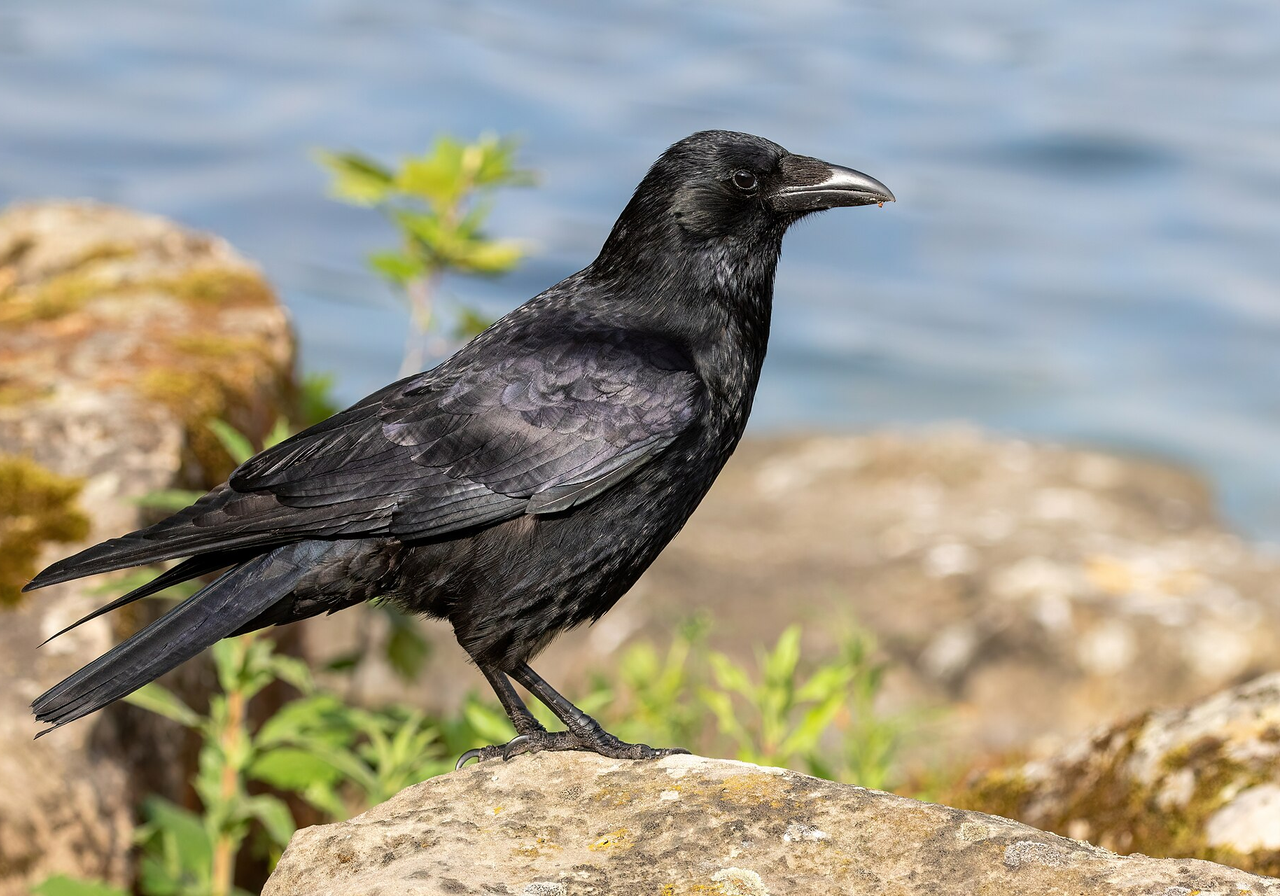
- Crow Same family
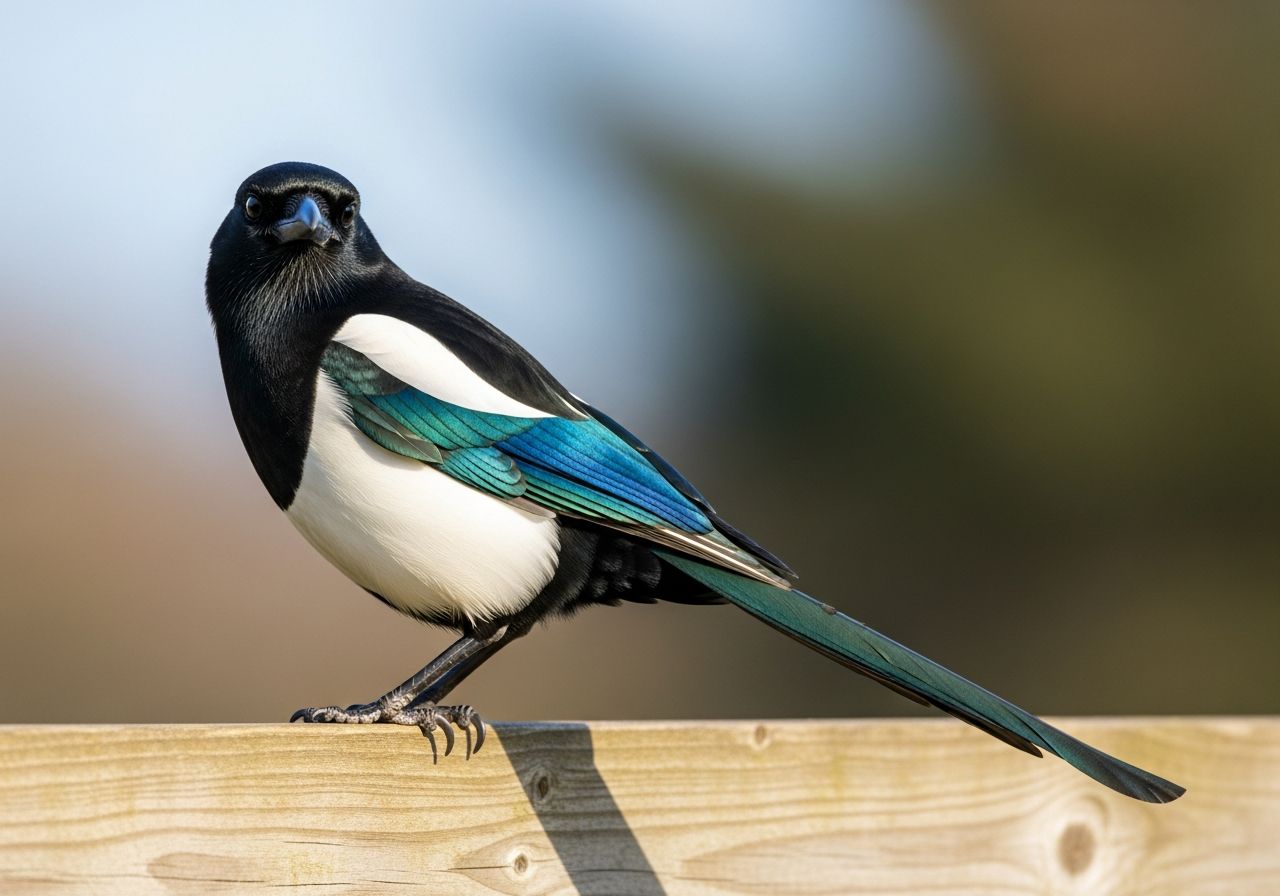
- Magpie Same family
- Rook Same family
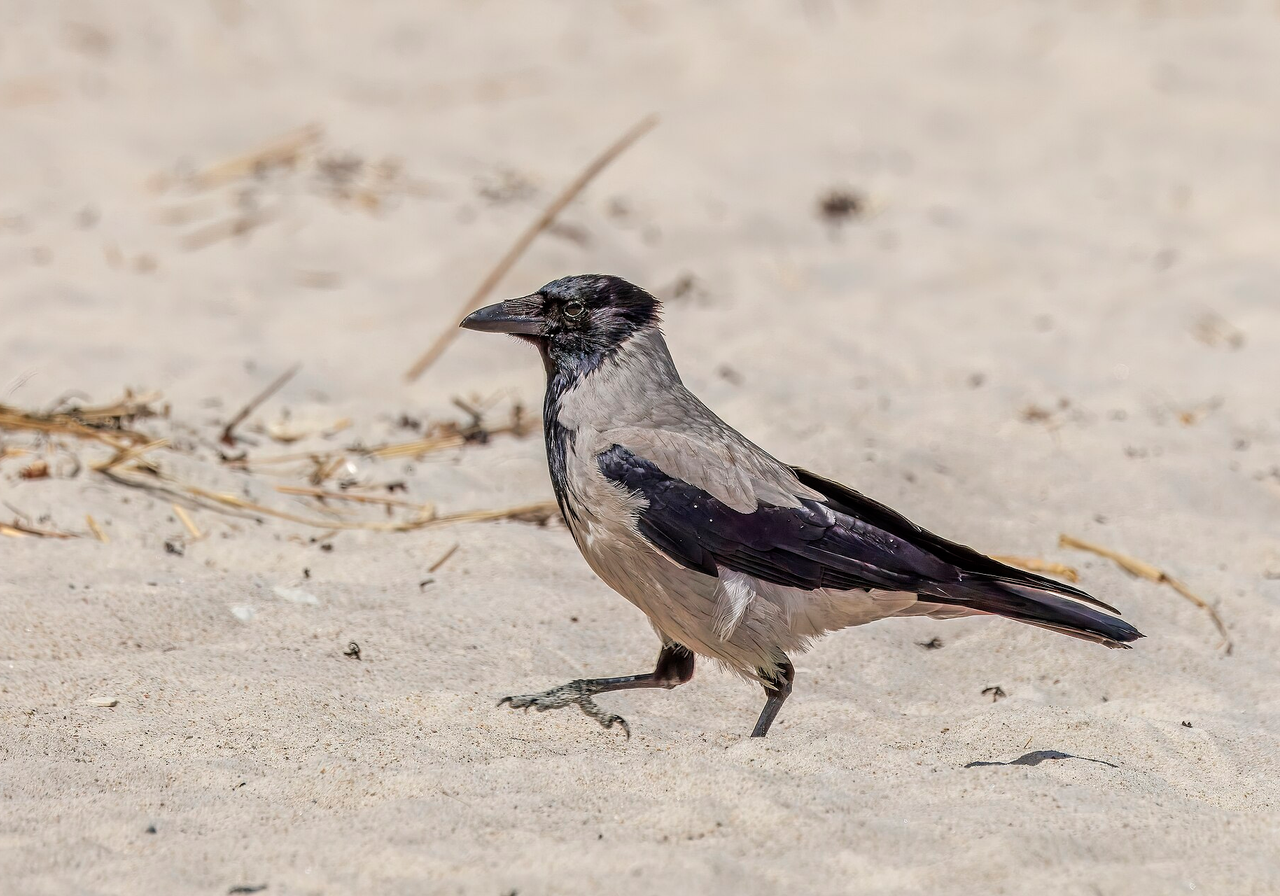
- Hooded Crow Same family
Range & geography
Did you know? Western Jackdaw facts
- Jackdaw pairs stay together for life.
- They often roost with rooks in winter.
Conservation status of the Western Jackdaw
The western jackdaw (Coloeus monedula) is listed as Least Concern on the IUCN Red List. Least Concern (LC) is the IUCN's lowest-risk category, assigned to widespread, abundant species that have been evaluated and found not to be threatened. It does not mean a species faces no pressures — only that it is not currently at risk of extinction.
Western Jackdaw (Coloeus monedula) was most recently assessed for the IUCN Red List in 2018. Look up on the IUCN Red List .
Frequently asked questions about the Western Jackdaw
Why do jackdaws have white eyes?
Adult jackdaws have a pale silvery-white iris. Researchers think it may help them communicate with each other, for example when defending nest holes.
Why do jackdaws nest in chimneys?
They naturally nest in holes in trees and cliffs, and chimneys offer similar sheltered cavities.
Is a jackdaw a crow?
Yes. It is a small member of the crow family, Corvidae.
How long do jackdaws live?
BTO data give a typical life expectancy of 5 years; the oldest ringed jackdaw lived 18 years.
What is a group of western jackdaws called?
A group of Western Jackdaws is called a clattering. It is also known as a train.
What is a baby western jackdaw called?
A baby Western Jackdaw is called a chick.
Sources & references
This guide is compiled and reviewed against established zoological and conservation references. Key sources for the Western Jackdaw:
-
IUCN Red List of Threatened Species
Conservation status (Least Concern) reflects the IUCN Red List category for Coloeus monedula, most recently assessed in 2018.
-
iNaturalist — observations & photos
Search citizen-science observations and community IDs for Coloeus monedula. Useful for range checks and recent sightings — not a substitute for formal Red List status.
-
GBIF — occurrence data
Global Biodiversity Information Facility species search for Coloeus monedula. Explore published occurrence records used in range research.
-
eBird — bird observations
Cornell Lab eBird target search for Western Jackdaw. Check recent checklists and seasonal abundance where birders report this species.
- BirdLife International (2026). Species factsheet: Eurasian Jackdaw Corvus monedula. BirdLife DataZone. Checked 1 November 2026.
IUCN Red List category Least Concern (assessed 2018), population estimate and trend.
- BTO BirdFacts: Jackdaw. British Trust for Ornithology.
Typical lifespan, oldest ringed bird and UK body weight.
- Tobias, J. A. et al. (2022). AVONET: morphological, ecological and geographical data for all birds. Ecology Letters 25: 581–597. doi:10.1111/ele.13898
Average body mass.
- Gill, F., Donsker, D. & Rasmussen, P. (Eds). IOC World Bird List v15.2.
English and scientific name, classification and range.
-
Global Animal Guide editorial standards
How we research, source, review, and update every guide for accuracy.
Social birds
Jackdaws live in flocks and pairs stay together for life. They nest in holes in trees, cliffs and buildings, and often fill chimneys with sticks. Flocks often feed and roost alongside rooks.