The mandarin duck (Aix galericulata) is a bird of the family Anatidae, in the order Anseriformes.
Quick answer
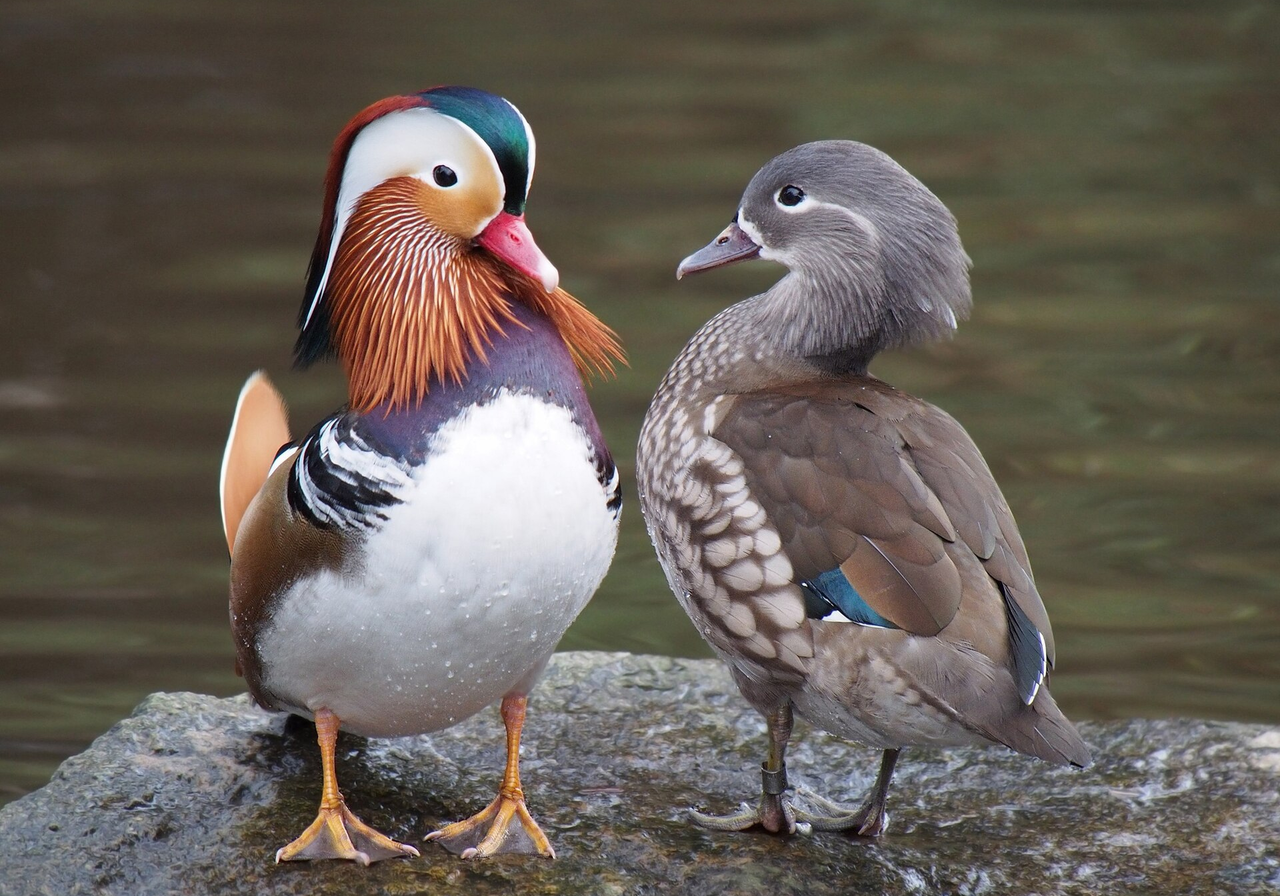
The mandarin duck (Aix galericulata) is a small, tree-nesting duck from East Asia, famous for the male's orange 'sails', whiskery orange cheeks and purple breast. Females are grey-brown with a white eye-ring. It is native to the Russian Far East, Korea, Japan and eastern China, and introduced birds now breed wild in Britain and elsewhere in Europe. It is listed as Least Concern.
Top questions about the Mandarin Duck
Mandarin Duck facts at a glance
- Weight 570 g
| Scientific name | Aix galericulata |
|---|---|
| Diet | Seeds, acorns, water plants, insects and snails |
| Habitat | Wooded lakes, ponds and rivers |
| Weight | 428–693 g |
| Oldest ringed bird | 10 years 4 months (BTO) |
| Range | East Asia; introduced to western Europe |
| Conservation status | Least Concern (IUCN Red List, assessed 2018) |
| Kingdom | Animalia |
|---|---|
| Phylum | Chordata |
| Class | Aves |
| Order | Anseriformes |
| Family | Anatidae |
| Genus | Aix |
Where it lives
The mandarin duck (Aix galericulata) is native to Russian Far East, north-east China, Korea and Japan; winters in eastern China. Introduced birds breed in Britain and elsewhere in Europe. — recorded across Asia in this guide’s range summary.
For occurrence records, see GBIF species search and sources below.
What is a group of mandarin ducks called?
Group name (collective noun)
A group of Mandarin Ducks is called a raft. It is also known as a paddling.
Baby name
A baby Mandarin Duck is called a duckling.
Explore more animal collective nouns and baby animal names .
Identification
Breeding males are unmistakable: a red bill, a broad white stripe above the eye, orange 'whiskers', a purple breast with white and black stripes, and two upright orange wing feathers like sails. Females and non-breeding males are grey-brown with a white eye-ring and stripe.
Nesting in trees
Mandarins nest in holes in trees, sometimes high above the ground. Soon after hatching the ducklings jump from the nest hole to the ground or water below, unharmed, and follow the female to the water.
A symbol of fidelity
In Chinese and East Asian culture, pairs of mandarin ducks represent faithful marriage and appear in art and as wedding gifts. In reality males leave the female once incubation starts, and pairs often form anew each year.
Status
BirdLife International lists the mandarin duck as Least Concern (2018) but reports a decreasing trend, mainly through loss of forest in its native range. A feral population descended from escaped ornamental birds now breeds in England and Scotland.
Explore the Mandarin Duck
Close relatives
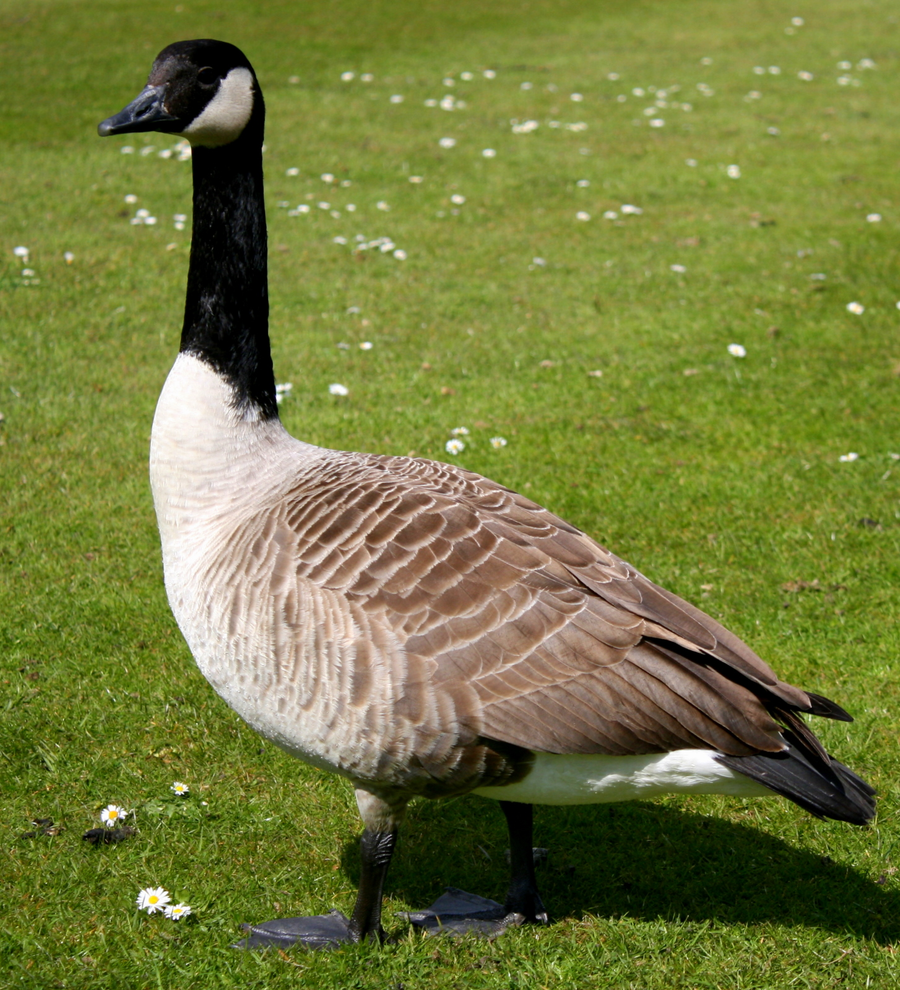
- Canada Goose Same family
- Muscovy Duck Same family
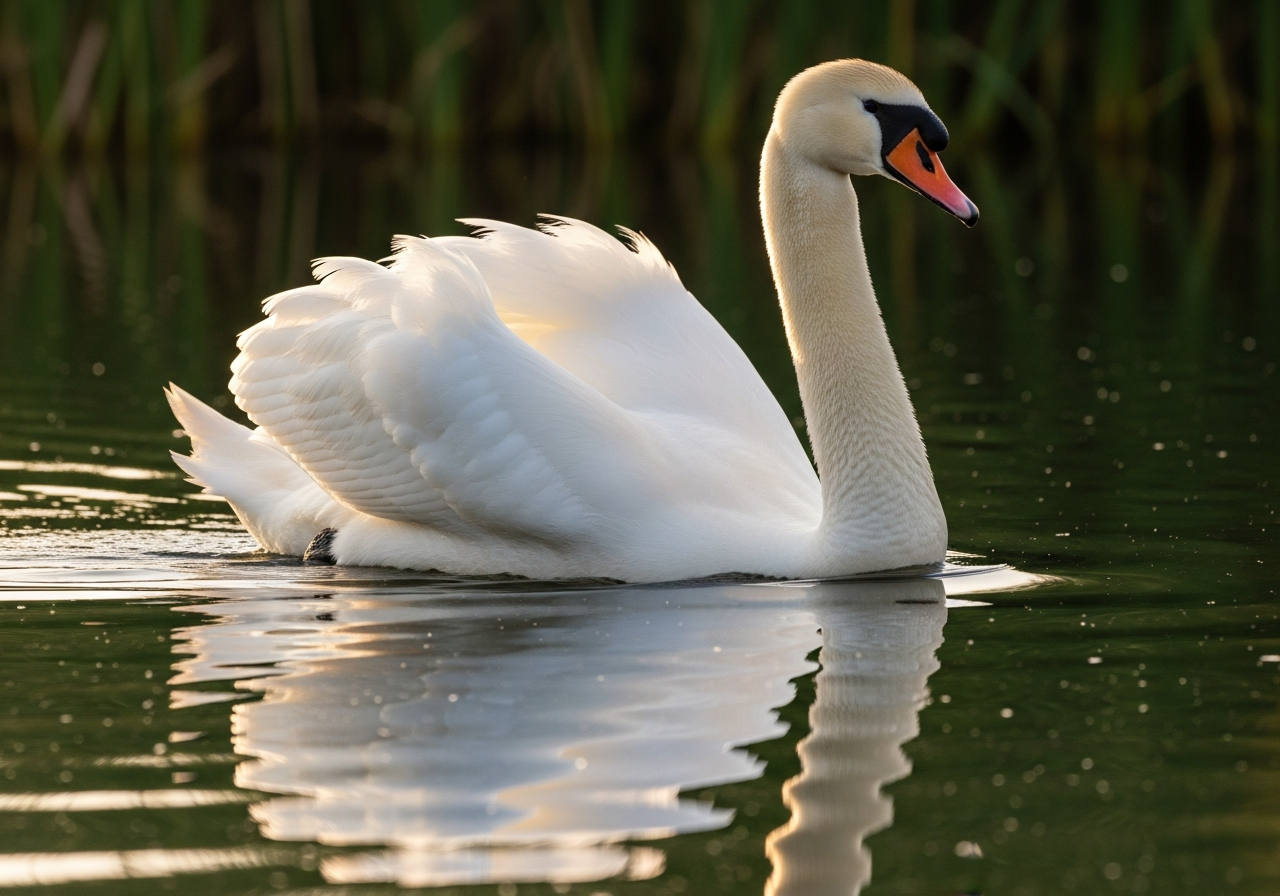
- Black Swan Same family
- Swan Same family
Range & geography
Did you know? Mandarin Duck facts
- Ducklings jump from tree-hole nests soon after hatching.
- The male's orange 'sails' are modified wing feathers.
Conservation status of the Mandarin Duck
The mandarin duck (Aix galericulata) is listed as Least Concern on the IUCN Red List. Least Concern (LC) is the IUCN's lowest-risk category, assigned to widespread, abundant species that have been evaluated and found not to be threatened. It does not mean a species faces no pressures — only that it is not currently at risk of extinction.
Mandarin Duck (Aix galericulata) was most recently assessed for the IUCN Red List in 2018. Look up on the IUCN Red List .
Frequently asked questions about the Mandarin Duck
Where do mandarin ducks come from?
From East Asia: the Russian Far East, Korea, Japan and eastern China. Introduced birds also live wild in Britain and parts of Europe.
Do mandarin ducks mate for life?
They are a traditional symbol of lifelong love, but in reality pairs often change from year to year.
Do mandarin ducks nest in trees?
Yes. They nest in tree holes, and the ducklings jump down to the ground after hatching.
How long do mandarin ducks live?
The oldest ringed mandarin in the BTO's records lived 10 years and 4 months.
What is a group of mandarin ducks called?
A group of Mandarin Ducks is called a raft. It is also known as a paddling.
What is a baby mandarin duck called?
A baby Mandarin Duck is called a duckling.
Sources & references
This guide is compiled and reviewed against established zoological and conservation references. Key sources for the Mandarin Duck:
-
IUCN Red List of Threatened Species
Conservation status (Least Concern) reflects the IUCN Red List category for Aix galericulata, most recently assessed in 2018.
-
iNaturalist — observations & photos
Search citizen-science observations and community IDs for Aix galericulata. Useful for range checks and recent sightings — not a substitute for formal Red List status.
-
GBIF — occurrence data
Global Biodiversity Information Facility species search for Aix galericulata. Explore published occurrence records used in range research.
-
eBird — bird observations
Cornell Lab eBird target search for Mandarin Duck. Check recent checklists and seasonal abundance where birders report this species.
- BirdLife International (2026). Species factsheet: Mandarin Duck Aix galericulata. BirdLife DataZone. Checked 1 November 2026.
IUCN Red List category Least Concern (assessed 2018), population estimate and trend.
- Animal Diversity Web: Aix galericulata. University of Michigan Museum of Zoology.
Size, lifespan and behaviour.
- BTO BirdFacts: Mandarin Duck. British Trust for Ornithology.
Typical lifespan, oldest ringed bird and UK body weight.
- Tobias, J. A. et al. (2022). AVONET: morphological, ecological and geographical data for all birds. Ecology Letters 25: 581–597. doi:10.1111/ele.13898
Average body mass.
- Gill, F., Donsker, D. & Rasmussen, P. (Eds). IOC World Bird List v15.2.
English and scientific name, classification and range.
-
Global Animal Guide editorial standards
How we research, source, review, and update every guide for accuracy.