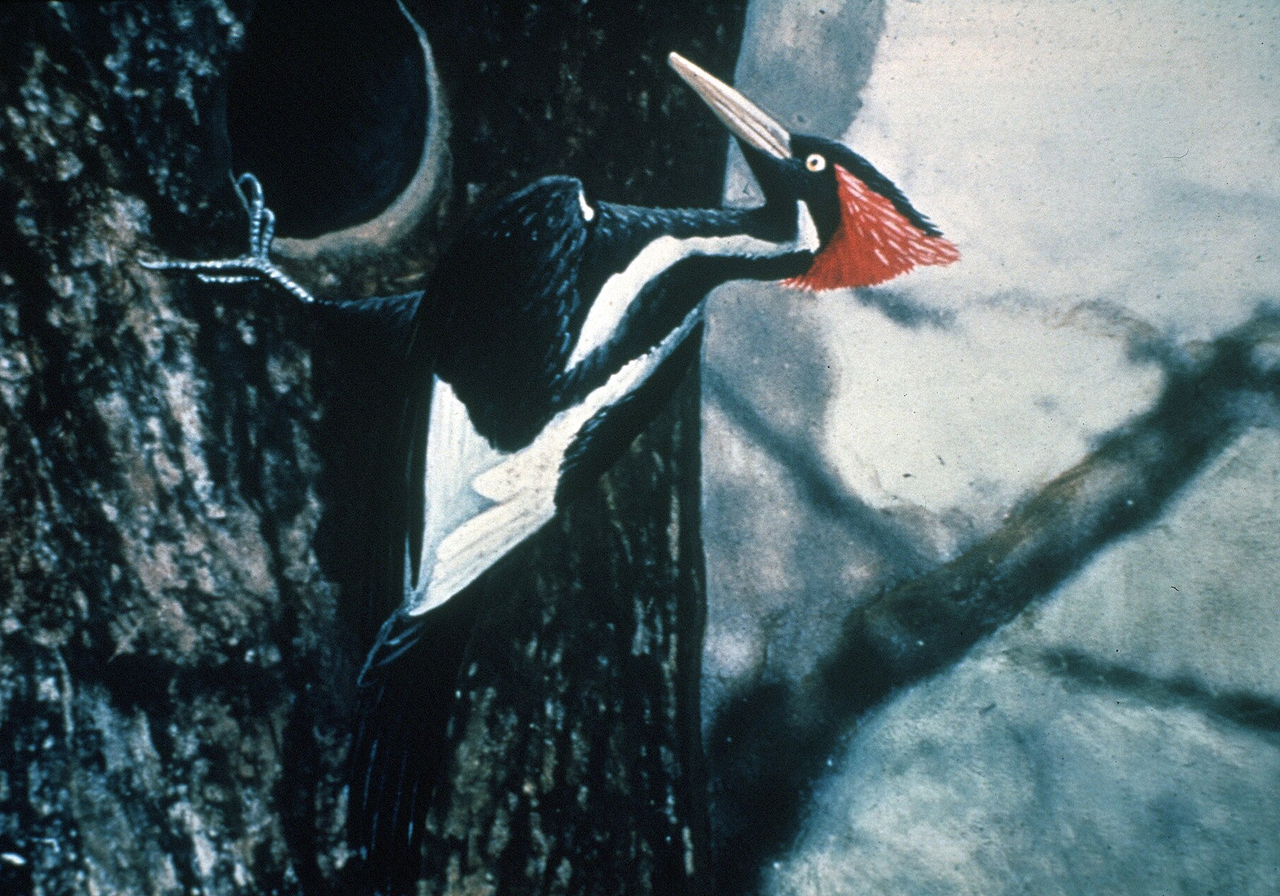
Photo: Original photo by Arthur A. Allen, 1935 [1], watercolored by Jerry A. Payne, USDA-ARS · CC BY 3.0 us · source · credits
The ivory-billed woodpecker (Campephilus principalis) is a bird of the woodpecker family, Picidae, in the order Piciformes.
Quick answer
The ivory-billed woodpecker (Campephilus principalis) was the largest woodpecker in the United States, a black-and-white bird with an ivory-coloured bill once found in old swamp forests of the south-eastern USA and Cuba. Logging and collecting drove it to the edge of extinction. BirdLife International lists it as Critically Endangered: claims of sightings since 2004 remain highly controversial, and if any survive, they number fewer than 50.
Top questions about the Ivory-billed Woodpecker
Ivory-billed Woodpecker facts at a glance
- Weight 510 g
- Length 53 cm
| Scientific name | Campephilus principalis |
|---|---|
| Diet | Large wood-boring beetle larvae; also fruit and nuts |
| Former habitat | Large old-growth bottomland swamp forest and Cuban pine forest |
| Length | 48–53 cm |
| Weight | 450–570 g |
| Last confirmed records | USA: 1940s; Cuba: 1987 |
| Conservation status | Critically Endangered (IUCN Red List, assessed 2020) |
| Kingdom | Animalia |
|---|---|
| Phylum | Chordata |
| Class | Aves |
| Order | Piciformes |
| Family | Picidae |
| Genus | Campephilus |
Where it lives
The ivory-billed woodpecker (Campephilus principalis) is native to Formerly old-growth swamp forests of the south-eastern United States and forests of Cuba; possibly extinct. — recorded across North America in this guide’s range summary.
For occurrence records, see GBIF species search and sources below.
How big is a ivory-billed woodpecker?
An adult ivory-billed woodpecker measures 53 cm long — about 31% of the height of an average adult person (1.73 m) — and weighs around 510 g, about 1% of an average adult’s body weight (70 kg).
Length vs an average adult’s height (to scale)
What is a group of ivory-billed woodpeckers called?
Group name (collective noun)
A group of Ivory-billed Woodpeckers is called a descent.
Baby name
A baby Ivory-billed Woodpecker is called a chick.
Explore more animal collective nouns and baby animal names .
Identification
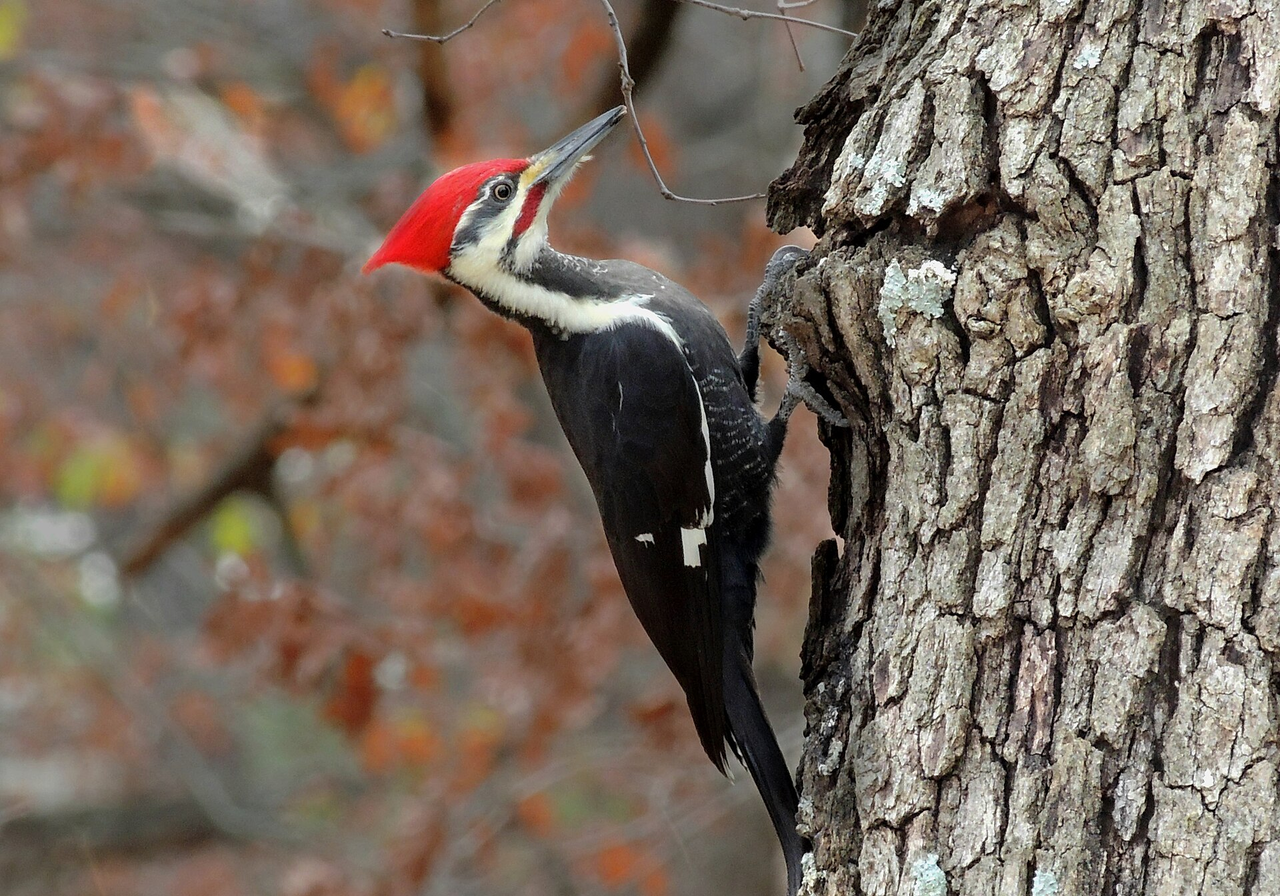
Ivory-bills were glossy black with a large white patch on the trailing edge of the wing, white stripes running down the neck and a pale, ivory-coloured bill. Males had a red crest, females a black one. The similar pileated woodpecker is smaller, with a dark bill and mostly black wings when perched.
A swamp-forest specialist
The species needed huge tracts of old forest with many dying trees, where it stripped bark to reach large beetle larvae. Pairs ranged over very large areas, so the clearance of bottomland forest in the late 1800s and early 1900s removed most of its habitat.
The 1935 photographs
In 1935 a team from Cornell University led by Arthur A. Allen filmed and photographed nesting ivory-bills in Louisiana's Singer Tract. These remain among the only clear images of the living bird. The forest was logged in the 1940s.
Possibly extinct
BirdLife International lists the species as Critically Endangered (2020). It notes that claims of birds persisting in the USA since 2004 are highly controversial, that there have been no confirmed Cuban records since 1987 despite many searches, and that any remaining population would be tiny, with 1 to 49 mature birds.
Explore the Ivory-billed Woodpecker
Close relatives
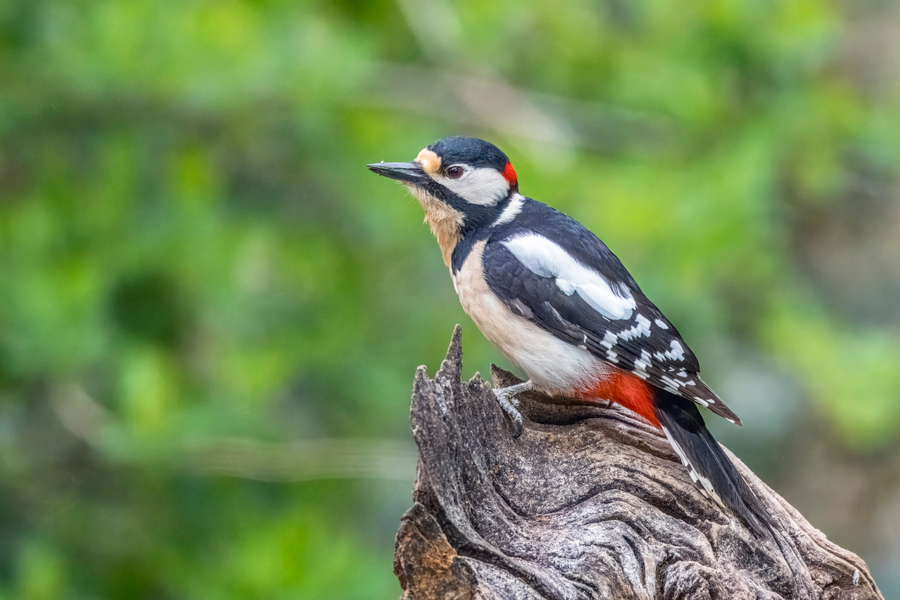
- Great Spotted Woodpecker Same family
- Pileated Woodpecker Same family
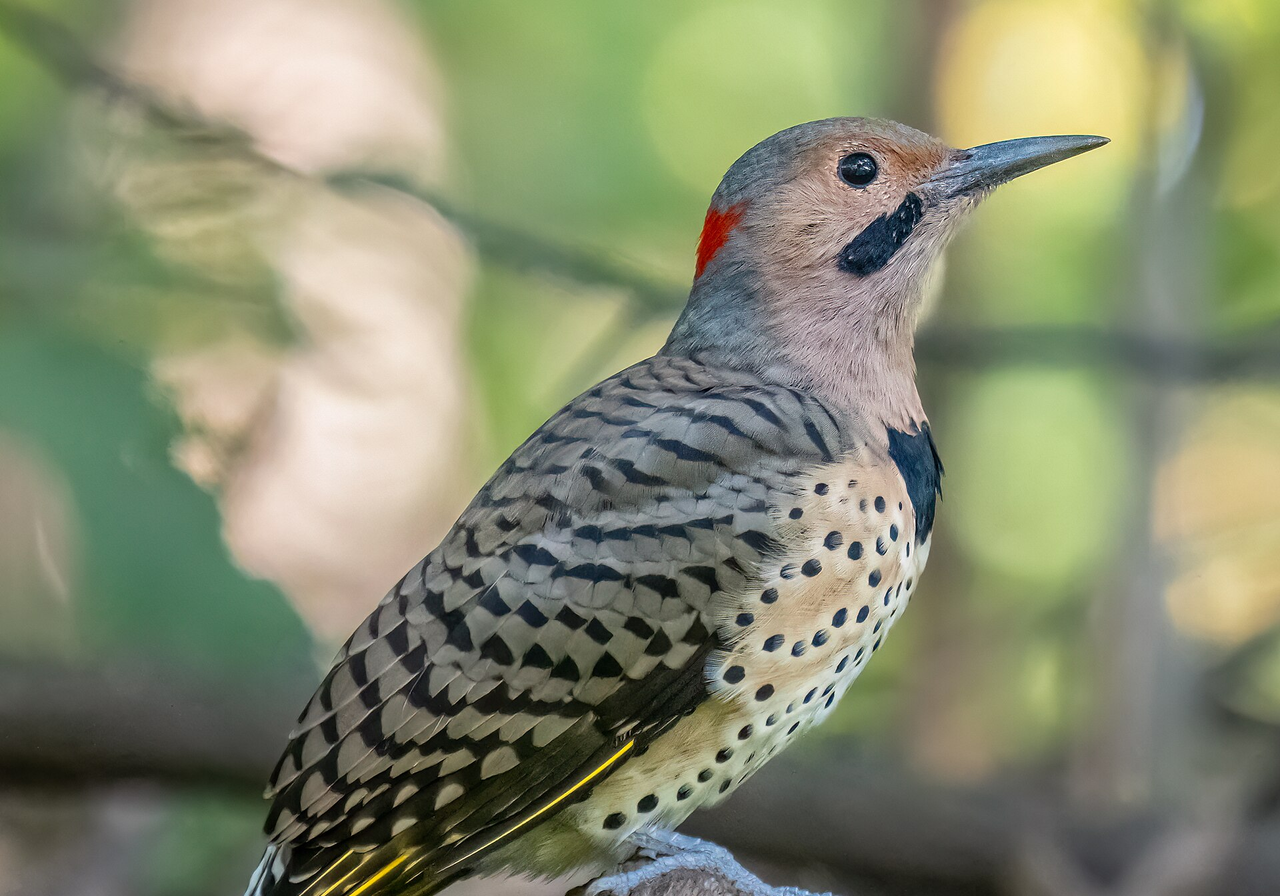
- Northern Flicker Same family
- Toco Toucan Same order
Collections
Range & geography
Did you know? Ivory-billed Woodpecker facts
- The best-known photographs of living ivory-bills were taken in Louisiana in 1935.
- Pairs needed very large areas of old forest to find enough food.
Conservation status of the Ivory-billed Woodpecker
The ivory-billed woodpecker (Campephilus principalis) is listed as Critically Endangered on the IUCN Red List. Critically Endangered (CR) is the highest-risk category the IUCN Red List assigns to a wild species before Extinct in the Wild. It means a species faces an extremely high probability of extinction — usually because its population has collapsed, its range has shrunk drastically, or very few mature individuals remain. Species at this level typically depend on active conservation to survive.
Main threats to the ivory-billed woodpecker
- Historic logging of old-growth forest
- Collecting and hunting
Ivory-billed Woodpecker (Campephilus principalis) was most recently assessed for the IUCN Red List in 2020. Look up on the IUCN Red List .
Frequently asked questions about the Ivory-billed Woodpecker
Is the ivory-billed woodpecker extinct?
It may be. BirdLife International still lists it as Critically Endangered, but there is no undisputed evidence of a living bird since the 1940s in the USA or 1987 in Cuba.
Why is it called the Lord God bird?
The nickname is said to come from people's reaction on seeing such a large, striking woodpecker.
How can you tell an ivory-billed from a pileated woodpecker?
Ivory-bills were larger, with a pale bill and white trailing edges to the wings that showed as a white patch on the back when perched. Pileated woodpeckers have dark bills and look mostly black when perched.
Where did ivory-billed woodpeckers live?
In old-growth swamp forests of the south-eastern United States and in forests of Cuba.
What is a group of ivory-billed woodpeckers called?
A group of Ivory-billed Woodpeckers is called a descent.
What is a baby ivory-billed woodpecker called?
A baby Ivory-billed Woodpecker is called a chick.
Sources & references
This guide is compiled and reviewed against established zoological and conservation references. Key sources for the Ivory-billed Woodpecker:
-
IUCN Red List of Threatened Species
Conservation status (Critically Endangered) reflects the IUCN Red List category for Campephilus principalis, most recently assessed in 2020.
-
iNaturalist — observations & photos
Search citizen-science observations and community IDs for Campephilus principalis. Useful for range checks and recent sightings — not a substitute for formal Red List status.
-
GBIF — occurrence data
Global Biodiversity Information Facility species search for Campephilus principalis. Explore published occurrence records used in range research.
-
eBird — bird observations
Cornell Lab eBird target search for Ivory-billed Woodpecker. Check recent checklists and seasonal abundance where birders report this species.
- BirdLife International (2026). Species factsheet: Ivory-billed Woodpecker Campephilus principalis. BirdLife DataZone. Checked 1 November 2026.
IUCN Red List category Critically Endangered (assessed 2020), population estimate and trend.
- Animal Diversity Web: Campephilus principalis. University of Michigan Museum of Zoology.
Size, lifespan and behaviour.
- Tobias, J. A. et al. (2022). AVONET: morphological, ecological and geographical data for all birds. Ecology Letters 25: 581–597. doi:10.1111/ele.13898
Average body mass.
- Gill, F., Donsker, D. & Rasmussen, P. (Eds). IOC World Bird List v15.2.
English and scientific name, classification and range.
-
Global Animal Guide editorial standards
How we research, source, review, and update every guide for accuracy.