The northern flicker (Colaptes auratus) is a bird of the woodpecker family, Picidae, in the order Piciformes.
Quick answer
The northern flicker (Colaptes auratus) is a large woodpecker of North and Central America that does much of its feeding on the ground, where it digs for ants with its long tongue. It is brown with black bars and spots, a black chest crescent and a white rump. Eastern birds flash yellow under the wings and tail; western birds flash red. It is listed as Least Concern, though numbers are falling.
Top questions about the Northern Flicker
Northern Flicker facts at a glance
- Weight 130 g
- Length 32 cm
| Scientific name | Colaptes auratus |
|---|---|
| Diet | Mainly ants and beetle larvae; berries and seeds in winter |
| Habitat | Open woodland, forest edges, parks and gardens |
| Length | 30–35 cm (12–14 in) |
| Weight | Average about 130 g |
| Oldest known | 9 years 2 months (yellow-shafted form) |
| Conservation status | Least Concern (IUCN Red List, assessed 2025) |
| Kingdom | Animalia |
|---|---|
| Phylum | Chordata |
| Class | Aves |
| Order | Piciformes |
| Family | Picidae |
| Genus | Colaptes |
Where it lives
The northern flicker (Colaptes auratus) is native to Most of North America from Alaska and Canada south through Mexico to Nicaragua, plus Cuba and the Cayman Islands. — recorded across North America in this guide’s range summary.
For occurrence records, see GBIF species search and sources below.
How big is a northern flicker?
An adult northern flicker measures 32 cm long — about 18% of the height of an average adult person (1.73 m) — and weighs around 130 g, a small fraction of an average adult’s body weight (70 kg).
Length vs an average adult’s height (to scale)
What is a group of northern flickers called?
Group name (collective noun)
A group of Northern Flickers is called a descent.
Baby name
A baby Northern Flicker is called a chick.
Explore more animal collective nouns and baby animal names .
An ant specialist
Flickers spend a lot of time on the ground, probing soil and anthills with a slightly curved bill and a long, sticky tongue. Ants are their main food, along with beetle larvae. In autumn and winter they turn to berries, fruit and seeds, which helps northern birds survive the cold.
Yellow-shafted and red-shafted
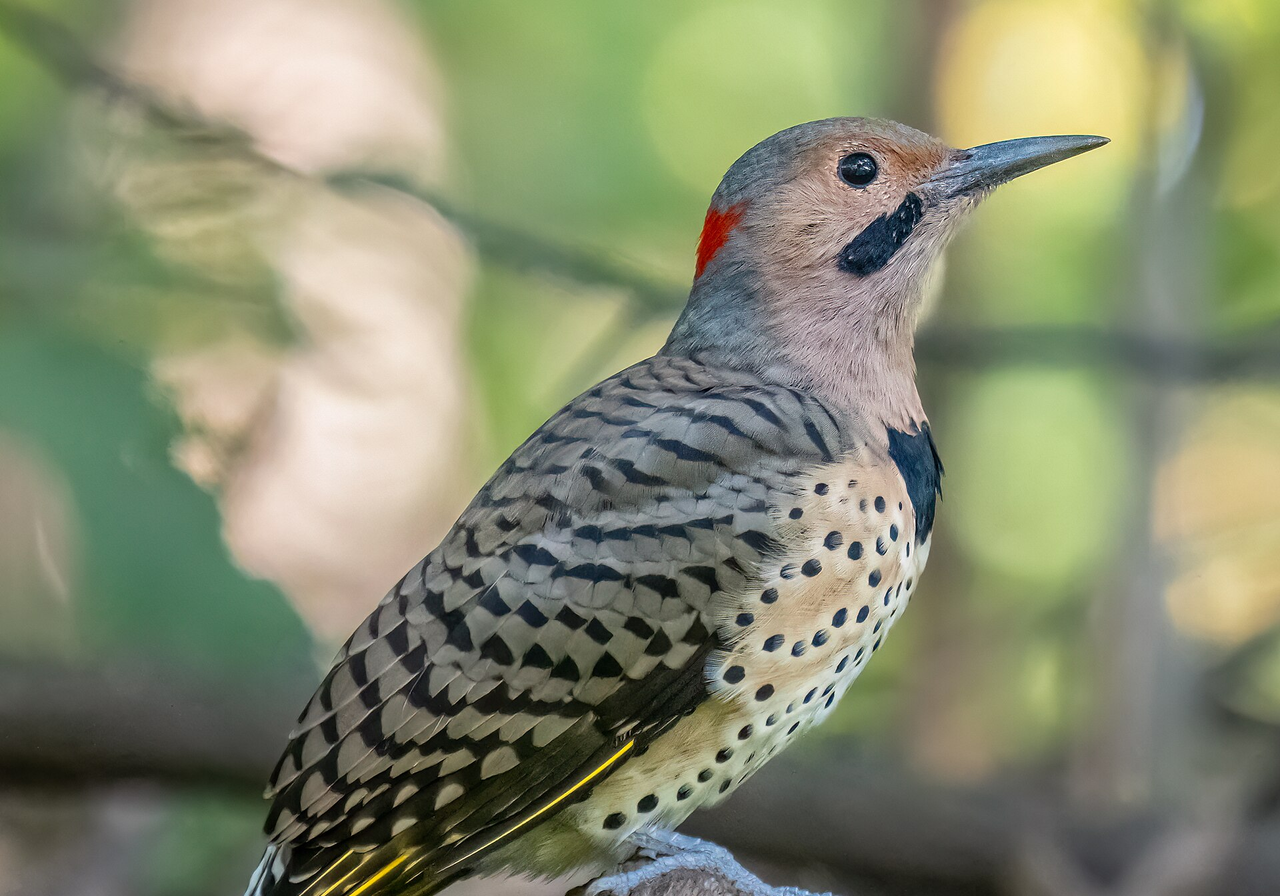
There are two main forms. Yellow-shafted flickers in the east have yellow undersides to the wings and tail, a grey crown and a red patch on the nape. Red-shafted flickers in the west have salmon-red flight feathers and a grey face. The two interbreed where they meet on the Great Plains. BirdLife International treats them as separate species; the IOC World Bird List keeps them as one.
Identification
Look for a brown, black-barred back, a black crescent on the chest, black-spotted underparts and a bright white rump that shows as the bird flies off in deep, bounding swoops. Males have a 'moustache' stripe (black in the east, red in the west) that females lack.
Status
Both forms are listed as Least Concern by BirdLife International (2025), which estimates about 12 million mature yellow-shafted flickers. Both are judged to be decreasing. Competition with introduced common starlings for nest holes is one problem identified in some areas.
Explore the Northern Flicker
Close relatives
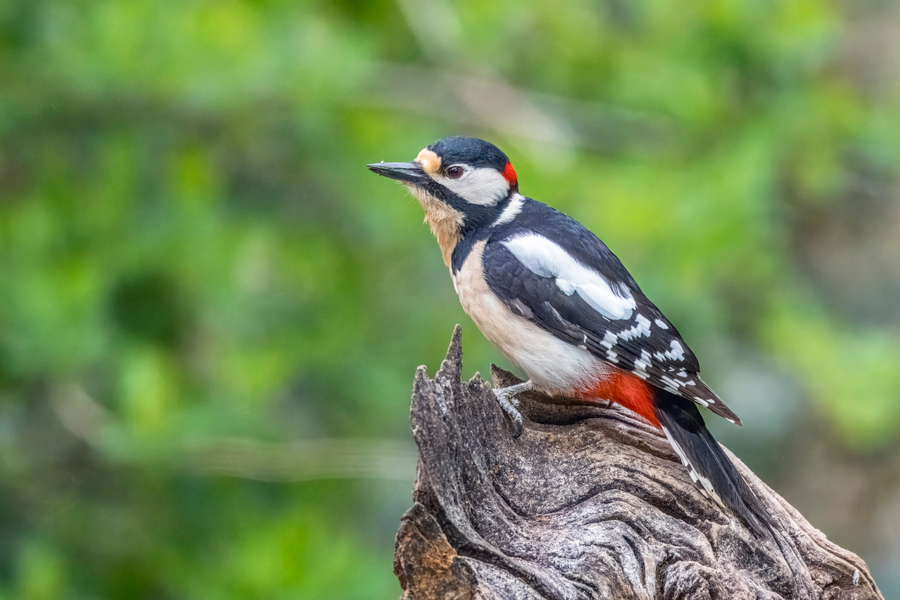
- Great Spotted Woodpecker Same family
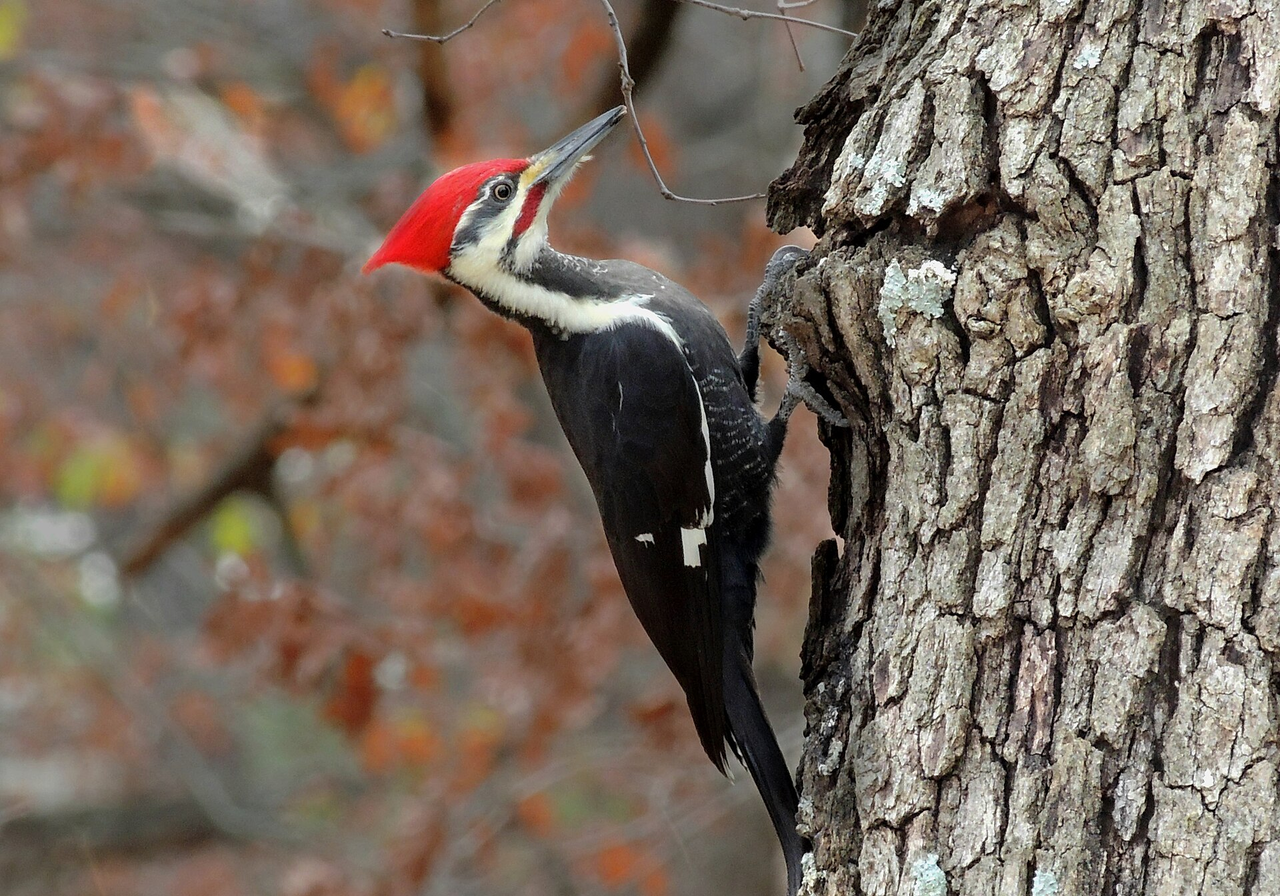
- Pileated Woodpecker Same family
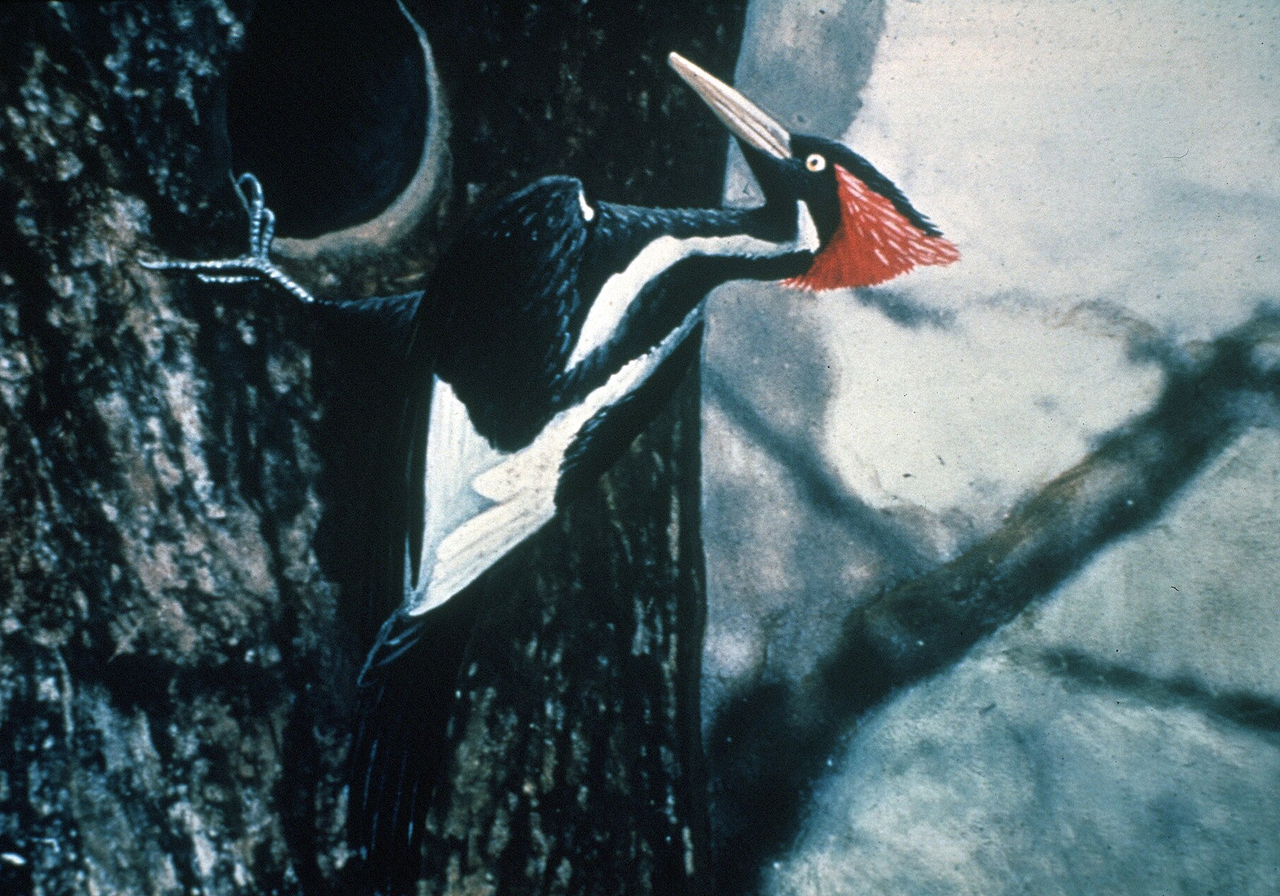
- Ivory-billed Woodpecker Same family
- Toco Toucan Same order
Range & geography
Did you know? Northern Flicker facts
- Unlike most North American woodpeckers, northern flickers in the far north migrate south for the winter.
- Both sexes have a black chest crescent; only males have the moustache stripe.
Conservation status of the Northern Flicker
The northern flicker (Colaptes auratus) is listed as Least Concern on the IUCN Red List. Least Concern (LC) is the IUCN's lowest-risk category, assigned to widespread, abundant species that have been evaluated and found not to be threatened. It does not mean a species faces no pressures — only that it is not currently at risk of extinction.
Northern Flicker (Colaptes auratus) was most recently assessed for the IUCN Red List in 2025. Look up on the IUCN Red List .
Frequently asked questions about the Northern Flicker
Why do northern flickers feed on the ground?
Their main food is ants, which they dig out of the soil and anthills using a long, sticky tongue.
Is a northern flicker a woodpecker?
Yes. It belongs to the woodpecker family, Picidae, and still drums and excavates nest holes in trees like other woodpeckers.
What is the difference between yellow-shafted and red-shafted flickers?
Yellow-shafted flickers (eastern) have yellow under the wings and tail; red-shafted flickers (western) have red. Where they meet they interbreed, and some authorities treat them as separate species.
How long do northern flickers live?
Most live only a few years. The oldest recorded wild bird was 9 years 2 months old.
What is a group of northern flickers called?
A group of Northern Flickers is called a descent.
What is a baby northern flicker called?
A baby Northern Flicker is called a chick.
Sources & references
This guide is compiled and reviewed against established zoological and conservation references. Key sources for the Northern Flicker:
-
IUCN Red List of Threatened Species
Conservation status (Least Concern) reflects the IUCN Red List category for Colaptes auratus, most recently assessed in 2025.
-
iNaturalist — observations & photos
Search citizen-science observations and community IDs for Colaptes auratus. Useful for range checks and recent sightings — not a substitute for formal Red List status.
-
GBIF — occurrence data
Global Biodiversity Information Facility species search for Colaptes auratus. Explore published occurrence records used in range research.
-
eBird — bird observations
Cornell Lab eBird target search for Northern Flicker. Check recent checklists and seasonal abundance where birders report this species.
- BirdLife International (2026). Species factsheet: Yellow-shafted Flicker Colaptes auratus. BirdLife DataZone. Checked 1 November 2026.
IUCN Red List category Least Concern (assessed 2025), population estimate and trend.
- BirdLife International (2026). Species factsheet: Red-shafted Flicker Colaptes cafer. BirdLife DataZone. Checked 1 November 2026.
IUCN Red List category Least Concern (assessed 2025), population estimate and trend.
- Animal Diversity Web: Colaptes auratus. University of Michigan Museum of Zoology.
Size, lifespan and diet.
- Tobias, J. A. et al. (2022). AVONET: morphological, ecological and geographical data for all birds. Ecology Letters 25: 581–597. doi:10.1111/ele.13898
Average body mass.
- Gill, F., Donsker, D. & Rasmussen, P. (Eds). IOC World Bird List v15.2.
English and scientific name, classification and range.
-
Global Animal Guide editorial standards
How we research, source, review, and update every guide for accuracy.