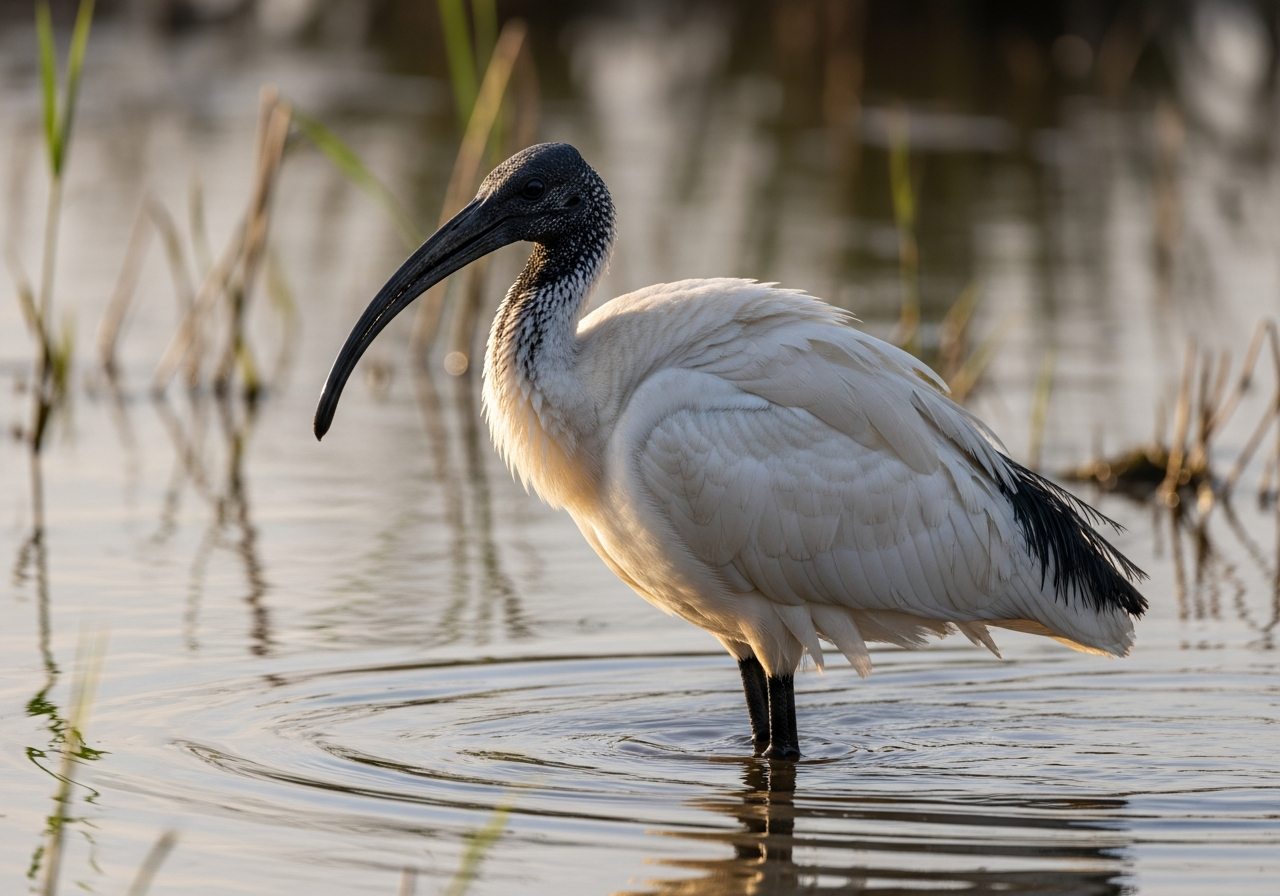
The ibis (Threskiornis aethiopicus) is a bird of the family Threskiornithidae, in the order Pelecaniformes.
Quick answer
An ibis is a long-legged wading bird with a distinctive long, down-curved bill used to probe mud and shallow water for food. The sacred ibis was revered in ancient Egypt. Ibises feed on insects, frogs, and small aquatic animals, nest in colonies, and often live around 20 years.
Top questions about the Ibis
Ibis facts at a glance
- Weight 1.5 kg
- Length 70 cm
- Top speed 40 km/h
- Lifespan 20 years
| Scientific name | Threskiornis aethiopicus |
|---|---|
| Diet | Carnivore (insects, frogs, small animals) |
| Habitat | Wetlands, marshes, rivers, and floodplains |
| Lifespan | Up to about 20 years |
| Weight | 1–1.5 kg (2.2–3.3 lb) |
| Top speed | A strong, steady flier |
| Conservation status | Least Concern (IUCN) |
| Kingdom | Animalia |
|---|---|
| Phylum | Chordata |
| Class | Aves |
| Order | Pelecaniformes |
| Family | Threskiornithidae |
Where it lives
The ibis (Threskiornis aethiopicus) is native to Wetlands, marshes, and floodplains across sub-Saharan Africa, with feral populations in parts of Europe. — recorded across Africa, Asia in this guide’s range summary.
For occurrence records, see GBIF species search and sources below.
How big is a ibis?
An adult ibis measures 70 cm long — about 40% of the height of an average adult person (1.73 m) — and weighs around 1.5 kg, about 2% of an average adult’s body weight (70 kg).
Length vs an average adult’s height (to scale)
What is a group of ibises called?
Group name (collective noun)
A group of Ibises is called a colony. It is also known as a wedge.
Baby name
A baby Ibis is called a chick.
Explore more animal collective nouns and baby animal names .
The probing bill
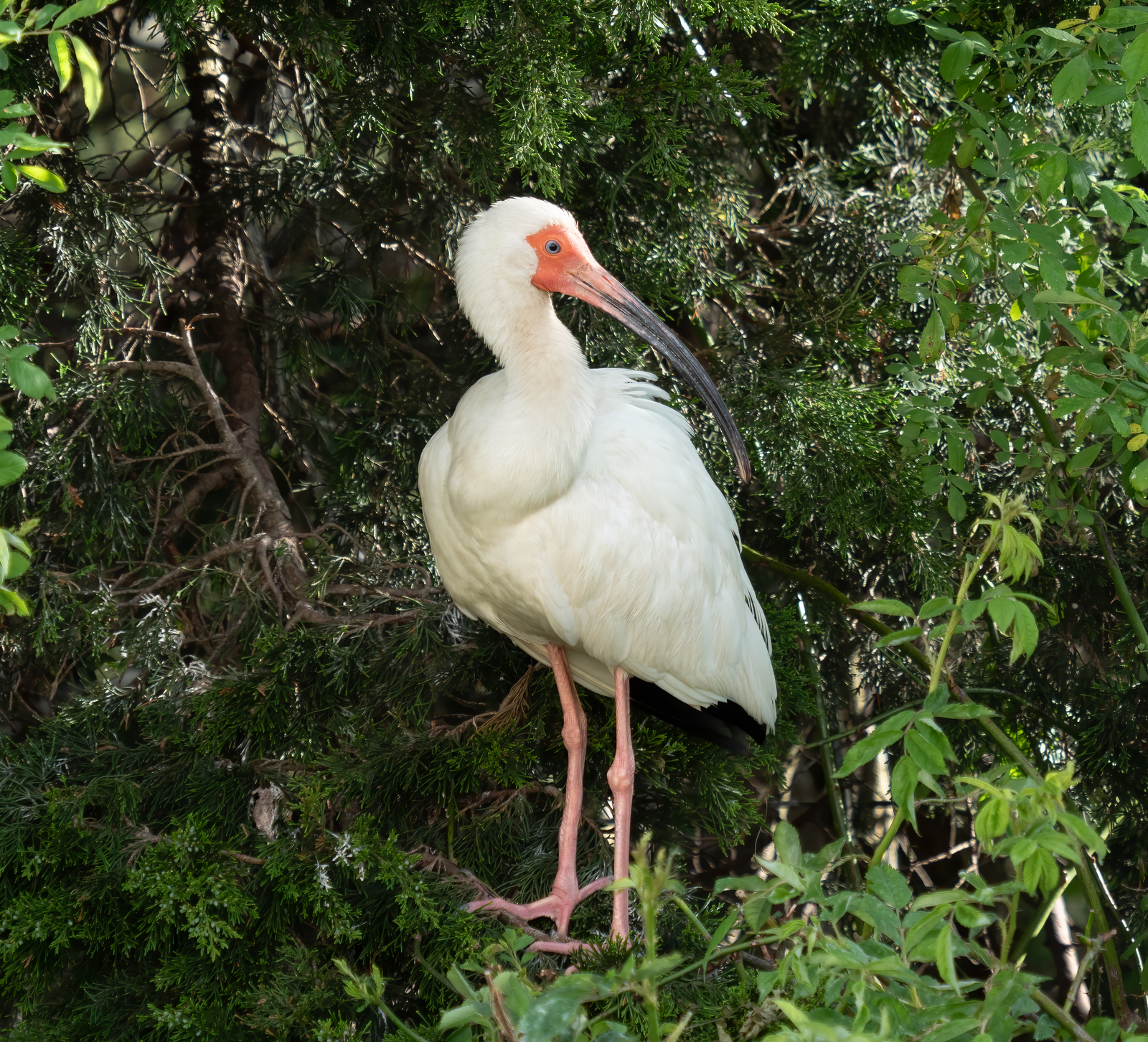
An ibis is built for wetlands. Its long, slender, down-curved bill works like forceps, probing soft mud, shallow water, and grass for insects, worms, frogs, and small fish that it locates largely by touch. This lets ibises feed in murky water where sight-hunting birds struggle.
Colonies and flight
Ibises are social birds that feed, roost, and nest in groups, often alongside herons, egrets, and storks. In flight they alternate flapping with gliding and often travel in long lines or V-formations between feeding and roosting sites.
Sacred history
The sacred ibis was closely linked to the ancient Egyptian god Thoth, and vast numbers were mummified as offerings. Although it no longer breeds along the Nile, it remains widespread across sub-Saharan Africa and has formed feral populations in parts of Europe.
Habitat and status
Ibises live around wetlands, floodplains, farmland, and even city parks, adapting well to landscapes shaped by people. Most species are common, and the sacred ibis is listed as Least Concern, though wetland drainage threatens some of their rarer relatives.
Dig deeper into the Ibis
- How Fast Is An Ibis?
Ibis top speed is about A strong, steady flier. Sprint vs endurance and what limits pace.
- How Long Do Ibises Live?
Ibis lifespan is typically Up to about 20 years. What shortens or extends life, life stages, and status (Least Concern).
- What Do Ibises Eat?
What ibises eat: Carnivore (insects, frogs, small animals), foraging style, and seasonal shifts in Wetlands, marshes, rivers, and floodplains.
- Where Do Ibises Live?
Where ibises live: Wetlands, marshes, rivers, and floodplains, native range cues, and human overlap. Status Least Concern.
Explore the Ibis
Close relatives
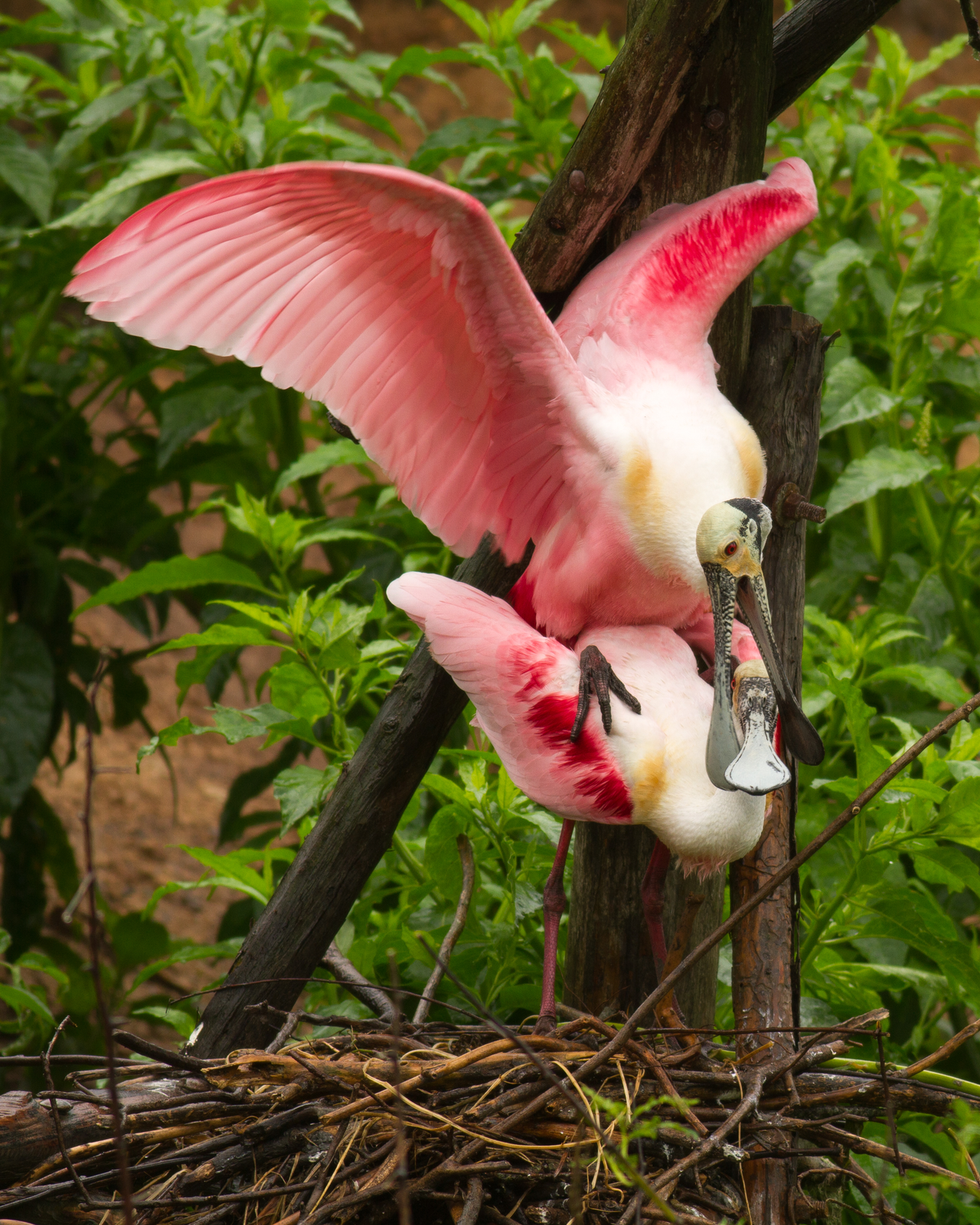
- Roseate Spoonbill Same family
- American White Ibis Same family
- Shoebill Same order
- Brown Pelican Same order
Range & geography
Did you know? Ibis facts
- An ibis is a long-legged wading bird with a distinctive long, down-curved bill used to probe mud and shallow water for food.
- Ibises eat insects, worms, frogs, small fish, and other small animals, using their long curved bills to probe mud and shallow water by touch.
- The sacred ibis was associated with Thoth, the ancient Egyptian god of wisdom and writing, and millions were mummified as religious offerings.
- Ibises live around wetlands, marshes, rivers, and floodplains. The sacred ibis is widespread across sub-Saharan Africa, with feral populations in Europe.
- The sacred ibis is listed as Least Concern and is common, although some other ibis species are threatened by the loss of wetlands.
- Conservation: Least Concern (IUCN).
Diet & feeding
Ibis feeds primarily as a carnivore (insects, frogs, small animals). An ibis is built for wetlands. Its long, slender, down-curved bill works like forceps, probing soft mud, shallow water, and grass for insects, worms, frogs, and small fish that it locates largely by touch. This lets ibises feed in murky water where si
Adaptations
- An ibis is built for wetlands. Its long, slender, down-curved bill works like forceps, probing soft mud, shallow water, and grass for insects, worms, frogs, and small fish that it locates largely by touch. This lets ibises feed in murky water where sight-hunting birds struggle.
- Ibises are social birds that feed, roost, and nest in groups, often alongside herons, egrets, and storks. In flight they alternate flapping with gliding and often travel in long lines or V-formations between feeding and roosting sites.
Behaviour & ecology
- An ibis is built for wetlands. Its long, slender, down-curved bill works like forceps, probing soft mud, shallow water, and grass for insects, worms, frogs, and small fish that it locates largely by touch. This lets ibises feed in murky water where sight-hunting birds struggle.
- Ibises are social birds that feed, roost, and nest in groups, often alongside herons, egrets, and storks. In flight they alternate flapping with gliding and often travel in long lines or V-formations between feeding and roosting sites.
- The sacred ibis was closely linked to the ancient Egyptian god Thoth, and vast numbers were mummified as offerings. Although it no longer breeds along the Nile, it remains widespread across sub-Saharan Africa and has formed feral populations in parts of Europe.
Communication
- Ibis uses calls and visual displays to communicate territory, alarm, and breeding status.
- Vocal repertoires vary by species and are often learned or refined during development.
Habitat & range
Wetlands, marshes, rivers, and floodplains
Ecological role
Ibis acts as a predator that helps regulate prey populations and maintain balance in wetlands, marshes, rivers, and floodplains.
Conservation status of the Ibis
The ibis (Threskiornis aethiopicus) is listed as Least Concern on the IUCN Red List. Least Concern (LC) is the IUCN's lowest-risk category, assigned to widespread, abundant species that have been evaluated and found not to be threatened. It does not mean a species faces no pressures — only that it is not currently at risk of extinction.
The ibis (Threskiornis aethiopicus) is assessed on the IUCN Red List. Look up on the IUCN Red List .
Frequently asked questions about the Ibis
What does an ibis eat?
Ibises eat insects, worms, frogs, small fish, and other small animals, using their long curved bills to probe mud and shallow water by touch.
Why was the ibis sacred in Egypt?
The sacred ibis was associated with Thoth, the ancient Egyptian god of wisdom and writing, and millions were mummified as religious offerings.
Where do ibises live?
Ibises live around wetlands, marshes, rivers, and floodplains. The sacred ibis is widespread across sub-Saharan Africa, with feral populations in Europe.
Are ibises endangered?
The sacred ibis is listed as Least Concern and is common, although some other ibis species are threatened by the loss of wetlands.
How long do ibises live?
Ibises can live around 20 years, with survival depending on the health of the wetlands they rely on for food.
What is a group of ibises called?
A group of Ibises is called a colony. It is also known as a wedge.
What is a baby ibis called?
A baby Ibis is called a chick.
Sources & references
This guide is compiled and reviewed against established zoological and conservation references. Key sources for the Ibis:
-
IUCN Red List of Threatened Species
Conservation status (Least Concern) reflects the IUCN Red List category for Threskiornis aethiopicus.
-
iNaturalist — observations & photos
Search citizen-science observations and community IDs for Threskiornis aethiopicus. Useful for range checks and recent sightings — not a substitute for formal Red List status.
-
GBIF — occurrence data
Global Biodiversity Information Facility species search for Threskiornis aethiopicus. Explore published occurrence records used in range research.
-
eBird — bird observations
Cornell Lab eBird target search for Ibis. Check recent checklists and seasonal abundance where birders report this species.
- IUCN Red List — Threskiornis aethiopicus.
Conservation status (Least Concern) and population trends.
- Animal Diversity Web — Threskiornis aethiopicus. University of Michigan Museum of Zoology.
Life history, morphology, and range.
- Wikipedia — Ibis.
General taxonomy and overview (cross-check primary sources).
-
Global Animal Guide editorial standards
How we research, source, review, and update every guide for accuracy.