Image sourcing: see credits & licences
The American white ibis (Eudocimus albus) is a bird of the family Threskiornithidae, in the order Pelecaniformes.
Quick answer
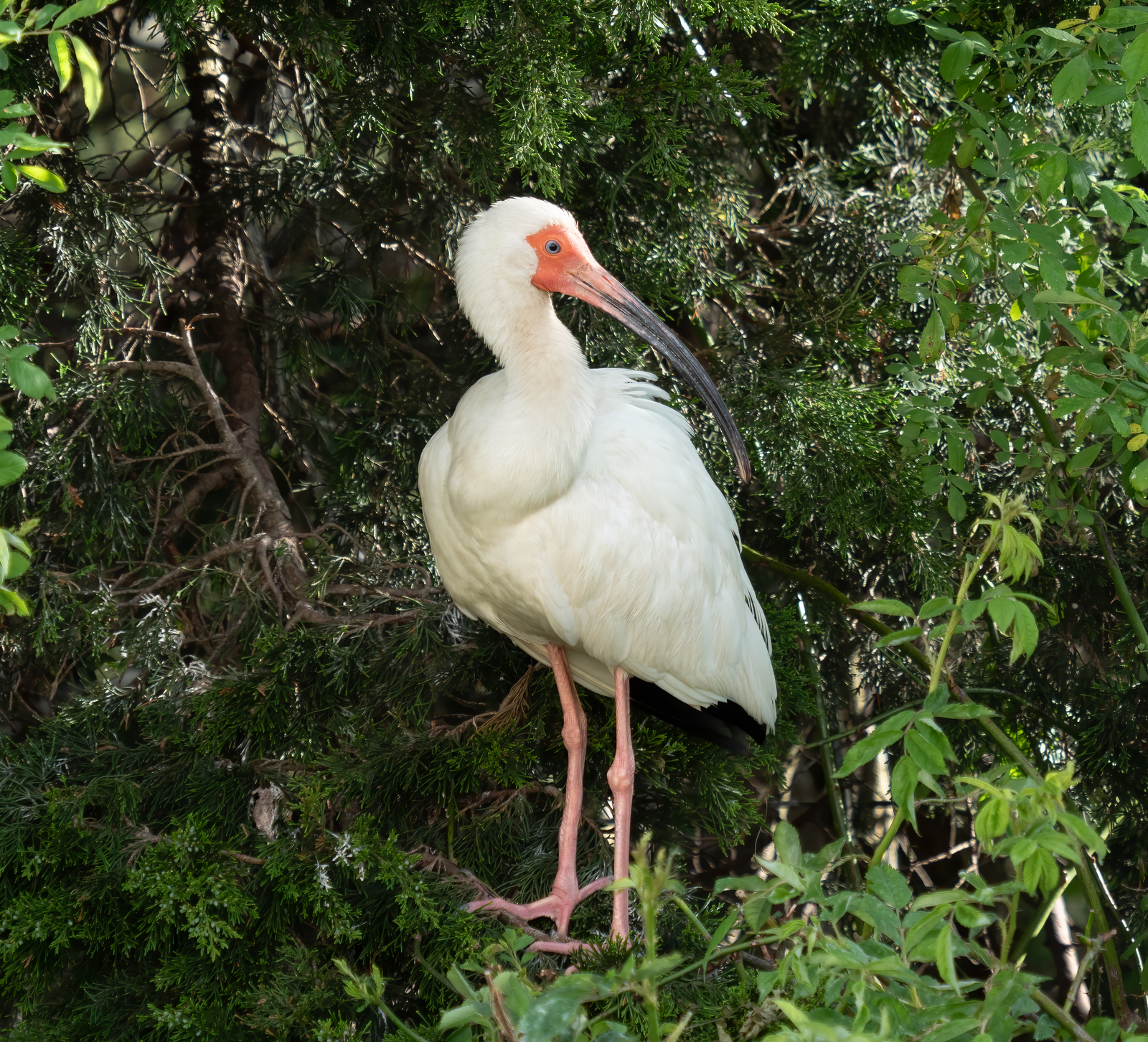
The American white ibis (Eudocimus albus) is a white wading bird with a curved red bill and black wingtips, common in southeastern US wetlands and lawns. Adults weigh about 1 kg, probe mud for crayfish and insects, and are listed Least Concern.
Top questions about the American White Ibis
American White Ibis facts at a glance
- Weight 1 kg
- Length 65 cm
- Top speed 40 km/h
- Lifespan 16 years
| Scientific name | Eudocimus albus |
|---|---|
| Diet | Carnivore |
| Habitat | Wetlands, mangroves, and lawns |
| Lifespan | 16–20 years |
| Weight | 0.7–1.2 kg |
| Top speed | up to 40 km/h |
| Conservation status | Least Concern (IUCN) |
| Kingdom | Animalia |
|---|---|
| Phylum | Chordata |
| Class | Aves |
| Order | Pelecaniformes |
| Family | Threskiornithidae |
| Genus | Eudocimus |
Where it lives
The american white ibis (Eudocimus albus) is native to Coastal Southeast US through the Caribbean to northern South America. — recorded across North America, South America in this guide’s range summary.
For occurrence records, see GBIF species search and sources below.
How big is a american white ibis?
An adult american white ibis measures 65 cm long — about 38% of the height of an average adult person (1.73 m) — and weighs around 1.0 kg, about 1% of an average adult’s body weight (70 kg).
Length vs an average adult’s height (to scale)
What is a group of american white ibises called?
Group name (collective noun)
A group of American White Ibises is called a congregation.
Baby name
A baby American White Ibis is called a chick.
Explore more animal collective nouns and baby animal names .
Curved bill mud-prober
The long, decurved bill probes soft mud and shallow water for crayfish, crabs, insects, and small fish. Juveniles are brown and mottled, gradually whitening over their first year.
Crayfish specialist
In Florida and the Gulf Coast, crayfish often dominate the diet. Flocks follow receding floodwaters and irrigated fields, exploiting prey concentrated in shrinking pools.
Southeast wetlands to lawns
Coastal marshes, mangroves, and estuaries from the Carolinas through Florida and the Caribbean to northern South America. Suburban lawns and golf courses attract birds where wetlands remain nearby.
Adaptable but wetland-dependent
Least Concern and abundant in many coastal counties. Habitat loss and polluted runoff still matter locally, but the species thrives where shallow feeding grounds persist.
Explore the American White Ibis
Close relatives
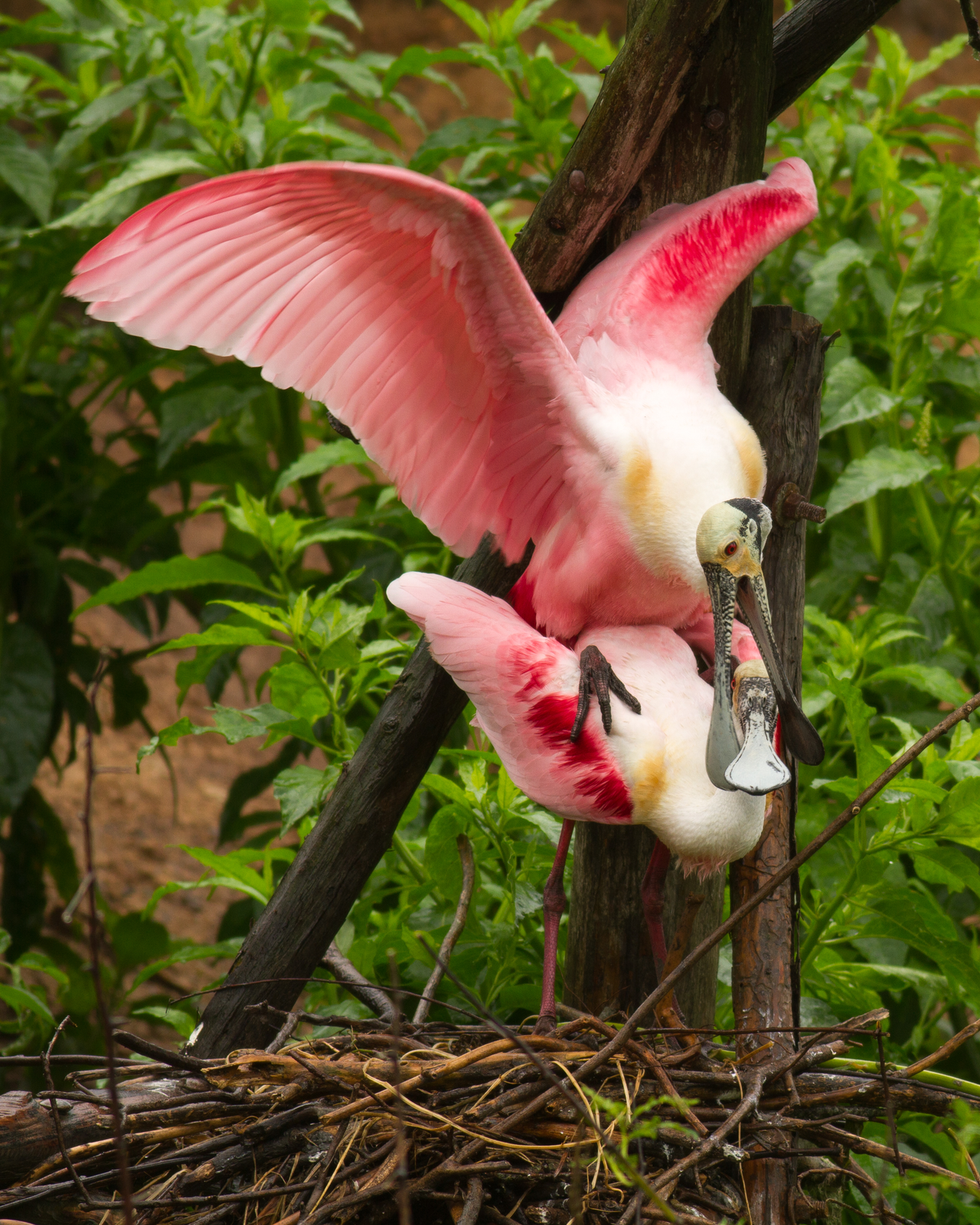
- Roseate Spoonbill Same family
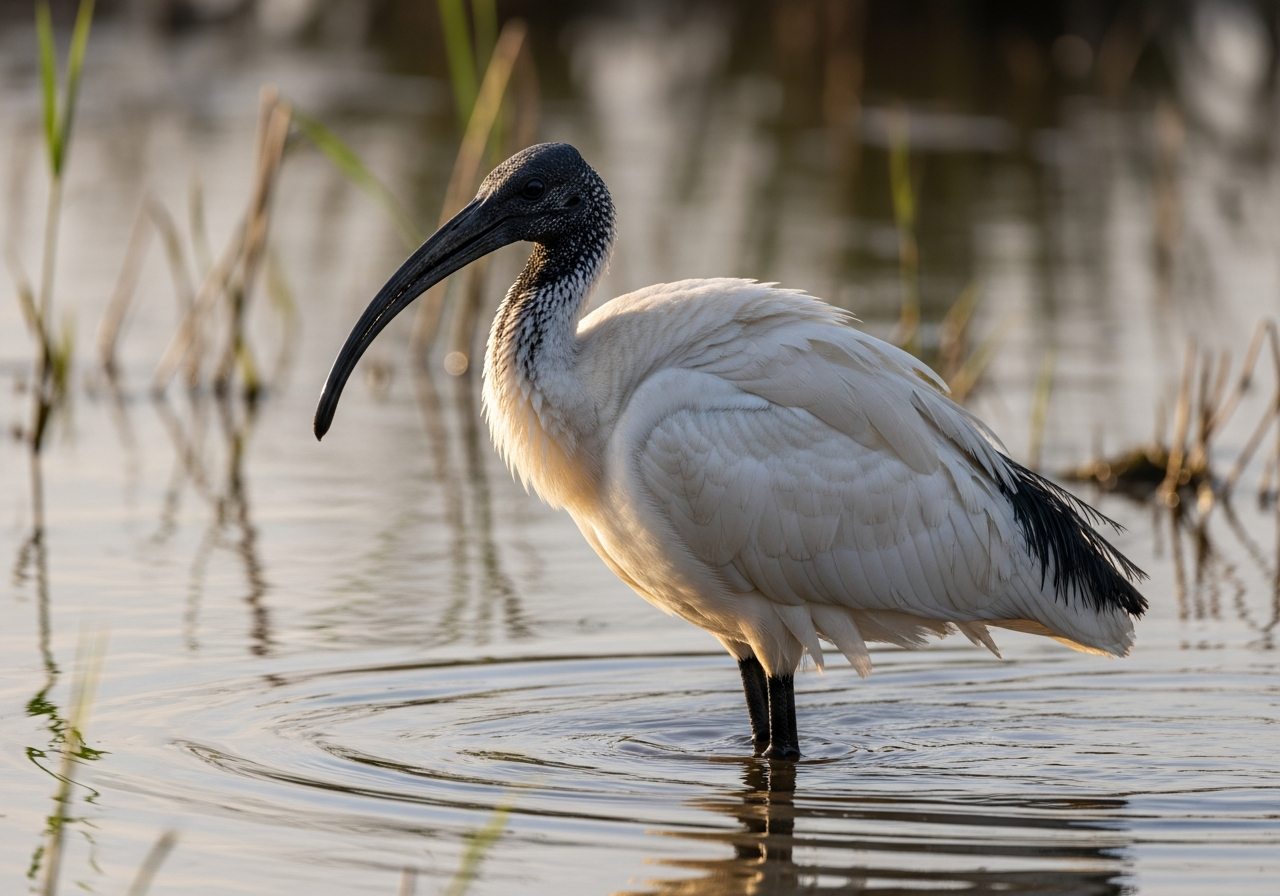
- Ibis Same family
- Shoebill Same order
- Brown Pelican Same order
Range & geography
Conservation status of the American White Ibis
The american white ibis (Eudocimus albus) is listed as Least Concern on the IUCN Red List. Least Concern (LC) is the IUCN's lowest-risk category, assigned to widespread, abundant species that have been evaluated and found not to be threatened. It does not mean a species faces no pressures — only that it is not currently at risk of extinction.
The american white ibis (Eudocimus albus) is assessed on the IUCN Red List. Look up on the IUCN Red List .
Frequently asked questions about the American White Ibis
Why do white ibises visit lawns?
Irrigated grass mimics shallow wetlands, concentrating earthworms, insects, and crayfish after rain.
How do you tell juvenile ibises from adults?
Juveniles are brown with streaked necks; adults are pure white with red faces and black wingtips.
What do American white ibises eat?
Mainly crayfish and other crustaceans, plus insects, small fish, and frogs in shallow water.
Are white ibises sacred in Florida culture?
They are a familiar coastal symbol and University of Miami mascot, reflecting their abundance in South Florida.
Do ibises nest in colonies?
Yes — they breed in tree colonies with herons and other waders, often on mangrove islands.
What is a group of american white ibises called?
A group of American White Ibises is called a congregation.
What is a baby american white ibis called?
A baby American White Ibis is called a chick.
Sources & references
This guide is compiled and reviewed against established zoological and conservation references. Key sources for the American White Ibis:
-
IUCN Red List of Threatened Species
Conservation status (Least Concern) reflects the IUCN Red List category for Eudocimus albus.
-
iNaturalist — observations & photos
Search citizen-science observations and community IDs for Eudocimus albus. Useful for range checks and recent sightings — not a substitute for formal Red List status.
-
GBIF — occurrence data
Global Biodiversity Information Facility species search for Eudocimus albus. Explore published occurrence records used in range research.
-
eBird — bird observations
Cornell Lab eBird target search for American White Ibis. Check recent checklists and seasonal abundance where birders report this species.
-
Global Animal Guide editorial standards
How we research, source, review, and update every guide for accuracy.