Image sourcing: see credits & licences
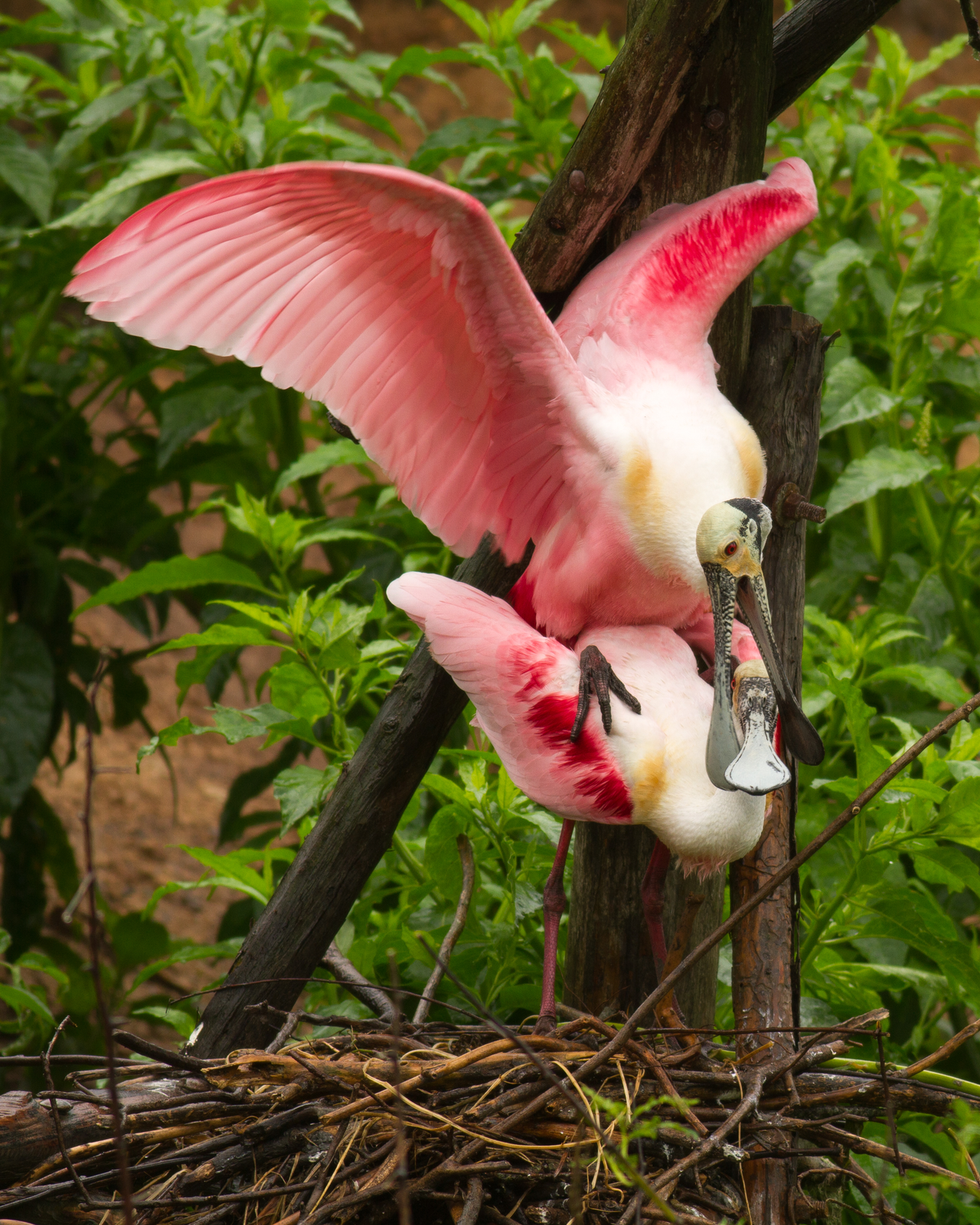
The roseate spoonbill (Platalea ajaja) is a bird of the family Threskiornithidae, in the order Pelecaniformes.
Quick answer
The roseate spoonbill (Platalea ajaja) is a vivid pink wading bird with a flat, spoon-shaped bill for sweeping shallow water. It feeds in Gulf Coast mangroves from the United States through the Caribbean to South America, weighs about 1.2 kg, and is listed Least Concern.
Top questions about the Roseate Spoonbill
Roseate Spoonbill facts at a glance
- Weight 1.2 kg
- Length 70 cm
- Top speed 35 km/h
- Lifespan 15 years
| Scientific name | Platalea ajaja |
|---|---|
| Diet | Carnivore (small fish and invertebrates) |
| Habitat | Mangroves and coastal lagoons |
| Lifespan | 15–20 years |
| Weight | 1.0–1.5 kg |
| Top speed | up to 35 km/h |
| Conservation status | Least Concern (IUCN) |
| Kingdom | Animalia |
|---|---|
| Phylum | Chordata |
| Class | Aves |
| Order | Pelecaniformes |
| Family | Threskiornithidae |
| Genus | Platalea |
Where it lives
The roseate spoonbill (Platalea ajaja) is native to Coastal wetlands from the US Gulf Coast through the Caribbean to South America. — recorded across North America, South America in this guide’s range summary.
For occurrence records, see GBIF species search and sources below.
How big is a roseate spoonbill?
An adult roseate spoonbill measures 70 cm long — about 40% of the height of an average adult person (1.73 m) — and weighs around 1.2 kg, about 2% of an average adult’s body weight (70 kg).
Length vs an average adult’s height (to scale)
What is a group of roseate spoonbills called?
Group name (collective noun)
A group of Roseate Spoonbills is called a sedge.
Baby name
A baby Roseate Spoonbill is called a chick.
Explore more animal collective nouns and baby animal names .
Spoon-shaped sweeping bill
The bill sweeps side to side through murky water, snapping shut when touch receptors detect shrimp, small fish, and aquatic insects. Pink colour comes partly from carotenoid pigments in crustacean prey.
Mangrove and lagoon feeder
Birds forage in tidal flats, lagoons, and mangrove shallows, often in small flocks. They roost in trees and nest in mangrove islands or swamp islands in noisy colonies with ibises and herons.
Gulf Coast to South America
Coastal wetlands from Texas and Florida through the Caribbean and northern South America hold core populations. Salinity, water depth, and prey pulses shape where flocks concentrate.
Habitat protection helps
Least Concern after recovering from nineteenth-century plume hunting. Mangrove clearing and altered freshwater flows still threaten local colonies, but protected coastal refuges support stable numbers.
Explore the Roseate Spoonbill
Close relatives
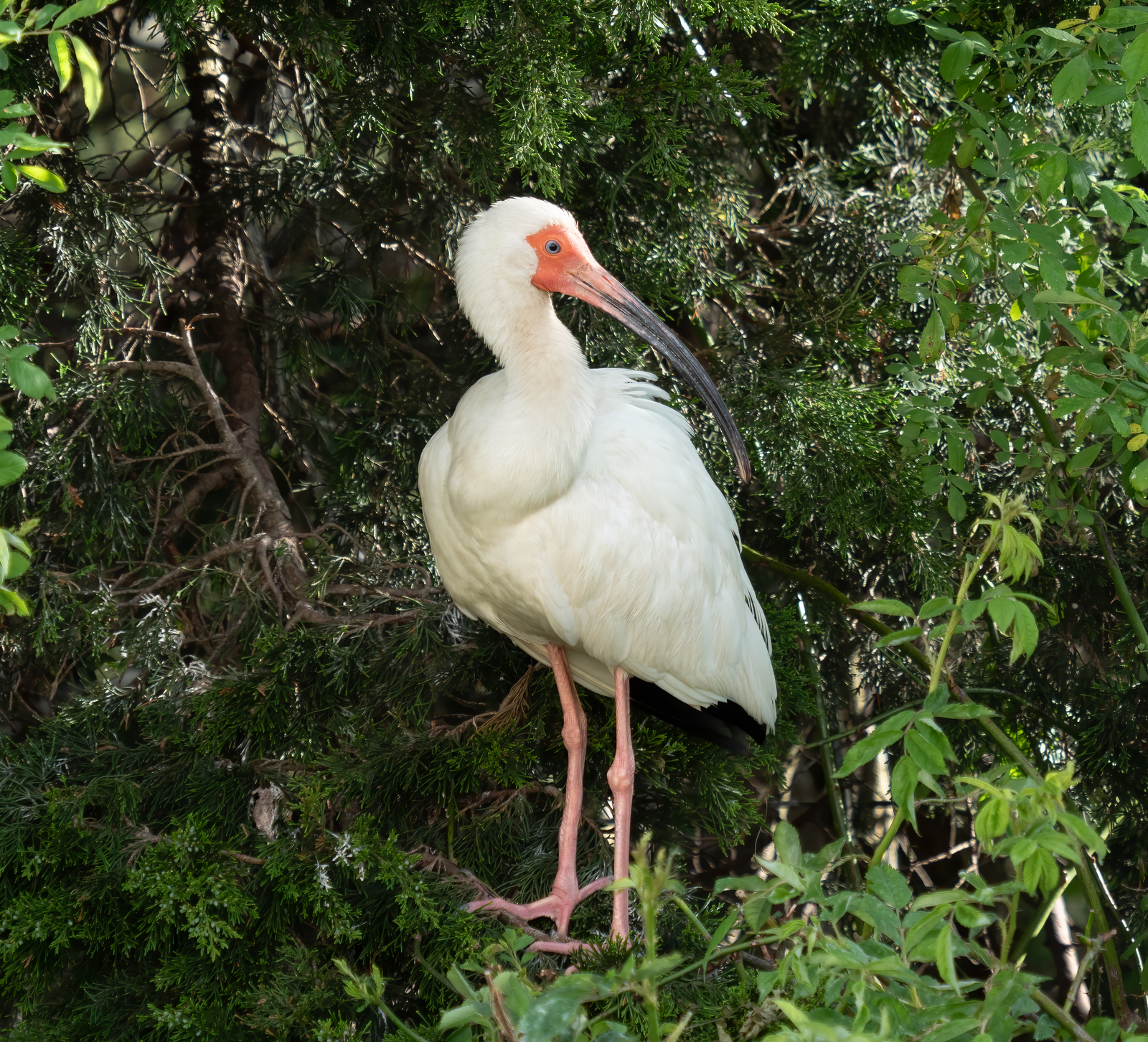
- American White Ibis Same family
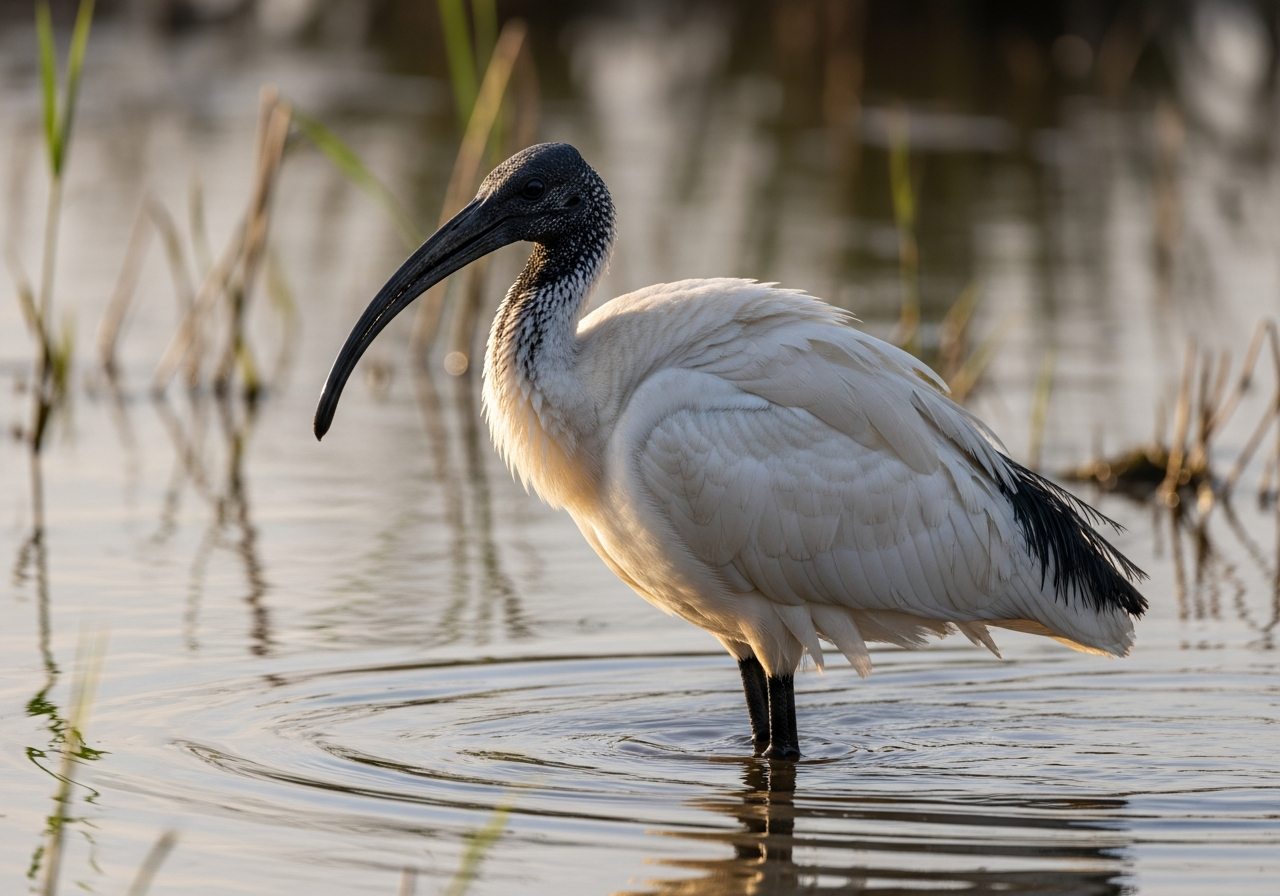
- Ibis Same family
- Shoebill Same order
- Brown Pelican Same order
Range & geography
Conservation status of the Roseate Spoonbill
The roseate spoonbill (Platalea ajaja) is listed as Least Concern on the IUCN Red List. Least Concern (LC) is the IUCN's lowest-risk category, assigned to widespread, abundant species that have been evaluated and found not to be threatened. It does not mean a species faces no pressures — only that it is not currently at risk of extinction.
The roseate spoonbill (Platalea ajaja) is assessed on the IUCN Red List. Look up on the IUCN Red List .
Frequently asked questions about the Roseate Spoonbill
Why are roseate spoonbills pink?
Diet carotenoids from shrimp and other crustaceans tint their feathers, similar to flamingos but usually paler rose-pink.
How does the spoon bill work?
The flattened tip sweeps through water; sensitive receptors trigger a snap when prey contacts the bill.
Where can you see roseate spoonbills in the US?
Coastal Texas, Louisiana, and Florida — especially Everglades and Gulf Coast refuges.
Do spoonbills nest in trees?
Yes — they build stick nests in mangroves or swamp trees, often in mixed colonies with other wading birds.
Are roseate spoonbills related to flamingos?
No — spoonbills are ibis relatives in Threskiornithidae; pink colour is a dietary coincidence, not close kinship.
What is a group of roseate spoonbills called?
A group of Roseate Spoonbills is called a sedge.
What is a baby roseate spoonbill called?
A baby Roseate Spoonbill is called a chick.
Sources & references
This guide is compiled and reviewed against established zoological and conservation references. Key sources for the Roseate Spoonbill:
-
IUCN Red List of Threatened Species
Conservation status (Least Concern) reflects the IUCN Red List category for Platalea ajaja.
-
iNaturalist — observations & photos
Search citizen-science observations and community IDs for Platalea ajaja. Useful for range checks and recent sightings — not a substitute for formal Red List status.
-
GBIF — occurrence data
Global Biodiversity Information Facility species search for Platalea ajaja. Explore published occurrence records used in range research.
-
eBird — bird observations
Cornell Lab eBird target search for Roseate Spoonbill. Check recent checklists and seasonal abundance where birders report this species.
-
Global Animal Guide editorial standards
How we research, source, review, and update every guide for accuracy.