Image sourcing: see credits & licences
The common starling (Sturnus vulgaris) is a bird of the family Sturnidae, in the order Passeriformes.
Quick answer
The common starling (Sturnus vulgaris) is a glossy black passerine native to Eurasia and introduced worldwide, famous for winter murmurations. Adults weigh about 80 g, eat insects and fruit, and are listed Least Concern.
Top questions about the Common Starling
Common Starling facts at a glance
- Weight 80 g
- Length 22 cm
- Top speed 70 km/h
- Lifespan 10 years
| Scientific name | Sturnus vulgaris |
|---|---|
| Diet | Omnivore |
| Habitat | Farms, towns, and grassland |
| Lifespan | 5–15 years |
| Weight | 0.07–0.09 kg |
| Top speed | up to 70 km/h |
| Conservation status | Least Concern (IUCN) |
| Kingdom | Animalia |
|---|---|
| Phylum | Chordata |
| Class | Aves |
| Order | Passeriformes |
| Family | Sturnidae |
| Genus | Sturnus |
Where it lives
The common starling (Sturnus vulgaris) is native to Native to Eurasia; introduced widely including North America and Australia. — recorded across Europe, Asia, Africa, North America, Oceania in this guide’s range summary.
For occurrence records, see GBIF species search and sources below.
How big is a common starling?
An adult common starling measures 22 cm long — about 13% of the height of an average adult person (1.73 m) — and weighs around 80 g, a small fraction of an average adult’s body weight (70 kg).
Length vs an average adult’s height (to scale)
What is a group of common starlings called?
Group name (collective noun)
A group of Common Starlings is called a murmuration.
Baby name
A baby Common Starling is called a chick.
Explore more animal collective nouns and baby animal names .
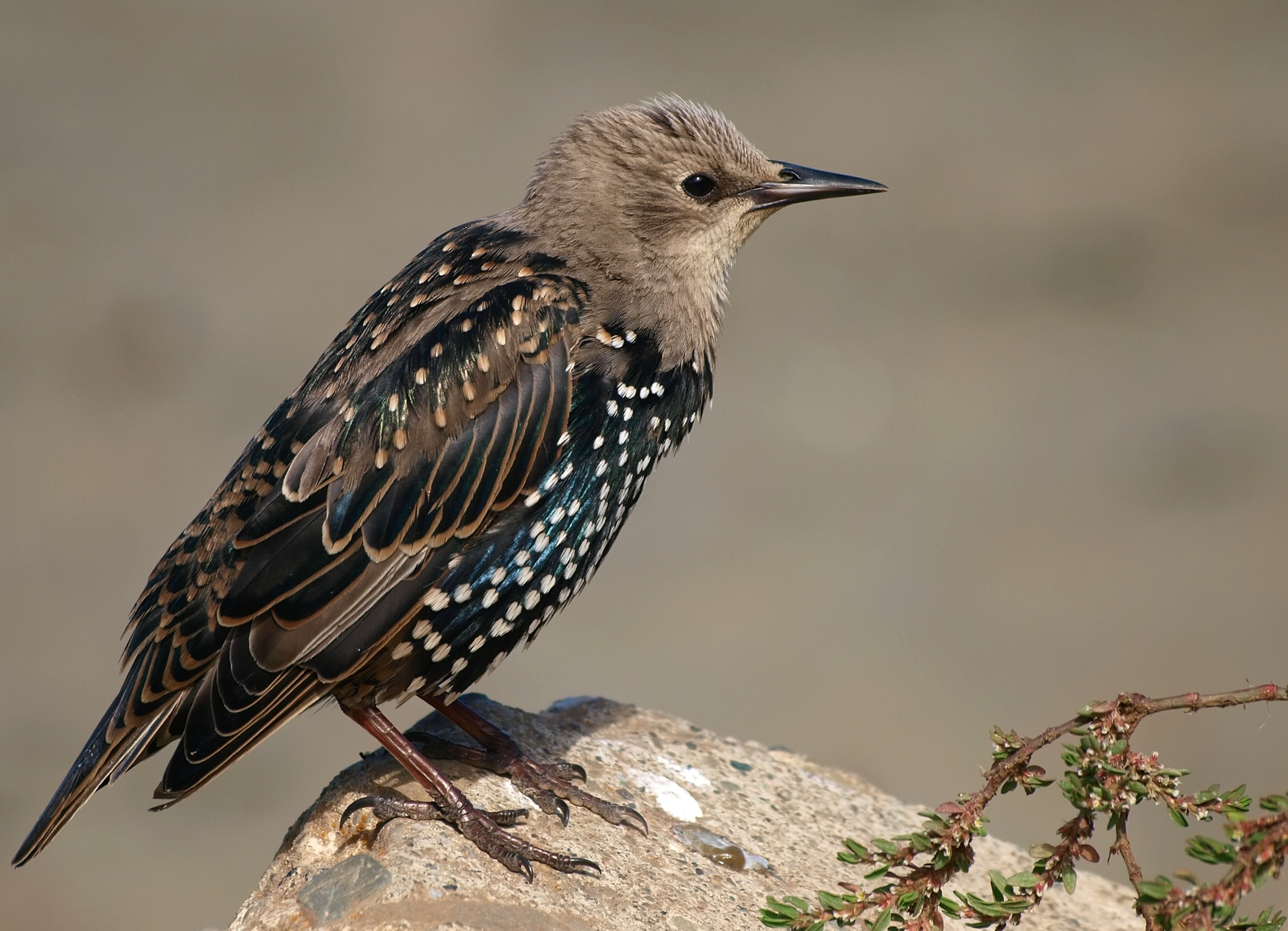
Iridescent speckled plumage
Breeding adults are glossy black with green-purple sheen; winter birds wear white spots. Bill colour shifts yellow to dark with season. Flight is fast and direct with short triangular wings.
Lawn grubs and orchard fruit
Starlings probe lawns for leatherjackets and take grain, berries, and orchard fruit. Parents feed chicks mainly insects during the breeding season.
Eurasian native, global invader
Native across Europe and western Asia; introduced to North America, Australia, New Zealand, and South Africa. Urban roosts of millions create spectacular evening murmurations in the UK.
Pest or performer
Least Concern and hugely abundant. Farmers blame crop damage and livestock feed loss; ecologists note competition with native cavity nesters where introduced.
Explore the Common Starling
Close relatives
- Canary Same order
- House Sparrow Same order
- Superb Lyrebird Same order
- Blue Tit Same order
Conservation status of the Common Starling
The common starling (Sturnus vulgaris) is listed as Least Concern on the IUCN Red List. Least Concern (LC) is the IUCN's lowest-risk category, assigned to widespread, abundant species that have been evaluated and found not to be threatened. It does not mean a species faces no pressures — only that it is not currently at risk of extinction.
The common starling (Sturnus vulgaris) is assessed on the IUCN Red List. Look up on the IUCN Red List .
Frequently asked questions about the Common Starling
What is a starling murmuration?
Thousands of birds swirl in coordinated flocks before roosting — a winter spectacle at dusk.
Are starlings native to North America?
No — about 100 birds released in New York in the 1890s founded today's millions.
Why do starlings have white spots in winter?
Pale feather tips wear off by spring, revealing glossy breeding plumage.
Can starlings mimic sounds?
Yes — they copy other birds, phones, and mechanical noises, especially in spring song.
Do starlings harm native birds?
Where introduced, they compete for nest cavities and food, though impacts vary by region.
What is a group of common starlings called?
A group of Common Starlings is called a murmuration.
What is a baby common starling called?
A baby Common Starling is called a chick.
Sources & references
This guide is compiled and reviewed against established zoological and conservation references. Key sources for the Common Starling:
-
IUCN Red List of Threatened Species
Conservation status (Least Concern) reflects the IUCN Red List category for Sturnus vulgaris.
-
iNaturalist — observations & photos
Search citizen-science observations and community IDs for Sturnus vulgaris. Useful for range checks and recent sightings — not a substitute for formal Red List status.
-
GBIF — occurrence data
Global Biodiversity Information Facility species search for Sturnus vulgaris. Explore published occurrence records used in range research.
-
eBird — bird observations
Cornell Lab eBird target search for Common Starling. Check recent checklists and seasonal abundance where birders report this species.
-
Global Animal Guide editorial standards
How we research, source, review, and update every guide for accuracy.