Image sourcing: see credits & licences
The whooping crane (Grus americana) is a bird of the family Gruidae, in the order Gruiformes.
Quick answer
The whooping crane (Grus americana) is North America's tallest bird and a flagship conservation success, breeding in Wood Buffalo National Park, Canada, and wintering on the Texas Gulf Coast. Adults stand near 1.5 m, eat crabs, fish, and plant matter in wetlands, and remain Endangered despite recovery from fewer than 20 wild birds.
Top questions about the Whooping Crane
Also available in Español (Grulla blanca americana)
Whooping Crane facts at a glance
- Weight 7 kg
- Length 1.5 m
- Top speed 70 km/h
- Lifespan 25 years
| Scientific name | Grus americana |
|---|---|
| Diet | Omnivore |
| Habitat | Wetlands, prairie marshes, and coastal flats |
| Lifespan | Around 25 years in the wild (varies by population and captivity). |
| Weight | About 7 kg typical adult mass (sex and region vary). |
| Top speed | Up to roughly 70 km/h when moving at speed. |
| Conservation status | Endangered (IUCN) |
| Kingdom | Animalia |
|---|---|
| Phylum | Chordata |
| Class | Aves |
| Order | Gruiformes |
| Family | Gruidae |
| Genus | Grus |
Where it lives
The whooping crane (Grus americana) is native to Breeds in Wood Buffalo National Park, Canada; winters on the Texas Gulf Coast. — recorded across North America in this guide’s range summary.
For occurrence records, see GBIF species search and sources below.
How big is a whooping crane?
An adult whooping crane measures 1.5 m long — about 87% of the height of an average adult person (1.73 m) — and weighs around 7.0 kg, about 10% of an average adult’s body weight (70 kg).
Length vs an average adult’s height (to scale)
What is a group of whooping cranes called?
Group name (collective noun)
A group of Whooping Cranes is called a sedge.
Baby name
A baby Whooping Crane is called a colt.
Explore more animal collective nouns and baby animal names .
Tallest crane in North America
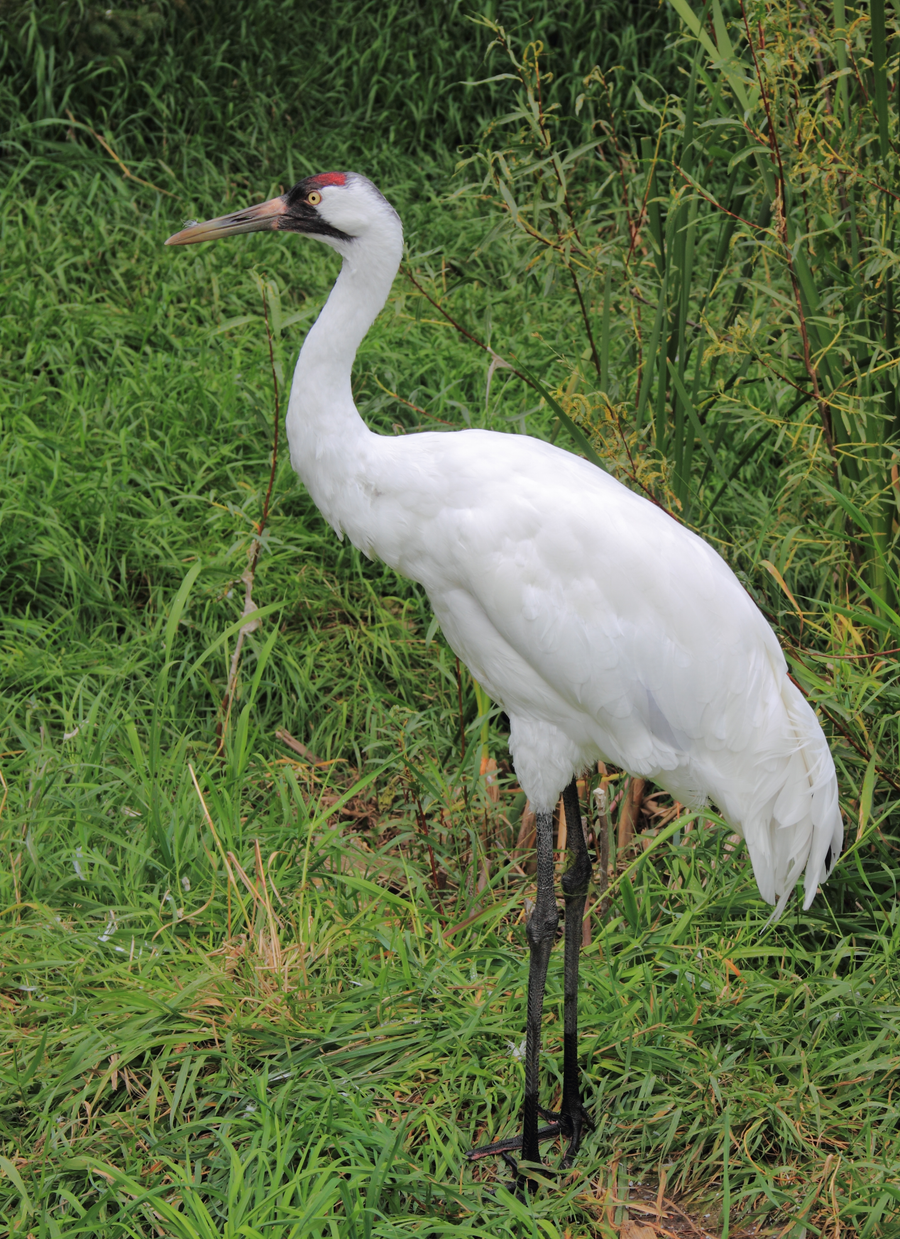
Adults are brilliant white with black wingtips visible in flight and a bare red crown. Trumpeting calls carry across marshes. Chicks are called colts.
Wetland omnivore
Diet includes blue crabs, clams, fish, insects, frogs, and tubers or grains depending on season and site — Aransas wintering grounds are famous for crab feeding.
Wood Buffalo to Texas
The core wild flock breeds in Wood Buffalo National Park, Canada, and migrates to coastal Texas. Reintroduced flocks exist in Wisconsin–Florida and Louisiana.
Endangered but recovering
Hunting and wetland drainage left fewer than 20 birds in the 1940s. Legal protection, migration monitoring, and captive rearing rebuilt numbers, yet the species remains Endangered with limited genetic diversity.
Explore the Whooping Crane
Close relatives
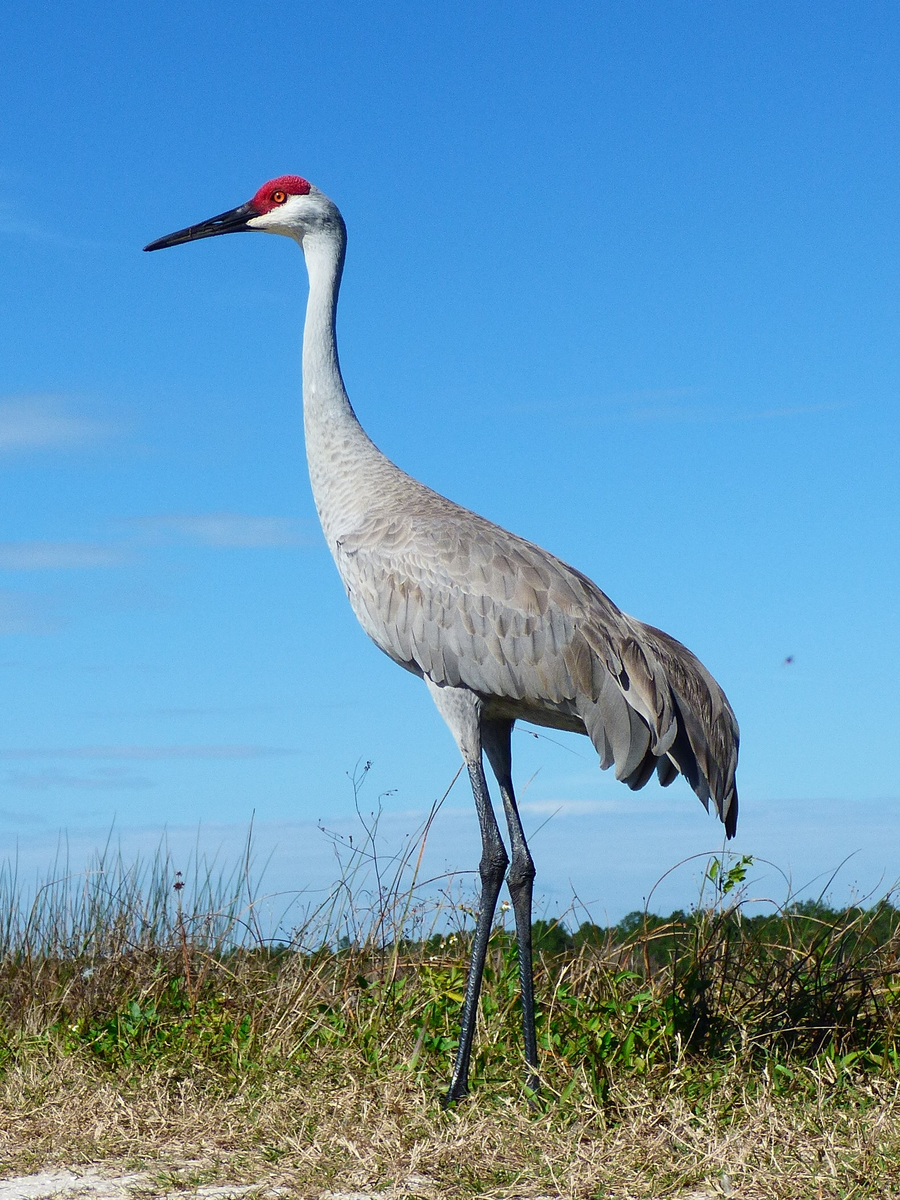
- Sandhill Crane Same family
- South Island Takahe Same order
- Chicken Same class
- Wandering Albatross Same class
Collections
Range & geography
Conservation status of the Whooping Crane
The whooping crane (Grus americana) is listed as Endangered on the IUCN Red List. Endangered (EN) means a species faces a very high risk of extinction in the wild. Populations are usually declining sharply due to habitat loss, hunting, disease, or climate pressure. It sits one level below Critically Endangered on the IUCN Red List.
Main threats to the whooping crane
- Habitat loss in breeding and wintering wetlands
- Collision with power lines
- Drought reducing wetland quality
- Dependence on reintroduction and intensive management
Whooping Crane (Grus americana) was most recently assessed for the IUCN Red List in 2018. Look up on the IUCN Red List .
Frequently asked questions about the Whooping Crane
How many whooping cranes are left?
Wild and reintroduced populations together number in the hundreds — far above the 1940s low, but still Endangered.
Where do whooping cranes winter?
The main migratory flock winters on the Texas Gulf Coast, especially around Aransas National Wildlife Refuge.
What do whooping cranes eat in Texas?
Blue crabs are a key winter food, along with other aquatic animals and plant material.
Why are whooping cranes Endangered?
Tiny population size, habitat limits on migration routes, and collision risks (power lines) keep them Endangered despite recovery gains.
What is a baby whooping crane called?
A young whooping crane is called a colt — that is the usual English name for a young whooping crane.
What is a group of whooping cranes called?
A group of Whooping Cranes is called a sedge.
Sources & references
This guide is compiled and reviewed against established zoological and conservation references. Key sources for the Whooping Crane:
-
IUCN Red List of Threatened Species
Conservation status (Endangered) reflects the IUCN Red List category for Grus americana, most recently assessed in 2018.
-
iNaturalist — observations & photos
Search citizen-science observations and community IDs for Grus americana. Useful for range checks and recent sightings — not a substitute for formal Red List status.
-
GBIF — occurrence data
Global Biodiversity Information Facility species search for Grus americana. Explore published occurrence records used in range research.
-
eBird — bird observations
Cornell Lab eBird target search for Whooping Crane. Check recent checklists and seasonal abundance where birders report this species.
-
Global Animal Guide editorial standards
How we research, source, review, and update every guide for accuracy.