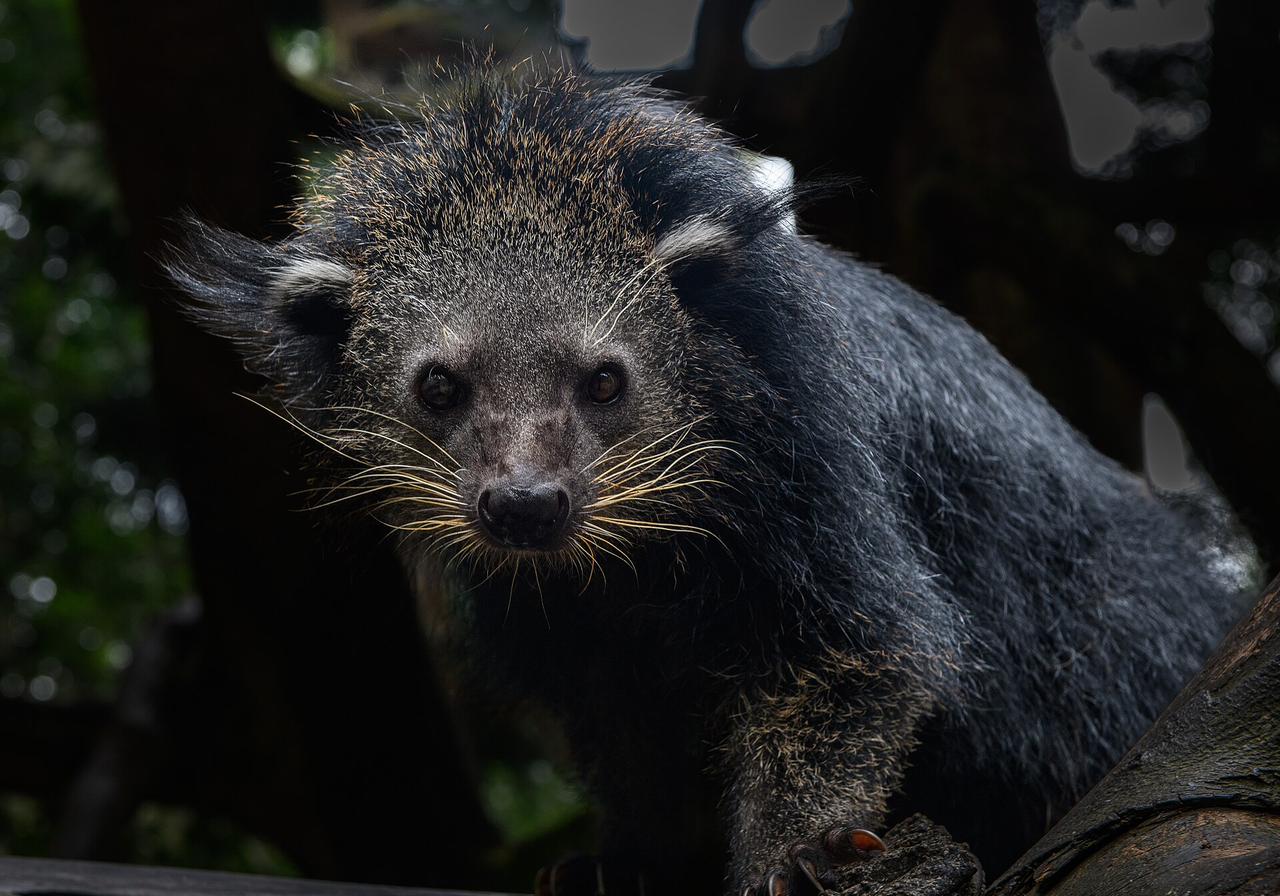
The binturong (Arctictis binturong) is a mammal of the family Viverridae, in the order Carnivora.
Quick answer
The binturong (Arctictis binturong), also called the bearcat, is a shaggy black tree-dwelling mammal of South and South-East Asian forests. It is the largest member of the civet family, weighing 9–20 kg, and one of only two carnivorans with a prehensile tail. It eats mainly fruit, especially figs. It is listed as Vulnerable on the IUCN Red List (assessed 2016), with a decreasing population.
Top questions about the Binturong
Binturong facts at a glance
- Weight 14 kg
- Length 80 cm
- Lifespan 18 years
| Scientific name | Arctictis binturong |
|---|---|
| Also called | Bearcat |
| Family | Viverridae (civets and genets) |
| Diet | Mostly fruit, especially figs; also insects, birds, fish, rodents, eggs and carrion |
| Habitat | The canopy of tall, dense tropical forest |
| Body length | 61–96 cm, with a tail of 56–89 cm |
| Weight | 9–20 kg; females are about 20% larger than males |
| Lifespan | Up to 18 years in the wild; over 25 years in captivity |
| Conservation status | Vulnerable (IUCN Red List, assessed 2016) |
| Kingdom | Animalia |
|---|---|
| Phylum | Chordata |
| Class | Mammalia |
| Order | Carnivora |
| Family | Viverridae |
| Genus | Arctictis |
Where it lives
The binturong (Arctictis binturong) is native to Forests of Bangladesh, Bhutan, Nepal, India, Myanmar, Thailand, Laos, Cambodia, Vietnam and China, south to Malaysia, Sumatra, Java, Borneo and the Philippines. — recorded across Asia in this guide’s range summary.
For occurrence records, see GBIF species search and sources below.
How big is a binturong?
An adult binturong measures 80 cm long — about 46% of the height of an average adult person (1.73 m) — and weighs around 14 kg, about 20% of an average adult’s body weight (70 kg).
Length vs an average adult’s height (to scale)
Neither bear nor cat
The binturong belongs to the civet family, Viverridae, and is its largest member. Long, coarse black fur, sometimes tipped with grey, covers a body 61–96 cm long, and the tail is almost as long again.
A fifth limb
Binturongs are one of two carnivoran species with a prehensile tail, which works as an extra limb as they climb slowly and carefully. Their hind legs can rotate backwards so the claws keep their grip on the way down. They are too heavy to jump between trees, so they also spend time on the ground, and they have been recorded swimming and diving.
Fruit first
Although they belong to the order Carnivora, binturongs eat mainly fruit, such as that of the strangler fig. They also hunt insects, birds, fish and rodents and will take eggs and carrion.
Why binturongs are declining
The IUCN Red List classes the binturong as Vulnerable, with numbers falling. Animal Diversity Web reports a decline of more than 30% over 30 years, caused mainly by deforestation, the wildlife trade and hunting.
Explore the Binturong
Close relatives
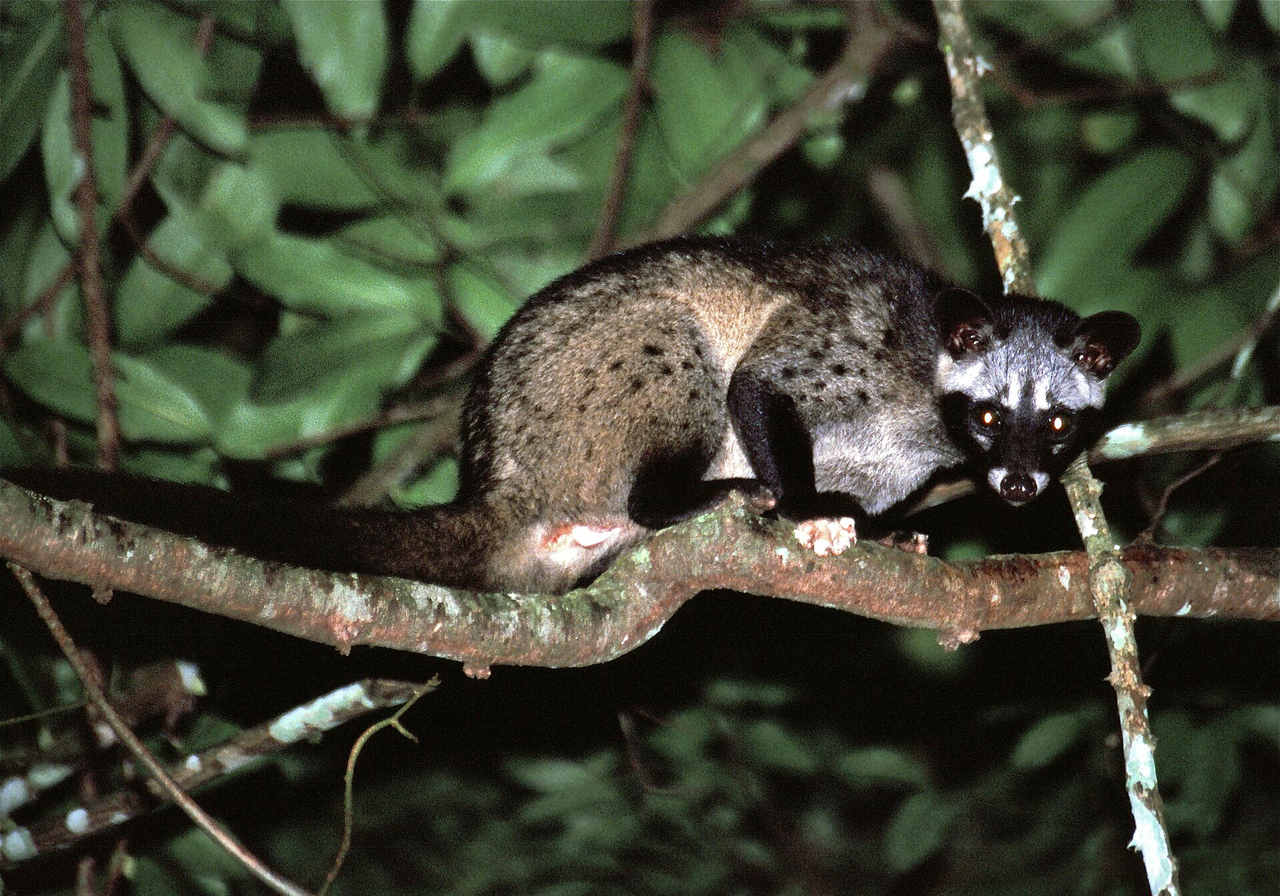
- Asian Palm Civet Same family
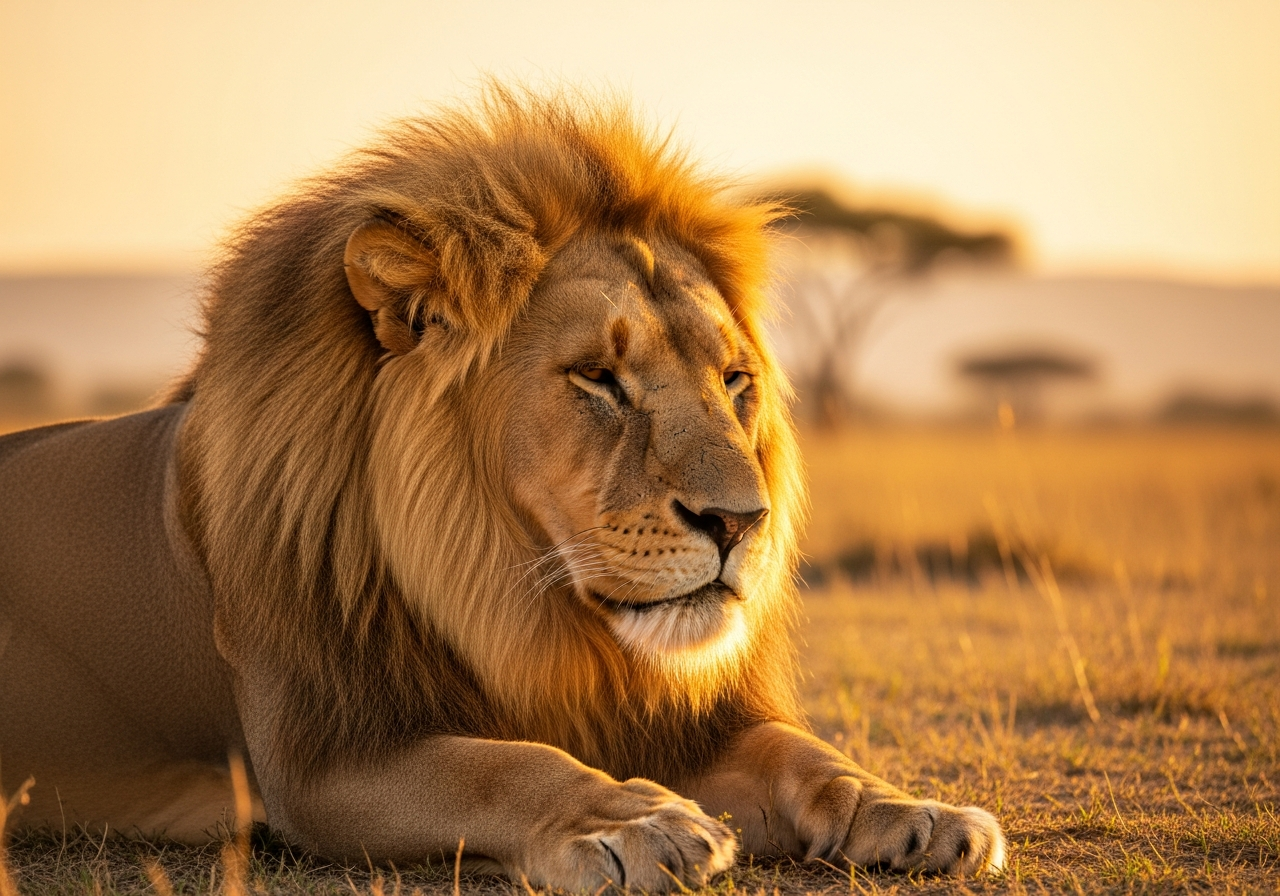
- Lion Same order
- Dog Same order
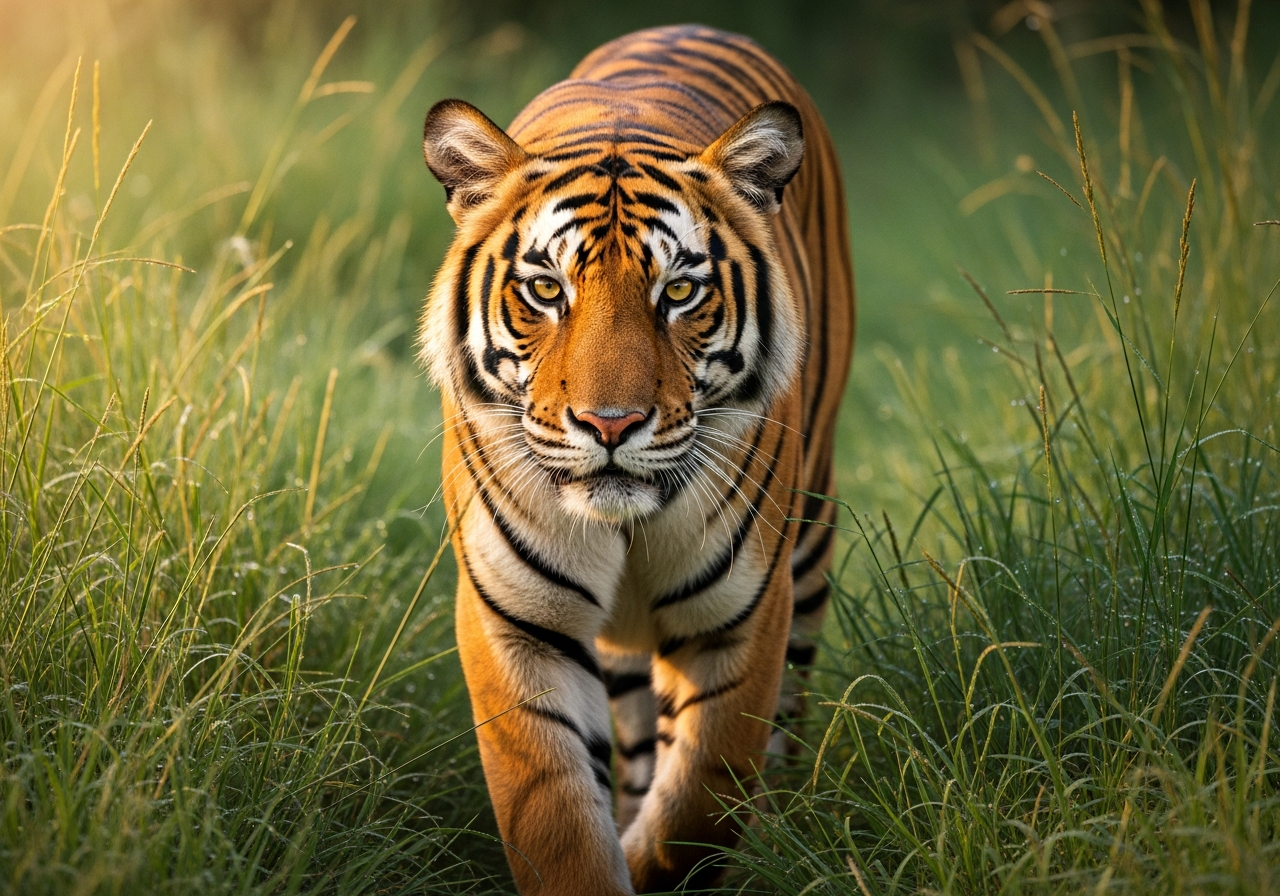
- Tiger Same order
Collections
Range & geography
Did you know? Binturong facts
- Female binturongs are about 20% larger than males.
- Binturongs have been recorded swimming and diving to find food.
Conservation status of the Binturong
The binturong (Arctictis binturong) is listed as Vulnerable on the IUCN Red List. Vulnerable (VU) means a species faces a high risk of extinction in the medium-term future. It is the lowest-risk of the three 'threatened' IUCN categories — one step below Endangered, which is itself below Critically Endangered — and is often an early warning that a population is in trouble.
Main threats to the binturong
- Deforestation
- Wildlife trade
- Hunting
Binturong (Arctictis binturong) was most recently assessed for the IUCN Red List in 2016. View the full IUCN assessment .
Frequently asked questions about the Binturong
Is a binturong a bear or a cat?
Neither. It is the largest member of the civet family, Viverridae.
What do binturongs eat?
Mostly fruit, especially figs, along with insects, birds, fish, rodents, eggs and carrion.
Are binturongs endangered?
They are listed as Vulnerable on the IUCN Red List (assessed 2016), and their population is decreasing.
Sources & references
This guide is compiled and reviewed against established zoological and conservation references. Key sources for the Binturong:
-
IUCN Red List of Threatened Species
Conservation status (Vulnerable) reflects the IUCN Red List category for Arctictis binturong, most recently assessed in 2016.
-
iNaturalist — observations & photos
Search citizen-science observations and community IDs for Arctictis binturong. Useful for range checks and recent sightings — not a substitute for formal Red List status.
-
GBIF — occurrence data
Global Biodiversity Information Facility species search for Arctictis binturong. Explore published occurrence records used in range research.
- IUCN Red List of Threatened Species: Arctictis binturong (assessed 2016). Checked 16 November 2026.
IUCN Red List category Vulnerable, assessed 2016; population trend decreasing; native range.
- Animal Diversity Web: Arctictis binturong. University of Michigan Museum of Zoology.
Size, lifespan, range, diet and behaviour.
-
Global Animal Guide editorial standards
How we research, source, review, and update every guide for accuracy.