Quick answer
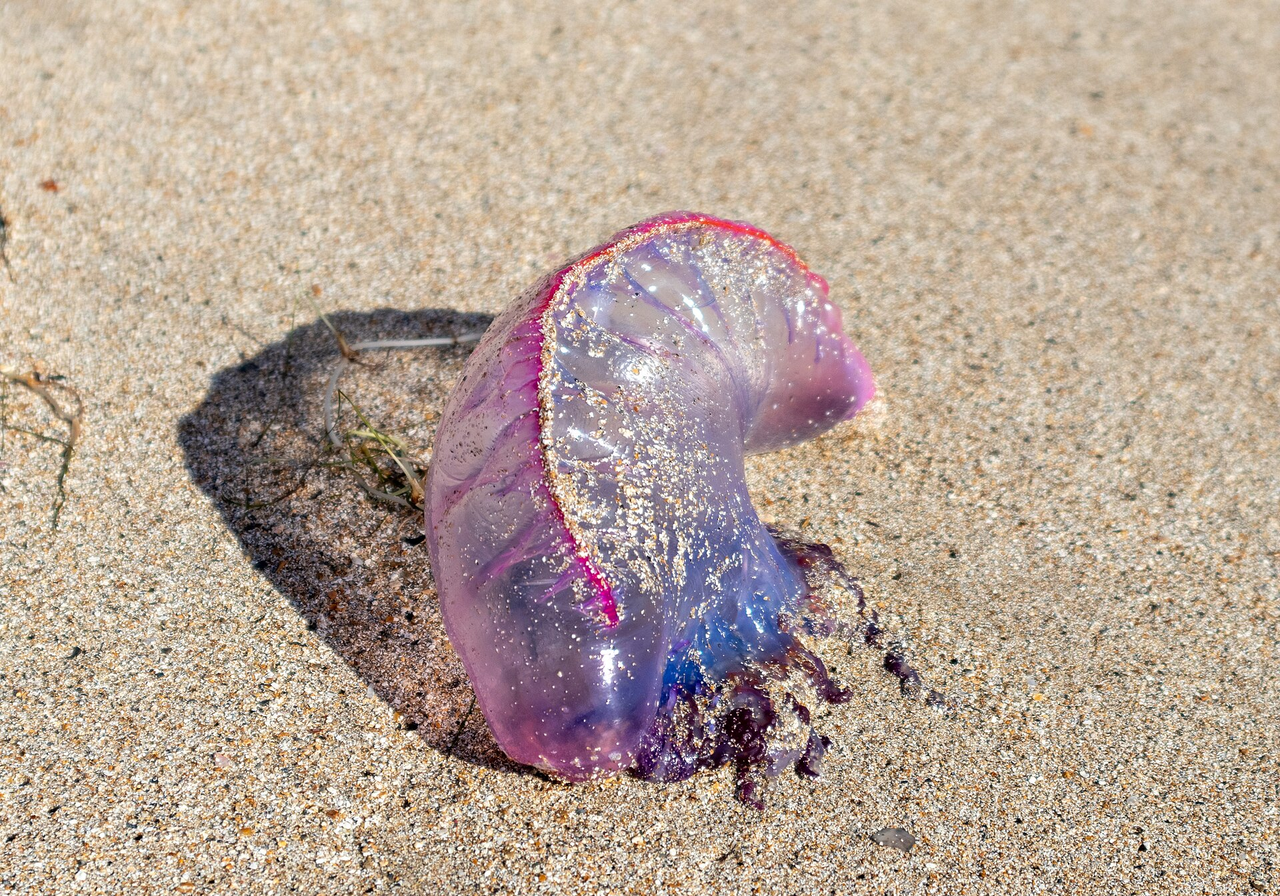
The Portuguese man o' war (Physalia physalis) looks like a jellyfish but is a floating colony of four kinds of polyp that work as one animal. A gas-filled float keeps it at the surface of warm seas, and long tentacles armed with stinging cells catch fish. It cannot swim and drifts with wind and current. The IUCN Red List has not evaluated it; Animal Diversity Web describes it as not especially rare.
Top questions about the Portuguese Man o' War
Portuguese Man o' War facts at a glance
| Scientific name | Physalia physalis |
|---|---|
| Type of animal | Colonial hydrozoan (a siphonophore), not a true jellyfish |
| Diet | Mostly small fish and fish fry; also shrimp and other plankton animals |
| Habitat | The surface of tropical and subtropical seas |
| Range | Atlantic, Pacific and Indian Oceans, the Caribbean and the Sargasso Sea |
| Movement | Drifts with wind and current; it cannot swim |
| Conservation status | Not Evaluated (IUCN Red List) |
| Kingdom | Animalia |
|---|---|
| Phylum | Cnidaria |
| Class | Hydrozoa |
| Order | Siphonophorae |
| Family | Physaliidae |
| Genus | Physalia |
Where it lives
The portuguese man o' war (Physalia physalis) is native to Surface waters of the Atlantic, Pacific and Indian Oceans, the Caribbean and the Sargasso Sea, mainly in tropical and subtropical regions. — recorded across Oceans in this guide’s range summary.
For occurrence records, see GBIF species search and sources below.
A colony, not a single animal
A man o' war is made of four kinds of polyp. One forms the float, a long gas-filled bladder. Others form the tentacles, the feeding polyps and the reproductive polyps. None could survive alone.
How it catches food
The tentacles carry stinging cells that trap prey. Between 70 and 90 per cent of what it catches is fish, mostly fry and small adults, along with shrimp, other crustaceans and small plankton animals.
Drifting at the surface
The colony cannot swim. The float sits above the water and the wind and currents carry it. It lives mainly in warm tropical and subtropical water, including the Gulf Stream.
Status
The IUCN Red List has not evaluated the species. Animal Diversity Web notes that it is not especially rare and is not considered to need special conservation effort.
Explore the Portuguese Man o' War
Close relatives
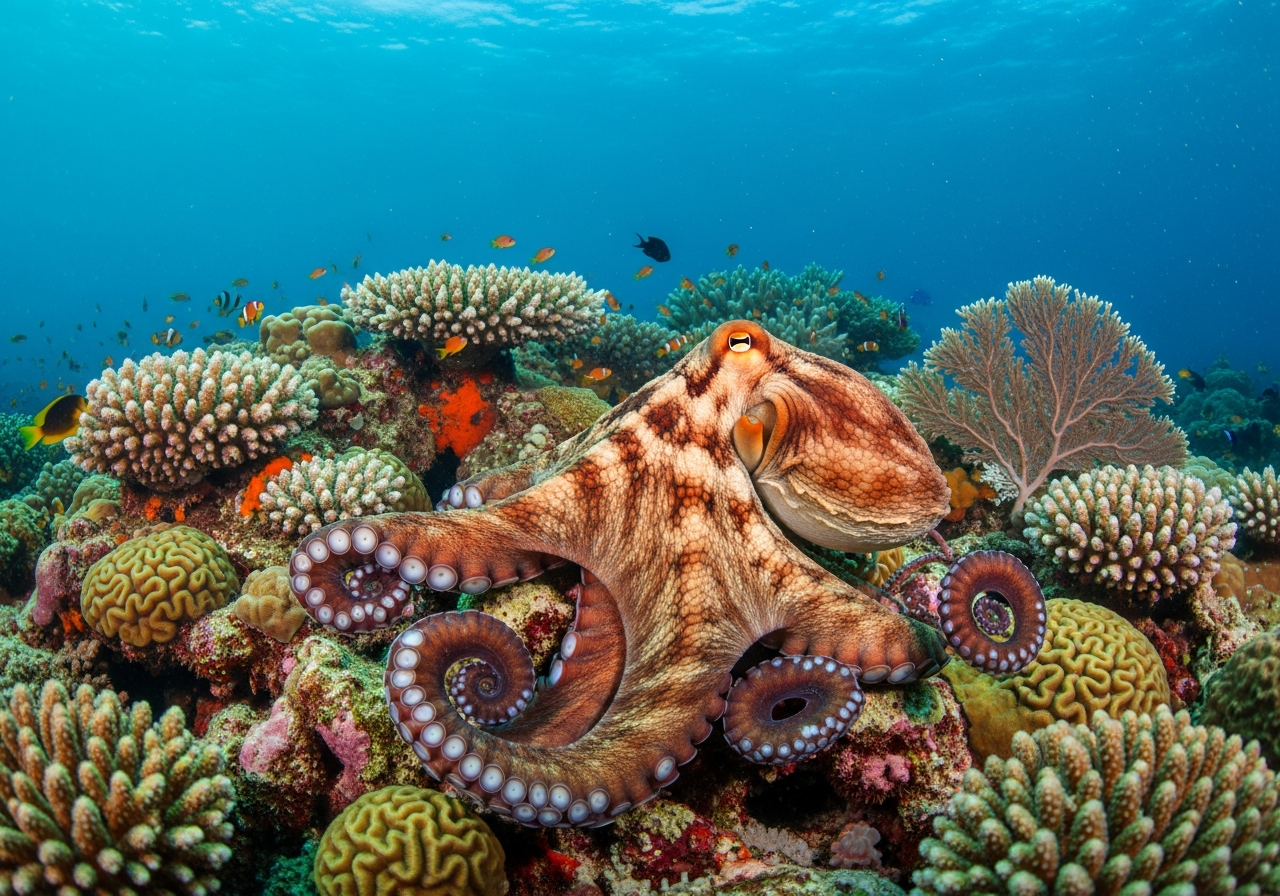
- Octopus Same class
- Black Widow Same class
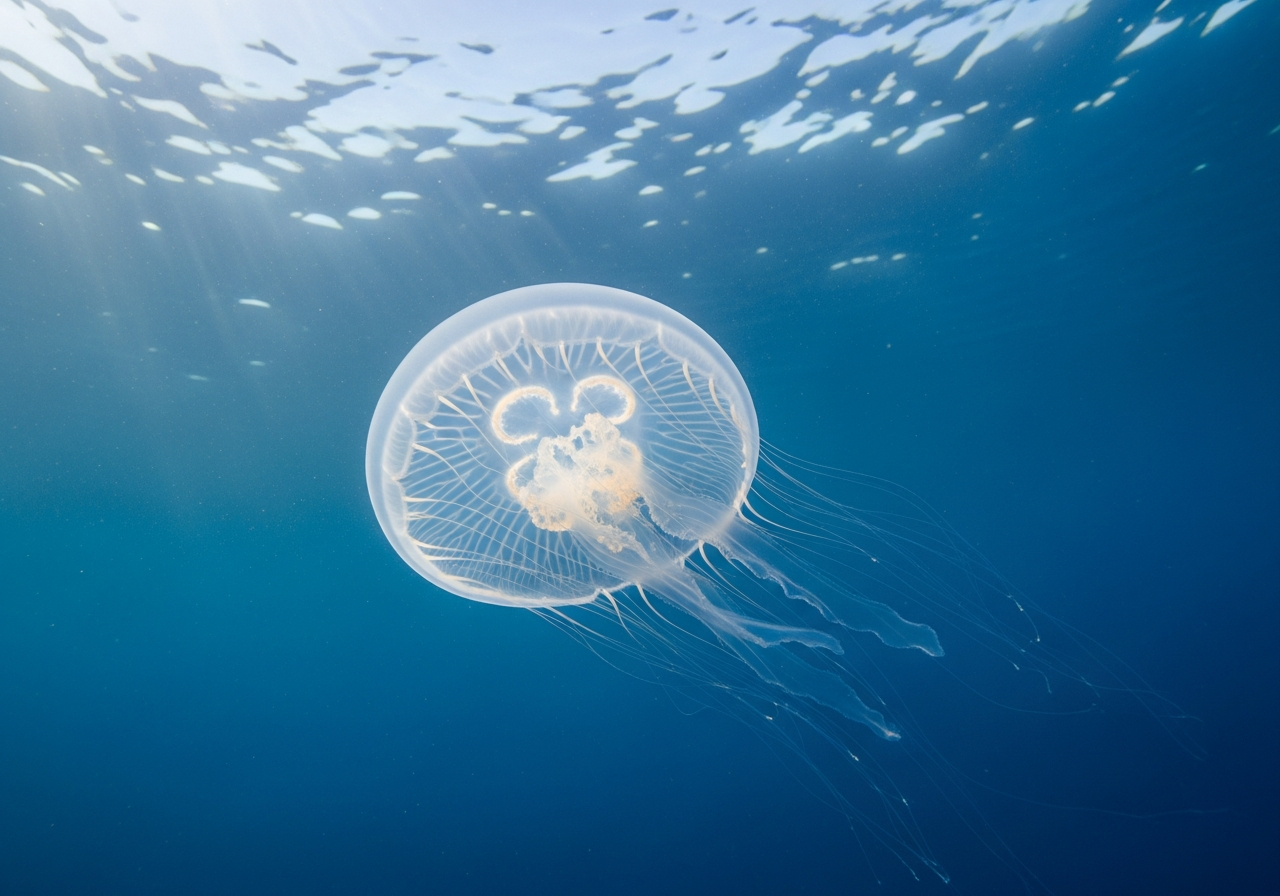
- Jellyfish Same class
- Tarantula Same class
Range & geography
Did you know? Portuguese Man o' War facts
- The float of a Portuguese man o' war is itself a single overgrown polyp.
- Fish make up 70 to 90 per cent of a man o' war's prey.
Conservation status of the Portuguese Man o' War
The portuguese man o' war (Physalia physalis) is listed as Not Evaluated on the IUCN Red List. Not Evaluated (NE) means a species has not yet been assessed against the IUCN Red List criteria. A lack of evaluation does not imply a species is safe — only that no formal assessment has been completed.
The portuguese man o' war (Physalia physalis) is assessed on the IUCN Red List. Look up on the IUCN Red List .
Frequently asked questions about the Portuguese Man o' War
Is a Portuguese man o' war a jellyfish?
No. It is a siphonophore: a colony of four kinds of specialised polyp that function together as one animal.
Can a Portuguese man o' war swim?
No. It floats on a gas-filled bladder and is moved by wind and currents.
What does a Portuguese man o' war eat?
Mostly small fish and fish fry, which make up 70 to 90 per cent of its prey, plus shrimp and other small animals.
Sources & references
This guide is compiled and reviewed against established zoological and conservation references. Key sources for the Portuguese Man o' War:
-
IUCN Red List of Threatened Species
Conservation status (Not Evaluated) reflects the IUCN Red List category for Physalia physalis.
-
iNaturalist — observations & photos
Search citizen-science observations and community IDs for Physalia physalis. Useful for range checks and recent sightings — not a substitute for formal Red List status.
-
GBIF — occurrence data
Global Biodiversity Information Facility species search for Physalia physalis. Explore published occurrence records used in range research.
- Animal Diversity Web: Physalia physalis. University of Michigan Museum of Zoology.
Size, lifespan, range, diet and behaviour.
-
Global Animal Guide editorial standards
How we research, source, review, and update every guide for accuracy.